
OTC Hearing Aids Guide 2026: Who They Are For & How to Choose focuses on explain who OTC hearing aids are for, how they differ from prescription devices and what to check before buying. The aim is to keep the useful depth of the original article while helping readers reach a current, practical decision faster.
Quick Verdict
- Best for: first-time OTC hearing-aid shoppers.
- Focus on: eligibility, FDA labeling, fit, controls, return policy and professional red flags.
- Watch for: OTC does not mean suitable for every type or degree of hearing loss.
Table of contents
What to Know in 2026
FDA’s OTC category applies to adults 18+ with perceived mild-to-moderate hearing loss. Children and people with more severe hearing loss need a different pathway, and certain symptoms should trigger medical evaluation rather than self-fitting. Official source.
Introduction
Hearing loss affects millions of people worldwide. In the United States alone, almost 30 million adults experience some degree of hearing difficulty, yet only about one‑fifth of those who could benefit from a hearing aid seek treatmentfda.gov. Untreated hearing loss doesn’t just make it hard to follow conversations; it can increase the risk of cognitive decline, depression, falls and isolation. Recognizing these barriers, regulators introduced a new category of over‑the‑counter (OTC) hearing aids to expand access to affordable hearing care. This guide explains everything you need to know about OTC hearing aids – how they work, their benefits and limitations, how to choose the right device and how to use them safely. Throughout the article you’ll find links to related resources on Freditech’s hearing‑aids section to deepen your understanding.
Whether you’re exploring hearing aids for yourself or a loved one, this global‑focused guide will give you a solid foundation.

What Are OTC Hearing Aids?
A new category of medical device
OTC hearing aids are a type of air‑conduction hearing aid that adults with perceived mild to moderate hearing loss can purchase directly from stores or online without visiting a hearing‑care professional. This category was created by the U.S. Food and Drug Administration (FDA) and became effective on 17 October 2022. The goal is to make hearing aids more accessible by eliminating the need for a prescription and professional fitting. Unlike personal sound amplification products (PSAPs), which simply amplify sounds and aren’t regulated as medical devices, OTC hearing aids are regulated by the FDA and must meet safety and effectiveness standardsnidcd.nih.gov. The National Institute on Deafness and Other Communication Disorders (NIDCD) notes that OTC devices amplify sounds and may include user‑adjustable settings, yet they are intended only for adults and not for children or those with severe hearing loss.
How OTC and prescription devices differ
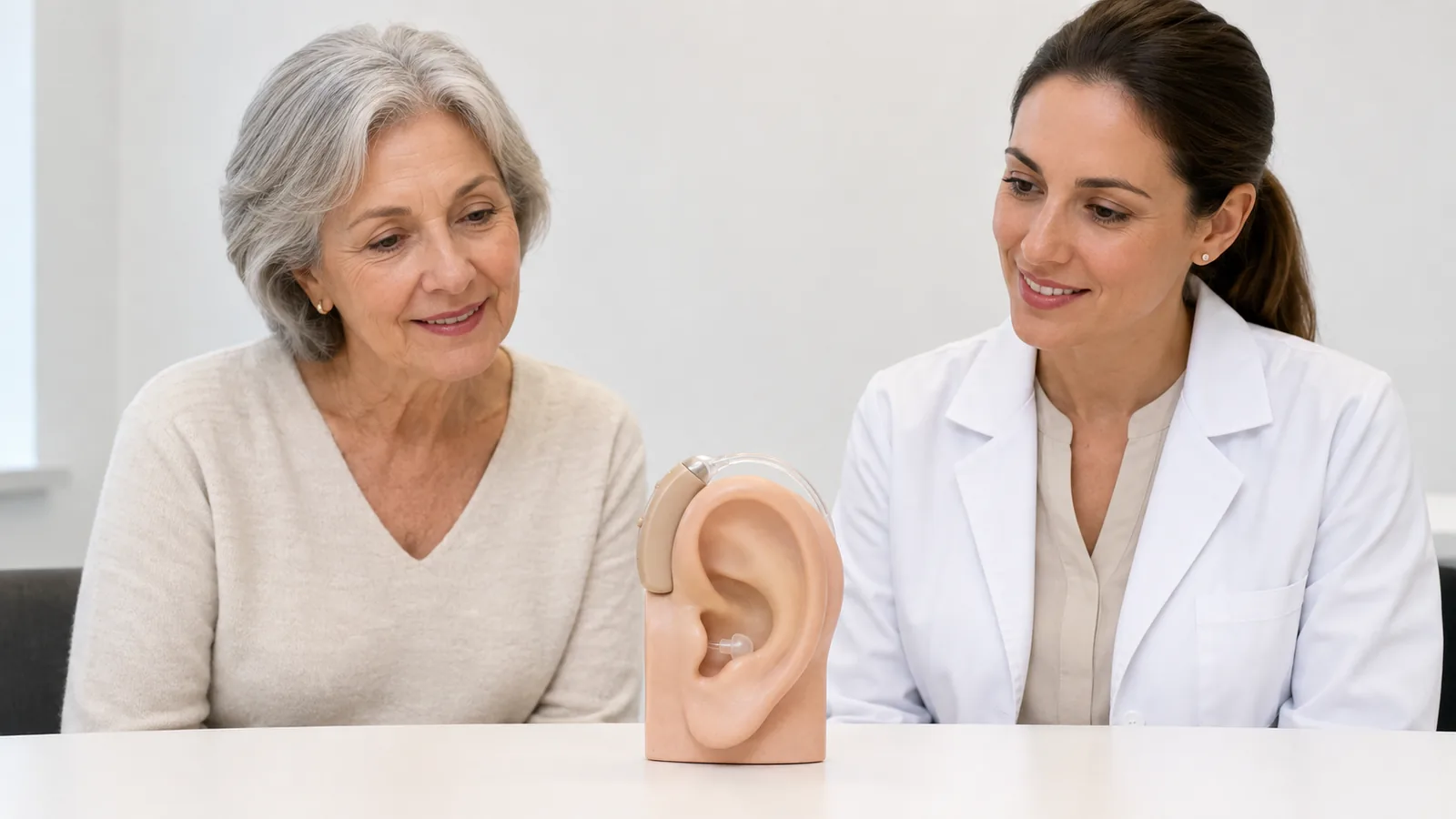
Prescription hearing aids require an audiologist or ear‑nose‑throat specialist to assess your hearing and tailor the device’s programming to your specific hearing loss. They are the standard option for children and for adults with severe or profound hearing loss. OTC devices, by contrast, are designed for self‑fitting. They typically allow the user to adjust volume, sound profiles or directional microphones via buttons or smartphone apps and may include self‑assessment tests built into the device. Because they are mass‑produced, OTC aids come in generic sizes and cannot be custom‑moulded to your ear canal; some models include multiple ear‑tip sizes to improve the fit. The NIDCD notes that OTC devices are not appropriate if you experience ear pain, fluid discharge, dizziness, sudden hearing loss or ringing in only one ear, as these could signal an underlying medical condition requiring professional care.
Who should consider OTC hearing aids?
Adults who believe they have mild to moderate hearing loss may be suitable candidates. Signs include needing to turn up the television volume, asking others to repeat themselves, having difficulty hearing conversations in noisy environments or finding that speech sounds muffled. If you already struggle to hear conversations in quiet settings or can’t hear loud sounds, then OTC devices are unlikely to provide enough amplification. In that case a prescription hearing aid fitted by an audiologist is necessary. Children under 18 should always see a hearing‑health professional; OTC devices are not approved for them.
Why governments created an OTC category
Historically, the high cost of hearing aids and limited insurance coverage have prevented many people from seeking help. Prescription hearing aids often cost around US$2,000 per ear, and full‑featured devices can run US$7,000 for a pairncoa.org. To lower barriers, a law passed in 2017 directed the FDA to create standards for OTC hearing aids. In 2022 the agency finalized rules allowing these devices to be sold directly to consumers. By increasing competition and eliminating bundled professional services, early estimates suggest average hearing‑aid prices could drop to around US$1,600 or lowerhealth.harvard.edu.
How Do OTC Hearing Aids Work?
Basic components and technology
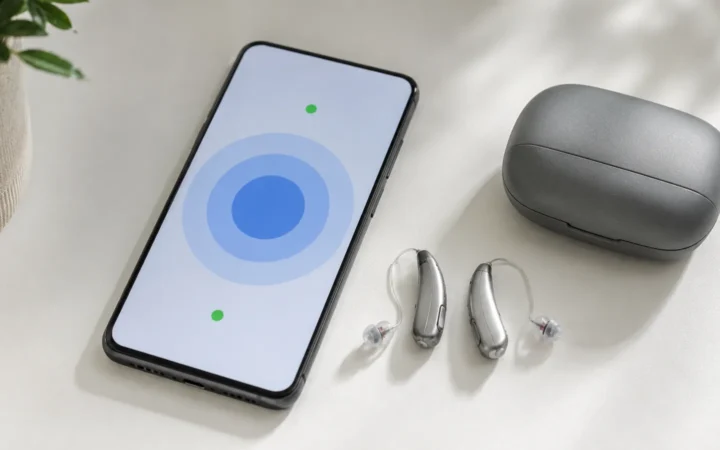
All hearing aids—prescription or OTC—use a microphone to pick up sound, an amplifier that processes and increases the sound’s volume, and a speaker (receiver) that delivers the amplified sound into the ear. Directional microphones and digital signal processors help filter out background noise and emphasise speech. Higher‑end models may include features like Bluetooth streaming, noise reduction, feedback cancellation, tinnitus maskers or artificial intelligence (AI) algorithms that adapt to your environment. For example, the Elehear Beyond OTC hearing aid incorporates real‑time AI noise reduction and speech translation and allows users to fine‑tune each ear separately via a smartphone appforbes.com. Many OTC devices are rechargeable and include smartphone apps for setup and customization; some even perform hearing‑test tones to tailor amplification profiles.
Step‑by‑step: choosing and setting up your OTC hearing aid
- Assess your hearing needs. Before purchasing, consider your hearing difficulties. If you frequently ask others to speak louder or have trouble hearing in groups, you may have mild to moderate hearing loss. A hearing‑health professional can confirm your hearing levels, typically measured in decibels (dB). Mild loss is usually between 26 and 40 dB, and moderate loss between 41 and 55 dB.
- Research device styles and features. OTC hearing aids come in behind‑the‑ear (BTE), in‑the‑ear (ITE) and receiver‑in‑canal (RIC) styles. Consider whether you need Bluetooth connectivity, rechargeable batteries, tinnitus masking or smartphone control. Reviews and comparisons can help; for instance, testers found Elehear Beyond easy to set up and praised its AI noise reduction, but noted shorter battery life compared with some competitors.
- Set a budget. OTC hearing aids typically range from US$100 to US$2,699. Decide how much you’re willing to spend and whether you need features that justify the price. Some manufacturers offer financing plans or free trials, and programmes like the Hearing Aid Project or Lions Clubs may assist with funding.
- Check return policies and warranties. Because OTC devices are self‑fitted, make sure the seller offers a return window—ideally 45 days or more—to give you time to adapt. Note that some models charge a restocking fee. Also check for warranty coverage on repairs and replacements.
- Fit and customize the device. Once purchased, follow the manufacturer’s guide. Many OTC aids include multiple ear‑tip sizes; start with a snug fit that feels comfortable. Use the smartphone app or on‑device buttons to run any self‑fitting hearing test and adjust volume or sound profiles. Real‑world users of the Elehear Beyond appreciated being able to adjust each ear separately and switch between “all‑around” and “speech focus” modes.
- Test the aid in various settings. Wear your hearing aids in quiet and noisy environments to evaluate performance. Adjust settings as needed. If you experience whistling (feedback), try a different ear tip or reduce volume. Keep notes on your experiences to guide adjustments.
- Monitor for problems. OTC devices are not suited for sudden or rapidly worsening hearing loss, ear pain or one‑sided hearing loss. If you notice dizziness, tinnitus in one ear, ear discharge or other unusual symptoms, stop using the aid and consult a hearing‑health professional.
Benefits of OTC Hearing Aids
Improved accessibility and affordability
The creation of an OTC category has lowered the entry cost for hearing assistance. Because these devices are sold directly to consumers and are not bundled with professional services, they cost significantly less than prescription hearing aids. For individuals who previously could not afford hearing aids, OTC options offer a pathway to better communication and quality of life. A survey by the National Council on Aging found that 28 percent of respondents cited price as their top concern when considering an OTC hearing aid. By providing a range of prices and features, the OTC market responds directly to this consumer concern.
Convenience and user control
OTC hearing aids can be purchased online or at retailers without a clinic visit. Self‑fitting allows you to adjust the device at home, saving time and potentially reducing stigma associated with seeking professional help. Smartphone apps and AI‑driven features enable personalized settings, and some models integrate with streaming services to deliver phone calls and music directly through the hearing aid. Elehear Beyond, for example, includes a control center that testers found user‑friendly and highly customizable.
Potential health benefits beyond hearing
Hearing aids may do more than restore hearing. Research suggests that addressing hearing loss can reduce the rate of cognitive decline in older adults at high risk of dementia by nearly 50 percent over a three‑year period. Treating hearing loss might therefore be a safe way to lower dementia risknih.gov. The FDA likewise notes that treating hearing loss can help reduce cognitive decline, depression and falls. While not all studies show the same degree of benefit, these findings underscore the importance of timely intervention.
Drawbacks and Limitations
Not suitable for all types of hearing loss
OTC hearing aids are designed only for mild to moderate hearing loss. If your hearing loss falls outside this range, an OTC device may provide insufficient amplification. Severe or profound hearing loss often requires prescription devices tailored to your audiogram. People with unilateral hearing loss, tinnitus in one ear, sudden or rapidly changing hearing loss or other ear symptoms should seek medical care rather than self‑diagnose.
Generic fit and limited customization
Unlike prescription aids that are custom‑moulded and professionally programmed, OTC devices use generic shells and rely on user adjustments. Harvard Health warns that because OTC aids cannot be tailored to complex hearing profiles, they may share limitations similar to “reading glasses”—helpful for some but not sufficient for everyone. Additionally, return policies and repair services vary; some brands may not offer robust warranties.
Risk of missing an underlying condition
Self‑prescribing an OTC hearing aid might delay diagnosis of medical issues such as ear infections, otosclerosis, Ménière’s disease or tumors. Harvard specialist Dr. James Naples advises that if you experience ear pain, dizziness, or one‑sided hearing loss, you should still see a clinician. A comprehensive hearing test helps rule out underlying diseases and ensures that a hearing aid is the appropriate treatment.
Costs, Insurance and Financial Assistance
How much do OTC hearing aids cost?
Prices vary widely based on features and brand. According to the National Council on Aging, OTC devices range from US$100 to US$2,699 per pair, whereas prescription hearing aids can cost up to US$7,000. Harvard Health notes that a single prescription hearing aid averages about US$2,000. Basic OTC models often have minimal features and rely on manual volume control, while premium devices incorporate Bluetooth streaming, adaptive noise reduction and rechargeable batteries. When budgeting, consider whether you need advanced features like tinnitus maskers, AI noise suppression or smartphone‑based self‑testing.
Insurance coverage and government programmes
In many countries, public health systems or insurers may cover part of the cost of prescription hearing aids, but coverage for OTC devices varies. In the United States, Medicare does not typically cover hearing aids, though some Medicare Advantage or Medicaid programmes offer limited benefits. Always check your policy or consult an audiologist. Veterans in the U.S. may qualify for hearing aids through the Department of Veterans Affairs, and the Indian Health Service offers assistance for eligible Native American and Alaska Native populations. For low‑income individuals, charities such as Lions Clubs and the Hearing Aid Project provide refurbished devices. Internationally, programmes differ; some countries offer government‑funded hearing aids for older adults or provide subsidies via national health systems. Check with local health authorities or insurance providers.
Financing and discounts
Manufacturers often provide monthly payment plans with no‑interest financing. Retailers may offer seasonal discounts or bundling deals that include accessories and extended warranties. When comparing prices, calculate the total cost over the device’s expected lifespan, including batteries or charging cases.
Real‑World Examples of OTC Hearing Aids
Below are examples of notable OTC hearing aids available in 2025. These descriptions are for educational purposes and not endorsements.
Elehear Beyond
Overview: The Elehear Beyond is a behind‑the‑ear OTC device priced at around US$449 per pair. It targets mild to moderate hearing loss and pairs with a smartphone app. Testers praised its AI‑driven noise reduction and speech translation features and appreciated the ability to independently adjust each ear.
Pros: Affordable, rechargeable, user‑friendly app, tinnitus masking, one‑year warranty and 45‑day trial. Real‑world testers reported improved sound clarity and ease of insertion.
Cons: Limited color options, additional cost if longer receiver length is needed, slightly shorter battery life compared with competitors.
Sony CRE‑E10
Overview: Sony’s CRE‑E10 is an in‑the‑ear OTC device priced around US$899.99. It features Bluetooth streaming for music and phone calls and offers multiple sound profiles. It’s marketed to users with mild to moderate hearing loss.
Pros: Discreet design, rechargeable, good sound quality and strong brand support. Integrates with smartphone apps for fine tuning.
Cons: Higher price than many OTC competitors, limited customization compared with some premium prescription aids.
Zepp Clarity Pixie
Overview: Zepp’s Clarity Pixie provides a receiver‑in‑canal design. It emphasises ease of use with pre‑set sound programs and an intuitive control panel. Pricing typically falls in the mid‑range (around US$999), and the device supports Bluetooth streaming.
Pros: Comfortable fit, rechargeable case, balanced sound across frequencies.
Cons: Fewer personalization options; might not suit complex hearing profiles.
Lucid Engage
Overview: The Lucid Engage sits in the premium tier of OTC aids, often costing US$1,500 or more. It includes AI‑powered scene analysis to adjust settings automatically, and testers note its strong noise‑reduction performance.
Pros: Highly adaptive, premium build quality, extensive companion app.
Cons: High price may reduce affordability; some users might find the interface complex.
Tip: Always read user reviews and consult a hearing professional before purchasing. Some countries require sellers to provide a summary of features and limitations; check packaging and documentation for details.
Tips for Maximizing the Benefits of Your OTC Hearing Aid
- Give yourself time to adapt. It can take weeks for your brain to adjust to amplified sounds. Wear your hearing aids for a few hours each day and gradually increase usage.
- Use recommended volume levels. Start at a comfortable volume that allows you to understand speech without straining. Avoid maxing out the volume, which can cause feedback and discomfort.
- Experiment with sound settings. Many OTC aids offer multiple programs (e.g., quiet, noisy, music). Try different modes in various environments to see what works best for you.
- Keep them clean. Wipe ear tips and outer surfaces with a dry cloth regularly. Replace wax guards and ear domes as recommended.
- Stay updated. If your device includes firmware updates via an app, install them. Updates may improve battery life or add features.
- Combine with communication strategies. Face the person speaking, ask for clarification if needed and reduce background noise when possible. Hearing aids are tools, but effective communication still relies on context and habits.
- Follow up with a professional. Even if you buy OTC aids, periodic hearing tests can detect changes in your hearing or underlying health issues. A hearing‑care professional can also help you optimise settings and suggest additional therapies.
Common Questions About OTC Hearing Aids (FAQ)
Are OTC hearing aids effective?
Yes—when used appropriately. OTC hearing aids can help many adults with mild to moderate hearing loss and may support long-term cognitive health. They aren’t intended for severe loss or complex conditions; if in doubt, consult a professional.
Do I need a hearing test before buying?
Not legally, but it’s highly recommended. A hearing test identifies your degree and type of loss and helps confirm whether an OTC device is suitable. Some OTC models include self-tests, but these don’t replace a professional assessment.
Can I use OTC hearing aids if I have tinnitus?
Some OTC models offer tinnitus maskers that play soft sounds to help cover ringing. However, persistent or one-sided (unilateral) tinnitus should be medically evaluated.
What’s the difference between an OTC hearing aid and a PSAP?
PSAPs simply amplify nearby sounds and are for people without diagnosed hearing loss (e.g., birding). They aren’t medical devices. OTC hearing aids are FDA-regulated products designed to treat mild to moderate hearing loss.
Will insurance cover my OTC hearing aids?
Coverage varies. In the U.S., Medicare typically doesn’t cover hearing aids. Some private insurers, Medicare Advantage plans, and Medicaid programs may offer partial coverage—check your policy. Other countries may provide subsidies or reimbursements; verify locally.
How long do OTC hearing aids last?
Usually 3–5 years, depending on build quality, usage, and care. Rechargeable batteries will gradually degrade. Warranty terms and availability of replacement parts vary by manufacturer.
Conclusion
The advent of over‑the‑counter hearing aids marks a significant shift toward more accessible hearing care. By allowing adults with mild to moderate hearing loss to purchase devices without a prescription, regulators hope to reduce the stigma and high costs associated with hearing aids. Research shows that addressing hearing loss not only improves communication but may reduce the risk of cognitive decline and dementia. Still, OTC devices are not a one‑size‑fits‑all solution. People with severe hearing loss, ear pain, sudden changes in hearing or other symptoms should seek professional care. When used correctly, OTC hearing aids offer a practical, affordable step toward better hearing health.
Author: Freditech Editorial Team – led by Wiredu Fred a certified audiologist and technical writer with a decade of experience in hearing‑aid technology.
Bottom Line
A good hearing-aid decision starts with candidacy and fit, then moves to features and price. Otc does not mean suitable for every type or degree of hearing loss. When symptoms or hearing difficulty fall outside the OTC category, professional assessment is the safer next step.
![Linner Mercury OTC Hearing Aids [FSA & HSA Eligible]](https://freditech.com/wp-content/uploads/2026/08/359-linner-mercury-otc-hearing-aids-fsa-hsa-720x450.webp)