
OnePlus 13 Review in 2026 is no longer judged only by launch-day specifications. In 2026, the useful question is whether its real strengths, software support, battery condition and current price still make sense against newer hardware. This review keeps the important original detail while putting the buying decision in today's context.
Quick Verdict
- Best for: buyers who can get this model at a meaningful discount without giving up needed support.
- What matters most: current software support, battery/condition, core hardware strengths and real street price.
- Skip or compare newer if: the price gap is small or you need the latest camera, AI, battery or connectivity features.
Table of contents
What to Know in 2026
OnePlus 13 is now a previous-generation flagship because OnePlus 15 is the current model. Its core hardware remains strong: Snapdragon 8 Elite, a 6.82-inch LTPO display, a 6,000 mAh battery and a triple 50 MP camera system. In 2026, price and remaining software support matter more than its launch-year “flagship killer” label. Official source.
A New Contender for the Android Throne
The OnePlus 13 arrives as a significant challenge to the established order of Android flagship smartphones, rekindling the brand’s long-standing reputation as a “flagship killer”. At a time when top-tier devices from competitors like Samsung and Google have seen their prices soar, the OnePlus 13 positions itself as a compelling alternative, offering a package of high-end hardware at a notably lower price point. This device is not merely an incremental update; it integrates a groundbreaking display, a massive, new-generation battery, a refined Hasselblad camera system, and the latest Qualcomm processor. By combining these premium components, OnePlus aims to deliver a true flagship experience that doesn’t “burn a hole in their pockets”.
This report moves beyond a simple recitation of specifications to provide a detailed, data-driven analysis of every key feature. This comprehensive review aims to empower the reader with a deep understanding of the OnePlus 13’s true value proposition. The following sections will highlight the phone’s strengths, scrutinize its subtle weaknesses, and examine how the hardware’s immense potential is either realized or hampered by software implementation. The objective is to provide a definitive, expert-level breakdown that helps discerning consumers determine if the OnePlus 13 is, in fact, the best Android flagship of 2025.

A Refined Design That Redefines Durability
The physical design of the OnePlus 13 represents a blend of classic brand identity and modern refinement. The phone is noticeably slimmer and lighter than its predecessor, the OnePlus 12, measuring 162.9 by 76.5 by 8.5 mm and weighing 213g for the Arctic Dawn and Black Eclipse models, and slightly thicker at 8.9 mm and lighter at 210g for the Midnight Ocean variant. This reduced size makes the device feel light and easy to hold, even for users with smaller hands. A fan-favorite feature, the trademark Alert Slider, remains a key part of the design, providing a quick and easy way to switch between silent, vibrate, and ring modes.
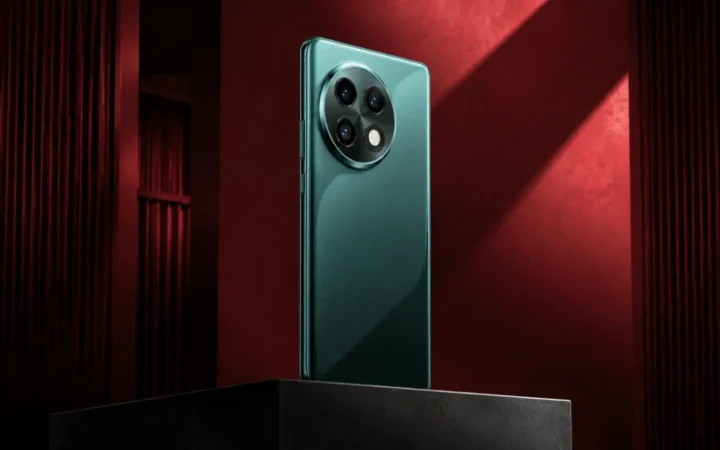
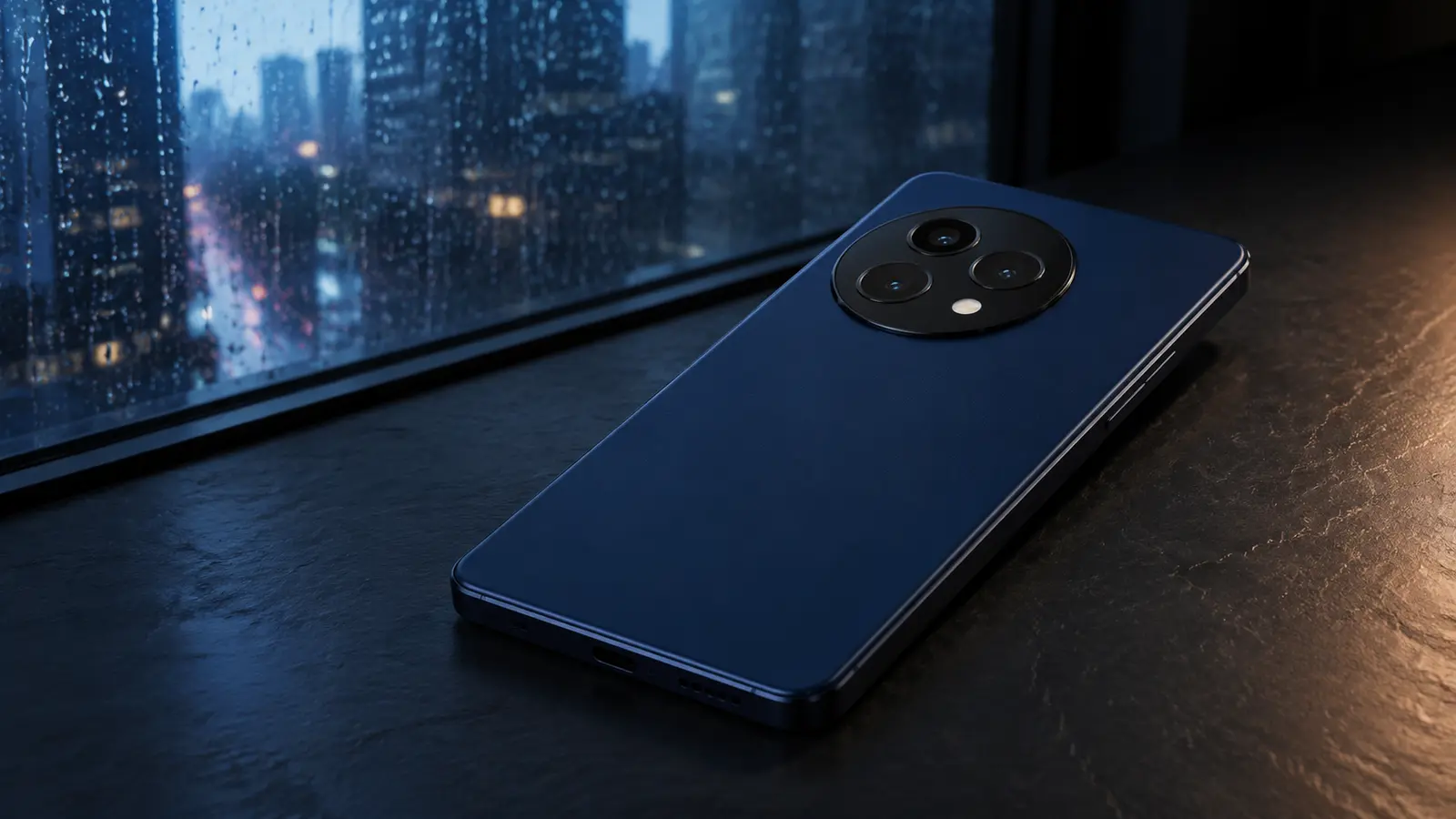
The OnePlus 13 is available in three distinct colorways: Arctic Dawn (white), Black Eclipse (black), and Midnight Ocean (blue). The Midnight Ocean model features a unique “microfiber vegan leather” back that reviewers describe as feeling like suede, while the other two models have a matte back glass that some have noted feels similar to plastic and can be slippery. The phone’s aesthetic is clean and elegant, with a redesigned circular Hasselblad-branded camera module that no longer awkwardly extends to the side of the device. This “free-floating” module is a key visual differentiator from previous models.
The IP69 Rating: Setting a New Standard
A standout feature of the OnePlus 13’s build is its unprecedented durability rating. The device holds both an IP68 and an IP69 rating for water and dust protection. The IP68 rating, which is standard for most flagships, guarantees the phone can be submerged in 1.5 meters of water for up to 30 minutes. The additional IP69 rating, however, is a notable step beyond the competition. It certifies that the device can withstand high-pressure and high-temperature water jets, making it “dishwasher safe” and surpassing the durability of rivals like the Samsung Galaxy S24 Ultra and Google Pixel 9 Pro XL, which are limited to IP68. This is a powerful statement about the phone’s engineering and build quality.
The phone’s front is protected by a new Ceramic Guard glass, which is designed for enhanced durability. This choice of materials and the phone’s extreme durability ratings paint a picture of a device built to withstand a wide range of harsh conditions. However, there is a fascinating disconnect between this objective durability and the subjective user experience. Several reviewers have noted that the phone’s “matte plastic” back can feel “slippery” or “greasy” to the touch, and they recommend using a case to prevent it from accidentally slipping out of one’s hand. This means that while the phone is engineered to survive being dropped or exposed to water, its tactile feel might paradoxically make it more susceptible to a common, everyday accident. A consumer is therefore presented with a choice: use the phone in its raw, durable form but risk an accidental drop, or encase it for a more secure grip and negate the aesthetic experience.
The Display: A Record-Breaking, Eye-Friendly Panel
The display on the OnePlus 13 is one of its most compelling features, earning DisplayMate’s highest-ever display performance grade of A++ and setting or matching 21 smartphone display performance records. This 6.82-inch QHD+ (3168×1440) ProXDR display utilizes cutting-edge LTPO 4.1 technology, which allows for a dynamic refresh rate that can intelligently scale from 1Hz up to 120Hz. This adaptive technology ensures a buttery-smooth visual experience for everything from scrolling to gaming, while simultaneously conserving battery life for static content.
The screen’s brightness and color accuracy are also top-of-the-line. It boasts a peak brightness of 4,500 nits and a High Brightness Mode (HBM) of 1,600 nits, which is critical for visibility in direct sunlight. The display supports a wide array of HDR standards, including Dolby Vision, HDR10+, and HDR Vivid, along with 10-bit color depth and a 100% Display P3 color gamut. These features ensure that colors are not only vivid but also accurately calibrated. Beyond its impressive raw numbers, the display is also equipped with eye-friendly features, such as DC-like dimming and a 2160Hz Pulse Width Modulation (PWM) frequency at low brightness, which are certified by TÜV Rheinland for Intelligent Eye Care 4.0. This makes the display comfortable to use for extended periods, especially for those who are sensitive to display flickering. The screen is also highly responsive, with new Aqua Touch 2.0 and Glove Mode technologies that allow it to be used even with wet fingers or gloves up to 5mm thick.
Beyond the Numbers: The Brightness Paradox
Despite the record-setting specifications, the real-world experience of the display reveals a subtle complexity. The headline-grabbing 4,500 nits peak brightness, a key marketing highlight, is not a figure users will experience in everyday use. As a user review and a technical breakdown from GSMArena clarify, this extreme brightness is reserved for specific HDR video highlights. The actual, more practical High Brightness Mode (HBM) maxes out at 1,600 nits, a figure that is technically lower than some competitors.
Furthermore, a significant number of community users have voiced frustration with the phone’s auto-brightness algorithm. These users describe the feature as “TRASH,” noting that it often makes the screen too dim in dark environments and that it fails to learn and adapt to their manual adjustments. This forces users to constantly override the automatic settings, which detracts from the seamless user experience promised by a flagship phone. This situation illustrates a crucial disconnect: while the hardware is objectively excellent, with a display that can be incredibly bright and accurate, the software’s poor implementation of features like auto-brightness can create a frustrating user experience. The phone’s true performance is not solely defined by its raw specs but by how well its software manages and optimizes those capabilities in a practical, day-to-day context.
Performance: The Snapdragon 8 Elite Advantage with Nuance
The OnePlus 13 is powered by the new Qualcomm Snapdragon 8 Elite Mobile Platform, a top-of-the-line chipset with a Qualcomm® Oryon™ CPU clocked at up to 4.32GHz and an Adreno™ 830 GPU. This powerful hardware, combined with a choice of 12GB or 16GB of LPDDR5X RAM and up to 512GB of UFS 4.0 storage, delivers a “blazing fast” and “seamless” experience in daily use and multitasking. Reviewers report that apps open and load instantly, and the phone handles dozens of open apps and browser tabs without any slowdown or hiccups.
The phone’s raw power is particularly evident in benchmark results. On the Geekbench 6 multi-core test, the OnePlus 13 scored an impressive 9,143 points, significantly outperforming rivals from Samsung and Google. In graphics performance, it achieved an average of 90 frames per second (fps) in the GFXBench Aztec Ruins 1440p Offscreen test, a score that comfortably beats the competition. This level of performance makes the phone a powerful device for everything from everyday tasks to intensive video editing, where a long video could be rendered out in a matter of seconds. To manage heat during demanding tasks like gaming, the phone is equipped with a large Dual Cryo-Velocity VC cooling system, with a vapor chamber measuring 9925mm².
Gaming, Cooling, and the Resolution Conundrum
While the benchmark results paint a picture of undisputed performance, a deeper look into the gaming experience reveals a more nuanced reality. Some video reviews suggest that the OnePlus 13 achieves its high frame rates in certain graphically intensive games through a process of dynamic resolution scaling, which can lower the game’s render resolution. This allows the phone to maintain a high frame rate at the expense of some visual fidelity, a trade-off that may not be ideal for all users.
Furthermore, a comparative test with a more conservative gaming-focused phone demonstrated that the OnePlus 13’s performance comes with a greater tendency to throttle. The OnePlus 13 was shown to cycle between heavy throttle states and high performance to maintain peak power, which could lead to an inconsistent experience during sustained, long-term gaming sessions. This is in contrast to the competitor, which throttled more gradually and offered a more stable, albeit lower, sustained performance. This shows that the phone is designed to push for raw, unbridled power to win on benchmarks, but its management of that power may not always translate into the most stable long-term experience for a dedicated gamer. While the hardware is exceptionally capable, the software’s aggressive optimization strategy can introduce a trade-off between peak performance and consistent visual quality.
The Hasselblad Camera: A Step Forward with Software Nuances
The OnePlus 13 features an upgraded triple-camera system, a result of its continued partnership with Hasselblad. The main camera is a 50MP Sony LYT-808 sensor with a f/1.6 aperture and optical image stabilization (OIS), while the ultrawide camera is a 50MP sensor with a 120° field of view. The most significant hardware upgrade is the new 50MP Sony LYT-600 telephoto camera, which offers 3x optical zoom and OIS. This camera uses a new Triprism lens design that reflects light three times, enabling a longer focal length in a more compact module—a design similar to Apple’s tetraprism lens but with a different implementation. For selfies, the phone has a 32MP fixed-focus front-facing camera.
In terms of image and video quality, reviewers have found that the OnePlus 13 produces “crisp, vibrant, and contrasty” images with good detail, particularly in bright daylight. The phone also excels in low-light and portrait photography, with the Hasselblad-tuned Portrait mode offering 1x, 2x, and 3x focal lengths that mimic classic Hasselblad lenses. A unique feature is XPan Mode, which uses both the main and ultrawide cameras to capture a panoramic image with a single click, a tribute to Hasselblad’s classic film camera. The phone also includes several AI-powered features like a Reflection Eraser and AI Detail Boost for editing photos. Video capabilities are also strong, with 8K recording at 30fps and 4K Dolby Vision support available on all three rear cameras and the front camera.
The Camera’s Achilles’ Heel: Software Tuning and Consistency
The phone’s camera system, however, has a critical weakness: software tuning inconsistencies. Despite the top-tier hardware, multiple user and expert reviews point out that the software’s processing can be “hit or miss”. This means that while some photos turn out “very good,” others may not meet the same standard, creating a lack of consistency that is unexpected from a flagship device. Specific complaints include “over-processed” ultrawide images and a tendency for the camera to overexpose bright whites, leading to a final image that looks different—and often worse—than what was seen in the viewfinder.
This is a profound observation. The camera hardware is objectively excellent, and the phone has significantly closed the gap with major rivals like the iPhone 16 Pro Max. However, it is the computational photography and software tuning—the very aspect that makes a modern smartphone camera great—that still shows room for improvement. The OnePlus 13 may lack the consistent, reliable output of a Google Pixel, forcing users to take multiple shots to get the “right” one. This makes the phone’s camera less of a point-and-shoot powerhouse and more of a tool that requires some patience and a bit of luck to master. The excellent hardware provides a solid foundation, but the software still needs to catch up to fully realize its potential.
Battery and Charging: An Endurance Champion with a Software Caveat
One of the most impressive technical achievements of the OnePlus 13 is its monumental battery life. The phone is equipped with a new 6,000mAh Silicon NanoStack battery, a significant increase from the 5,400mAh capacity of its predecessor. This large capacity is achieved without making the phone bulky, allowing for a slim and comfortable design. In a benchmark test of looping a YouTube video at maximum brightness, the phone lasted an impressive “24 hours and 28 minutes” on a single charge. In real-world usage, this translates into an all-day, and for many users, a full two-day device.
The charging speeds are equally impressive. The OnePlus 13 supports 100W SUPERVOOC™ wired charging, which can take the battery from 1% to 100% in just 36 minutes, or around 40 minutes in real-world tests. A notable detail for users in the United States is that the phone is limited to 80W wired charging out of the box, requiring the purchase of a special adapter to achieve the full 100W speed. For wireless charging, the phone supports 50W AIRVOOC, but this requires a specific OnePlus wireless charger and a special magnetic case to achieve full speed and proper alignment.
The Elephant in the Room: Post-Update Battery Drain
The OnePlus 13’s stellar battery performance, however, is subject to a significant and widely reported software issue. A large number of users across community forums and social media platforms have reported a “rapid battery drain” after a specific OxygenOS 15 software update. Users who initially experienced an “awesome” 8 to 10 hours of screen-on-time have seen that figure plummet to less than 6 hours after the update. Some have even reported that the battery drains by 50% in just two hours of video calling.
This problem is a serious contradiction that directly undermines one of the phone’s primary selling points. The underlying issue appears to be a lack of software quality control and optimization from OnePlus, with users in some cases calling their purchase a “disaster”. The community has developed several troubleshooting steps, such as factory resets or performing a full charge/discharge cycle, but these are temporary fixes for a core issue that needs to be addressed by OnePlus. The phone’s hardware is designed to deliver best-in-class battery life, but a user’s experience is fundamentally dependent on a stable and optimized software version. This is a significant risk for consumers, as a future over-the-air update could potentially degrade the phone’s performance.
OxygenOS 15: Fluidity, AI, and the Update Question
The OnePlus 13 ships with OxygenOS 15, which is based on Android 15. The software experience is praised by reviewers for its fluidity and responsiveness, with a focus on replicating the “seamless” and “superfast” feel of Apple’s iOS. The haptic feedback is also noted for being “crisp and precise”.
The new operating system includes several AI features, both from Google and OnePlus. Google’s suite includes features like Circle to Search, while OnePlus’s own AI toolkit offers tools such as AI Detail Boost, Reflection Eraser, and AI Unblur for photo editing.
The Software Support Conundrum
On paper, OnePlus has a strong software support policy, promising four years of major OS updates and six years of security updates. This commitment provides a sense of long-term value and reliability. However, this promise is at odds with the reality of the company’s update history and quality control. Community forum threads and long-term reviews reveal a pattern of slow updates and a lack of quality control, with some users reporting that new updates have introduced significant bugs and performance regressions. The widespread battery drain issue following a specific OxygenOS 15 update is a prime example of this problem. This suggests that while OnePlus is offering an excellent support policy in theory, the practical experience of receiving those updates can be unpredictable and, in some cases, detrimental to the phone’s performance.
Our Verdict: The Value-Packed Flagship of the Year?
The OnePlus 13 is an undeniable technological achievement. It brings a combination of class-leading specifications—including a monumental 6,000mAh battery, a chart-topping DisplayMate A++ screen, and the formidable Snapdragon 8 Elite processor—at a price point that undercuts its primary competition. The phone also sets a new standard for durability with its dual IP68 and IP69 ratings. This is a device for the user who prioritizes raw performance, a beautiful and bright display, and epic battery life, while seeking to avoid the premium price tag of a Samsung or Google flagship.
However, the analysis reveals that this hardware prowess is not without its compromises, primarily in the realm of software. The inconsistent camera processing, the frustrating auto-brightness algorithm, and the potential for new updates to introduce significant bugs like battery drain are all reminders that a truly perfect phone is a balance of both hardware and software mastery. Despite these flaws, the OnePlus 13 delivers on its core promise. It is a value-packed flagship that demands serious consideration and is a testament to OnePlus’s continued push to innovate in a crowded and expensive market. For the discerning consumer willing to tolerate a few software-related quirks in exchange for a powerful and durable device, the OnePlus 13 is arguably the best value Android flagship of the year.
OnePlus 13 vs. Key Competitors: A Quick-Glance Comparison
Feature | OnePlus 13 (256GB/12GB) | Samsung Galaxy S25+ (512GB/12GB) | Google Pixel 9 Pro (512GB/16GB) |
Price | ~$900 USD | ~$1,200 USD (RM 5,599) | ~$1,350 USD (RM 6,299) |
Processor | Snapdragon 8 Elite | Snapdragon 8 Elite (est.) | Google Tensor G5 (est.) |
Display | 6.82″ QHD+ LTPO 4.1 | 6.82″ Quad HD+ LTPO | 6.8″ LTPO OLED (est.) |
Peak Brightness | 4,500 nits | 2,600 nits | 3,000 nits |
Main Camera | 50MP (Sony LYT-808) | 50MP (est.) | 50MP (est.) |
Telephoto | 50MP 3x Optical | 10MP 3x Optical | 12MP 5x Optical |
Battery Capacity | 6,000 mAh | 4,000 mAh | N/A (not specified) |
Wired Charging | 80W/100W SuperVOOC | 25W (est.) | N/A (not specified) |
Wireless Charging | 50W AIRVOOC | N/A (not specified) | N/A (not specified) |
Durability | IP68 & IP69 | IP68 | IP68 |
Software Support | 4 OS / 6 Security | 7 OS / 7 Security | 7 OS / 7 Security |
Frequently Asked Questions (FAQ)
What is the software update policy for the OnePlus 13?
How does the OnePlus 13’s camera compare to the iPhone 16 Pro Max?
Does the OnePlus 13 support wireless charging?
What is the real-world battery life, and are there any common issues?
What is the new IP69 rating, and is the phone waterproof?
Citation
- OnePlus 13 Review – PCMag
- OnePlus 13 review: The best Android flagship for the money | Tom’s Guide
- OnePlus 13 vs rivals: Why this RM4,399 phone might be 2025’s best value flagship
- OnePlus 13 Review: This Flagship Phone Desperately Needs a Reason to Exist – CNET
- OnePlus 13 Specs | OnePlus North America
- OnePlus 13 – Full phone specifications – GSMArena.com
- Buy OnePlus 13 Online – OnePlus (United Kingdom)
- OnePlus 13 review: The best Android phone I’ve ever used, even after the Galaxy S25 Ultra
- OnePlus 13: a big battery, a powerful chipset, and everything you need to know | TechRadar
- OnePlus 13 review – is this flagship making waves? | Amateur …
- OnePlus 13 Review: Flagship Killer Phone Takes On CES For The Win | HotHardware
- Affiliate disclosure: FrediTech may earn a commission from qualifying purchases at no extra cost to you. OnePlus 13 512GB (Unlocked) Black Eclipse 5011111155 – Best Buy
- OnePlus 13
- OnePlus 13 Display Technology Shoot-Out
- The OnePlus 13 May Be The Best Phone Of This Year—So Far – Forbes
- OnePlus 13 review: Lab tests – display, battery life, charging speed …
- So, what do you like about your OnePlus 13 so far? : r/OnePlus13 – Reddit
- OnePlus 13 Review – UL Benchmarks
- OnePlus 13 review | The flagship Android phone that tops the competition – The GATE
- OnePlus 13 long-term review: The finest phone of the year…possibly [Video] – 9to5Google
- Gaming test – OnePlus 13 with Snapdragon 8 Elite! – YouTube
- iQOO 13 vs OnePlus 13 Gaming Comparison 30 mins GPU Thermal Throttling Test – Shocking Results!! – YouTube
- The best OnePlus 13 camera feature is one you aren’t using – Android Authority
Bottom Line
For OnePlus 13 Review in 2026, the 2026 decision is mostly about value. If the price is low enough, the support window is acceptable and the hardware still matches your priorities, an older flagship can remain a smart purchase. If those conditions are not met, newer models deserve the premium.