
A whole-house filter treats water before it reaches multiple fixtures, but that does not make every system suitable for every home. Sediment, chlorine, hardness, iron, lead and microbiological concerns require different treatment strategies, which is why source-water testing and specific certification claims matter before equipment is selected.
Primary reference: authoritative guidance/source.
Quick Verdict
- Best for: homes that need point-of-entry treatment for a clearly identified water-quality issue.
- What matters most: source-water results, treatment media, certified claims, household flow demand and maintenance.
- Key caution: do not assume one whole-house filter addresses hardness, microbes, metals and chemical contaminants equally well.
Table of contents
Introduction: Unseen Quality – Taking Full Control of Your Home’s Water
We turn on the tap dozens of time a day without a second thought, assuming the water is clean and safe. However, the journey water takes to reach our homes is complex. It’s treated with chemicals like chlorine, travels through miles of aging pipes, and can pick up a host of unseen contaminants along the way. From industrial pollutants and agricultural runoff to the sediment and minerals from a private well, the quality of water entering your home is rarely as pure as you’d hope.
Many people address this with a point-of-use filter on their kitchen tap. But this only solves a fraction of the problem. What about the water you shower in, cook with, and use to wash your clothes? A whole-house water filter, also known as a Point-of-Entry (POE) system, offers a truly comprehensive solution.
By purifying water as it enters your home, this single system provides transformative benefits for your health, your property, and your wallet. This guide explores the powerful advantages of installing a whole-house filter, making it one of the smartest upgrades for any modern home.

What is a Whole-House Water Filter? A Quick Primer
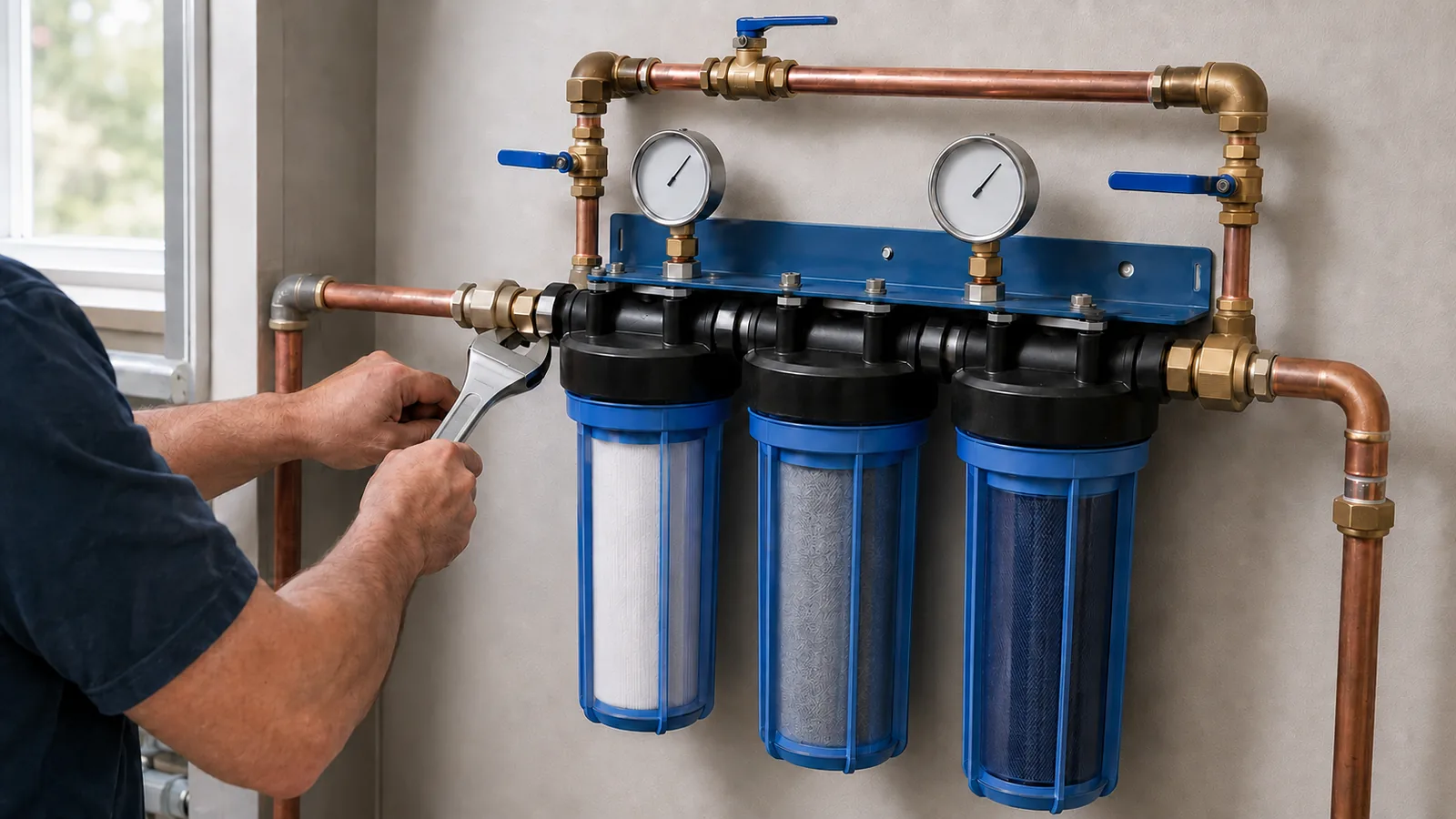
Unlike a point-of-use filter (like a countertop unit) that treats water for a single faucet, a whole-house system is installed on your main water line. This strategic placement means every tap, showerhead, and water-using appliance—from your washing machine to your ice maker—is supplied with clean, filtered water.
1. Comprehensive Purity: Clean, Filtered Water from Every Tap
The most significant benefit is the peace of mind that comes with total home protection. A whole-house system ensures that all the water your family interacts with meets a higher standard of purity.
- Safer Drinking & Cooking: Confidently drink from any tap, wash produce, and cook meals knowing that chlorine taste, sediment, and other impurities have been removed.
- Healthier Bathing: When you shower, your skin absorbs chemicals and you can inhale them in the steam. A whole-house filter provides purified water for every bath and shower.
- Total Home Solution: Eliminates the need to install and maintain multiple individual filters, offering a convenient, all-in-one solution.
2. Softer, Healthier Skin and Hair
If you struggle with dry, itchy skin or brittle hair, your water could be the culprit. Municipal water suppliers worldwide use chlorine for disinfection, a chemical that, while essential for safety, can strip the natural, protective oils from your skin and hair. A whole-house carbon filter effectively removes chlorine and its byproducts, resulting in water that is gentler on your body. This can be especially beneficial for individuals with sensitive skin or chronic conditions like eczema and psoriasis.
3. Protect Your Plumbing and Extend Appliance Lifespan
Hard water and sediment are silent destroyers of a home’s infrastructure. Over time, they lead to expensive repairs and replacements.
- Preventing Scale Buildup: Hard water, rich in minerals like calcium and magnesium, creates limescale. This chalky deposit clogs pipes, encrusts the heating elements in water heaters (forcing them to work harder and fail sooner), and damages the delicate components of dishwashers and washing machines.
- Stopping Sediment Damage: For homes on well water, fine sand, silt, and rust can clog faucet aerators, ruin appliance valves, and accumulate in water tanks. A whole-house sediment filter acts as a gatekeeper, protecting your entire plumbing network.
4. Superior Taste and Odor for Better Drinking and Cooking
One of the first things you’ll notice is a dramatic improvement in your water’s taste and smell. Whole-house carbon filters excel at removing chlorine, chloramines, and volatile organic compounds (VOCs) that give tap water an unpleasant chemical taste or a “swampy” odor. This results in water that is crisp, clean, and refreshing, which also elevates the flavor of coffee, tea, and any dish prepared with water.
5. A Shield Against Invisible Health Threats
Beyond the contaminants you can taste and see, a properly configured whole-house system protects your family from invisible dangers that can be present in both municipal and well water supplies. This includes:
- Heavy Metals: Lead can leach from old pipes, while arsenic and mercury can stem from industrial pollution or natural deposits.
- Industrial Chemicals: “Forever chemicals” like PFAS, which are increasingly found in water sources globally, can be targeted by specialized filter media.
- Pesticides & Herbicides: In agricultural areas, runoff can introduce these chemicals into the groundwater. For more on drinking water contaminants and their health effects, global bodies like the World Health Organization (WHO) provide extensive guidelines.
6. A Smart, Cost-Effective Investment for the Long Run
While the upfront cost is a consideration, a whole-house filter is a financially savvy investment.
End the Expense of Bottled Water: The recurring cost of buying bottled water adds up to a significant annual expense. A whole-house system delivers premium-quality water for a fraction of the cost per liter.
Reduce Appliance Repair Bills: By protecting your expensive appliances from scale and sediment, you extend their operational lifespan and avoid costly service calls and premature replacements.
Consolidate Filter Costs: Instead of buying and replacing multiple pitcher, faucet, and refrigerator filters, you maintain just one centralized system.
7. An Environmentally Responsible Choice
Opting for a whole-house filter is a significant step towards a more sustainable lifestyle. By providing an unlimited supply of pure, great-tasting water from every tap, you effectively eliminate your household’s need for single-use plastic water bottles—a major contributor to global plastic pollution and overflowing landfills.
Choosing the Right System for Your Home
The ideal whole-house filter depends on your water source and specific concerns.
Frequently Asked Questions (FAQs)
How much does a whole-house water filter cost?
The cost varies significantly with complexity. A basic single-stage system might cost $500 – $1,500 for the unit and professional installation. A comprehensive multi-stage system for well water can range from $2,000 to $5,000+. This investment should be weighed against the long-term savings on bottled water and appliance protection.
Can a whole-house filter make my well water safe to drink?
Yes, with the correct components. To ensure well water is microbiologically safe, your system must include a UV Purifier. The UV light neutralizes bacteria and viruses that standard filters cannot remove. It is strongly recommended to get your well water professionally tested to identify exactly which contaminants (e.g., iron, nitrates, hardness) you need to treat.
Will a whole-house filter work during a power outage?
It depends on the system. Standard media filters (sediment, carbon, softeners) are passive and operate on water pressure, so they will continue to work. However, components that require electricity, such as a UV Purifier or an RO system’s booster pump, will not function during an outage unless connected to a backup power source like a generator or battery system.
What kind of maintenance is required?
Maintenance is relatively simple. Sediment pre-filters typically need to be replaced every 3–9 months. Large carbon or media tanks may last 3–10 years before the media needs to be replaced. A water softener requires periodically adding salt to its brine tank. A UV system requires changing the lamp annually.
Does a whole-house system reduce water pressure?
A properly sized and installed system will have a negligible impact on water pressure. If a system is too small for the home’s flow rate or if filters become clogged from lack of maintenance, a drop in pressure can occur.
Conclusion: A Foundational Investment in Your Home and Well-being
A whole-house water filter is more than a luxury; it is a foundational upgrade that provides a comprehensive solution to modern water quality concerns. It is an investment in your family’s health, delivering pure water for drinking, cooking, and bathing. It is an investment in your home, protecting your plumbing and appliances from the damaging effects of sediment and scale. Finally, it is an investment in a more sustainable future, freeing your household from the environmental and financial burden of bottled water.
By purifying your water at the point of entry, you ensure that every tap in your home delivers clean, safe, and great-tasting water, providing security and peace of mind for years to come.
Related Articles
Bottom Line
Choose a whole-house system only after defining the treatment goal. Match the technology to the water problem, verify any certification claims, size the system for household flow and budget for the maintenance required to keep performance consistent.