
Hair Care Ingredients Explained: What They Do and Who Needs Them focuses on explain common surfactants, conditioners, silicones, humectants, proteins, oils and actives in plain language. The aim is to keep the useful depth of the original article while helping readers reach a current, practical decision faster.
Quick Verdict
- Best for: readers trying to understand labels before buying hair products.
- Focus on: what an ingredient does, concentration context, hair type and scalp tolerance.
- Watch for: ingredient presence alone does not prove a finished product will work for everyone.
Table of contents
Introduction
When you pick up a bottle of shampoo or conditioner, you’re greeted by a long list of ingredients that can feel like a foreign language. Each ingredient has a specific role in cleaning, moisturising or protecting your hair. Understanding what these substances do helps you choose products that suit your hair type and avoid those that may irritate your scalp or weigh your strands down. This guide condenses the science behind major hair‑care ingredients into clear explanations and provides step‑by‑step advice to build an effective routine. All facts are drawn from reputable sources—including medical centers, peer‑reviewed journals and government agencies—and each section includes citations for further reading.

1 Cleansing Agents: The Surfactants That Remove Dirt
1.1 Why surfactants matter
Surfactants are detergents that reduce the surface tension of water, allowing oil and dirt to mix and wash away. Without surfactants, water alone can’t dissolve sebum or styling product residue. The most common surfactants fall into four categories: anionic, amphoteric, non‑ionic and cationic, each with distinct properties.
Anionic detergents
Lauryl sulfates—such as sodium lauryl sulfate (SLS)—are powerful cleansers that produce abundant foam and work in both hard and soft water. They’re ideal for oily hair but can strip natural oils. Laureth sulfates (e.g., sodium laureth sulfate) are milder and suitable for normal or dry hair. Sulfosuccinates are strong detergents used sparingly to deep‑clean heavily styled or oily hairpmc.ncbi.nlm.nih.gov.
Amphoteric and non‑ionic detergents
For babies and sensitive scalps, shampoos often use amphoteric surfactants like betaines. These generate less lather but are gentle and reduce static. Non‑ionic surfactants such as glucosides provide mild cleansing and are popular in sulfate‑free shampoos.
Cationic surfactants in conditioners
Cationic surfactants carry a positive charge that allows them to bind to the negatively charged hair shaft. In conditioners, ingredients like stearalkonium chloride deposit a thin film that reduces static and improves combability. They aren’t primary cleansers but are key to smooth, silky hair.
1.2 pH balance and preservatives
Hair prefers an acidic environment. To prevent cuticle swelling and roughness, formulators add acids such as glycolic or citric acid to keep shampoos near the scalp’s pH. Preservatives—like sodium benzoate, parabens and DMDM hydantoin—protect products from microbial growth.
1.3 When to use stronger cleansers
Most people don’t need heavy detergents every day. Clarifying shampoos use stronger surfactants like lauryl sulfates to remove stubborn buildup and are typically used once a week. Oily hair shampoos also rely on stronger detergents with little or no conditioning agents. If your hair feels heavy, looks dull or resists styling, incorporate a clarifying wash, then follow up with a hydrating conditioner.
2 Conditioners: Restoring Softness and Shine
Conditioners restore lipids and proteins lost during washing. They smooth the cuticle, reduce friction and add shine. A good conditioner should leave hair soft without weighing it down.
2.1 Silicones: A controversial hero
Silicones are synthetic polymers that coat the hair shaft with a thin film. This film reduces friction, prevents moisture loss and imparts shine. Dimethicone is the most common; it makes hair feel slippery and detangles easily. Amodimethicone selectively binds to damaged areas, providing targeted conditioning. However, water‑insoluble silicones can build up over time and may require stronger shampoos for removalpmc.ncbi.nlm.nih.gov.
2.2 Natural and synthetic oils
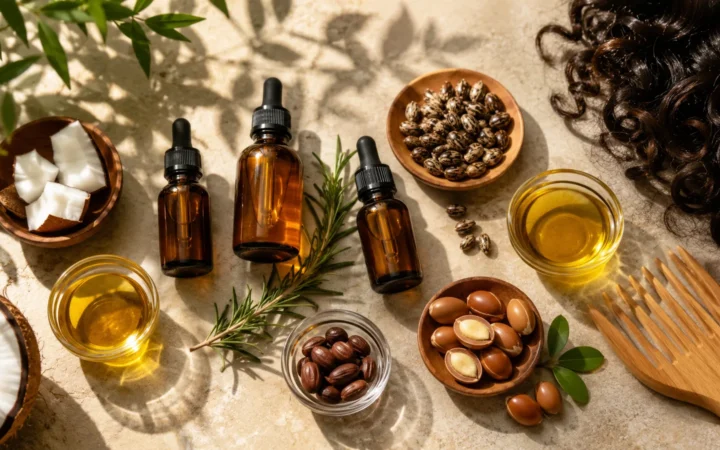
Oils act as emollients, smoothing the cuticle and sealing in moisture. Coconut oil has a low molecular weight and can penetrate the hair shaft to reduce protein loss. Oils rich in unsaturated fats—such as almond, argan and olive oil—sit mainly on the surface; they moisturise and increase elasticity but don’t penetrate as deeply. Castor oil provides antifungal and moisturizing benefits thanks to its ricinoleic acidpmc.ncbi.nlm.nih.gov. Choose lightweight oils (argan, almond) for fine hair and heavier oils (olive, castor) for coarse or very dry strands.
2.3 Humectants: Drawing in moisture
Humectants attract water from the air and underlying layers of your hair. Glycerin is a colorless humectant that pulls moisture from the environment to keep hair hydrated. It’s considered safe and non‑irritating and is especially useful for curly hair when applied to dry strandshealthline.com.
Panthenol (vitamin B5) acts as both a humectant and an emollient. Cleveland Clinic explains that panthenol draws moisture from deeper skin layers and the air while filling in dry patches to smooth the hair shaft. It strengthens brittle hair by binding to the cuticle and smoothing rough spots, making it a reliable choice for leave‑in conditioners and serums.
Other humectants, such as propylene glycol, sorbitol and hyaluronic acid, often appear alongside glycerin and panthenolhealth.clevelandclinic.org.
2.4 Proteins and amino acids: Reinforcing strength
Hair consists mainly of keratin, a fibrous protein. Adding proteins to hair care can temporarily repair damage by filling weak spots in the cuticle and cortex. Hydrolyzed keratin fragments adhere to the hair surface and increase tensile strength. Shampoos and conditioners with keratin hydrolysates make hair stronger, brighter and softer. Be cautious with keratin treatments—professional “Brazilian blowouts” use formaldehyde to seal keratin into hair and can cause respiratory irritation and other side effectsmy.clevelandclinic.org.
Other proteins, including hydrolyzed silk and wheat proteins, form films that temporarily mend split ends and restore smoothness. These are common in masks for chemically treated or heat‑damaged hair. People with fine hair should opt for lighter proteins to avoid limpness, while those with coarse or curly hair can benefit from richer formulas.
2.5 Ceramides: The lipid glue
Ceramides are lipids that act as mortar between the hair’s cuticle cells. They help retain moisture and strengthen the hair shaft. Healthline notes that ceramides in shampoos and conditioners lock nutrients in and reinforce the hair structurehealthline.com. Products containing ceramides are particularly beneficial for extremely dry or damaged hair. Look for labels like “ceramide III” or “ceramide NP.”
3 Building an Ingredient‑Focused Hair Routine
Choosing hair products isn’t just about picking the most expensive or trendy bottle—it’s about matching ingredients to your hair’s needs. Follow this step‑by‑step approach to build a routine that works for you.
3.1 Assess your hair
- Texture and thickness – Fine or straight hair tends to become oily quickly and benefits from light detergents and volumising proteins. Thick, coarse or curly hair often needs more moisture and richer oils. Understanding your texture helps you avoid products that weigh hair down or leave it too dry.
- Porosity – Conduct a quick porosity test: after washing, place a strand of hair in a glass of water. If it sinks quickly, your hair is high porosity (prone to frizz and moisture loss). Use heavy emollients like coconut or castor oil and humectants like glycerin. If it floats, your hair is low porosity; avoid heavy oils and opt for light silicones and proteins.
- Scalp condition – A healthy scalp is the foundation of healthy hair. If you have dandruff or seborrheic dermatitis, gentle surfactants and medicated shampoos containing zinc pyrithione or salicylic acid may be needed. Sensitive scalps benefit from fragrance‑free and sulfate‑free formulas.
3.2 Match ingredients to concerns
Use the table below to identify which ingredients address common hair issues:
Hair concern | Ingredients to seek | Ingredients to limit |
Dry, frizzy hair | Glycerin, panthenol, coconut/ argan/ olive oil, ceramides, amodimethicone | Strong sulfates, drying alcohols |
Oily scalp | Lauryl or sulfosuccinate detergents once or twice weekly, lightweight proteins, clarifying treatments | Heavy oils, silicones that may weigh hair down |
Breakage & damage | Hydrolyzed keratin, silk proteins, amino acids, ceramides; targeted silicones | Excessive heat styling, harsh chemical treatments |
3.3 Create a simple routine
- Cleanse appropriately: Use a mild shampoo (containing laureth sulfates or glucosides) for regular washing. If you use heavy styling products, incorporate a clarifying shampoo once a week.
- Condition smartly: Apply conditioner from the mid‑shaft to the ends. Choose formulas with humectants and oils suited to your texture. Those with dry or damaged hair should seek products containing panthenol, glycerin and ceramides.
- Deep treat weekly: Once a week, use a hair mask rich in proteins and emollients. For guidance on selecting the right mask, read How to Choose the Right Hair Mask for Your Hair Type.
- Protect and style: Use leave‑in conditioners or serums with panthenol, glycerin and light silicones to maintain moisture and protect against heat. For curly hair, seal with natural oils to define curls.
- Adjust as needed: Listen to your hair. If it becomes greasy, lighten up on oils or silicones; if it feels dry, incorporate richer humectants and emollients.
4 Real‑World Examples
Example 1: Restoring strength to bleached hair
Emma lightened her naturally dark hair to platinum blonde, leaving it brittle and prone to breakage. She switched to a sulfate‑free shampoo with gentle surfactants and added a weekly conditioner containing hydrolyzed keratin and silk proteins. Over time, her hair felt stronger and looked shinier. Studies show that keratin hydrolysates in shampoos and conditioners can improve strength and softness.
Example 2: Taming frizz in humid climates
Carlos lives in a tropical region where high humidity makes his wavy hair puff up. He found relief by using a leave‑in serum with glycerin, panthenol and amodimethicone. Glycerin and panthenol draw moisture into the hair shaft, while silicone creates a barrier that prevents excess humidity from frizzing his strands.
6 Frequently Asked Questions (FAQ)
What ingredients are best for dry hair?
Look for humectants like glycerin and panthenol to attract moisture, emollient oils such as coconut, argan or olive oil to seal the cuticle, and ceramides to reinforce the hair shaft. Avoid strong sulfates and drying alcohols.
Can I use coconut oil on fine hair?
Yes, but use it sparingly. Coconut oil penetrates the hair shaft and prevents protein loss, yet it can weigh down fine hair. Apply only a small amount to the ends or choose lighter oils like almond or argan.
Are silicone‑free products better for everyone?
Not necessarily. Silicones reduce friction, enhance shine and protect against heat. Water‑insoluble silicones can build up; people with fine hair may prefer water‑soluble silicones or silicone‑free formulas, while those with thick or frizzy hair often benefit from their smoothing effect.
Do keratin supplements strengthen hair?
There is no strong evidence that ingesting keratin supplements improves hair. Cleveland Clinic notes that while keratin is a primary component of hair, supplements haven’t been shown to strengthen hair. Topical hydrolyzed keratin, however, can improve hair strength and shine.
How often should I use a deep‑conditioning mask?
Once a week is sufficient for most hair types. If your hair is extremely dry or damaged, you may benefit from twice‑weekly treatments. Rotating between protein‑rich masks and moisture‑rich masks can address both strength and hydration.
Conclusion
Understanding hair‑care ingredients empowers you to make better choices. Surfactants cleanse, but selecting the right type (lauryl, laureth, amphoteric or non‑ionic) helps avoid stripping natural oils. Conditioners rely on silicones, oils, humectants, proteins and ceramides to restore softness and strength. By assessing your hair’s texture, porosity and scalp condition, you can match ingredients to your needs and build a routine that delivers results. For more science‑backed hair tips and product recommendations, explore the hair‑care section on Freditech, including articles like 10 Expert Hair Care Tips to Transform Hair Health & Shine in 2025.
Author:
Wiredu Fred is a certified beauty and health writer who specialises in hair science. He consults dermatologists and reviews peer‑reviewed studies to translate cosmetic chemistry into actionable advice. Fred contributes regularly to Freditech and strives to make evidence‑based hair care accessible to readers worldwide.
Bottom Line
Hair care works best when the routine matches the hair and scalp rather than chasing one miracle ingredient. Ingredient presence alone does not prove a finished product will work for everyone. Consistent gentle care is more useful than aggressive fixes that increase breakage or irritation.