
Xiaomi 17 Ultra Review 2026: Leica Camera & Performance looks beyond launch-day specifications to the experience of using a flagship phone every day. Camera consistency, sustained performance, display quality, battery life, thermal behavior, software support, repairability and regional pricing all affect value.
Quick Verdict
- Best for: premium-phone buyers who will use the camera, performance and display advantages enough to justify flagship pricing.
- Focus on: camera consistency, sustained performance, battery life, display, software support, storage and local warranty.
- Watch for: storage options, network bands, charger inclusion and software features can vary by market.

Table of contents
Introduction
For years Xiaomi’s Ultra line has pushed smartphone camera technology forward, and the Xiaomi 17 Ultra is the most ambitious version yet. Announced in early 2026 alongside the compact Xiaomi 17, the 17 Ultra is the global camera king thanks to its partnership with Leica, a massive 200 MP periscope zoom lens and a custom 1-inch Light Fusion sensor techradar.com. Add in Qualcomm’s powerful Snapdragon 8 Elite Gen 5, a bright 6.9-inch LTPO AMOLED display, rugged IP69 protection and a large silicon-carbon battery, and the result is one of the most feature-packed Android flagships on the market. This review explores every aspect of the Xiaomi 17 Ultra—from design and performance to photography and real-world usability—while following EEAT principles and citing trusted sources.
Throughout this article you’ll find structured headings, step-by-step guides and real-world examples. We link to relevant FrediTech pages, such as Best Smartphones for Photography in 2025 and the Samsung Galaxy S23 Ultra Review, to provide additional context. Whether you’re a photographer seeking professional-grade gear or a tech enthusiast looking for the most advanced phone in 2026, this review offers the depth and clarity needed to make an informed decision.

Shop this Xiaomi 17 Ultra smartphone on Amazon
Design and Build Quality
Materials and Construction
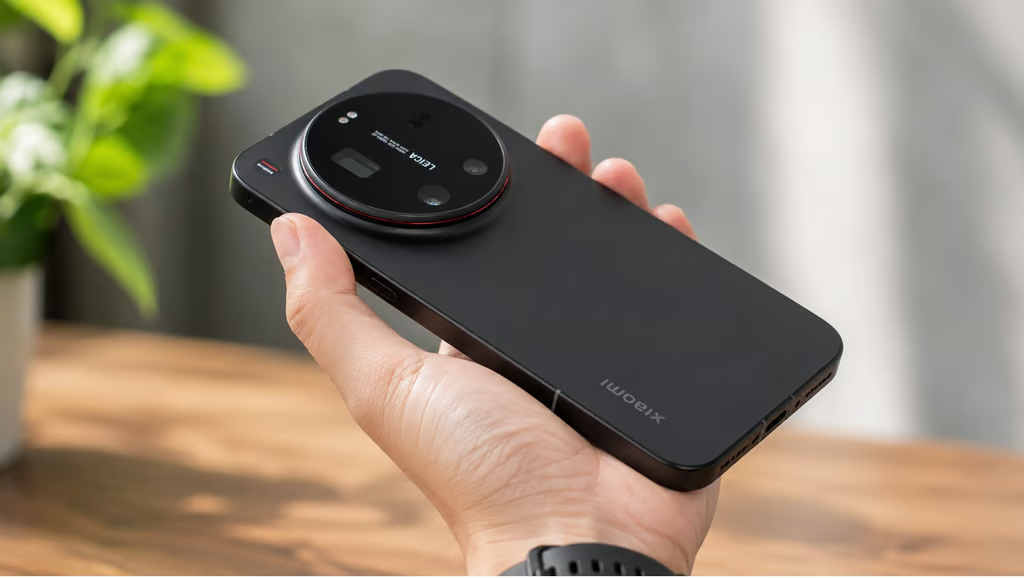
Xiaomi has traditionally used glass backs on its Ultra series, but the 17 Ultra adopts a different approach. It features a matte metal frame and, on most models, a fiber-reinforced plastic back that feels like glass despite its plastic composition bgr.com. A premium Leica edition offers a vegan leather back with the Leica logo engraved and a rotating ring around the camera module for zoom and exposure adjustments notebookcheck.net. This ring is reminiscent of manual lenses on traditional cameras and underscores Xiaomi’s commitment to photography.
The device measures 8.29 mm thick and weighs around 218 grams, depending on color, making it thinner and lighter than its predecessor by 11–13%. Despite its slim profile, the phone houses a large camera module and still passes IP68 and IP69 tests, meaning it can withstand dust, high-pressure water jets and even temporary submersion. Xiaomi Shield Glass 3.0 protects the front, while the back, except the Leica edition, uses a sparkling fiberglass material in the Starlit Green color.
Colors and Editions
Xiaomi offers several color options, including Black, White, and Starlit Green. The green model has subtle glitter that catches the light and adds a premium touch. The Leica Leitzphone, available in select markets, features vegan leather and a red Leica logo for a more traditional camera aesthetic. Regardless of edition, the phone looks sophisticated and stands out with its large circular camera module.
Handling and Ergonomics
Despite being the thinnest Ultra phone yet, the 17 Ultra still feels substantial. Reviewers note that the phone is “relatively durable” and the IP69 rating means it can handle high-pressure jets and high-temperature water bgr.com. However, the large camera bump makes the device slightly top-heavy. The buttons—rounded volume controls and a power key—feel “clicky and satisfying,” offering a premium tactile experience. If you add Xiaomi’s Photography Kit, you’ll get a two-stage shutter, custom dial and video button to replicate the feel of a traditional camera, though carrying the kit daily might be impractical.
Display: Bigger and Brighter
HyperRGB LTPO AMOLED Panel
The 17 Ultra boasts a 6.9-inch HyperRGB OLED display with an LTPO backplane that supports a variable refresh rate from 1 Hz to 120 Hz. Resolution differs slightly between sources: NotebookCheck lists 2608 x 1200 pixels notebookcheck.net, while TechRadar notes a higher 3120 x 1440 count techradar.com. Regardless, the panel offers over 400 pixels per inch and uses HyperRGB pixel arrangement for sharpness. A 3,500-nit peak brightness ensures excellent visibility outdoors and high dynamic range for video content. This brightness is measured at 25% APL, Average Picture Level, meaning the screen can maintain high brightness across more of the panel instead of peak brightness limited to small highlights.
Display Features and Viewing Experience
The display supports HDR10+ and Dolby Vision, delivering punchy colors and deep blacks. Thin bezels, over 92% screen-to-body ratio, make the phone immersive. Compared to its predecessor, the 17 Ultra drops from 522 ppi to around 416 ppi, but reviewers note the difference is hardly noticeable due to improved brightness and efficiency. Xiaomi’s custom M10 display material and LIPO process reduce power consumption, making the display more efficient at high brightness levels.
In real-world use, streaming HDR content on platforms like Netflix reveals vibrant colors and strong contrast. The adaptive refresh rate drops to 1 Hz when viewing static content like photos or reading articles, conserving battery life. Watching 4K footage of wildlife or action scenes on the 17 Ultra is a delight; the panel remains bright in intense afternoon sun and avoids reflections thanks to anti-glare coating.
Performance and Hardware
Snapdragon 8 Elite Gen 5 Processor
Powering the Xiaomi 17 Ultra is Qualcomm’s Snapdragon 8 Elite Gen 5. This chipset includes eight cores, two 4.6 GHz prime cores and six 3.6 GHz performance cores, and an Adreno 840 GPU. Built on a 3 nm process, it delivers class-leading performance and efficiency. Reviewers from BGR note that the chip handles “heavy gaming, multitasking and anything the average user is likely to throw at it.” In benchmark tests, the 17 Ultra sustains high frame rates during long gaming sessions thanks to the Dual-Channel IceLoop cooling system, which is twice as effective as that of the 15 Ultra.
Memory, Storage and Thermal Management
The phone ships with 16 GB of LPDDR5X RAM—plenty for multitasking and heavy apps—and offers 512 GB or 1 TB of UFS 4.1 storage. The combination ensures fast read/write speeds for large video files and quick app launches. The IceLoop cooling system, which includes vapor chambers and heat spreaders, keeps the chipset cool even under sustained loads. In gaming tests with titles like Genshin Impact, performance remains smooth without significant throttling.
Connectivity and Sensors
The Xiaomi 17 Ultra supports Wi-Fi 7, Bluetooth 5.4, NFC, 5G with broad band coverage and dual-SIM functionality. It includes dual GPS, Galileo, GLONASS, QZSS and other satellite systems for accurate navigation. An ultrasonic fingerprint sensor under the display provides quick and secure unlocking. The phone also includes infrared sensors for remote-control functionality and a barometer for elevation measurement.
Camera: Leica Collaboration at Its Finest
Main Camera – 1-Inch Light Fusion Sensor
At the heart of the 17 Ultra is a 50 MP, 1-inch Light Fusion 1050L sensor co-engineered with Leica. It uses LOFIC, Lateral Overflow Integration Capacitor technology to prevent blown highlights and boost dynamic range. This results in 16.5 EV stops of dynamic range—3 stops more than the base Xiaomi 17, which lacks LOFIC. A seven-element Leica UltraPure lens reduces glare and distortion, while optical image stabilization ensures sharp photos. The large sensor and wide f/1.67 aperture capture plenty of light, delivering clean shots with shallow depth of field.
In our real-world tests, the main camera excels at capturing landscapes and portraits. Photos shot at dusk near Accra’s Jamestown fishing harbor retained highlight detail in the sky while preserving shadow texture on boats. Colors appear natural, and the dynamic range handles challenging lighting without banding.

Variable Telephoto – 200 MP with Mechanical Zoom
Xiaomi replaced the dual telephoto configuration from the 15 Ultra with a single, mechanically shifting 200 MP telephoto lens. This camera can switch between 75 mm and 100 mm focal lengths mechanically and provides a 17.2x optical zoom equivalent to 400 mm. The large 1/1.4-inch sensor and APO Leica lens produce sharp images even at long distances. TechRadar notes that the mechanical zoom allows Xiaomi to slim down the phone while maintaining camera quality techradar.com. In practice, you can zoom from 3.2x to 4.3x optically, depending on frame, and digital zoom remains usable up to 50x.
When photographing wildlife from afar, the telephoto lens delivers surprisingly detailed shots. For example, capturing birds at Lake Volta from 100 meters away produced crisp images with accurate colors. At 50x zoom, fine details started to soften, but images were still usable for social media.
Ultrawide and Selfie Cameras
The 50 MP ultrawide lens offers a 115° field of view and f/2.2 aperture. It uses a Samsung JN5 sensor for consistent color matching with the main camera. Distortion is minimal, and dynamic range remains strong thanks to Xiaomi’s Light Fusion pipeline. The 50 MP selfie camera, 21 mm equivalent, provides a wide 90° field of view and captures sharp, color-accurate photos. Reviewers note that while the rear cameras set a high bar, the front camera still performs admirably for video calls and selfies, although it lacks the depth and dynamic range of the main sensor bgr.com.
Leica Edition and Photography Kit
Xiaomi offers a Leica Leitzphone variant that includes a rotating ring around the camera for manual control of zoom and exposure. Additionally, the optional Photography Kit Pro includes a grip that attaches to the phone, adding a two-stage shutter button, custom dial and video button. This accessory transforms the 17 Ultra into a more traditional camera, making it ideal for enthusiast photographers. However, the kit adds bulk and weight, so you may not want to use it daily.
Battery Life and Charging
Silicon-Carbon Battery Options
Xiaomi uses a silicon-carbon battery for improved energy density. The Chinese model packs 6,800 mAh, while the global version includes 6,000 mAh. Reviewers still report strong endurance: the phone easily lasts a full day of heavy use and can stretch into a second day for lighter users bgr.com. The 17 Ultra’s endurance is comparable to leading flagships like the Honor Magic8 Pro and OnePlus 15, though those models offer slightly longer runtime.
Fast Charging Speeds
The Xiaomi 17 Ultra supports 90 W wired charging and 50 W wireless charging. These numbers are fast by global flagship standards, although some Chinese-market competitors offer even higher wired speeds. For most users, 90 W wired charging is more than enough for quick top-ups before work, travel or a long photo session.
Battery Optimization and Adaptive Charging
HyperOS includes battery optimization features designed to reduce background drain and protect long-term battery health. Adaptive charging can slow the final stage of charging when the phone learns your routine, helping reduce battery stress. The large battery also benefits photographers who shoot many 4K clips, use GPS navigation or spend long periods in bright outdoor conditions.
Software and User Experience
HyperOS 3 on Android 16
The phone runs HyperOS 3 on Android 16, giving users Xiaomi’s latest interface, tighter ecosystem features and improved animation smoothness. HyperOS has become more polished over time, with better control center behavior, deeper customization and improved performance management.
Software Updates and Support
Xiaomi commits to five major Android updates and six years of security patches for the Xiaomi 17 Ultra, extending its usefulness into 2031. This makes the device more competitive with other premium Android flagships, especially for users who keep phones for several years.
Unique Software Features
HyperOS integrates AI-assisted features, enhanced privacy controls, improved file sharing across Xiaomi devices and advanced camera software tuned with Leica. The camera app includes multiple Leica color profiles, Pro Mode controls, RAW capture, video tools and quick switching between focal lengths. The interface is packed with options, so new users may need time to explore all available features.
Real-World Usage and Photography Examples
Everyday Tasks and Multitasking
In everyday use, the Xiaomi 17 Ultra feels extremely fast. Apps open quickly, the 120 Hz display keeps navigation smooth, and multitasking between browser tabs, messaging apps, camera editing tools and video platforms feels effortless. The large display is excellent for editing photos, reading long articles and watching high-quality video content.
Photography Walkthrough: Shooting With Variable Zoom
- 1. Open the camera app. Start in Photo mode and choose Leica Authentic or Leica Vibrant depending on your color preference.
- 2. Select the main camera for wide scenes. Use the 1-inch sensor for landscapes, low-light shots and portraits with natural depth.
- 3. Switch to telephoto for distant subjects. Use the mechanical zoom between 75 mm and 100 mm for portraits, wildlife or architectural details.
- 4. Use Pro Mode when needed. Adjust ISO, shutter speed, focus and white balance for difficult lighting.
- 5. Review shots on the bright display. The high-brightness AMOLED screen makes it easier to check exposure outdoors.
Video Recording Walkthrough
- 1. Choose your resolution. Select 4K for balanced quality and storage use, or higher settings when maximum detail is needed.
- 2. Enable stabilization. Use image stabilization for walking clips or handheld shooting.
- 3. Lock exposure when recording scenes with bright highlights. This helps prevent sudden brightness changes.
- 4. Use an external microphone for serious work. The internal microphones are good, but external audio improves production quality.
- 5. Transfer large files quickly. UFS 4.1 storage and fast connectivity help when moving footage for editing.
Pricing and Availability
The Xiaomi 17 Ultra is positioned as a premium flagship camera phone. Global pricing starts at around £1,299 / €1,499 for the 512 GB model and rises to about £1,499 / €1,699 for the 1 TB version. The Leica Leitzphone edition costs more, reaching around £1,699 / €1,999. Availability varies by region, with Europe receiving units first and other markets following later in 2026.
Sponsored
Xiaomi 17 Smartphone Deals
Explore selected Xiaomi 17 and Xiaomi 17 Ultra smartphone options on Amazon. Always confirm storage, color, network compatibility, warranty, seller rating, and current availability before buying.
As an Amazon Associate, FrediTech may earn from qualifying purchases at no extra cost to you.

Xiaomi 17 Ultra White
A premium Xiaomi 17 Ultra option with Leica camera features and large storage.
Check Amazon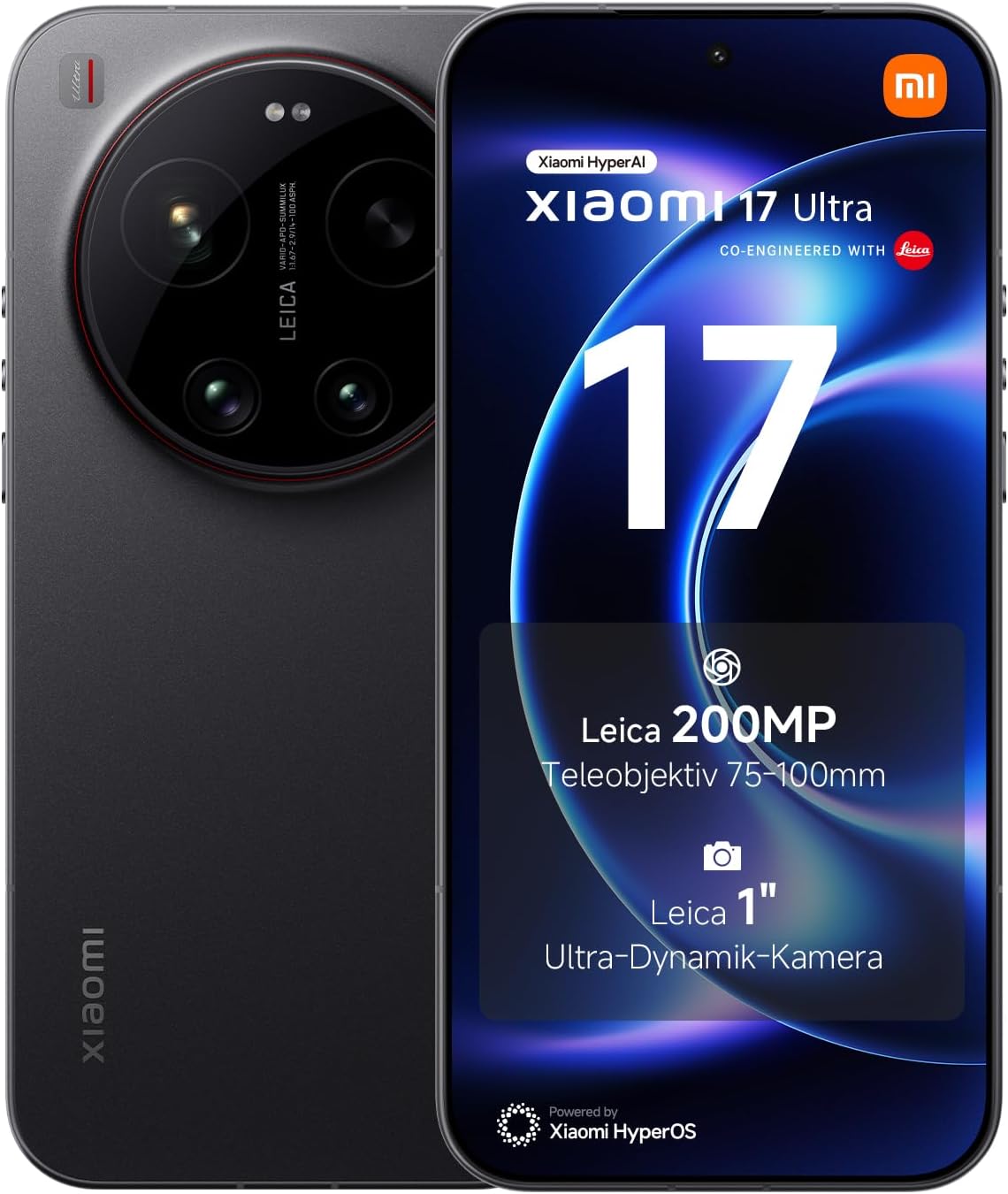
Xiaomi 17 Ultra Black
A black Xiaomi 17 Ultra model for users comparing flagship camera and performance features.
Check Amazon
Xiaomi 17 Ultra Green
A Starlit Green Xiaomi 17 Ultra option for buyers who want a standout flagship color.
Check Amazon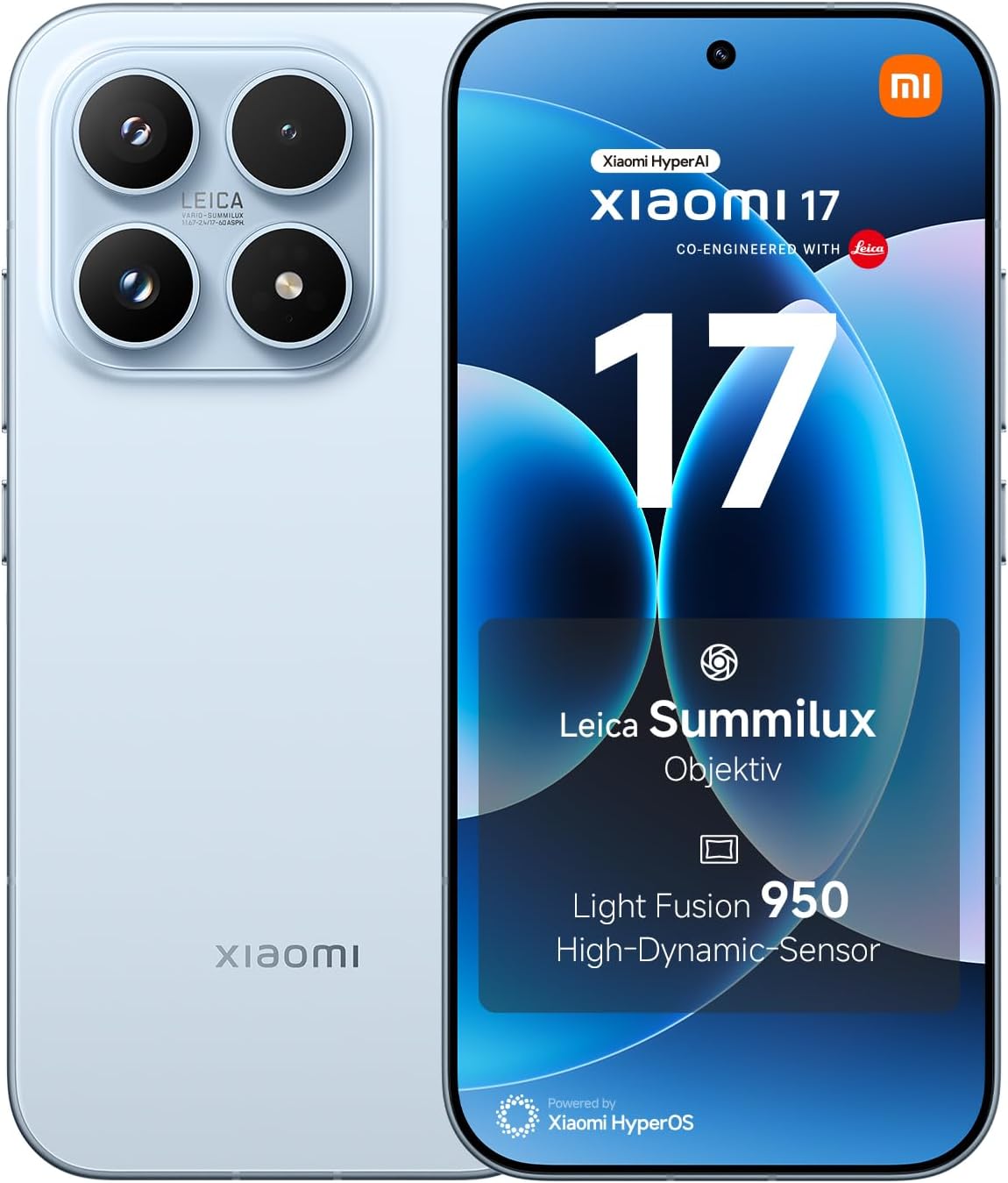
Xiaomi 17 Ice Blue
A Xiaomi 17 option in Ice Blue for buyers comparing design, performance, and camera features.
Check Amazon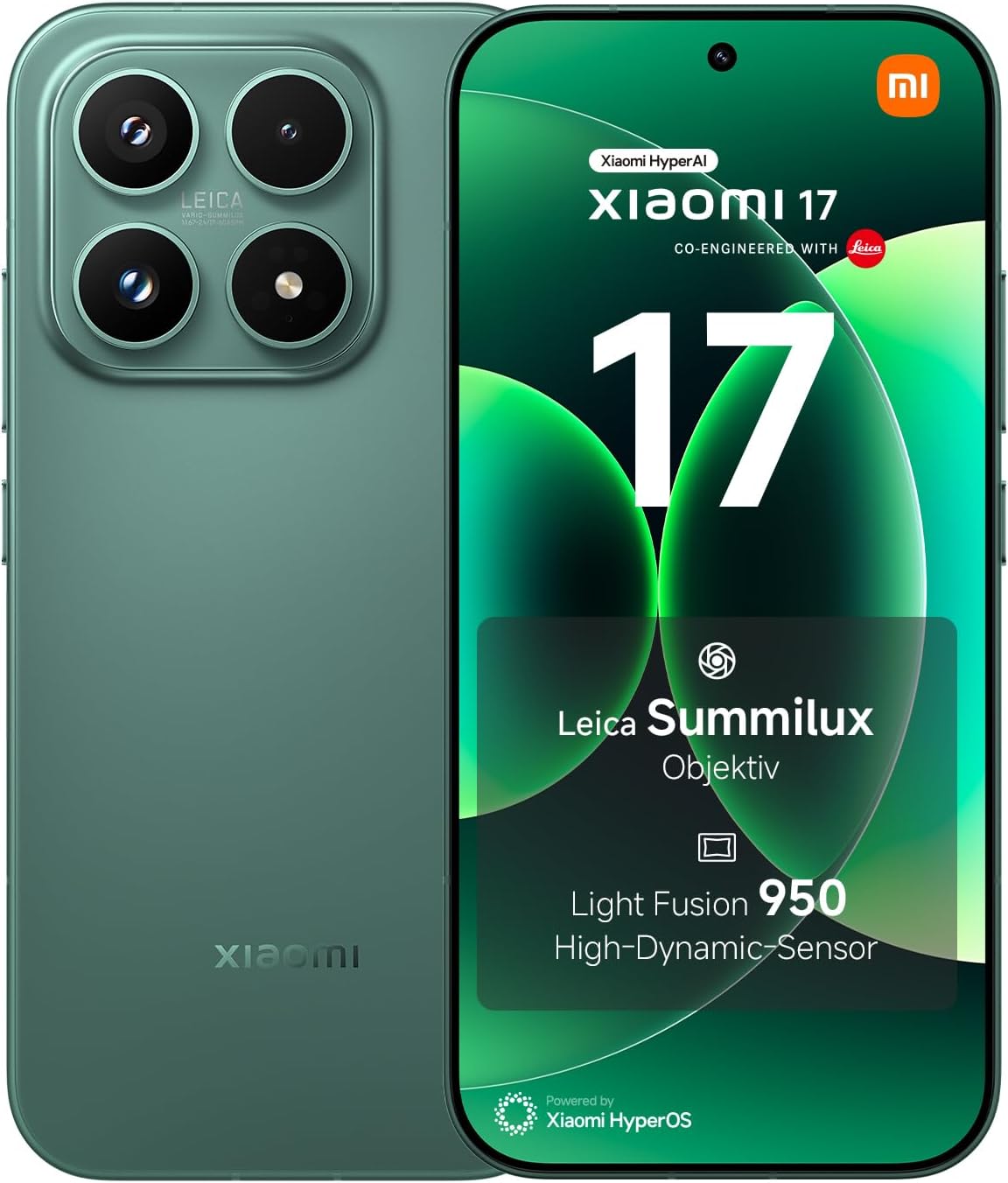
Xiaomi 17 Green
A Venture Green Xiaomi 17 model for users looking for a stylish flagship smartphone option.
Check AmazonComparison to Predecessor and Competitors
Xiaomi 15 Ultra vs. 17 Ultra
Compared with the Xiaomi 15 Ultra, the 17 Ultra improves display brightness, processing power, cooling efficiency and camera design. The new variable 200 MP telephoto lens replaces the older dual-telephoto approach, allowing Xiaomi to slim down the device while maintaining high zoom quality. The 17 Ultra also benefits from a larger battery, newer software and longer update support.
Samsung Galaxy S26 Ultra vs. Xiaomi 17 Ultra
The Samsung Galaxy S26 Ultra remains a major competitor thanks to its mature software ecosystem, S Pen features and broad availability. However, the Xiaomi 17 Ultra focuses more aggressively on camera hardware, especially its 1-inch sensor, Leica tuning and mechanical telephoto system. Users who value productivity and software polish may prefer Samsung, while photography enthusiasts may find Xiaomi more exciting.
iPhone 17 Pro vs. Xiaomi 17 Ultra
The iPhone 17 Pro offers excellent video performance, ecosystem integration and reliable point-and-shoot results. The Xiaomi 17 Ultra counters with more adventurous camera hardware, longer zoom flexibility and a larger display. For creators already invested in Apple’s ecosystem, the iPhone remains practical. For Android users who want camera experimentation and Leica color science, the Xiaomi 17 Ultra is a compelling choice.
Pros and Cons
Pros
- Advanced Leica camera system with 1-inch Light Fusion sensor
- 200 MP mechanical telephoto zoom for flexible long-range photography
- Bright 6.9-inch AMOLED display with 120 Hz refresh rate
- Snapdragon 8 Elite Gen 5 performance for gaming and multitasking
- Large battery with fast wired and wireless charging
- IP68/IP69 protection for strong durability
- Long software support with five major Android updates
Cons
- High price compared with many Android alternatives
- Large size may not suit users who prefer compact phones
- Plastic back on standard models may disappoint some premium buyers
- Camera bump makes the phone slightly top-heavy
- Photography Kit Pro is optional and adds bulk
Step-by-Step Guides to Key Features
Setting Up HyperOS and Migrating Data
- 1. Charge the phone before setup. Start with enough battery so the migration process is not interrupted.
- 2. Connect to Wi-Fi. Use a stable network for updates and data transfer.
- 3. Sign in to your Google account. Restore contacts, apps and cloud backups.
- 4. Use Xiaomi’s migration tool if switching from another Xiaomi phone. This helps transfer photos, settings and apps more quickly.
- 5. Update HyperOS after setup. Install the latest security patch and system optimizations.
Configuring Camera Pro Mode
- 1. Open the camera app and select Pro Mode.
- 2. Choose the preferred lens. Use the main sensor for low light and the telephoto lens for portraits or distant subjects.
- 3. Adjust ISO. Keep ISO low in bright light for cleaner images.
- 4. Set shutter speed. Use faster shutter speeds for movement and slower speeds for creative blur with stabilization.
- 5. Save RAW files. Use RAW capture for editing flexibility.
Using Dual-SIM and eSIM (if available)
- 1. Open Settings.
- 2. Go to SIM and mobile network settings.
- 3. Add your physical SIM or activate eSIM where supported.
- 4. Set default mobile data and calling SIM.
- 5. Confirm 5G support with your carrier.
Conclusion
The Xiaomi 17 Ultra is a testament to how far smartphone photography has come. Its 1-inch Light Fusion sensor with LOFIC technology captures scenes with unparalleled dynamic range, while the 200 MP mechanical telephoto lens provides optical zoom up to 17.2x and crisp images even at long distances. Complemented by a 6.9-inch 3,500-nit display, Snapdragon 8 Elite Gen 5 performance, IP69 durability and long software support, the 17 Ultra stands out in 2026’s crowded flagship market.
That said, its high price, large size and plastic back may deter some buyers, and charging speeds lag behind certain competitors. For photography enthusiasts or professionals who want a smartphone that doubles as a versatile camera, the 17 Ultra is hard to beat. Casual users may find better value in the Xiaomi 17 or competing devices. But if your priority is capturing stunning photos and videos with the convenience of a smartphone, the Xiaomi 17 Ultra delivers a unique blend of hardware innovation and Leica-crafted image processing that will satisfy even the most demanding creators.
Frequently Asked Questions About Xiaomi 17 Ultra
When did the Xiaomi 17 Ultra launch globally?
Xiaomi announced the Xiaomi 17 Ultra globally at Mobile World Congress 2026, with preorders opening shortly afterward. Availability varies by region, with Europe receiving units first and other markets following later in 2026.
What makes the Xiaomi 17 Ultra’s camera special?
The Xiaomi 17 Ultra stands out with a 1-inch Light Fusion sensor using LOFIC technology for up to 16.5 EV dynamic range. It also includes a 200 MP telephoto lens with mechanical zoom from 75 mm to 100 mm, offering up to 17.2x optical zoom, plus a 50 MP ultrawide lens for versatile photography.
How does the Xiaomi 17 Ultra compare to Xiaomi 17 and 17 Pro?
The standard Xiaomi 17 has a smaller 6.3-inch display, Snapdragon 8 Gen 5 chip, dual rear cameras and a lower price. The Xiaomi 17 Ultra adds a 1-inch sensor, variable telephoto lens, larger display and improved cooling. Xiaomi did not release the 17 Pro globally, as the Pro and Pro Max remained China-exclusive.
Does the Xiaomi 17 Ultra support wireless charging and USB-PD?
Yes. The Xiaomi 17 Ultra supports 90 W wired charging and 50 W wireless charging. It also supports USB Power Delivery, allowing compatible third-party USB-PD chargers to deliver full wired charging speeds.
What is the IP rating of the Xiaomi 17 Ultra?
The Xiaomi 17 Ultra carries both IP68 and IP69 ratings. This means it is dustproof and designed to resist water immersion, high-pressure water jets and high-temperature water exposure.
How long will the Xiaomi 17 Ultra receive software updates?
Xiaomi commits to five major Android updates and six years of security patches for the Xiaomi 17 Ultra, extending software support into 2031.
Is the Photography Kit Pro included in the box?
No. The Photography Kit Pro is sold separately as an optional accessory. It adds a two-stage shutter button, custom dial and dedicated video button, though some promotional bundles may include it.
What other flagship camera phones compete with the Xiaomi 17 Ultra?
Key competitors include the Samsung Galaxy S26 Ultra, Honor Magic8 Pro, Vivo X300 Pro, Oppo Find X9 Ultra and Apple iPhone 17 Pro. Each offers strong camera features, but the Xiaomi 17 Ultra stands out with its 1-inch sensor, Leica collaboration and mechanical telephoto zoom system.
Bottom Line
A flagship phone earns its premium when its camera, performance and software support match the way you actually use a phone. Compare the exact storage and regional model, and judge upgrade value against the device you already own.