
Confirmed crowdfunding campaign · Unverified performance claims Indiegogo campaign launched 27 August 2026 · Research checked 28 August 2026
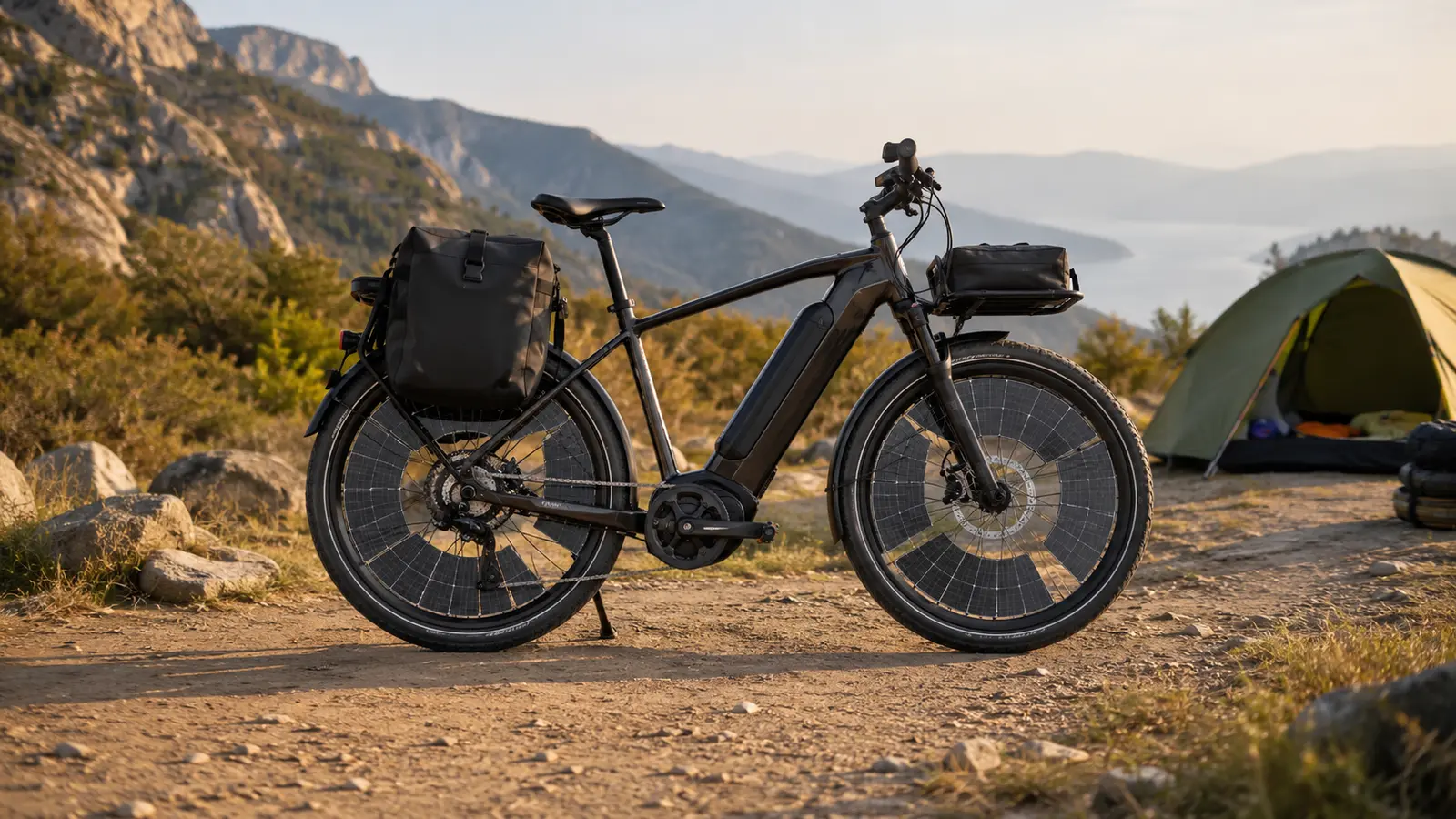
PHOSGO’s Go5 campaign starts at a $1,899 Super Early Bird pledge and advertises up to 200W of wheel-integrated solar generation, 150Nm from a mid-drive motor and as much as 140 miles of combined riding. None of those performance claims has been independently verified, and an Indiegogo pledge does not offer the same certainty as buying a finished certified e-bike from a retailer.
Do not back the Go5 solely for the “solar” or “140-mile” headline. The concept is interesting, but wheel-mounted panels face orientation, shading, dirt and impact challenges. Back only if you can absorb delay or non-delivery, after PHOSGO publishes credible certification, battery, solar-controller, warranty and production evidence.
PHOSGO Go5 price and what a pledge means
The PHOSGO Go5 series launched on Indiegogo on 27 August 2026. Super Early Bird pledges start at $1,899, with shipping eligibility dependent on the backer’s country and campaign tier. This is a new campaign, so the advertised amount is not a reduction from a proven retail selling price.
A crowdfunding pledge supports a project; it is not the same as an ordinary store purchase. Product design, schedule and specifications can change. Delivery can be late or fail, and chargeback, return and warranty rights may be weaker. Read the platform terms and campaign refund policy before committing.
| Claim | Campaign figure | Evidence status |
|---|---|---|
| Early pledge | From $1,899 | Live campaign tier; availability can change |
| Solar generation | Up to 200W | Manufacturer claim, not independently validated |
| Motor torque | Up to 150Nm | Manufacturer claim; test method undisclosed |
| Combined riding | Up to 140 miles | Manufacturer claim; conditions and standard unclear |
| Retail delivery | Campaign dependent | Normal retail stock not established |
A novelty claim is not evidence of production quality, certification or support. The more unusual the engineering, the more important replacement parts and test documentation become.
Can wheel-integrated solar panels deliver 200W?
Two hundred watts is a peak power claim, likely requiring strong direct sunlight and an optimal configuration. If a system genuinely averaged 200W for five peak-sun hours, the theoretical gross energy would be 1kWh before controller, wiring, battery and temperature losses. Real wheel integration makes that ideal difficult.
Panels in wheels rotate, change angle, pass through the bike’s shadow and can be partly blocked by frame, bags, mudguards or terrain. Urban buildings, trees and cloud reduce irradiance. Dirt and road spray can cover cells. Curved or segmented panel geometry may also change efficiency relative to a flat panel aimed at the sun.
Questions the campaign should answer
- Is 200W a laboratory peak, combined panel rating or measured battery input?
- What output was recorded over a full day in several climates?
- How does power pass from rotating wheels to the stationary electrical system?
- What happens when one segment is shaded or damaged?
- How much unsprung weight do the panels and hardware add?
- Can a local bike shop replace a spoke, rim, tire or solar module?
Solar can still be useful even below peak. A few hundred watt-hours while parked could extend a ride or maintain the battery. Buyers need measured energy—not only panel wattage—to understand the benefit.
The 140-mile combined range claim
E-bike range varies with battery capacity, assist level, rider mass, speed, hills, tire pressure, wind, temperature, cargo and motor efficiency. PHOSGO’s “up to 140 miles” combines stored battery energy and solar contribution under unspecified conditions. It should not be treated as a repeatable trip range.
Solar gained during a ride is limited by time. A fast 30-mile journey may finish before the panels collect much energy; a multi-day tour with long sunny stops could gain more. Ask for battery watt-hours, tested route, elevation, rider mass, assist mode and average speed.
Best solar scenario
Sunny multi-day travel, outdoor parking, low assist and time for the bike to collect energy between rides.
Worst solar scenario
Cloudy commuting, indoor storage, high assist, steep hills and shaded city streets.
A normal outlet remains faster and more predictable. Solar should be considered an extender or resilience feature, not permission to travel without a charging plan.
150Nm motor claim and local e-bike law
A claimed 150Nm mid-drive output is high and could help with cargo or steep climbs. Torque figures are not always measured at the same point or under the same conditions, so cross-brand comparisons can mislead. Sustained power, controller tuning, heat and gearing determine hill performance.
Legal classification depends on motor power, assisted speed, throttle behavior and country. A bike that exceeds local e-bike limits may require registration, insurance, a license, helmet or road restrictions. The campaign must identify region-specific motors and firmware rather than shipping one configuration worldwide.
Safety certifications to verify
- Complete electrical-system certification such as UL 2849 where relevant.
- Battery certification such as UL 2271 and transport test documentation.
- Applicable EN 15194/CE or national e-bike compliance for Europe.
- Charger certification and correct local plug.
- Water-ingress and thermal-protection test results.
- Brake, frame and wheel testing appropriate to total mass and speed.
Crowdfunding due-diligence checklist
- Prototype evidence: look for unedited rides, charging data and production-intent hardware.
- Manufacturing history: verify previous products were delivered and supported.
- Certification status: distinguish “planned” or “submitted” from completed.
- Battery details: cell supplier, usable Wh, BMS protections and replacement price.
- Shipping: tax, duty, dangerous-goods fees and last-mile delivery.
- Service: parts catalog, manuals, local shop compatibility and response times.
- Warranty: battery capacity threshold, motor, frame and solar-module coverage.
- Refund reality: understand when funds become committed and what happens after delay.
Search for independent company registration, team history and factory evidence. Rendered videos and sponsored demonstrations can show intent but not repeatable production. A finished retail competitor with lower specifications may be the safer long-term purchase if it has local support.
Alternatives to a solar-wheel e-bike
A proven touring e-bike plus a portable folding solar panel avoids adding complexity to rotating wheels. The panel can be aimed at the sun while the bike is parked and replaced separately. A second certified battery provides more predictable range, though airlines and shipping rules make transport difficult.
For daily commuting, a conventional e-bike with a removable battery and local dealer network is usually easier to charge and repair. Solar matters most when grid access is limited and the rider accepts slower, weather-dependent collection.
Engineering failure modes to investigate
Wheel-mounted energy collection introduces rotating electrical connections, vibration and repeated impacts. The campaign should explain slip rings or other power-transfer hardware, sealing, bearing life and what happens after a wheel is bent. A system that works on a demonstration ride must survive potholes, curb strikes and thousands of wet rotations.
Solar segments may create aerodynamic drag or crosswind effects, and extra wheel mass can change acceleration and suspension response. Independent handling tests should cover emergency braking, high-speed descents and gusty conditions. Panel edges must not create sharp hazards after damage.
Battery and fire-safety questions
The battery is the most consequential component. Backers need cell manufacturer, nominal and usable watt-hours, pack voltage, BMS protections, enclosure rating and certification reports. A large torque motor can demand high current, making thermal design important on long climbs.
Charging from solar and wall power needs safe arbitration. Ask whether both inputs can operate together, how the controller prevents overcharge and whether the charger is supported locally. Do not store or charge a damaged pack indoors.
Delivery-day inspection if the bike ships
- Photograph the carton and any damage before assembly.
- Confirm frame, battery and charger serial numbers.
- Have critical assembly and torque checked by a qualified shop.
- Verify brakes, wheel security, steering and tire pressure before power use.
- Install firmware only through an official app or documented process.
- Test at low assist in a controlled area.
- Measure solar input and battery range separately.
Do not begin with a remote expedition. Build confidence near home and identify local shops willing to service the mechanical parts. Specialized solar wheels may need manufacturer parts even when drivetrain components are standard.
Five-year ownership questions
Solar benefits accumulate over time only if the panels, controller and battery remain serviceable. Ask for replacement prices, wiring diagrams, diagnostic tools and how long firmware servers will operate. A beautiful proprietary wheel can become a liability if one failed module strands an otherwise functional bicycle.
Resale value will depend on transferable warranty and battery health. Buyers of a used campaign bike may be cautious without certification and parts. The initial $1,899 pledge is only the beginning of the cost calculation.
How FrediTech would independently test the claims
Solar testing should log irradiance, panel power, controller output and battery energy over fixed parked and riding periods. Range testing should use a measured route, rider mass, assist mode, speed, elevation and weather. Torque should be assessed alongside sustained climbing temperature and electrical power.
Publishing raw data would let readers separate peak sunlight from daily energy and battery-only range from solar contribution. Until those results exist, “up to” figures remain hypotheses.
Should you back PHOSGO Go5?
Consider only if…
- You understand crowdfunding can fail.
- You value experimental solar engineering.
- You can absorb $1,899 without a guaranteed delivery date.
- Required certification and shipping are confirmed for your country.
Wait for retail if…
- You need dependable transport.
- You require local service and replacement parts.
- The 140-mile claim is the main reason you are interested.
- You cannot verify battery and electrical safety evidence.
The Go5 has a visually compelling concept and ambitious engineering claims, but the evidence is not mature enough for a normal buying recommendation. A campaign pledge transfers substantial execution risk to the backer. Wait for certified hardware, measured daily solar energy, real-world range and delivered customer units.
Questions potential backers are asking
Is $1,899 the final retail price?
No. It is a Super Early Bird crowdfunding pledge tier. Shipping, tax, duty, accessories and later retail pricing can differ.
Will the solar wheels produce 200W all day?
No such result is independently established. “Up to 200W” is a peak manufacturer claim; shade, angle, rotation, heat and dirt reduce real output.
Does 140 miles mean one guaranteed charge?
No. It is an unverified “up to” combined riding claim involving battery and solar under undisclosed conditions.
Is an Indiegogo pledge protected like a store purchase?
Generally not. Platform terms, refunds and consumer protections differ. Delivery can be delayed, changed or fail.
Sources and research method
Campaign price and technical figures are attributed to PHOSGO. FrediTech found no independent certification, range or solar-output test sufficient to validate the claims at publication.