
Fact-checked: September 2, 2026. Prices, availability and announced features can change by market.
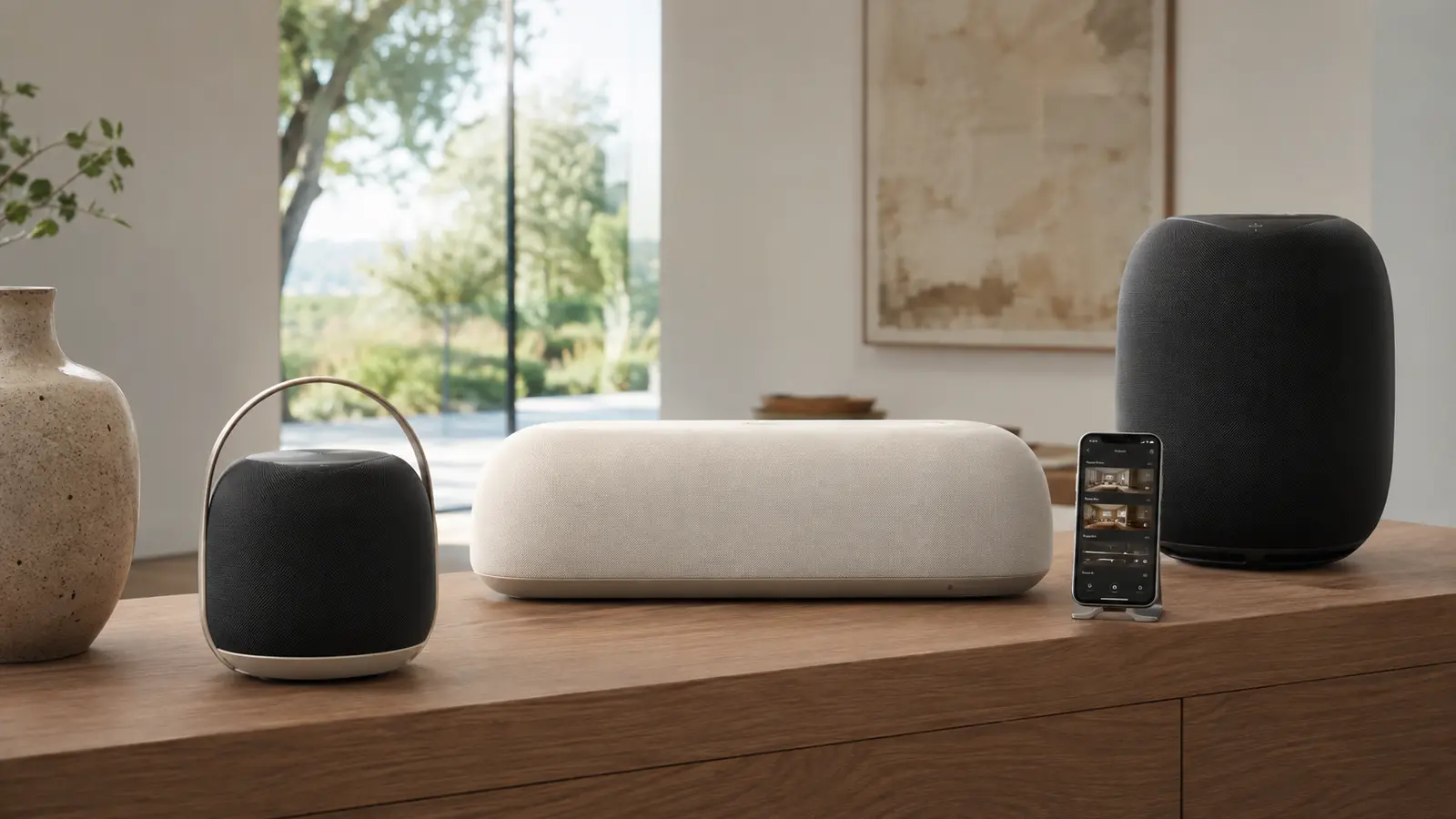
JBL Cove is a new whole-home speaker family built around Wi-Fi playback and three roles. Cove M1 is the compact entry model, P1 adds battery-powered portability and Cove X1 is the larger Dolby Atmos-focused speaker. US prices are $229.95, $399.95 and $449.95, respectively, with availability scheduled for September 13.
European launch references list €229.99 for M1, €449.99 for P1 and €499.99 for X1, illustrating why local pricing must be verified rather than converted. The range supports AirPlay 2, Google Cast, Spotify Connect, Tidal Connect and Qobuz Connect, plus automatic room tuning through JBL’s system.
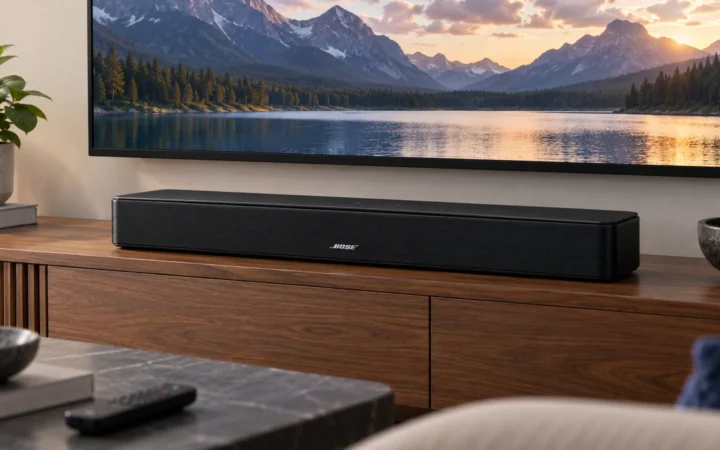
Cove also promises integration with compatible JBL Bar MK2 soundbars and future Alexa+ support. “Future” is the operative word: Alexa+ should not be listed as available at launch, and rear-channel behavior must be checked against the exact soundbar and software version.
Table of contents
At a Glance
| Key fact | Verified position |
|---|---|
| US prices | M1 $229.95; P1 $399.95; X1 $449.95 |
| European prices | M1 €229.99; P1 €449.99; X1 €499.99 |
| Release | September 13, 2026 in announced US availability |
| Streaming | AirPlay 2, Google Cast, Spotify, Tidal and Qobuz Connect |
| P1 battery | Up to 14 hours under JBL conditions |
| Spatial audio | P1 and X1 positioned with Dolby Atmos capabilities; implementation differs |
| Soundbar role | Compatibility with specified JBL Bar MK2 models/software |
| Alexa+ | Announced for future support, not a launch feature |
M1, P1 and X1: The Roles
M1 is the affordable room speaker for kitchens, bedrooms and stereo pairs. P1 adds a handle and up to 14 hours of claimed battery life, making it the bridge between home Wi-Fi and patio listening. X1 uses the largest enclosure and driver arrangement to prioritize wider, more immersive room sound.
P1’s price sits only $50 below X1 in the US. That means portability—not cheaper sound—is the reason to choose it. If a speaker will stay plugged in, X1 is likely the more logical audition. If it moves daily, P1’s battery and form can outweigh absolute scale.
Streaming and Multiroom Compatibility
Supporting AirPlay 2 and Google Cast gives mixed Apple/Android households two system-level casting options. Spotify, Tidal and Qobuz Connect let their apps hand playback to the speaker directly. Each service can require a suitable subscription, country availability and same-network setup.
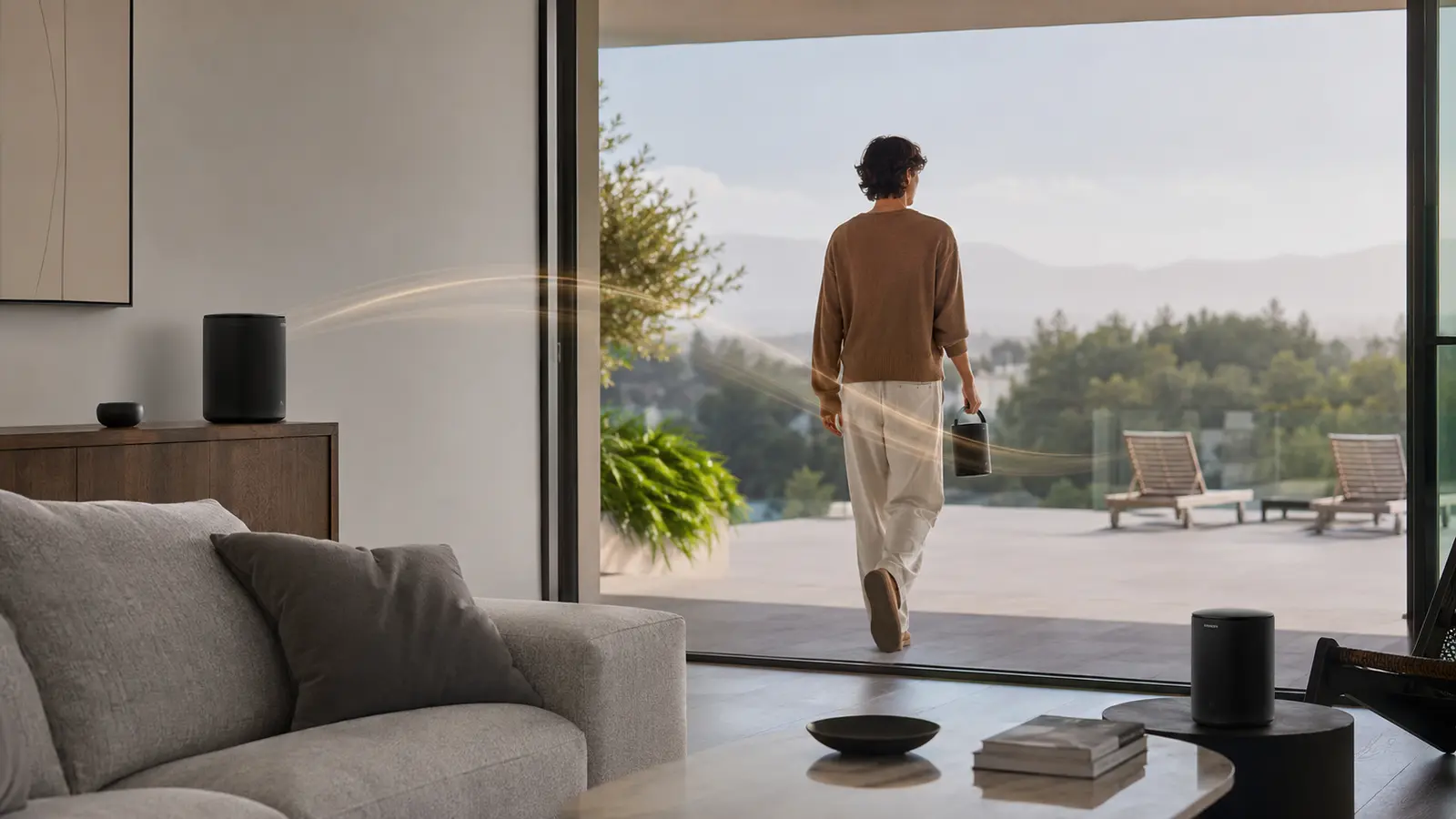
JBL One manages grouping, tuning and firmware. “Music Follows Me” is designed to transfer playback as the listener moves, but presence behavior and privacy should be tested. Automatic room tuning is a setup aid, not a guarantee of perfect sound in echoing or asymmetrical rooms.
Dolby Atmos and Driver Differences
Dolby Atmos support means the speaker can decode or render compatible spatial content; it does not mean a single enclosure reproduces the separation of a full multi-speaker system. X1’s larger driver arrangement offers more physical space for directional output and bass. P1 balances spatial processing with portability.
Source quality matters. Atmos tracks are not available in every service tier or region, and stereo mixes can remain preferable. Wait for independent measurements of frequency response, output and room correction rather than assuming the most expensive model is automatically neutral.
Rear-Channel Use With JBL Bar MK2
Cove speakers can participate in compatible JBL soundbar setups, including rear-channel roles under the supported Bar MK2 ecosystem. Compatibility must be read as a matrix: soundbar model, speaker model, number of units and firmware version all matter. A generic Bluetooth soundbar is not enough.
Before buying two speakers as rears, confirm whether they remain available for ordinary multiroom use while bonded, how latency is managed and whether battery models need continuous power. A pair of P1s can cost more than X1 and may be awkward if they must be charged constantly.
Alexa+ and Future Features
JBL says Alexa+ support is planned. That is an announced future feature, not something a launch-day buyer can rely on. Voice-assistant rollout depends on Amazon, country, language, account and JBL firmware. Current AirPlay/Google Cast/Connect functions should justify the purchase without it.
Do not buy a promise
Treat future Alexa+ support as a possible bonus. Use only current, documented functions in a must-have checklist.
Cove vs Sonos Era and Bose Alternatives
| System | Strength | Trade-off |
|---|---|---|
| JBL Cove | Broad casting support, portable P1 and soundbar integration | New ecosystem with limited long-term test history |
| Sonos Era/Move | Mature multiroom grouping and home-theater options | More ecosystem-specific behavior and potentially higher system cost |
| Bose smart/portable | Simple premium lifestyle audio and portability choices | Whole-home and rear-channel matrix differs by model |
Cove’s strongest competitive point is openness across common playback services. Sonos remains deeper in multiroom/home theater, while Bose can appeal through established portable designs. Return policy matters because app reliability, latency and sound preference are difficult to settle from specifications.
Which Cove Should You Buy?
Choose M1 for small rooms, stereo pairing or the lowest entry cost. Choose P1 only if the battery and handle will be used. Choose X1 for a stationary main-room speaker and Dolby Atmos focus. For rear channels, verify the exact JBL Bar MK2 matrix before ordering a pair.
FrediTech verdict
M1 is the low-risk entry and P1 is the distinctive model. X1 is attractive on paper, but the whole range needs independent sound and app testing. Future Alexa+ support should not influence today’s purchase.
Which Cove Should You Buy?
Choose M1 for a desk, kitchen or compact room where low entry cost matters. P1 is the flexible middle option when battery operation and stronger standalone sound matter. X1 makes sense when Dolby Atmos or compatible rear-channel duties are a real part of the plan. Do not pay for theater capability without confirming the exact Bar MK2 pairing.
For multiroom buyers, start with one unit and test the household’s actual services for a full return period. Listen for synchronized playback, reliable wake-up and consistent volume. Waiting is prudent if US pricing, Alexa+ timing or promised service behavior determines the purchase. A future feature should have zero value in today’s budget calculation.
Frequently Asked Questions
What are the US JBL Cove prices?
M1 is $229.95, P1 $399.95 and X1 $449.95.
When do JBL Cove speakers launch?
Announced US availability is September 13, 2026. Other markets can differ.
Which model has a battery?
P1 is the portable battery model with an up-to-14-hour manufacturer claim.
Do Cove speakers support AirPlay 2?
Yes, alongside Google Cast and multiple service-native Connect options.
Can I use them as rear speakers?
Selected configurations work with compatible JBL Bar MK2 systems. Confirm exact model and firmware.
Is Alexa+ available now?
No. JBL describes Alexa+ as future support rather than a launch feature.
Related FrediTech Guides
- Sony ULT Tower Comparison
- Sonos Ace Ultra and Beam Ultra Guide
- Internal-link opportunity: FrediTech whole-home audio guide (URL to be assigned)
Sources and Verification
US and European prices, services and release details were checked against JBL and reputable launch coverage. Sound quality, battery endurance and room tuning remain untested claims.