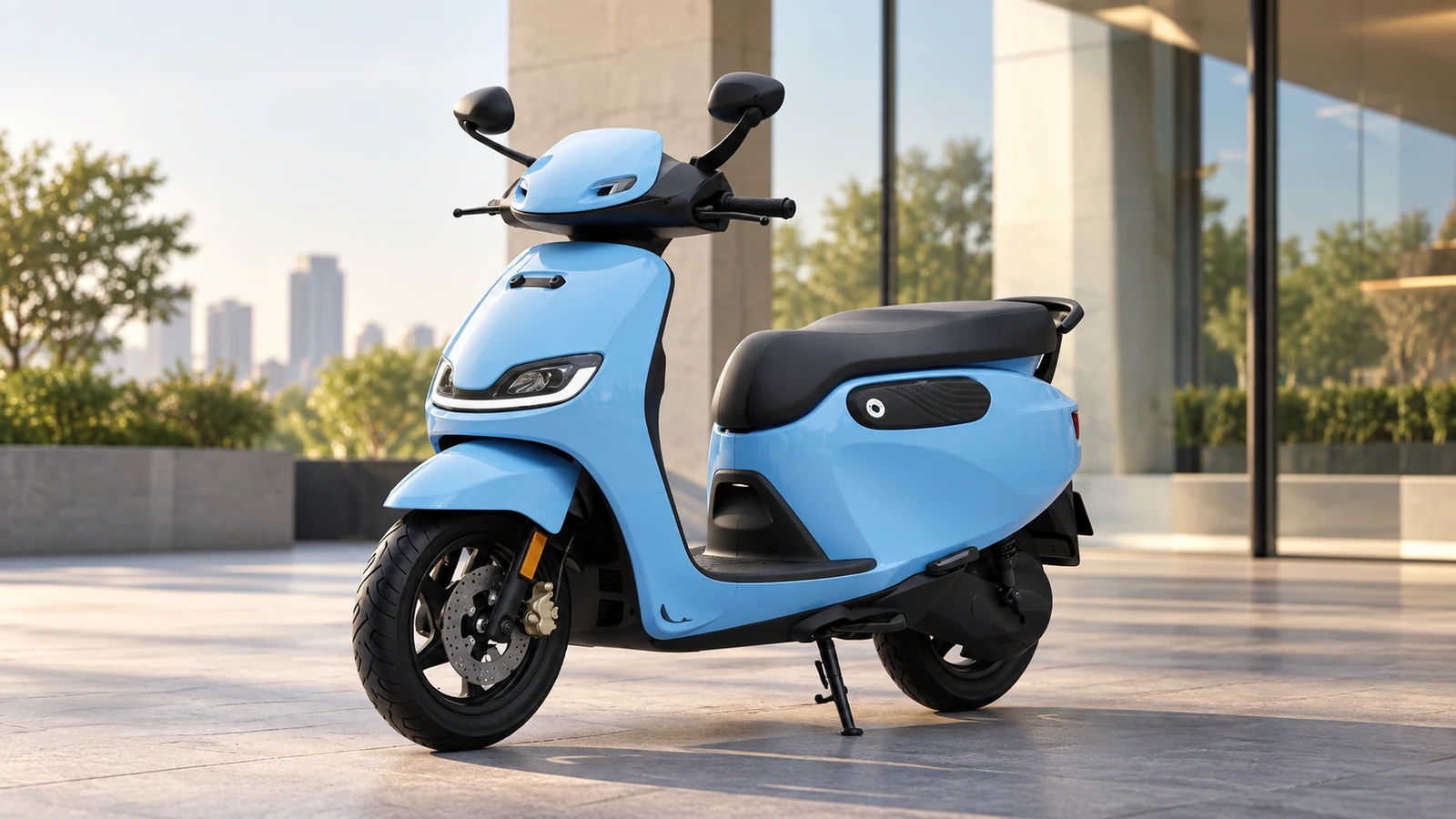

Simple Energy’s new Wave family starts at ₹109,999 ex-showroom Bengaluru and stretches across four battery capacities from 2.2kWh to 5kWh. That breadth is more important than the headline 243km IDC range, because the longest figure belongs only to the top Wave+ and should not be read as a guaranteed road-trip distance.
Launched on September 2, 2026, the family-focused Wave comes as Wave S, Wave and Wave+, split into six price/display configurations. The 2.2/2.7kWh packs are reported as LFP, while 3.7/5kWh versions use NCA. The real question is how much battery you need for daily riding. This is an early buying guide, not a road test; independent range and charging tests are still needed.
Table of contents
Simple Wave at a Glance
| Item | Verified/launch detail |
|---|---|
| Launch | September 2, 2026 |
| Starting price | ₹109,999 ex-showroom Bengaluru |
| Model families | Wave S, Wave, Wave+ |
| Battery options | 2.2 / 2.7 / 3.7 / 5kWh |
| Battery chemistry | LFP on 2.2/2.7; NCA on 3.7/5 according to launch coverage |
| IDC range claims | 110 / 132 / 171 / 243km |
| Top speed | Up to 90km/h on Wave/Wave+ |
| 0–40km/h | 3.3 sec on higher configurations |
| Peak motor output | Up to 6.4kW |
| Wheels | 12-inch alloys |
| Brakes | 220mm front disc, rear drum, CBS |
| Storage | 70 litres total quoted |
| Warranty framework | 3 years / 30,000km vehicle and battery |
| Deliveries | NCA models from Sept. 25; LFP models expected first week of October |
Simple’s own Wave product page is the best place to confirm the current family-level specification before ordering.
Simple Wave Prices and Six Configurations
The ₹109,999 headline is an introductory ex-showroom price, not an India-wide on-road price. Insurance, registration and local charges can change the final amount.
| Configuration | Battery | Display | IDC claim | Intro ex-showroom price |
|---|---|---|---|---|
| Wave S | 2.2kWh | EBN | 110km | ₹109,999 |
| Wave S | 2.7kWh | EBN | 132km | ₹139,999 |
| Wave S | 2.7kWh | TFT | 132km | ₹149,999 |
| Wave | 3.7kWh | EBN | 171km | ₹159,999 |
| Wave | 3.7kWh | TFT | 171km | ₹174,999 |
| Wave+ | 5kWh | TFT | 243km | ₹189,999 |
There are three model names but six configurations, and some price steps buy a display/features upgrade rather than more battery. Before paying, use Simple Energy’s official dealer locator and test-ride page to check local coverage.
What Does 243km IDC Range Actually Mean?
IDC refers to the Indian Driving Cycle, a standardized test basis used to compare vehicle energy consumption and certified/claimed range under controlled conditions. It is useful for comparing models, but it is not a promise that every owner will travel exactly the listed distance.
Real range changes with speed, load, acceleration, gradients, tyre pressure, traffic, weather, riding mode and battery temperature. Sustained high speed increases aerodynamic losses, so 90km/h capability does not imply 243km at 90km/h. There are not yet enough independent Wave tests to publish responsible variant-by-variant road-range figures.
For broader context on why certified EV range and road range can diverge, see FrediTech’s Volkswagen ID.4 range and charging guide.
Which Battery Size Fits Your Commute?
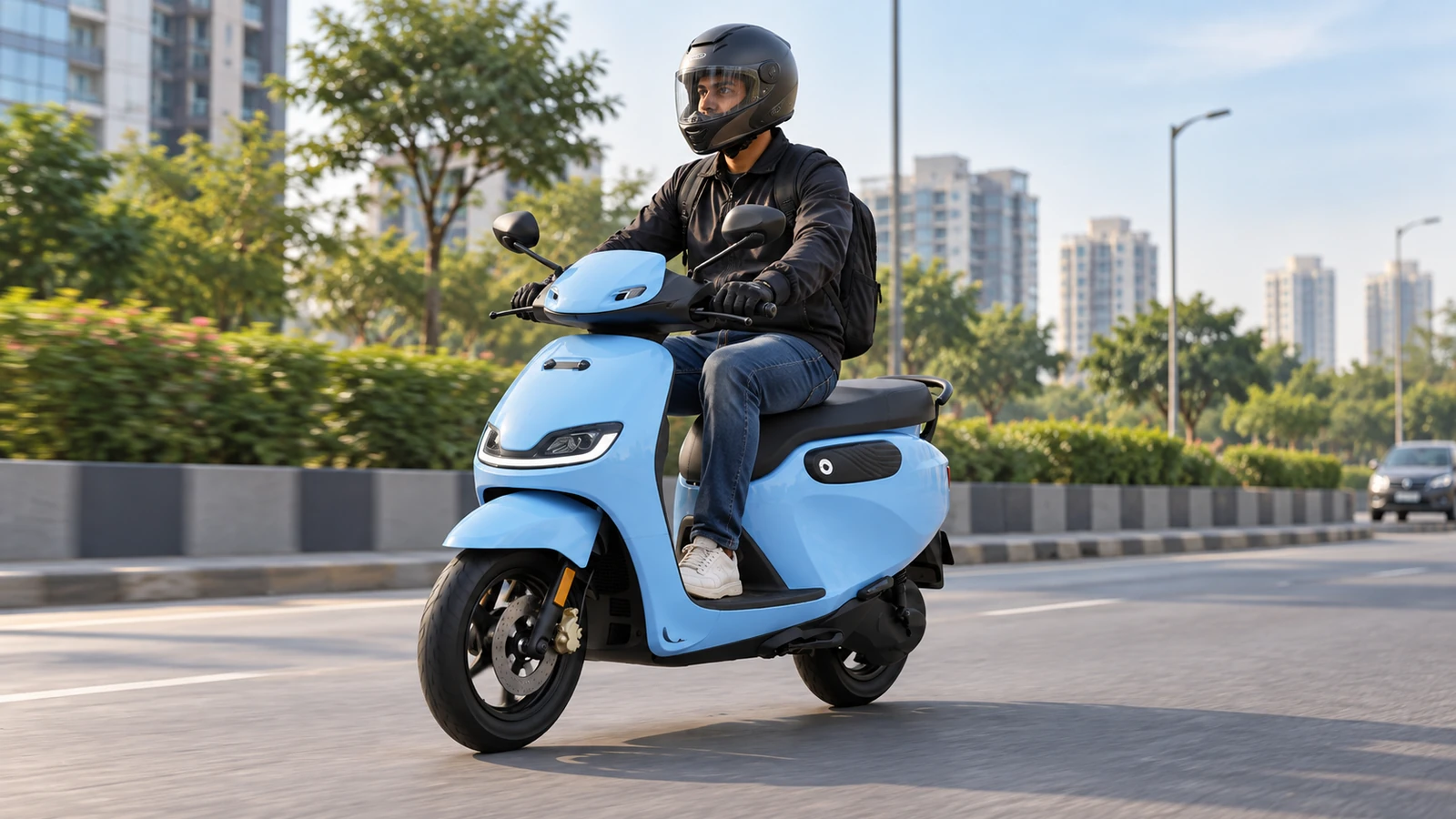
Wave S 2.2kWh: best starting point for short urban use
The 2.2kWh Wave S carries a 110km IDC claim and the lowest price. Launch coverage attributes a 4.5kW motor to it. It is the rational starting point for modest daily mileage and easy home charging, provided you maintain sensible range reserve.
Wave S 2.7kWh: more reserve without leaving the LFP tier
The move from 2.2 to 2.7kWh adds roughly 22.7% nominal battery capacity, while the IDC claim rises from 110 to 132km—about 20%. The EBN version costs ₹30,000 more than the base scooter, while the TFT version adds another ₹10,000.
For buyers wanting reported LFP chemistry with more reserve, this is the more flexible Wave S.
Wave 3.7kWh: the potential middle-ground model
At 171km IDC, the 3.7kWh Wave moves into the faster Wave family. Simple’s product page lists the Wave at up to 90km/h and 0–40km/h in 3.3 seconds, compared with 75km/h and 4 seconds for Wave S at family level.
For longer commutes, the ₹159,999 3.7kWh EBN may be the value sweet spot: substantially more reserve without the full flagship price.
Wave+ 5kWh: maximum reserve and headline range
Wave+ is the ₹189,999 flagship. Its 5kWh pack carries the 243km IDC claim, and the official page lists 90km/h plus 0–40km/h in 3.3 seconds.
It costs ₹80,000 more than the base Wave S, so its value depends on whether you will actually use the extra reserve.
LFP vs NCA: Why the Chemistry Split Matters
Launch coverage consistently identifies the 2.2 and 2.7kWh packs as lithium iron phosphate (LFP) and the 3.7 and 5kWh packs as nickel-cobalt-aluminium (NCA). Simple’s public product page did not expose the chemistry field in the web specification when checked, so buyers should confirm it on the dealer specification sheet.
LFP generally trades lower energy density for strong cycle-life potential and thermal stability; NCA can provide higher specific energy. The U.S. Department of Energy’s lithium-ion chemistry comparison shows why chemistry is a trade-off, not a safety verdict. Pack enclosure, cell quality, BMS and thermal controls remain critical. Wave launch reporting lists IP67 battery/motor protection and a Gen 3 BMS.
Performance, Brakes and Practicality
The Wave family uses a PMSM drive system. Launch tables generally attribute 4.5kW to the base 2.2kWh model and up to 6.4kW to higher configurations, while Simple’s official public page emphasizes performance by model family.
The most dependable official distinction is:
- Wave S: up to 75km/h, 0–40km/h in 4 seconds.
- Wave: up to 90km/h, 0–40km/h in 3.3 seconds.
- Wave+: up to 90km/h, 0–40km/h in 3.3 seconds.
Wave and Wave+ add Sport mode, while Wave S focuses on EcoX, Eco and Ride. Higher models also get functions such as regenerative braking, hill hold, reverse and connected features depending on configuration.
Hardware includes 12-inch alloys, a 220mm front disc, rear drum and CBS. The quoted 775mm seat height, 175mm ground clearance and 920mm seat reinforce the family focus. Launch material quotes 70 litres total storage.
Charging: What the 0–80% Claim Tells You
The top 5kWh Wave+ is quoted at about 2 hours 15 minutes from 0–80% using the applicable fast-charging setup in several launch/spec sources. Some other launch material quotes faster figures for specific packs/chargers, so FrediTech is not generalizing one charging time across all six configurations.
A 0–80% figure is not a full-charge time because charging typically tapers near high state of charge. Confirm the supplied charger and home requirements with the dealer; do not substitute an unapproved charger.
For a broader explanation of charging curves and why peak charging figures do not describe the whole session, FrediTech’s Chevrolet Blazer EV charging guide provides useful background.
Illustrative Electricity Cost Per Full Charge
Running cost depends on your local electricity tariff and charging losses. Using an illustrative ₹8/kWh household tariff and assuming roughly 10% wall-to-battery losses:
| Pack | Approx. wall energy | Illustrative electricity cost |
|---|---|---|
| 2.2kWh | 2.42kWh | ₹19.36 |
| 2.7kWh | 2.97kWh | ₹23.76 |
| 3.7kWh | 4.07kWh | ₹32.56 |
| 5kWh | 5.50kWh | ₹44.00 |
These are illustrations, not promised ownership costs. A meaningful ₹/km figure needs measured real-world range, so FrediTech is not publishing one yet.
Warranty, Connected Features and Service
Simple Energy’s current warranty page states:
- Vehicle: 3 years or 30,000km, whichever comes first.
- Battery: 3 years or 30,000km.
- Portable charger: 3 years or 20,000km.
- Warranty transfers with the vehicle.
Because the page currently opens with another Simple variant selected, confirm the Wave-specific warranty document at purchase. A public battery-capacity-retention threshold was not found.
Simple’s subscription documentation says remote live charging status requires an active Simple Super Pack. The website advertises 50+ stores, but service access remains location dependent.
Bookings and Delivery Timing
Bookings are open through participating Simple channels and dealers, but FrediTech did not find a clearly published Wave-specific booking amount and refund policy in the official pages checked.
Launch reporting says NCA-equipped Wave/Wave+ configurations are scheduled to start deliveries on September 25, while the LFP Wave S configurations are expected in the first week of October. That is more precise than describing every Wave as a “last week of September” delivery.
Confirm your city’s allocation and expected handover date with the dealer before paying.
Simple Wave vs Ather Konarc and TVS iQube
The closest rivals should be compared on service, software, charging access and tested efficiency—not range alone.
| Scooter | Current entry point* | Battery/range reference | Top-speed reference | Ownership strength |
|---|---|---|---|---|
| Simple Wave S | ₹109,999 ex-showroom Bengaluru | 2.2kWh / 110km IDC | Wave S up to 75km/h | Large storage, broad battery choice |
| Simple Wave+ | ₹189,999 ex-showroom Bengaluru | 5kWh / 243km IDC | 90km/h | Maximum claimed range |
| Ather Konarc S | From about ₹99,999 where offered | Current 125/161km IDC versions | 70km/h | Mature charging/software ecosystem |
| TVS iQube | From ₹95,124 effective ex-showroom on current page | 114–212km IDC family | 68–82km/h | 2,800+ dealer network |
*Pricing basis differs by brand and location; check each official configurator before comparing totals.
Ather’s official Konarc FAQ publishes IDC plus separate TrueRange estimates, while TVS’s official iQube page shows a much larger dealer footprint. Bajaj Chetak, Vida and Ola are also relevant, but compare exact local prices and test standards.
What About PM E-DRIVE and State Subsidies?
Do not subtract an old FAME incentive from the Wave price. India’s current policy is PM E-DRIVE, and the Ministry of Heavy Industries’ official portal says the terminal date for eligible electric two-wheelers has been extended to March 31, 2028.
Ask the dealer for a written breakup showing current eligible incentive, insurance, registration and any state benefit rather than assuming an old subsidy.
Which Simple Wave Should You Buy?
For a short 20–30km daily commute: Start with Wave S 2.2. It keeps the purchase price lowest and may provide ample reserve if charging is convenient.
For medium city use with fewer charges: Wave S 2.7 adds battery while remaining in the LFP tier.
For 50–80km daily riding: The 3.7kWh Wave is the configuration to investigate first because it combines more reserve with the 90km/h Wave performance tier.
For maximum range reserve: Wave+ 5kWh makes sense if your daily distance is genuinely high, charging opportunities are uncertain or you simply value fewer charging sessions.
No buyer should choose the Wave+ solely because “243km” is the largest number. Real road range, battery warranty, charging convenience, local service and the ₹80,000 premium over the base model matter more.
FrediTech Early Take
Best headline feature: Four battery capacities spanning 2.2 to 5kWh.
Most interesting engineering choice: Reported LFP packs for the smaller batteries and NCA for the higher-capacity models.
Strongest practical feature: 70 litres of quoted storage.
Biggest claim: 243km IDC on Wave+.
Most important caveat: IDC range is not guaranteed real-world range.
Likely value sweet spot: The 3.7kWh Wave could be the most balanced configuration for riders who need more reserve and higher performance, but this needs real-world range testing.
Best advice before booking: Check your local dealer, warranty document, on-road price and charging setup before deciding by battery size.
What Independent Testing Still Needs to Verify
- Real urban, mixed-road and two-up range.
- High-speed range and actual charging times.
- Ride comfort, braking and thermal behavior.
- App/subscription reliability.
- Long-term battery degradation.
- Kerb weight by variant.
- Service and spare-parts availability outside major cities.
Frequently Asked Questions
What is the Simple Wave price?
The range starts at ₹109,999 and reaches ₹189,999 ex-showroom Bengaluru at launch, depending on configuration.
Which Simple Wave costs ₹109,999?
The entry Wave S with the 2.2kWh battery and EBN display.
Does Simple Wave really have 243km range?
The Wave+ has a 243km IDC claim. That is a standardized test figure, not guaranteed real-world range.
Which Wave models use LFP batteries?
Launch coverage identifies the 2.2 and 2.7kWh Wave S packs as LFP.
Which use NCA?
The 3.7kWh Wave and 5kWh Wave+ are reported with NCA chemistry.
What is the top speed?
Simple’s official page lists Wave S at up to 75km/h and Wave/Wave+ at up to 90km/h.
How quickly does the Wave+ charge?
The 5kWh model is quoted at about 2 hours 15 minutes for 0–80% under the applicable fast-charging setup. That is not a full-charge time.
When do deliveries start?
Launch reporting places NCA deliveries from September 25 and LFP deliveries in the first week of October 2026.
What is the battery warranty?
Simple’s current standard warranty page lists 3 years or 30,000km for the battery, but confirm the Wave-specific purchase document.
Is the Wave suitable for highways?
The 90km/h Wave and Wave+ can use faster urban/peripheral roads where legally permitted, but range falls faster at sustained speed and the Wave should not be treated like a long-distance touring motorcycle.