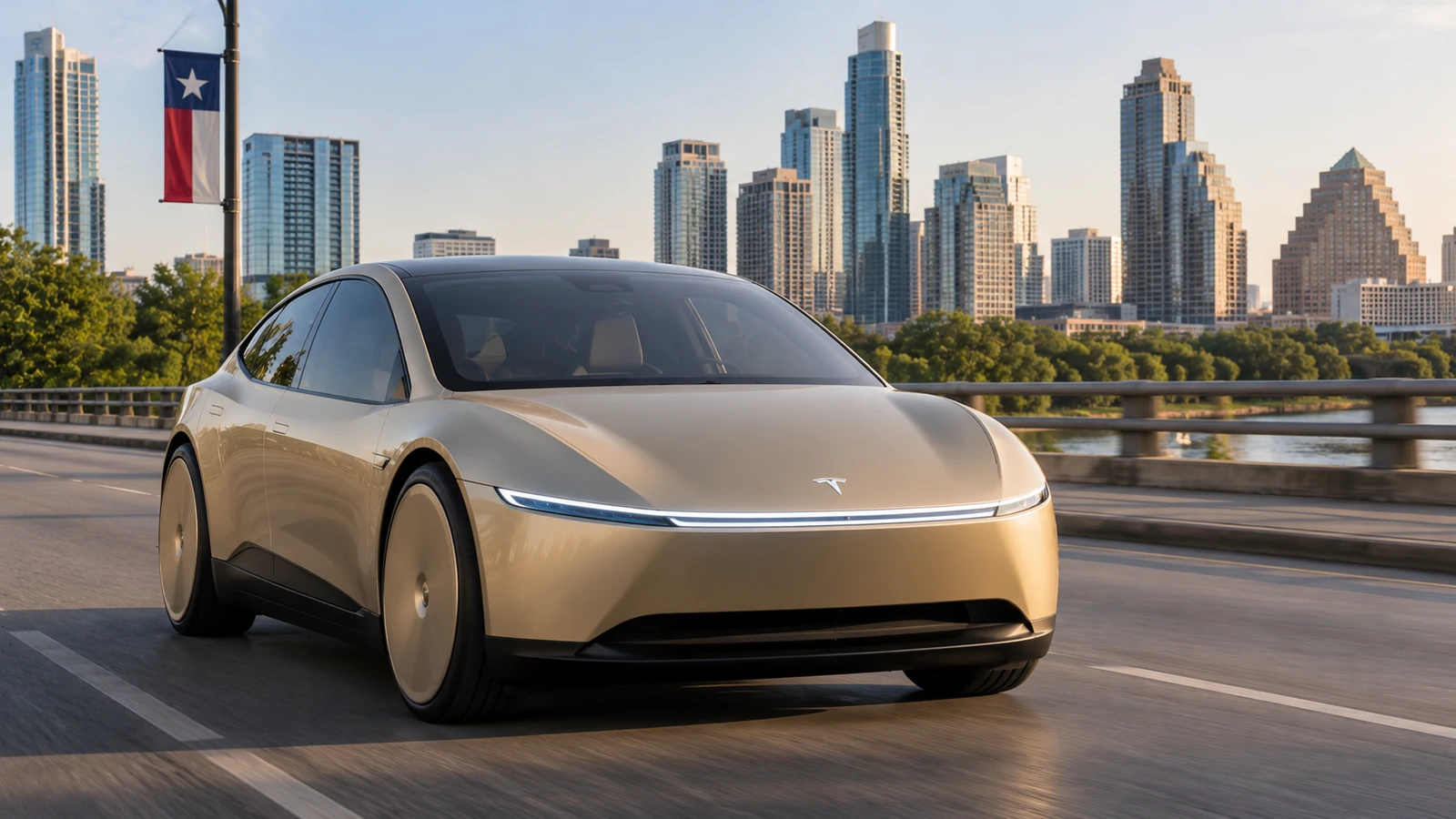

Ordinary passengers can now be assigned rides in Tesla’s purpose-built Cybercab in limited areas of Austin, Texas. The two-seat vehicle has no steering wheel, accelerator pedal, brake pedal or conventional side mirrors and has moved from demonstrations into Tesla’s public Robotaxi network.
This is not a conventional consumer launch. Tesla still has not published an ordinary MSRP, EPA range, battery capacity, charging speed, consumer warranty or retail-sale date. NHTSA has also opened a formal Audit Query into Tesla’s self-certification.
The key distinction is simple: public passenger access, commercial ride-service operation, regulatory compliance and retail sales are different things.
Table of contents
Tesla Cybercab Austin Rollout at a Glance
| Item | Current status |
|---|---|
| Public rollout | September 3, 2026 |
| Location | Limited areas of Austin |
| Passenger capacity | 2 |
| Steering wheel | None |
| Pedals | None |
| Conventional side mirrors | None |
| Ride booking | Tesla Robotaxi app |
| Can riders choose Cybercab? | No; assignment depends on availability and party size |
| Fixed public Cybercab fare | Not published |
| Ride price | Estimate shown in app before confirmation |
| Reported Cybercabs registered in Texas | 45* |
| Reported Tesla autonomous vehicles registered | 420* |
| NHTSA status | Formal Audit Query into self-certification |
| Ordinary consumer MSRP | Not announced |
| Certified range | Not announced |
| Battery capacity | Not announced |
| Charging rate | Not announced |
| Consumer warranty | Not announced |
Registration counts reported by Reuters from Texas records. Registered does not mean active in public Austin service.
Tesla’s official Cybercab FAQ and Cybercab Rider Guide are now the best rider-facing sources.
What Actually Changed on September 3?
Tesla added Cybercab to the existing Robotaxi service in limited parts of Austin. Reuters reported Tesla describing access as open to the public, while Tesla’s support pages let ordinary users request rides through the app.
You cannot order Cybercab as a separate category. Assignment depends on availability and party size, and the vehicle holds only two people. Riders need the Robotaxi app, a Tesla Account and a destination inside the displayed service area. Ages 13–17 must ride with an adult; under-13s are not permitted.
How to Request a Cybercab Ride in Austin
Tesla’s current process is straightforward:
- Download the Robotaxi app for iOS or Android.
- Sign in with a Tesla Account.
- Enter a destination inside the service area shown in the app.
- Review the estimated fare and wait time.
- Confirm the ride.
- Wait at the designated pickup point and match the license plate.
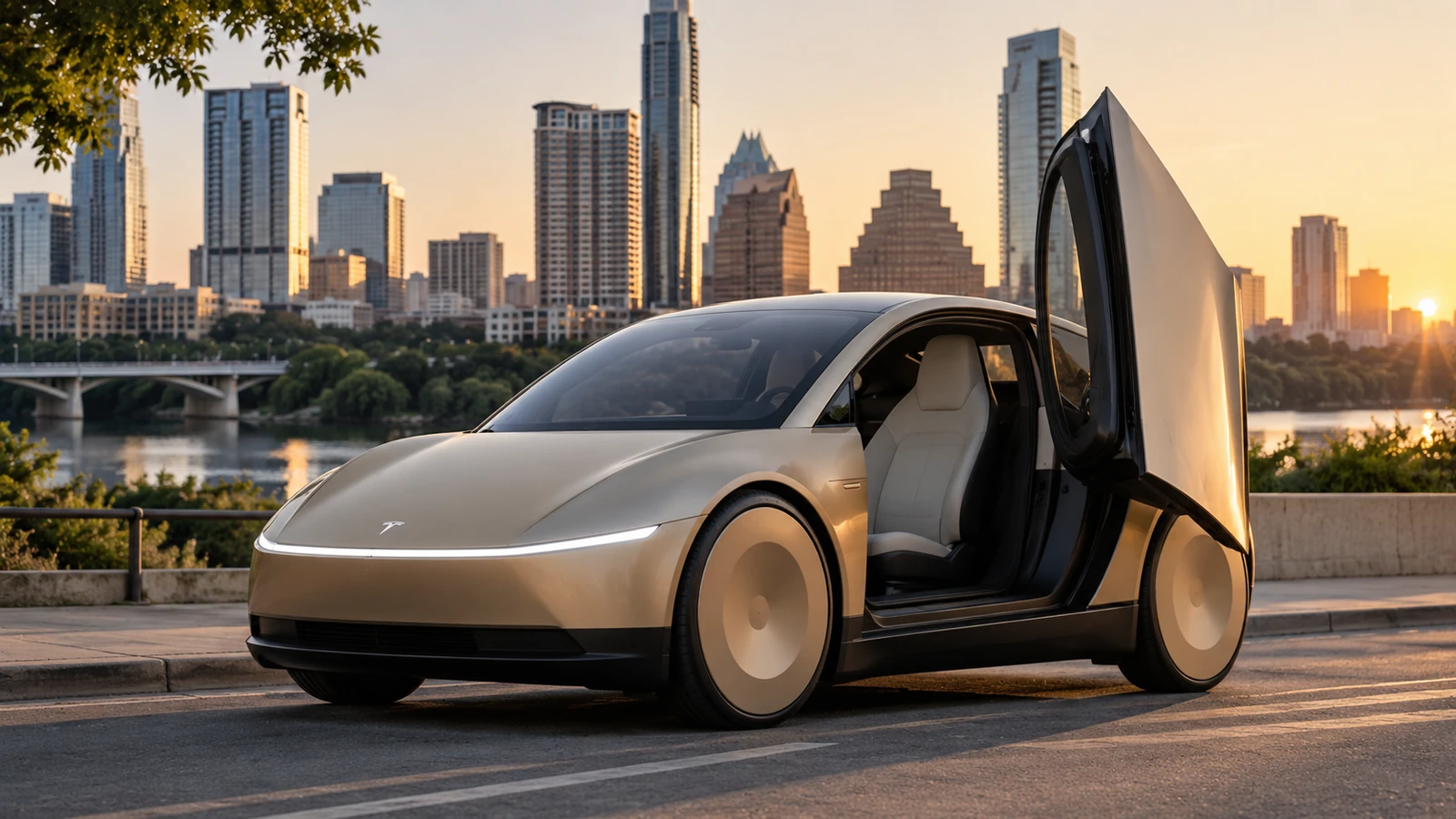
- If a Cybercab is assigned, the nearest door can open automatically as the requester’s phone approaches.
- Enter, fasten your seat belt and tap Start Ride on the touchscreen or in the app.
The front lightbar changes color during pickup, the rear lightbar illuminates red and hazards flash when parked. Tesla says the vehicle normally waits seven minutes. You can reroute a trip, but not add intermediate stops.
Where Does Cybercab Operate in Austin?
Tesla’s precise Cybercab geofence is not published as a static neighborhood list. The official wording is “limited areas of Austin, Texas,” and Tesla tells riders to use the live map in the Robotaxi app as the source of truth.
Tesla says Cybercab is designed for city streets, highways, intersections and parking lots, but that does not prove every Austin highway route is available. Austin-Bergstrom airport access is not specifically confirmed for Cybercab, so do not rely on it until the app accepts the route.
Tesla says operating hours vary by area and the app blocks requests outside them. A fixed Cybercab-specific Austin schedule and detailed weather restrictions are not publicly posted.
How Much Does a Cybercab Ride Cost?
There is no fixed Cybercab-specific fare publicly posted.
Tesla’s Robotaxi support page says the app shows the estimated fare before you confirm a ride and that its introductory program charges a simple rate plus applicable taxes and fees. Reuters reported that executives discussed future dynamic pricing that could rise with demand.
That is not a published per-mile Cybercab tariff, so FrediTech does not invent a base rate or surge formula.
Important: This Is Not an Ordinary Retail Vehicle Launch
Tesla now has a form for fleet or individual Cybercab purchases for commercial purposes, but that is not a normal consumer configurator.
Tesla still has not publicly announced:
- an ordinary consumer MSRP;
- a retail ordering date;
- an EPA-certified range;
- battery capacity or chemistry;
- maximum charging rate;
- consumer financing;
- a standard consumer warranty;
- a normal retail delivery schedule.
Historical price or operating-cost targets are not current retail facts. FrediTech’s Tesla Roadster guide shows why future-product targets should be separated from production specifications.
Cybercab Design: Two Seats, Butterfly Doors and No Driver Controls
Cybercab has a low gold body, two passenger seats, upward/outward-opening butterfly-style doors and a central touchscreen.
Tesla’s rider guide confirms no steering wheel, accelerator or brake pedal. First-responder material says there are no side mirrors and identifies front-fender cameras. Tesla describes the system as using camera vision and sensors, but its public rider documents do not publish a definitive sensor count or detailed radar/lidar inventory.
Tesla does publish 20.2 cubic feet (572L) of trunk volume, enough for two checked suitcases plus two carry-ons or a small folded wheelchair.
What Happens If Cybercab Needs Help?
Tesla provides remote customer support, but that is not automatically teleoperation.
During a ride, you can tap Support on the touchscreen or in the app and speak with a Tesla representative through the cabin microphone and speakers. If you want to end the trip, you can tap Pull Over or press the physical STOP button between the dome lights.
Tesla says the vehicle will then stop at the nearest safe location when possible. On a highway, that process can take longer.
In a collision, Robotaxi is designed to stop, activate hazards and start two-way communication; Tesla says it can call 911 if passengers do not respond.
Tesla’s rider documentation does not say a support representative routinely controls steering, acceleration or braking. Special first-responder procedures for moving or immobilizing a disabled vehicle are different from a human remotely driving every trip.
Is There a Safety Driver?
Cybercab itself has no conventional driver controls, and Tesla’s rider guide says both seats are available to passengers. There is therefore no onboard safety driver in the normal Cybercab passenger configuration.
Earlier Model Y robotaxi deployments sometimes used onboard monitors, while Tesla has since expanded unsupervised operation. Cybercab is best described as a purpose-built autonomous service vehicle without an onboard driver inside its operating domain, not as a car that can drive autonomously everywhere.
NHTSA Has Opened a Formal Audit Query
The most important regulatory update arrived on September 4.
NHTSA opened an Audit Query into Tesla’s self-certification that Cybercab meets all applicable Federal Motor Vehicle Safety Standards.
FMVSS are federal vehicle-performance requirements. Manufacturers generally self-certify compliance, subject to NHTSA oversight.
Cybercab is unusual because it lacks conventional controls assumed by several standards. NHTSA says it will examine Tesla’s technical data and whether the company treated some FMVSS provisions as inapplicable.
This is not NHTSA approval and not a finding that Cybercab is unsafe. Reuters also reported that Tesla had not used the exemption pathway for limited vehicles without conventional controls.
Texas Authorization Is Separate From Federal Compliance
Tesla Robotaxi, LLC currently shows as Authorized in the Texas Department of Motor Vehicles’ automated-vehicle operator database.
Texas’ Senate Bill 2807 created a statewide authorization system for commercial Level 4/5 AVs, enforceable from May 28, 2026. TxDMV can authorize, restrict or revoke operators, while DPS/local law enforcement enforce road rules. The TxDMV automated-vehicle program is the state framework.
Texas largely preempts city AV permitting, so Austin focuses on coordination, first responders and incident tracking. State authorization does not replace federal vehicle-safety requirements.
45 Cybercabs Registered Does Not Mean 45 Active Rides
Reuters reported that Texas records showed 420 Tesla autonomous vehicles registered in the state, including 45 Cybercabs, as of September 4.
That is a useful fleet-development indicator, but it should not be converted into “45 Cybercabs are carrying passengers in Austin.”
A registered vehicle may be elsewhere in Texas, testing, inactive or assigned to non-public work. Tesla has not published an Austin active-Cybercab count.
Privacy: What Happens to Cabin and Trip Data?
Tesla’s Robotaxi privacy notice says the service processes account, payment, location and trip data required to provide rides.
Cybercab has an interior camera. Tesla says it is used for occupancy, support or safety events, with an on-screen indicator when active. The microphone can transmit audio during support or safety events, and the camera may check cleanliness or lost items after a ride. Early-access programs can involve additional analytics, so review the current in-app privacy notice.
Accessibility and Rider Practicalities
Cybercab is not documented as a wheelchair-accessible vehicle that lets a rider remain in a wheelchair. Tesla instead lists transfer-height seating, room for some folded mobility devices, screen-reader app support, service animals and Braille on doors/overhead buttons.
Important limits include:
- two passengers maximum;
- no riders under 13;
- no booking a ride for another person;
- no ordinary pets;
- no extra trip stops;
- no LATCH/ISOFIX child-seat anchors.
If a rider needs a wheelchair-accessible vehicle, Tesla’s app provides access to local WAV providers rather than claiming Cybercab itself is a WAV.
Cybercab vs Model Y Robotaxi, Waymo and Zoox
| Feature | Tesla Cybercab | Tesla Model Y Robotaxi | Waymo in Austin | Zoox |
|---|---|---|---|---|
| Purpose-built robotaxi | Yes | No | No, current Austin fleet uses road cars | Yes |
| Passenger capacity | 2 | Up to 4 | Vehicle dependent | Purpose-built multi-seat layout |
| Steering wheel/pedals | No | Yes | Yes on current road vehicles | No |
| Public Austin rides | Limited | Yes | Yes, through Uber | Austin testing/arrival phase |
| Vehicle selection | Automatic | Automatic | Uber matching | Market dependent |
| Sensor philosophy | Tesla camera-led system | Tesla camera-led system | Cameras + radar + lidar | Cameras + radar + lidar |
| Fixed Cybercab fare published | No | App estimate | Uber fare | Austin public fare not applicable |
Waymo’s Austin service runs through Uber and is publicly matchable inside the service area. Zoox currently describes Austin as an arrival/testing market, with public commercial service further along elsewhere.
Tesla’s milestone is distinctive because Cybercab is purpose-built and now carrying public passengers without driver controls, but that does not make Tesla’s network broader than Waymo’s or its regulatory path more mature than Zoox’s.
Battery, Range, Charging and Warranty: Still Not Confirmed
Tesla has started Cybercab production; its Q2 update documented engineering drives and employee rides before public deployment, while Reuters reported production began in April. Tesla’s current public rider pages still do not provide consumer-grade specifications for:
- battery capacity;
- battery chemistry;
- EPA range;
- peak charging rate;
- charging curve;
- wireless/inductive charging in Austin;
- consumer warranty.
Until Tesla puts those values into a current official specification or regulatory certification, FrediTech treats them as unconfirmed for consumer buying purposes. For EV-spec context, see FrediTech’s Volkswagen ID.4 guide and Rivian R1S vs R1T.
Who Should Try Cybercab—and Who Should Not Rely on It?
Cybercab suits a local or visitor inside the Austin geofence who has a flexible schedule and wants to try a purpose-built autonomous ride. Do not depend on it for a time-critical airport trip, medical appointment or other essential journey unless the app confirms the route and wait time immediately beforehand.
FrediTech Early Take
What changed: Members of the public can now be assigned Cybercab rides in limited parts of Austin.
Why it matters: Tesla’s purpose-built, no-steering-wheel vehicle has moved into real passenger service.
Biggest distinction: This is a Robotaxi deployment, not an ordinary consumer retail launch.
Regulatory status: NHTSA has opened an Audit Query into Tesla’s FMVSS self-certification.
Biggest safety question: How the system performs as public fleet exposure grows and regulators obtain more data.
Biggest consumer unknown: Retail price, certified range, battery, charging, consumer warranty and ordinary sale timing remain undisclosed.
Rider Safety Checklist
Before requesting a ride:
- Confirm your pickup and destination appear inside the live app service area.
- Review the displayed fare and wait time.
- Remember that Cybercab cannot carry more than two people.
- Confirm age/accessibility requirements.
- Match the vehicle’s license plate before entering.
- Fasten your seat belt before starting.
- Know where Pull Over, Support and the overhead STOP button are.
- In an emergency, call 911; do not treat app support as a substitute for emergency services.
Frequently Asked Questions
Can the public ride Tesla Cybercab in Austin?
Yes, in limited areas and subject to vehicle availability. Riders request Robotaxi service through the app; Cybercab assignment is not guaranteed.
Can I specifically request a Cybercab?
No. Tesla says assignment initially depends on vehicle availability and group size.
How much does a Cybercab ride cost?
Tesla does not publish a fixed Cybercab tariff. The Robotaxi app shows an estimated fare before confirmation.
Is there a safety driver?
No onboard safety driver is documented for the normal two-seat Cybercab service configuration.
Is a human remotely driving it?
Tesla documents remote customer support and special first-responder assistance, but does not say support staff routinely steer or control passenger trips remotely.
Does Cybercab have a steering wheel or pedals?
No. Tesla’s rider guide confirms neither a steering wheel nor accelerator/brake pedals are installed.
What is NHTSA investigating?
Tesla’s self-certification that Cybercab complies with applicable federal safety standards despite lacking conventional driver controls.
How many Cybercabs are in Texas?
Reuters reported 45 registered Cybercabs among 420 Tesla autonomous vehicles. Registration does not equal active public fleet size.
Can I buy a Cybercab?
There is no ordinary consumer retail launch. Tesla now accepts inquiries for fleet or individual commercial-purpose purchases.
What is Cybercab’s range?
Tesla has not published a certified consumer range.
What battery does Cybercab use?
Battery capacity and chemistry are not publicly confirmed in Tesla’s current rider/service specification.
How fast does Cybercab charge?
Tesla has not published a current official Cybercab charging-rate specification for consumers.
When will Cybercab go on sale to ordinary buyers?
Tesla has not announced an ordinary consumer retail-sale date.