
Apple Watch Series 10 Review in 2026: Still Worth Buying? keeps the useful research from the original “Apple Watch Series 10: An Expert-Level Review of a “Thinstant Classic” and Its Place in the Smartwatch Ecosystem” article, but updates the buying context for 2026. The goal is not to rewrite working sections for the sake of freshness; it is to correct what has changed, surface the decision points quickly and make the page easier to use on both search and AI-driven discovery.
Quick Verdict
- Best for: readers comparing a still-capable previous-generation device with today’s lineup.
- What holds up: the original hardware strengths remain useful when the price is right.
- Main caution: current-generation features, software support and battery condition can change the value equation.
2026 correction: Series 10 launched with a wide-angle OLED display, S10 SiP, faster charging, depth/water-temperature sensing and sleep-apnea notifications—not a MicroLED display, non-invasive glucose monitoring or blood-pressure monitoring. It remains compatible with watchOS 27, although Series 12 is now current. Apple Series 10 launch details.
Table of contents
Apple Watch Series 10: What Apple Actually Shipped
Apple Watch Series 10 arrived in 2024 as a thinner redesign with 42 mm and 46 mm case sizes, the S10 SiP and Apple’s first wide-angle OLED display. The display is easier to read from an angle, but it is not MicroLED. The launch also did not include non-invasive glucose monitoring or a cuffless blood-pressure monitor. Those claims in the earlier version of this article were incorrect and have been removed.
The real health additions were more grounded: sleep-apnea notifications on supported regions and users, water-depth and water-temperature sensing, the Vitals experience in watchOS, plus the existing heart-rate, ECG and temperature-related features available by model and region.


Design, Display and Everyday Use
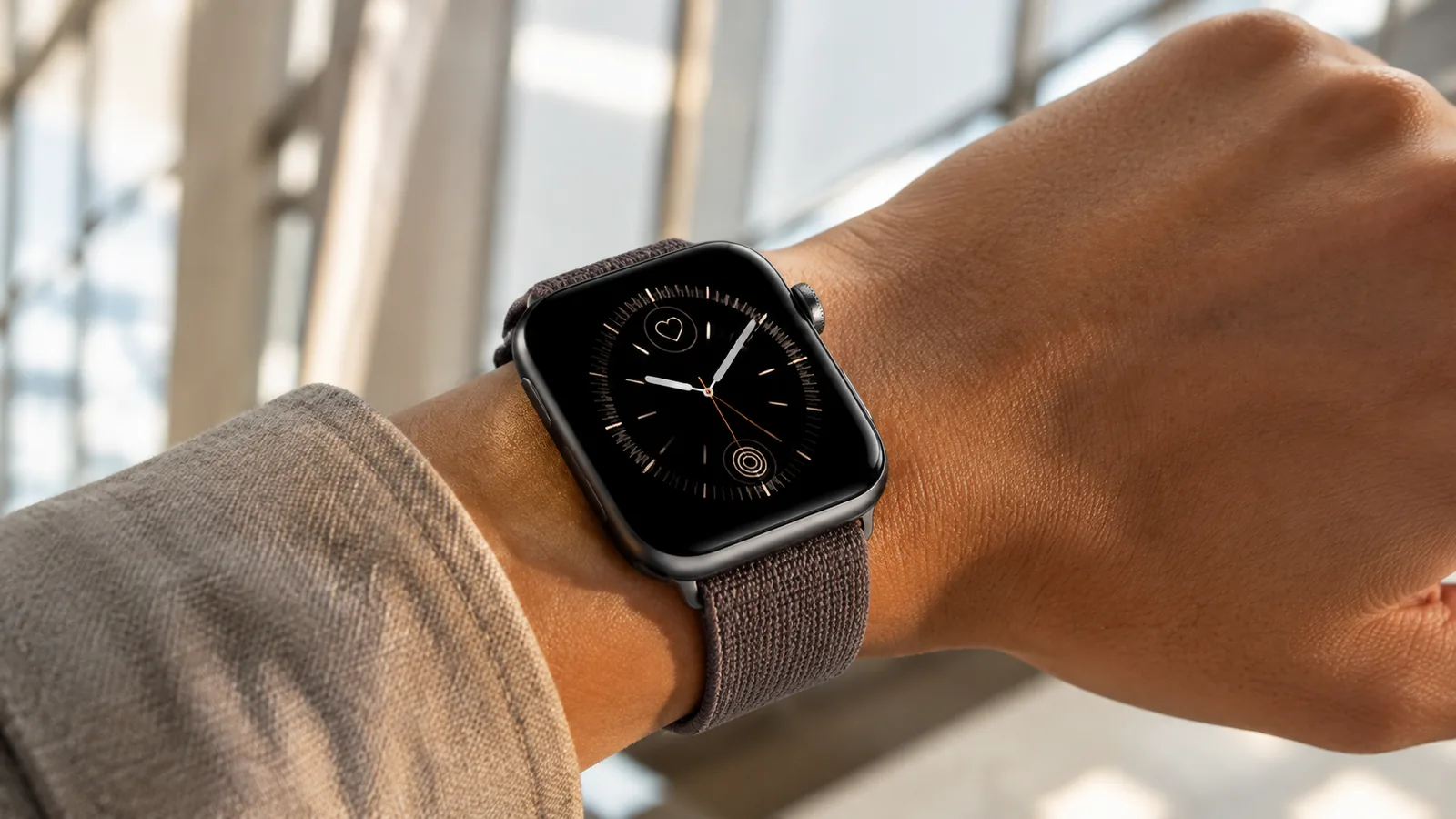
Series 10 remains appealing because it combines a larger usable display with a relatively slim case. Apple described the wide-angle OLED as up to 40% brighter than Series 9 when viewed at an angle. That matters more in daily use than a speculative display technology label: messages, workout metrics and complications are easier to glance at without rotating the wrist as much.
Battery and Charging
Apple rates Series 10 for up to 18 hours of normal use and up to 36 hours in Low Power Mode. Its faster charging is a practical strength: Apple says it can reach about 80% in around 30 minutes, which makes overnight sleep tracking easier to fit into a daily routine.
Health and Fitness Reality Check
Series 10 should be viewed as a wellness and fitness device, not a replacement for clinical instruments. Sleep-apnea notifications are designed to flag patterns that may warrant follow-up; they do not diagnose every case. Likewise, the watch did not launch with direct glucose measurement or on-demand blood-pressure readings.
Series 10 in 2026
Series 10 is no longer Apple’s newest generation, but it remains compatible with watchOS 27. That makes it materially more attractive than older models that have fallen outside the latest operating-system support. Its value now depends on discount, battery condition and whether newer Series 12 features matter to you.
Who Should Consider It?
- Good fit: iPhone users who find Series 10 at a meaningful discount and want a large, bright display plus fast charging.
- Consider newer: buyers who want Apple’s latest health, intelligence and battery improvements.
- Skip: anyone buying specifically for glucose measurement or direct blood-pressure readings; Series 10 does not provide those features.
Apple’s Series 10 launch details provide the authoritative specification baseline.
Bottom Line for 2026
The original article still contains useful detail, but the 2026 decision should be based on current support, verified specifications, real-world fit and today’s alternatives. A discounted older product can still be good value when its limitations are understood; a newer model is not automatically better for every reader.