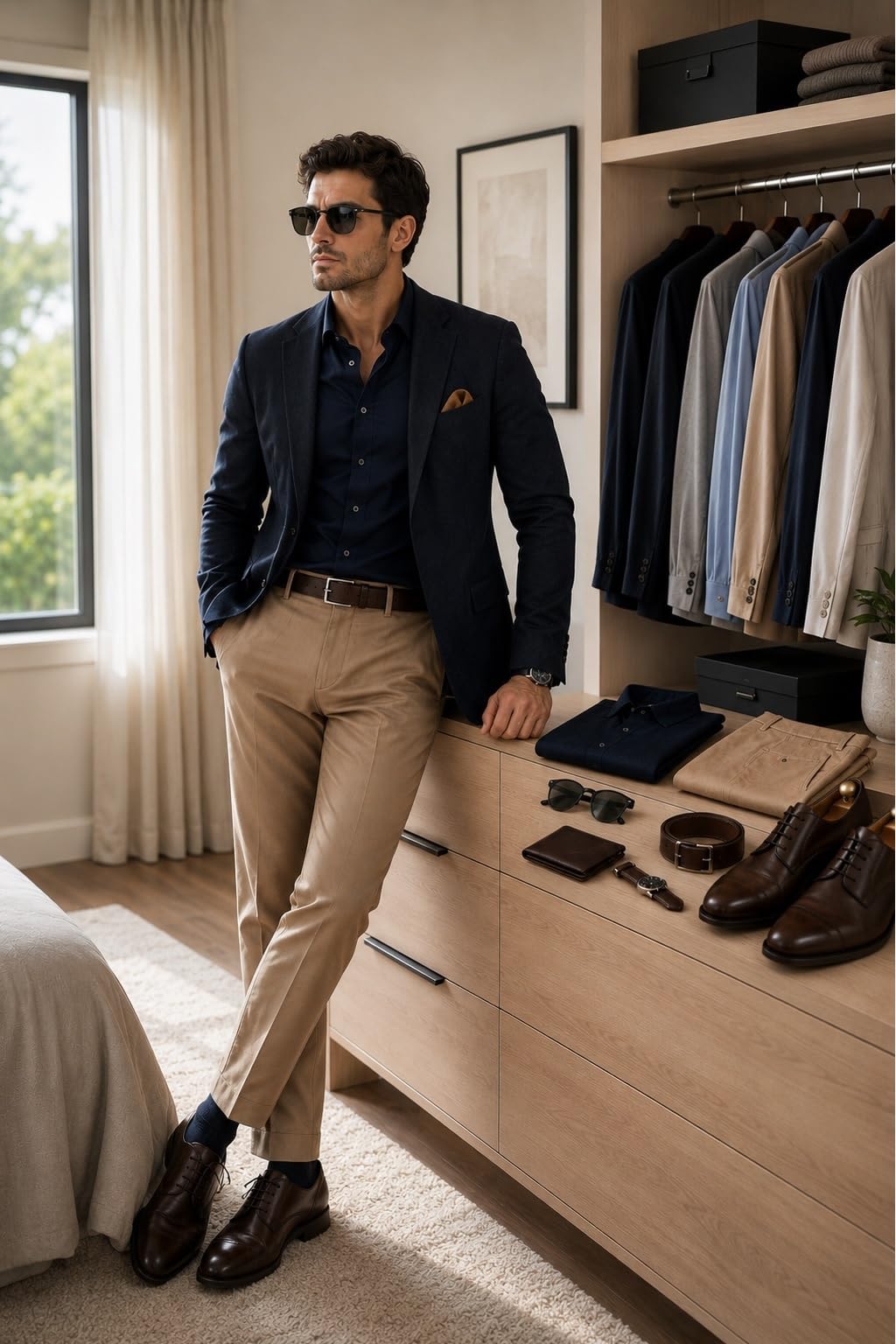

How to Style a Navy Blazer With Khaki Trousers in 2026 is built around proportion, comfort and occasion rather than rigid fashion rules. Fit, fabric, color balance, footwear, layering and accessories can change the same base piece from casual to polished.
Quick Verdict
- Best for: readers who want practical outfit formulas they can adapt to their own wardrobe and body shape.
- Focus on: fit, proportion, fabric, color balance, footwear, layering and accessories.
- Watch for: the most flattering outfit is the one that fits comfortably and suits the setting, not one that follows every trend.

To style a navy blazer with khaki trousers, begin with a blazer that sits cleanly at the shoulders and flat-front khakis with a straight or gently tapered leg. Add a white or light-blue shirt, medium-to-dark brown shoes and a matching belt. That simple formula can move from business casual to a wedding, date or weekend event by changing the shirt, footwear and accessories.
The most reliable outfit: a softly structured navy blazer, tailored tan chinos, a white Oxford shirt, dark-brown loafers and a brown leather belt. Add a burgundy or navy tie for a dressier setting; remove the tie and switch to clean white sneakers for a relaxed one.
The combination works because navy supplies depth and structure while khaki adds warmth and visual contrast. It looks coordinated without resembling a matching suit, which makes it especially useful when the invitation or dress code calls for smart casual or business casual.
Table of contents
Why a Navy Blazer and Khaki Trousers Work So Well
A navy blazer is dark enough to look polished but softer than black, while khaki sits on the warm, neutral side of the color wheel. The difference in value—dark on top and lighter below—creates a clear, balanced silhouette. It is also easy to repeat the warm tone of the trousers through brown leather shoes, a belt or a watch strap.
The outfit has strong menswear roots. Primer’s navy-blazer guide treats khakis, a solid shirt and loafers as the original combination, with a tie available when more formality is needed. Gentleman’s Gazette likewise describes the navy blazer as a versatile, season-spanning wardrobe piece that can move between interviews, weddings and casual outfits.
Khaki originally describes a tan or light-brown color, while chinos are cotton-twill trousers. Retailers often use the terms interchangeably. In this guide, khaki trousers means tailored tan or beige chinos rather than cargo pants.
The Four-Step Navy Blazer and Khaki Outfit Formula
Check the venue and dress code first. A meeting, wedding and weekend lunch need different shirts, shoes and accessories.
Pair a clean, softly structured blazer with straight or tapered trousers. Avoid combining a tight jacket with loose, pooling pants.
White and light blue are the safest choices. Fine stripes, pale pink, knit polos and lightweight sweaters add variety.
Brown loafers or derbies dress it up; suede chukkas soften it; clean leather sneakers make it casual.
Choose the Right Fit and Fabric
Fit carries more visual weight than labels or price. The blazer and trousers should follow the body without restricting movement, pulling at the buttons or creating excess fabric around the ankles.
- The shoulder seam ends close to your natural shoulder.
- The collar rests against the shirt collar without a visible gap.
- The front closes without an X-shaped pull at the button.
- The sleeve reveals roughly 0.25–0.5 inch of shirt cuff.
- The jacket gives you a comfortable range of movement.
- The waistband stays in place without being held up tightly by a belt.
- The seat lies cleanly without sagging or pulling.
- The leg is straight or gently tapered—not skin-tight.
- The hem touches the shoe with little or no stacking.
- Flat-front pockets remain closed rather than flaring outward.
The Art of Manliness guide to khakis recommends a flat front, a straight or gently tapered leg and a hem that avoids excessive bunching. It also advises pairing khakis with a soft, less-structured jacket so the two garments share a similar level of formality.
Blazer fabrics
- Hopsack wool: breathable, textured and versatile across several seasons.
- Cotton: relaxed and practical for business-casual or weekend wear.
- Linen or linen blend: airy and naturally rumpled for warm-weather events.
- Flannel or textured wool: warmer and visually richer for fall and winter.
Trouser fabrics
Midweight cotton twill is the easiest year-round choice. A small amount of stretch can improve comfort, especially for travel or long workdays. Use lighter cotton-linen blends in hot weather and brushed cotton or heavier twill when temperatures fall.
A navy suit jacket is not always a substitute for a blazer. Very smooth worsted fabric, formal shoulders and matching-suit details can look disconnected from casual cotton trousers. A standalone blazer or sport coat usually has enough texture to bridge the difference.
Best Shirts, Shoes and Accessories
Shirt colors and layers
| Shirt or layer | Best setting | Why it works | Finishing idea |
|---|---|---|---|
| White dress shirt | Office, interview, wedding | Crisp contrast and maximum versatility | Burgundy tie and dark-brown shoes |
| Light-blue Oxford shirt | Business casual, date | Connects naturally with navy without looking monochrome | Brown loafers; tie optional |
| Pale-pink shirt | Spring event, dinner | Adds restrained warmth against blue and tan | Chocolate-brown suede shoes |
| Fine stripe or small check | Creative office, smart casual | Adds pattern while the jacket and trousers remain neutral | Keep the tie and pocket square simple |
| Knit polo | Weekend, dinner, travel | More refined than a T-shirt but less formal than a dress shirt | Loafers or minimalist sneakers |
| Fine-gauge sweater or turtleneck | Fall and winter | Creates a clean layer without bulky shirt fabric | Suede chukkas or leather boots |
On a phone, swipe the table sideways to compare every column.
Shoes and belts
Medium brown is the most forgiving shoe color because it echoes the warmth of khaki and contrasts gently with navy. Dark brown and oxblood look dressier; tan and suede feel more relaxed. Black can work for a sharper evening outfit, but it creates more contrast and is less adaptable than brown.
| Footwear | Formality | Best use | Belt guidance |
|---|---|---|---|
| Dark-brown derby or Oxford | Dressy | Meetings, interviews, semi-formal events | Dark-brown leather |
| Oxblood brogue or monk strap | Dressy with personality | Dinners, weddings, creative workplaces | Oxblood or dark-brown leather |
| Brown leather loafer | Smart casual | Office, date, summer event | Similar brown tone; not necessarily an exact match |
| Brown suede chukka | Relaxed smart casual | Fall, weekend dinner, travel | Suede or matte leather belt |
| Minimal white leather sneaker | Casual | Brunch, daytime date, casual office | Brown woven belt or no visible belt |
On a phone, swipe the table sideways to compare every column.
Accessories
Use accessories to support the outfit rather than compete with it. A white linen pocket square, restrained wristwatch and brown leather belt are enough for most settings. When wearing a tie, burgundy, forest green, navy knit or a small geometric pattern complements the palette. Keep the tie and pocket square related in mood, but do not buy them as an identical matching set.
How to Wear the Combination for Any Occasion
| Occasion | Shirt or layer | Shoes | Key detail |
|---|---|---|---|
| Business casual | White or light-blue Oxford | Brown derby or loafer | Pressed trousers; optional tie |
| Job interview | White dress shirt | Dark-brown leather shoes | Use only when the employer’s dress code is not suit-formal |
| Wedding | White, pale blue or pale pink | Dark-brown or oxblood shoes | Tie and pocket square; confirm the invitation |
| Dinner or date | Oxford shirt, knit polo or turtleneck | Suede loafers or chukkas | Open collar and one refined accessory |
| Weekend brunch | Polo or quality plain T-shirt | Clean sneakers or loafers | Unstructured blazer with patch pockets |
| Travel | Knit polo or wrinkle-resistant shirt | Loafers or supportive minimalist sneakers | Stretch chinos and an unlined jacket |
On a phone, swipe the table sideways to compare every column.
Business casual and office wear
- Use a clean two-button blazer. A softly structured wool or cotton design looks professional without imitating a suit.
- Choose neat midweight chinos. Tan or camel trousers with a small break are reliable for meetings and client lunches.
- Add a white or light-blue shirt. Wear a tie when the room leans formal; otherwise, keep the collar open and tidy.
- Finish with polished brown shoes. A derby, brogue or loafer works; repeat the leather tone in the belt.

Weddings and semi-formal events
Choose a refined blazer in hopsack or smooth textured wool, tailored khaki trousers, a crisp shirt, a tie and polished leather shoes. A white pocket square adds a clean finish. The combination is appropriate for many daytime, outdoor, destination and smart-casual weddings.
A navy blazer and khakis are not a replacement for a tuxedo or matching suit when the dress code says black tie, formal or explicitly requests a suit. When uncertain, ask the hosts or choose the more formal option.
Dinner dates and evening plans
Replace the office shirt with a pale-blue Oxford, fine-gauge knit polo or lightweight turtleneck. Darker tan trousers and suede loafers make the outfit feel intentional but less corporate. Skip the tie, open one collar button and choose either a watch or pocket square as the focal accessory.
Weekend brunch and casual gatherings
Use an unstructured cotton or linen blazer with patch pockets. Under it, wear a heavyweight plain T-shirt, polo or casual button-down. Clean white leather sneakers, suede loafers or desert boots keep the look relaxed. The blazer should still fit properly; “casual” does not require an oversized or wrinkled jacket.
Travel and long days
Prioritize movement and temperature control: an unlined blazer, stretch chinos, a breathable knit polo and comfortable loafers or minimalist sneakers. Carry the blazer or hang it during the journey when possible, then brush or steam it lightly before an event.
Seasonal Color and Fabric Variations
| Season | Blazer | Trousers | Shirt or layer | Shoes |
|---|---|---|---|---|
| Spring | Lightweight hopsack or cotton | Stone or classic tan | White, pale blue or pale pink | Brown loafers |
| Summer | Unlined linen blend | Light cotton or cotton-linen | Breathable Oxford or knit polo | Suede loafers or clean sneakers |
| Fall | Textured wool or cotton twill | Camel, tobacco or olive-khaki | Oxford shirt or merino knit | Suede chukkas or brogues |
| Winter | Flannel or heavier wool | Heavy twill in medium or dark tan | Turtleneck or shirt with fine-gauge sweater | Dark-brown boots or derbies |
On a phone, swipe the table sideways to compare every column.

Common Styling Mistakes to Avoid
A shiny, highly structured suit jacket can look unrelated to cotton chinos. Choose a textured standalone blazer or sport coat.
A very short, tight blazer over loose trousers makes the outfit top-heavy. Keep both pieces similar in trimness and visual weight.
Excess fabric at the ankle weakens an otherwise polished look. Hem the trousers for a slight break or clean no-break finish.
A heavy flannel jacket and very thin summer chinos feel disconnected. Coordinate the weight and texture of both garments.
Sneakers can work, but they should be simple and clean. Performance trainers usually make the outfit too sporty.
A tie, lapel pin, bold watch, patterned square and bracelets compete for attention. Select one or two restrained accents.
A final mirror check
- Can you move and sit without the blazer pulling?
- Do the trouser hems fall cleanly over the shoes?
- Are the shoes appropriate for the venue and dress code?
- Does the belt relate to the footwear?
- Is one item clearly dressier or more casual than everything else?
- Have you removed temporary stitching and opened the jacket vents?
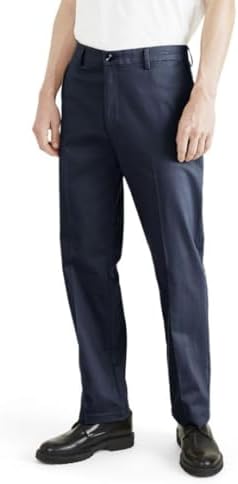
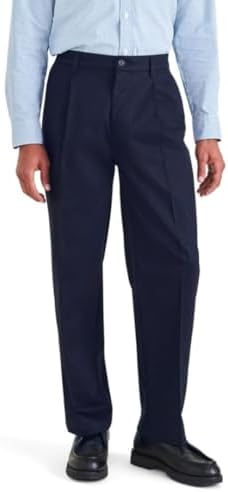
Build the Navy-and-Khaki Outfit
Use these links as a starting point for comparing the core pieces. A good fit matters more than choosing a particular brand.
Prices and availability can change. Review the current listing details and return policy before buying.
Final Verdict
A navy blazer with khaki trousers works for so many occasions because the outfit has a stable foundation and adjustable details. Keep the fit clean, match the fabric weights, begin with a white or light-blue shirt and choose brown footwear appropriate to the venue. From there, a tie and polished derbies make the outfit dressier, while a knit polo and clean sneakers make it more relaxed.
The most important rule is context. Read the dress code, consider the time and setting, and make sure every piece belongs at roughly the same level of formality. When those elements align, the combination looks confident rather than complicated.
This guide was reviewed on August 17, 2026. Its recommendations combine established menswear principles with the cited editorial references below. Product links are optional examples selected for category relevance; they are not presented as personally tested items or guaranteed recommendations.
Frequently Asked Questions
Can I wear a navy blazer with khaki trousers to a wedding?
Yes, when the wedding dress code is smart casual, dressy casual or some forms of semi-formal daytime wear. Add a crisp shirt, tie, pocket square and polished leather shoes. Choose a matching suit or tuxedo instead when the invitation specifies formal or black tie.
What color shirt looks best with a navy blazer and khakis?
White is the most versatile, followed by light blue. Pale pink, subtle stripes and small checks also work. For casual outfits, try a white knit polo or heavyweight plain T-shirt.
What shoes go with a navy blazer and khaki pants?
Brown loafers, derbies, brogues and suede chukkas are reliable choices. Dark brown or oxblood looks dressier; medium brown is versatile; minimalist white leather sneakers suit casual settings.
Can I wear black shoes with this outfit?
Yes, particularly for a sharper evening outfit with darker khakis, but black creates stronger contrast. Brown or oxblood footwear usually blends more naturally with the warm tone of tan trousers.
Should I wear a tie with a navy blazer and khakis?
Wear a tie for dressier meetings, interviews, weddings and evening events. An open-collar Oxford shirt is usually enough for business casual, dates and relaxed social occasions.
Is a navy blazer and khaki trousers outfit business casual?
Yes, it is a classic business-casual combination in many workplaces. Use pressed trousers, a collared shirt and leather shoes, then confirm that your employer does not require a matching suit.
Can I wear a T-shirt under the navy blazer?
Yes, for casual offices, brunch or a daytime date. Choose a substantial, opaque T-shirt with a clean neckline and minimal branding. White, cream or a restrained stripe works best.
What shade of khaki works best with navy?
Classic tan and camel are the most versatile. Stone feels lighter for spring and summer, while tobacco, olive-khaki and darker tan add depth in fall and winter.
Should the blazer and trousers have the same fit?
They do not need identical cuts, but their proportions should agree. A trim blazer works best with straight or tapered trousers, while a relaxed jacket needs pants with enough room to keep the silhouette balanced.
Sources and Further Reading
- Primer: How to Style a Navy Blazer
- The Art of Manliness: A Man’s Guide to Khakis
- Gentleman’s Gazette: Men’s Navy Blazers Reviewed

Bottom Line
Use these combinations as starting points rather than rules. Good styling comes from balanced proportions, comfortable fit and a few coordinated details that make the outfit feel intentional.