
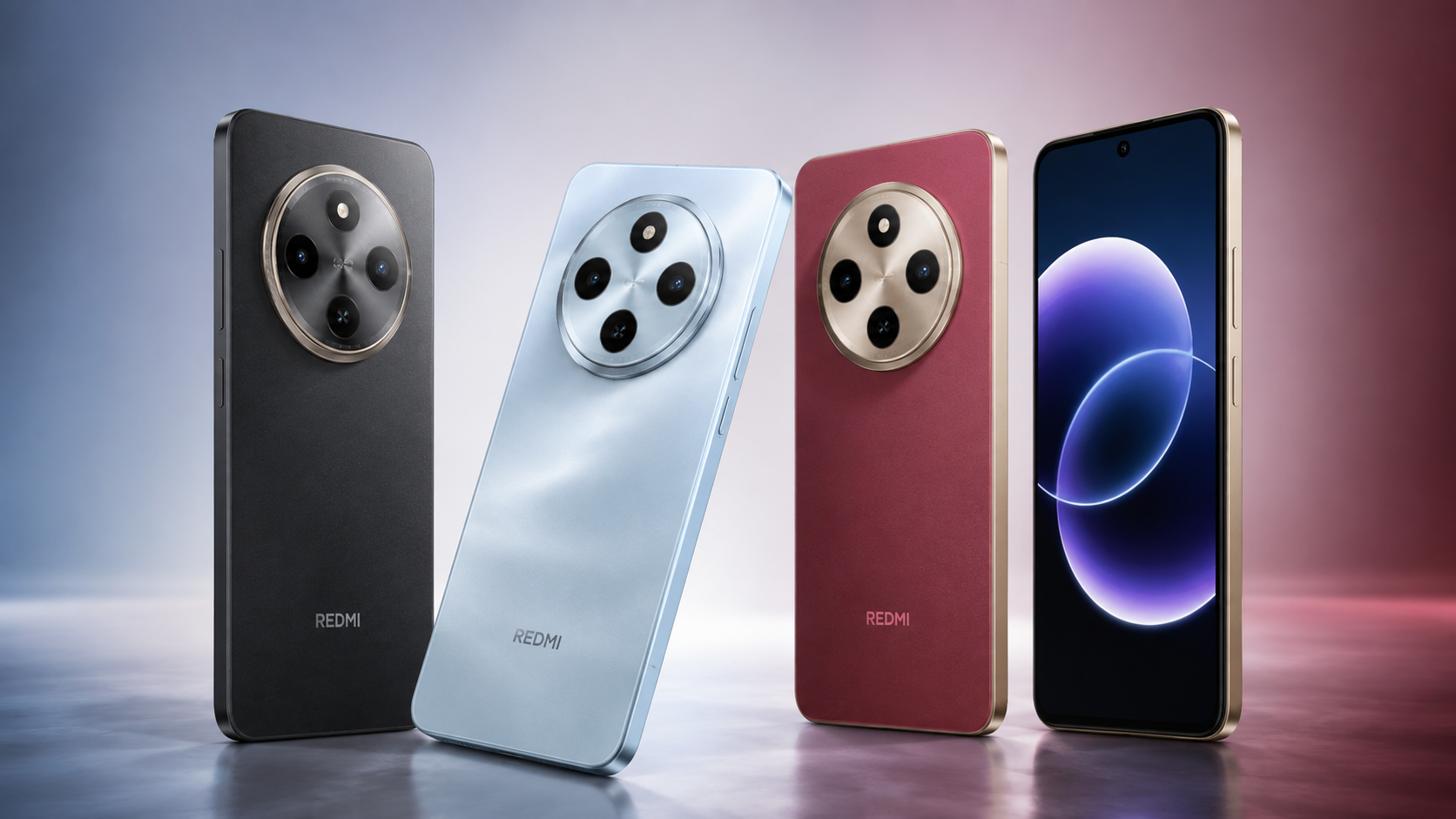
Quick verdict
The Redmi 17C 5G is a practical S$279 budget phone for buyers who value battery size, expandable storage, 5G and a large display. Its 6,000mAh battery, 120Hz screen, headphone jack and microSD support are useful at this price, but 4GB of RAM and the low-resolution 6.9-inch panel limit its appeal for heavy multitasking and sharp-looking media.
The biggest buying catch is simple: the phone supports 33W charging, while Xiaomi includes only a 15W adapter in the Singapore box. Reaching the advertised charging ceiling therefore requires a separately purchased compatible charger.
Xiaomi introduced the Redmi 17C 5G in Singapore on August 26, 2026. The confirmed retail configuration combines 4GB of RAM and 128GB of storage for S$279. It is a new model, so that figure is a launch price—not a discount from a proven earlier selling price.
This Redmi 17C 5G review preview separates the useful hardware from the marketing numbers and explains who should buy it. All core specifications come from Xiaomi’s official Singapore product page; performance, camera quality and endurance still need independent hands-on testing.
In this guide
Table of contents
Redmi 17C 5G Price in Singapore and Availability
| Market | Configuration | Confirmed price | Status |
|---|---|---|---|
| Singapore | 4GB RAM + 128GB storage | S$279 | Officially listed by Xiaomi Singapore |
| India | Not announced | Not announced | No confirmed launch at publication time |
| Other markets | Varies if announced later | Not announced | Check the regional Xiaomi store rather than importing blindly |
Regional model numbers, network bands, charger contents, warranty coverage and software can differ. An imported Singapore unit may not receive local after-sales support elsewhere. Buyers outside Singapore should wait for a local product page and authorised retail listing before assuming price or compatibility.
Redmi 17C 5G Specifications at a Glance
| Feature | Confirmed specification | Why it matters |
|---|---|---|
| Display | 6.9-inch LCD, 1600 × 720, up to 120Hz, quoted 810-nit peak | Large and smooth, but modest pixel density |
| Processor | MediaTek Dimensity 6300, 6nm | Entry-level 5G platform for daily tasks |
| Memory | 4GB LPDDR4X RAM and 128GB UFS 2.2 storage | Storage is adequate; RAM is the likely bottleneck |
| Expansion | microSD support up to 1TB | Useful for photos, downloads and offline media |
| Cameras | 50MP main rear camera and 8MP front camera | Promising resolution, but image processing determines results |
| Battery | 6,000mAh typical capacity; 33W charging supported | Strong capacity for a budget 5G phone |
| Boxed adapter | 15W power adapter | Cannot deliver the phone’s maximum charging rate |
| Other features | IP64 rating, 3.5mm headphone jack and FM radio | Practical features often omitted from costlier phones |
Large 120Hz Display: Smooth, but Not Especially Sharp
The 6.9-inch LCD is one of the Redmi 17C 5G’s headline features. A refresh rate of up to 120Hz can make scrolling and supported animations look smoother than a conventional 60Hz panel. Xiaomi quotes up to 810 nits of peak brightness, although peak figures are measured under particular conditions and do not describe brightness sustained across the whole panel.
The compromise is resolution. Stretching 1600 × 720 pixels across 6.9 inches produces lower pixel density than a Full HD+ screen. Text, fine interface elements and high-resolution video may look less crisp at close range. That trade-off can reduce display power use and processing demand, but readers who prioritise sharpness should compare the screen in person.
The large canvas suits maps, social feeds and video subtitles. It also makes the phone physically substantial, so small-handed users should check one-handed comfort rather than buying from screen size alone.
Dimensity 6300 Performance, 4GB RAM and Expandable Storage
MediaTek’s Dimensity 6300 gives the phone 5G connectivity and enough processing power for calls, messaging, browsing, streaming, navigation and lighter games. It is not intended to match an upper-midrange or flagship chipset in graphics performance, camera processing or sustained heavy workloads.
The more important limitation may be the 4GB of physical RAM. Xiaomi can advertise memory extension using part of the storage, but virtual memory is slower and should not be counted as equal to physical RAM. Frequent app switching, large games and years of increasingly demanding software may expose the constraint.
UFS 2.2 storage is a welcome step above the slowest entry-level storage types, and 128GB is reasonable for this class. The microSD slot is particularly valuable for downloaded video, music and photos. Apps and performance-sensitive games are generally better kept on internal storage.
Who is the hardware suited to?
- Students and first-time smartphone buyers with routine workloads.
- Users who need a secondary 5G phone with long potential runtime.
- People who keep large offline media libraries on microSD cards.
- Buyers who still use wired headphones or FM radio.
Power users, competitive gamers and anyone who keeps many apps active should look for at least 6GB or 8GB of physical RAM.
6,000mAh Battery and the 15W Charger Catch
A 6,000mAh battery paired with a modest-resolution LCD and efficient entry-level processor creates a credible foundation for strong endurance. Xiaomi also says the battery can retain at least 80% of its original capacity after 1,000 charge cycles under its testing conditions. That is a manufacturer durability claim, not a guarantee of identical results for every owner.
The phone accepts up to 33W charging, but the supplied adapter is rated at 15W. In practical terms, the device will charge more slowly out of the box than its specification ceiling permits. A compatible 33W charger adds to the effective ownership cost, and the correct cable and charging protocol matter as much as the wattage printed on a third-party adapter.
Before buying another charger
Check Xiaomi Singapore’s compatibility guidance and use a reputable, safety-certified adapter and cable. A generic “33W” label does not guarantee that the phone and charger negotiate the maximum supported rate. Charging speed also falls as the battery fills and can be reduced by heat or active use.
What to Expect From the 50MP Camera
The Redmi 17C 5G includes a 50MP main rear camera and an 8MP front camera. Megapixel count describes output resolution, not overall quality. Sensor size, lens brightness, autofocus, image processing and night-mode behaviour have a larger effect on usable photographs.
In this price class, buyers should expect the main camera to perform best outdoors or in bright indoor light. Look for independent samples showing moving subjects, skin tones, HDR scenes and night photos. The published hardware does not establish flagship-level detail, and there is no reason to infer optical zoom from the 50MP label.
HyperOS, Durability and Long-Term Ownership
The Singapore model launches with Xiaomi HyperOS 3 based on Android 16. Xiaomi’s regional page should be the authority for the shipping software and any published update commitment. If long-term use matters, check the official security-update schedule before purchase; a launch version alone does not tell you how many major upgrades the phone will receive.
An IP64 rating means the phone has tested resistance to dust ingress and splashing water under controlled conditions. It is not designed for immersion, and water resistance can decline with age, impact or repair. The 3.5mm jack is a genuine convenience for wired audio, while the advertised 200% volume mode should be treated as a loudness setting—not a measure of clarity or speaker fidelity.
Redmi 17C 5G Strengths and Trade-Offs
| Area | Advantage | Trade-off |
|---|---|---|
| Battery | Large 6,000mAh capacity | 15W adapter in the box is slower than the supported 33W rate |
| Display | Large 120Hz panel | Only 1600 × 720 resolution across 6.9 inches |
| Connectivity | Affordable 5G support | Imported models may not suit every network or warranty region |
| Memory | 128GB storage plus microSD expansion | 4GB physical RAM limits heavier multitasking |
| Practical features | Headphone jack, FM radio and IP64 rating | No premium camera or flagship performance promise |
Is the Redmi 17C 5G Worth Buying?
FrediTech verdict
At S$279, the Redmi 17C 5G makes the most sense as a practical battery-first phone for light and moderate users. It offers 5G, ample expandable storage, a high-refresh display and legacy conveniences that are increasingly rare.
Buy it if those features matter more than display sharpness, camera versatility and heavy multitasking. Budget for a compatible faster charger only if shorter top-up times matter. Buyers who game heavily, edit media or expect to keep many apps open should prioritise more physical RAM, even if that means accepting a smaller battery.
Use FrediTech’s smartphone buying guide to compare processor class, storage, update policies and camera hardware before choosing a budget phone.
Frequently Asked Questions
What is the Redmi 17C 5G price in Singapore?
The Redmi 17C 5G is officially listed at S$279 in Singapore for the configuration with 4GB of RAM and 128GB of storage.
Does the Redmi 17C 5G include a 33W charger?
No. The phone supports charging at up to 33W, but Xiaomi lists a 15W power adapter in the Singapore package. A compatible faster charger must be purchased separately.
Does the Redmi 17C 5G support microSD cards?
Yes. Xiaomi lists microSD expansion of up to 1TB, which is useful for photos, downloads and offline media.
Is the Redmi 17C 5G good for gaming?
The Dimensity 6300 should handle lighter and popular games at suitable settings, but 4GB of RAM and entry-level graphics make the phone a poor choice for demanding or sustained high-frame-rate gaming.
Is the Redmi 17C 5G available in India?
Xiaomi had not confirmed an India launch at the time this guide was updated on August 27, 2026. Buyers should rely on an official regional Xiaomi announcement rather than imported-listing speculation.