Table of contents
FrediTech verdict at a glance
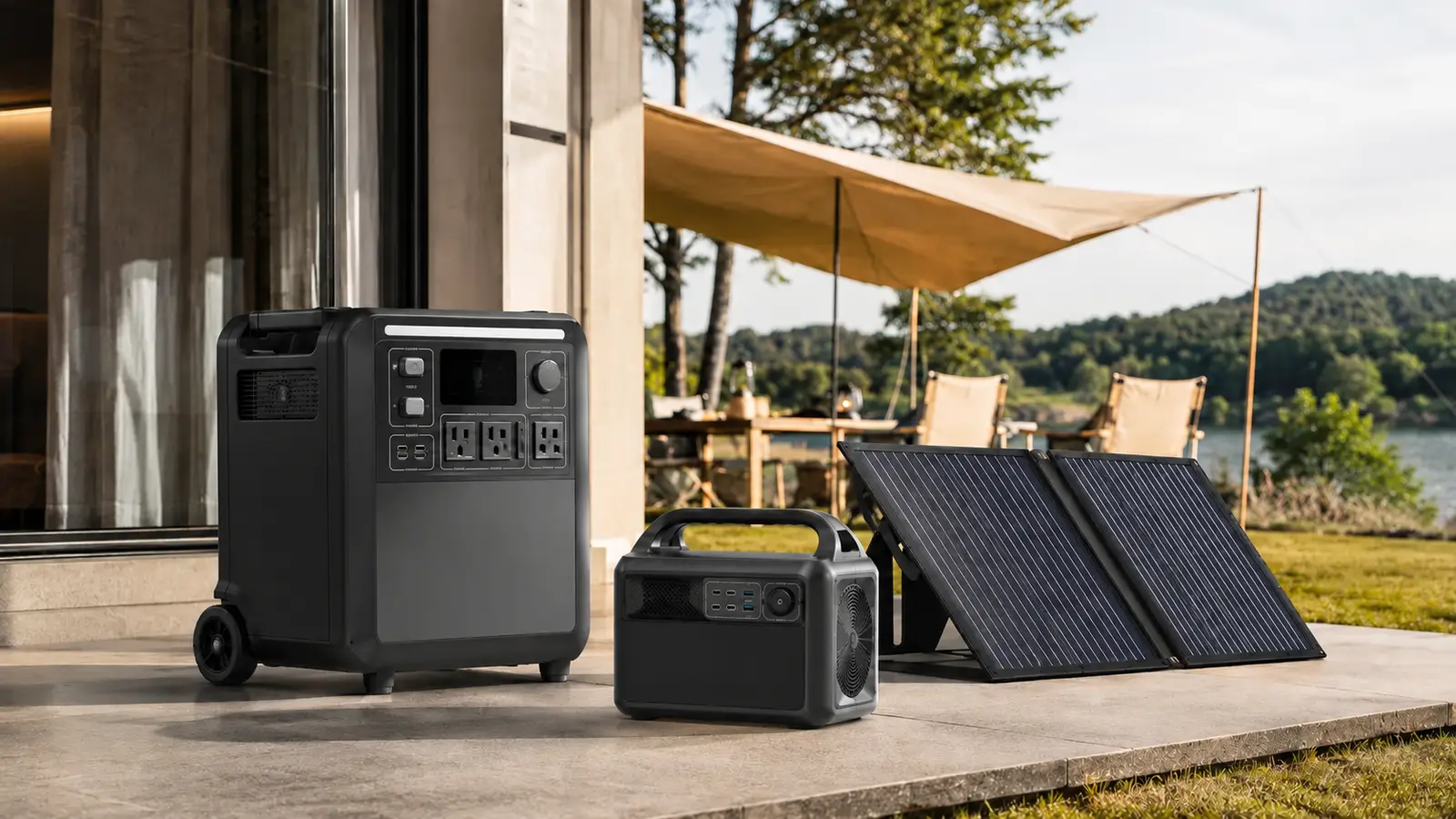
FOSSiBOT’s IFA 2026 range covers two very different jobs. The 2,048Wh F3000 is a 3,000W home-backup and high-draw camping power station, while the 288Wh FDC300 is a lighter 2.66kg unit with a built-in folding fan and 140W bidirectional USB-C. The specifications are interesting, but pricing, warranty terms and final retail availability are still missing.
Best preliminary fit: F3000 for appliances and backup; FDC300 for desks, tents and small electronics. Do not confuse either product with: a dedicated EV charger or a substitute for a professionally installed home battery.
Affiliate disclosure: FrediTech may earn from qualifying Amazon purchases made through links in this guide, at no additional cost to you. Recommendations remain independent.
FOSSiBOT’s IFA 2026 portable-power lineup
FOSSiBOT confirmed that it will exhibit the F3000, FDC300 and balcony-energy products at IFA Berlin from September 4–8, 2026. The company lists capacity, output and charging claims, but it has not published complete launch pricing, market-by-market release dates or consumer warranty terms for the new models. This guide therefore explains the specification sheet and the questions buyers should ask before ordering.
| Specification | FOSSiBOT F3000 | FOSSiBOT FDC300 |
|---|---|---|
| Battery capacity | 2,048Wh | 288Wh |
| Maximum quoted output | 3,000W AC | 140W bidirectional USB-C highlighted |
| Solar input | Up to 1,200W claimed | Not fully detailed in the announcement |
| Weight | Not confirmed in the preview | 2.66kg |
| Distinctive feature | Smart ECO energy management | Integrated folding fan |
| Best preliminary use | Backup, tools, RVs and high-draw devices | Laptops, cameras, lights and personal cooling |
F3000: capacity and output explained
A 2,048Wh battery stores roughly two kilowatt-hours before conversion losses. That is enough to make the F3000 relevant to refrigerators, communications equipment, lighting, CPAP machines, power tools and campsite appliances. Its 3,000W AC rating suggests it can start and run substantially more demanding equipment than a small power bank, but every buyer should check both continuous and surge requirements.
Usable runtime is never simply battery watt-hours divided by the number printed on an appliance. The inverter consumes energy, and compressors or heating elements cycle. As a rough planning example, a constant 100W load might run for materially less than 20.5 hours after losses, while a 1,500W heater could drain the battery quickly. A plug-in energy meter gives a better estimate than an appliance’s maximum label alone.
FOSSiBOT advertises up to 1,200W solar input. Achieving that figure requires compatible panel voltage and current, good sunlight, suitable orientation and enough panel area. Cloud, heat, shading and cable losses reduce production. The maximum number is not a daily yield guarantee.
FDC300: a power station with its own fan
The FDC300 combines a 288Wh battery with a folding fan, which could be useful in a tent, dorm room, workshop or during a short outage. At 2.66kg, it is portable in the literal sense but heavier than a typical laptop power bank. The built-in fan avoids carrying a separate appliance and cable, though its airflow, noise and energy consumption require testing.
The highlighted 140W bidirectional USB-C port is valuable for modern laptops because one connection can charge the FDC300 or power a compatible device. Maximum USB-C speed depends on supported USB Power Delivery profiles and a correctly rated cable. A 240W e-marked cable is a sensible choice for devices operating above 100W, but the connected laptop will still draw only what both ends negotiate.
Balcony storage: a different product category
FOSSiBOT is also showing balcony-energy products including the FBP1200. These systems pair solar generation with storage for home use. They should not be assessed like a portable power station: grid connection, inverter certification, export limits, local electrical codes and landlord or homeowners-association rules can all apply. Installation requirements vary significantly across Europe and other markets.
Safety and EV-charging note
A portable power station is not a dedicated EV charger. Even when an EV’s portable charging cable can physically plug into an AC outlet, grounding, output waveform, continuous-load limits and manufacturer instructions determine whether charging is safe or supported. Never improvise adapters, bypass ground checks or run high loads through coiled or underrated extension cables.
Five specifications missing from the preview
- Battery chemistry and cycle-life test: capacity retention and test conditions matter more than a cycle number alone.
- Recharge time: separate figures are needed for wall, solar, car and combined charging.
- UPS transfer time: sensitive computers and medical devices may have stricter requirements.
- Warranty and service: confirm coverage in the buyer’s country and who pays return freight.
- Port-level limits: total output does not mean every socket can deliver the full rating simultaneously.
Useful portable-power accessories
Compatibility matters more than connector appearance. Confirm voltage, current, polarity and cable rating in the final FOSSiBOT manual before buying solar or high-power USB-C accessories.
Do not order a solar panel until its electrical range and connector are confirmed compatible with the final product.
Which model fits which buyer?
Consider the F3000 for
- Home outage essentials
- RVs, workshops and high-draw camping appliances
- Large solar arrays where the input specification matches
- Users who need several AC loads
Consider the FDC300 for
- Laptops, phones, cameras and lights
- Short outages or day trips
- Personal cooling in a tent or small workspace
- Buyers who prioritize lower carrying weight
Final buying advice
Choose a power station by measured load, required runtime, recharge opportunity and local support—not the largest wattage on the box. The F3000’s specification could make it a capable backup platform, while the FDC300’s fan and 140W USB-C create a more distinctive travel proposition. Wait for price, warranty, battery chemistry and independent efficiency testing before deciding whether either one beats established alternatives.
Frequently asked questions
Can the FOSSiBOT F3000 power a refrigerator?
Its quoted 3,000W output should cover many refrigerators, but start-up surge and energy use vary. Check the appliance label, measure actual consumption and confirm the final F3000 surge specification.
Can the F3000 charge an electric car?
It is not a dedicated EV charger. Do not assume compatibility merely because an EV cable fits an AC socket; follow both manufacturers’ grounding and continuous-load instructions.
Does the FDC300 support 140W laptop charging?
FOSSiBOT highlights 140W bidirectional USB-C. The laptop, protocol and cable must also support the negotiated power level.
How fast will 1,200W of solar recharge 2,048Wh?
A simple division suggests under two hours, but that ignores tapering, heat, conversion losses, weather and panel conditions. Use the manufacturer’s final measured recharge specification rather than that theoretical minimum.
Sources and methodology
This guide is based on FOSSiBOT’s official IFA 2026 preview. Performance figures are manufacturer specifications and require independent verification; unannounced pricing and warranty details have not been inferred.