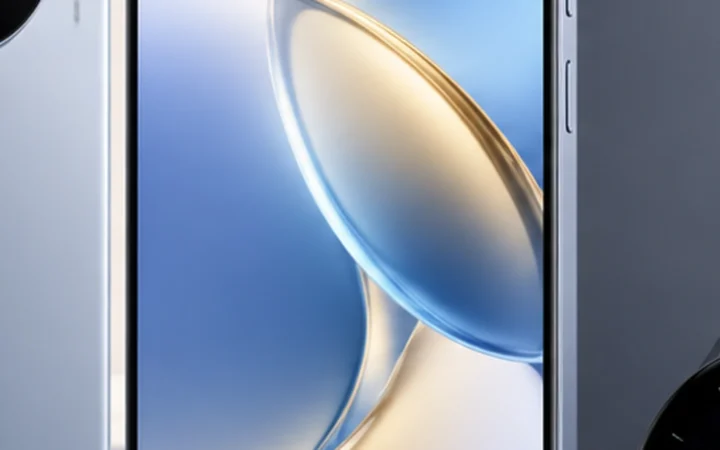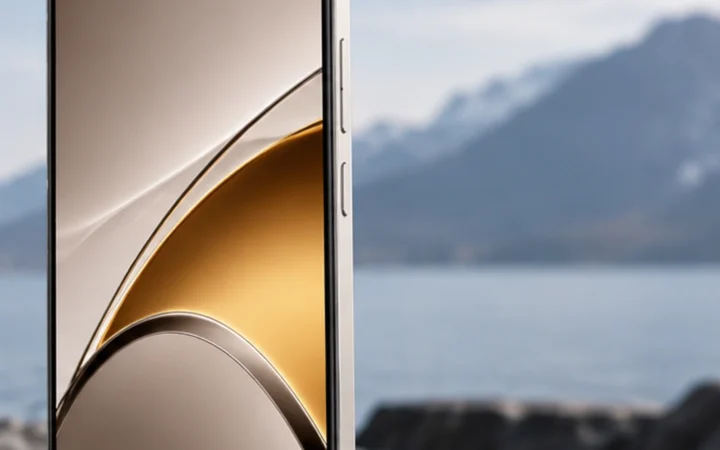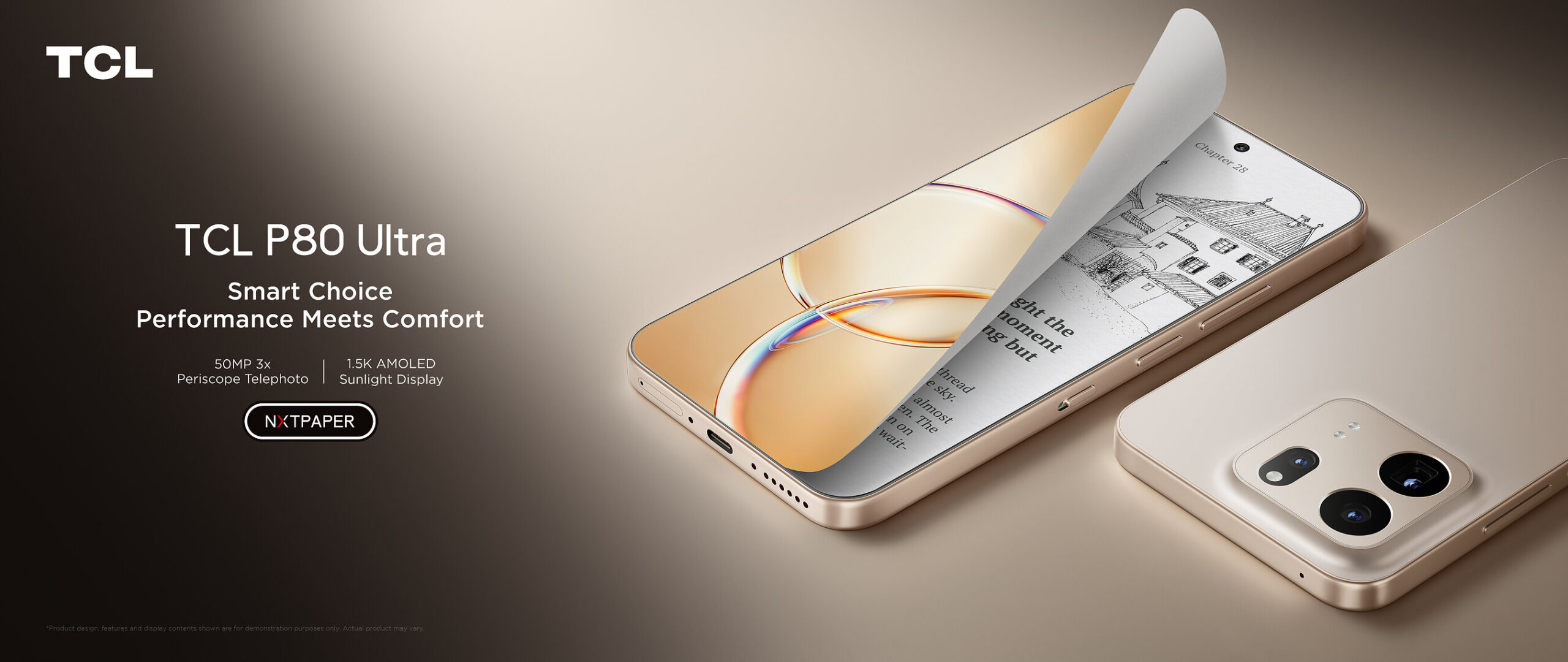

TCL’s P80 family starts at €349, while the €429 P80 Pro and €549 P80 Ultra bring TCL’s NXTPAPER treatment to 120Hz AMOLED. The lineup is more nuanced than the early launch shorthand suggests: the standard P80 also uses a 6.83-inch 1.5K 120Hz AMOLED panel, but without NXTPAPER; the Pro keeps most of the Ultra’s core hardware for €120 less; and the Ultra’s clearest upgrade is a dedicated 50MP 3x periscope telephoto.
The battery headline needs equal care. TCL says Max Ink can support up to seven days of reading-focused use by switching to a monochrome interface and restricting background activity. That is not seven days of normal smartphone use, and NXTPAPER is not E Ink. Early independent testing is already useful: Tweakers measured 13h47 in its normal battery test and just over 16 hours in Max Ink, while Geeknetic praised the matte display but found camera processing inconsistent.
FrediTech early verdict: the €429 P80 Pro looks like the best value for readers. The Ultra is easier to justify if its 3x camera matters enough to pay another €120. US buyers should wait for official price and timing.
Table of contents
TCL P80 Series at a Glance
| Feature | P80 | P80 Pro | P80 Ultra |
|---|---|---|---|
| Europe starting price | €349 (8/128GB) | €429 (8/256GB) | €549 (8/256GB) |
| Display | 6.83in 1.5K AMOLED, 120Hz | 6.83in 1.5K NXTPAPER AMOLED, 120Hz | 6.83in 1.5K NXTPAPER AMOLED, 120Hz |
| Peak brightness | Up to 3,200 nits* | Up to 3,200 nits* | Up to 3,200 nits* |
| Chipset | Dimensity 7300 Elite* | Dimensity 7400 Elite* | Dimensity 7400 Elite* |
| Main / telephoto | 50MP OIS / none | 50MP OIS / none | 50MP OIS / 50MP 3x periscope OIS |
| Battery / charging | 5,000mAh / 45W | 5,800mAh / 45W | 5,800mAh / 45W |
| Storage | 128/256GB | 256/512GB | 256/512GB |
| NXTPAPER / Max Ink | No | Yes | Yes |
| Software promise | 3 OS upgrades; 7 years security** | 4 OS upgrades; 7 years security** | 4 OS upgrades; 7 years security** |
| IP rating | IP68* | IP68* | IP68* |
* Manufacturer specification. **Briefing information reported by Android Authority; see the software-support caveat below.
Price and availability
TCL announced the P80 series at IFA 2026 on September 3 at 8:30 a.m. ET. European rollout began around launch, with country-level dates and configurations varying. Latin America is due from October. TCL has only said the US will follow “a bit later,” so there is no confirmed US release date or US MSRP.
The pricing ladder is clear: €349 for P80, €429 for P80 Pro and €549 for P80 Ultra. P80 to Pro is an €80 or 22.9% premium. Pro to Ultra adds €120 or 28.0%. P80 to Ultra adds €200 or 57.3%. Current European listings also show 256GB P80 around €379, 512GB Pro around €499 and 512GB Ultra around €599 where those SKUs are sold.
The most important spec correction is that the standard P80 does not switch to a different display technology. TCL’s official page lists the same broad 6.83-inch, 2772×1280, 120Hz AMOLED format and claimed 3,200-nit peak. What it loses is NXTPAPER, the NXTPAPER key, 800mAh of battery capacity, some storage headroom and the faster Dimensity 7400 Elite used by Pro and Ultra.
The Pro is much closer to the Ultra: NXTPAPER AMOLED, Dimensity 7400 Elite, 5,800mAh, 45W, 8GB physical RAM and up to 512GB storage are shared. The Ultra’s clearest hardware upgrade is the extra 50MP 3x periscope camera.
How can NXTPAPER work on AMOLED?
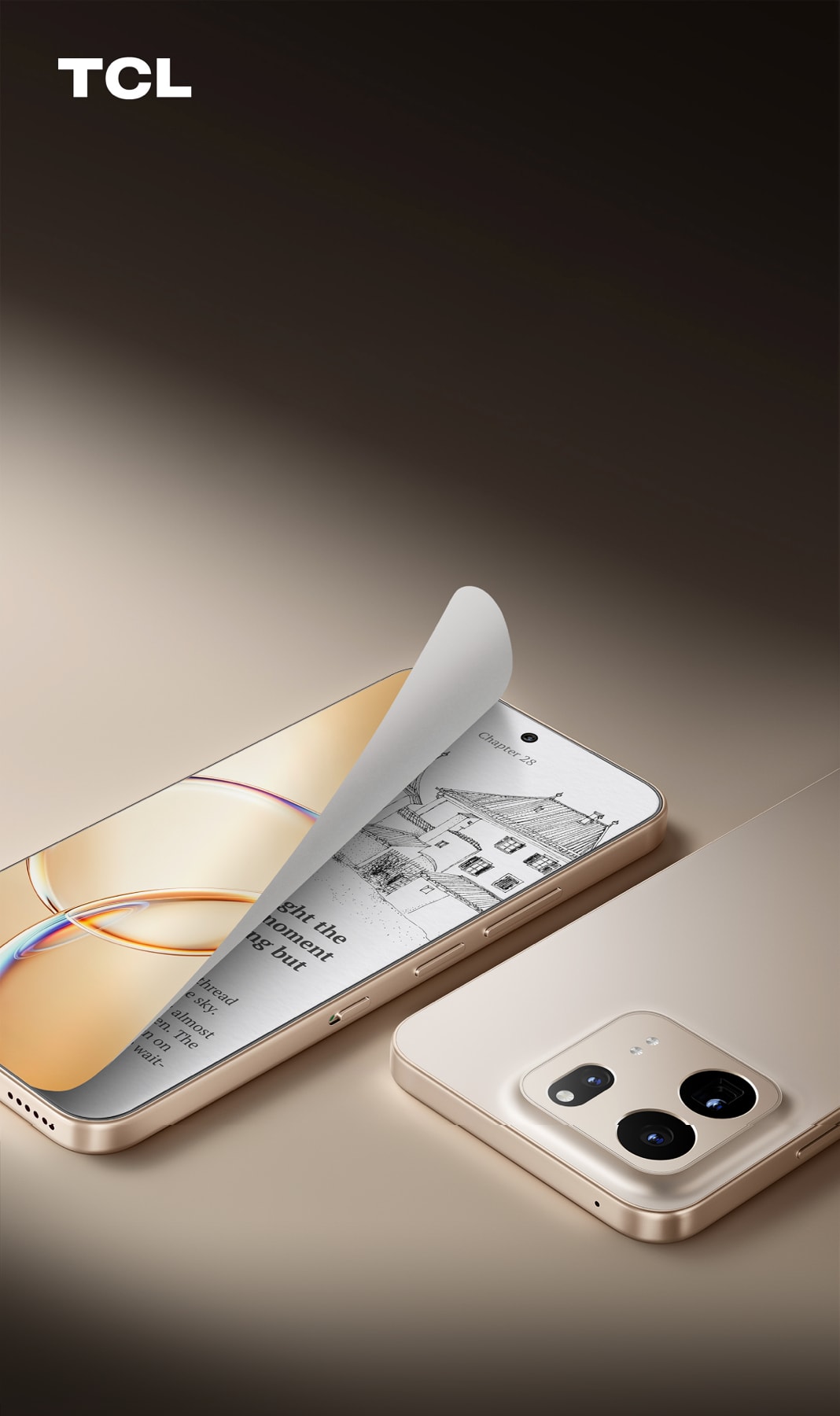
NXTPAPER is TCL’s combination of optical display treatment and software modes. On the Pro and Ultra, the underlying panel remains self-emissive AMOLED. TCL adds a nano-etched anti-glare surface, circular-polarization treatment and the side-mounted NXTPAPER key for Paper Mode and Max Ink.
That is fundamentally different from E Ink. OLED pixels emit light while active; E Ink uses electrophoretic particles in a reflective panel and can retain a static page with very little power. A monochrome AMOLED interface therefore does not become electronic paper.
NXTPAPER is not E Ink. Paper Mode and Max Ink change appearance, software behavior and power management, but the screen remains AMOLED.
TCL specifies DC dimming in bright scenes and 3,840Hz high-frequency PWM in dark scenes. Those are manufacturer claims, not independent flicker measurements. We found no instrumented independent PWM data for the P80 Ultra at publication, so flicker-sensitive buyers should wait for measured modulation-depth testing.
What does Max Ink actually do?
Paper Mode is the lighter option. Geeknetic found that it keeps normal apps available while making colors softer; camera and video apps can temporarily return to normal rendering when color is needed.
Max Ink is deliberately stricter. It switches to a monochrome reading interface, limits app access and suppresses background activity and nonessential notifications. Hands-on reports say core functions such as calls, messages, books, calendar and calculator remain available while many general apps are restricted. That is important because the battery saving is not simply a grayscale effect—it also comes from reducing activity and distraction.
For students, commuters and long-form readers, that can be useful. For users who need constant social notifications, color diagrams or unrestricted apps, Max Ink has real trade-offs.
Can TCL P80 Ultra really last seven days?
Only in TCL’s specialized Max Ink scenario. It should not be described as seven-day mixed-use battery life. TCL also advertises up to 26 days of standby in that low-power context.
Tweakers measured 13h47 in its normal battery benchmark and just over 16 hours in Max Ink, about an 18% gain in that particular test. Geeknetic reported around 16 hours in PCMark at controlled brightness. Those figures do not invalidate TCL’s reading-only test; they show why readers should keep normal smartphone endurance separate from Max Ink claims.
TCL specifies 45W USB-PD charging. Tweakers measured 49% after 30 minutes and about 1h32 to full. A wall adapter is not guaranteed in every region, so check the exact retailer bundle.
Eye-comfort claims: useful engineering, not medical promises
TCL markets reduced glare and blue-light exposure, circular polarization, high-frequency dimming and SGS visual-comfort certifications. The safe interpretation is that the display is designed to reduce glare and blue-light exposure. None of that proves prevention of eye strain, headaches or sleep problems.
Independent impressions do support one practical benefit: the matte surface. Geeknetic found it pleasant outdoors, while Tweakers said the screen looked calmer than a normal phone in dark conditions but still emitted light and could not reproduce the passive feel of an e-reader.
How fast are P80 Pro and Ultra?
Pro and Ultra use MediaTek’s 4nm Dimensity 7400 Elite; P80 uses Dimensity 7300 Elite. These are midrange/upper-midrange chips, not flagship silicon. The “Ultra” name does not make this a Snapdragon 8-class performance phone.
For reading, browsing, messaging, streaming and routine multitasking, 8GB of physical RAM should be adequate. TCL’s extra “up to 16GB RAM expansion” is storage-based virtual memory, not additional physical RAM. Geeknetic found everyday performance acceptable but considered the processor less impressive than the display and build.
MicroSD support was not clearly confirmed in the official specifications reviewed. Buyers who need substantial local storage should choose capacity accordingly rather than assume expandability.
P80 Ultra camera: the strongest reason to spend more
The Ultra combines a 50MP 1/1.56-inch f/1.88 main camera with OIS/EIS, an 8MP autofocus ultrawide and a dedicated 50MP 3x periscope telephoto with stabilization. Pro and P80 keep the 50MP main and 8MP ultrawide but omit the periscope.
A dedicated 3x lens is a real hardware advantage over digital zoom because it captures through its own optical path instead of simply cropping the main sensor. It can help with portraits, details and distant subjects. But 50MP is not proof of image quality.
Early testing is the warning. Geeknetic observed overexposure and limited dynamic range in some scenes. Tweakers also found the overall camera experience disappointing for the price, although the telephoto could produce appealing close-focus shots. Buyers who prioritize photography should wait for broader post-launch firmware testing before assuming the Ultra beats established camera phones around €500–€600.
| Camera | P80 | P80 Pro | P80 Ultra |
|---|---|---|---|
| Main | 50MP, 1/1.56in, OIS* | 50MP, 1/1.56in, OIS* | 50MP, 1/1.56in, OIS* |
| Ultrawide | 8MP AF* | 8MP AF* | 8MP AF* |
| Telephoto | — | — | 50MP 3x periscope, OIS* |
| Selfie | 32MP* | 32MP* | 32MP* |
| 4K video | Not confirmed in official pages reviewed | Not confirmed | Not confirmed |
* Manufacturer specification.
Software support: one point still needs regional confirmation
All three launch with Android 16. TCL’s media briefing information reported by Android Authority says P80 Pro and Ultra are slated for four major Android upgrades and seven years of security updates, while P80 gets three major OS upgrades and the same seven-year security window.
However, some early third-party spec reports list only three major upgrades for the Pro, and TCL’s public product pages we reviewed do not clearly publish the count. Long-term buyers should therefore verify the regional support terms before purchase. Seven years of security support also does not mean seven Android-version upgrades or guarantee monthly patches.
Is P80 Ultra worth €120 more than P80 Pro?
For readers, usually no. Both share the feature that makes the series distinctive: 1.5K 120Hz NXTPAPER AMOLED, Paper Mode, Max Ink, the NXTPAPER key, Dimensity 7400 Elite, 5,800mAh battery and 45W charging.
The Ultra becomes the better buy when the 3x periscope materially changes what you shoot. If you frequently photograph portraits, travel details or distant subjects, €120 for a real telephoto may be reasonable. If reading and display comfort are the priority, the Pro delivers essentially the same NXTPAPER experience for less.
Competitor context at €429–€549
Google’s Pixel 10a is currently shown at €449 in several European Google Stores versus a usual €549 price, while Nothing lists the Phone (4a) Pro around €529–€549 depending on market.
| Phone | Reference price | Display | Telephoto | Software headline |
|---|---|---|---|---|
| P80 Pro | €429 | 120Hz NXTPAPER AMOLED | No | 4 OS / 7 years security** |
| P80 Ultra | €549 | 120Hz NXTPAPER AMOLED | 50MP 3x | 4 OS / 7 years security** |
| Pixel 10a | €449 promo / €549 usual | 60–120Hz pOLED | No | 7 years OS/security/Pixel Drops* |
| Nothing Phone (4a) Pro | €529 Germany | AMOLED | 50MP 3.5x periscope* | 3 OS / 6 years security* |
* Manufacturer specification. **See TCL support caveat above.
TCL’s differentiator is not simply “better OLED”; it is the matte, reading-focused workflow. Google has the clearer long-term OS policy, while Nothing gives the Ultra direct competition on periscope zoom.
Can P80 Pro or Ultra replace a Kindle?
For occasional reading, maybe; for dedicated readers, not fully. The TCL phones can run color apps, browsers and PDFs, then switch into a calmer monochrome mode without carrying another device. A true e-reader still wins on reflective outdoor behavior, static-page efficiency, battery longevity and distraction-free design.
Who should buy which model?
P80: best for the lowest upfront price. You still get a 120Hz 1.5K AMOLED display and 50MP main camera, but lose NXTPAPER and accept a smaller battery and lower-tier chipset.
P80 Pro: best for readers. It keeps the NXTPAPER AMOLED experience and most Ultra hardware while saving €120.
P80 Ultra: best for buyers who specifically want the stabilized 3x periscope and can tolerate early camera-processing uncertainty.
Wait: if you are in the US, unusually sensitive to PWM, or buying mainly for camera quality. US pricing is unannounced, independent flicker data is missing and imaging deserves more testing.
FrediTech Early Take
The P80 Pro is the most rational model in the range. It retains the unusual NXTPAPER AMOLED experience and almost all the Ultra’s core hardware for less. The Ultra is justified mainly by its 50MP 3x periscope, while the standard P80 is more competitive than early summaries implied because it still has a 120Hz 1.5K AMOLED panel—it simply lacks NXTPAPER.
The two claims readers should never confuse are equally important: Max Ink is still AMOLED, not E Ink, and TCL’s up-to-seven-day estimate applies to a specialized low-power reading mode, not ordinary smartphone use.
FAQs
How much does TCL P80 Ultra cost?
From €549 in Europe for 8GB/256GB; 512GB is around €599 in some markets.
How much does P80 Pro cost?
From €429 for 8GB/256GB; 512GB is around €499 where offered.
How much does P80 cost?
From €349 for 8GB/128GB; 256GB is around €379 in some markets.
When did the P80 series launch?
TCL announced it September 3, 2026 at IFA; European rollout began around launch with country-level variation.
When does Latin America get it?
TCL says rollout begins in October 2026.
Is P80 coming to the US?
TCL says later, but no date or US price is confirmed.
Is NXTPAPER AMOLED the same as E Ink?
No. The display remains AMOLED; NXTPAPER adds optical treatment and software reading modes.
What is Max Ink?
A monochrome, reduced-distraction mode that restricts apps, notifications and background activity.
Can P80 Ultra really last seven days?
TCL claims up to seven days in Max Ink under specialized conditions, not normal mixed use.
Does P80 Ultra have optical telephoto zoom?
Yes. TCL specifies a dedicated 50MP 3x periscope with stabilization.
How large are the batteries?
P80 Pro and Ultra use 5,800mAh; P80 uses 5,000mAh.
How fast is charging?
All three support up to 45W wired charging; exact charging time varies by charger and conditions.
How many Android upgrades are promised?
Briefing information says four for Pro/Ultra and three for P80, plus seven years security; verify regional terms because early Pro reports conflict.
P80 Ultra vs P80 Pro: which should I buy?
Choose Pro for NXTPAPER value; choose Ultra if the 3x periscope is worth €120 to you.