
Hamilton Beach 3-in-1 Spiralizer Review 2026 looks beyond blade count and marketing bundles to the things that affect daily kitchen use: capacity, cutting consistency, cleanup, storage, safety, durability and whether the tool actually saves preparation time.
Quick Verdict
- Best for: home cooks who want faster prep without adding a difficult-to-clean appliance.
- Focus on: capacity, blade quality, stability, dishwasher-safe parts, storage and replacement-part availability.
- Watch for: more attachments are not automatically better if cleanup, storage or blade safety become inconvenient.

Vegetable spiralizers let you turn zucchini, carrots and other produce into noodle-like spirals for healthy, creative meals. The Hamilton Beach 3-in-1 Electric Spiralizer makes veggie prep fast and funfreditech.com. In this guide, we’ll explain how this spiralizer works, its key features, step-by-step usage, and real-world benefits. You’ll learn why spiralizing appeals to home cooks (and kids!), how to use and clean the machine, plus recipe ideas and tips from experts. We’ll also link to related Freditech reviews (like our Fullstar Vegetable Chopper & Spiralizer 4-in-1 Reviewfreditech.com and the 10 Best Electric Choppers & Spiralizers guidefreditech.com) for comparison. By the end, you’ll know how this device can help you “cook like a pro and eat healthier without the hassle”.
Table of contents
What Is the Hamilton Beach 3-in-1 Electric Spiralizer?
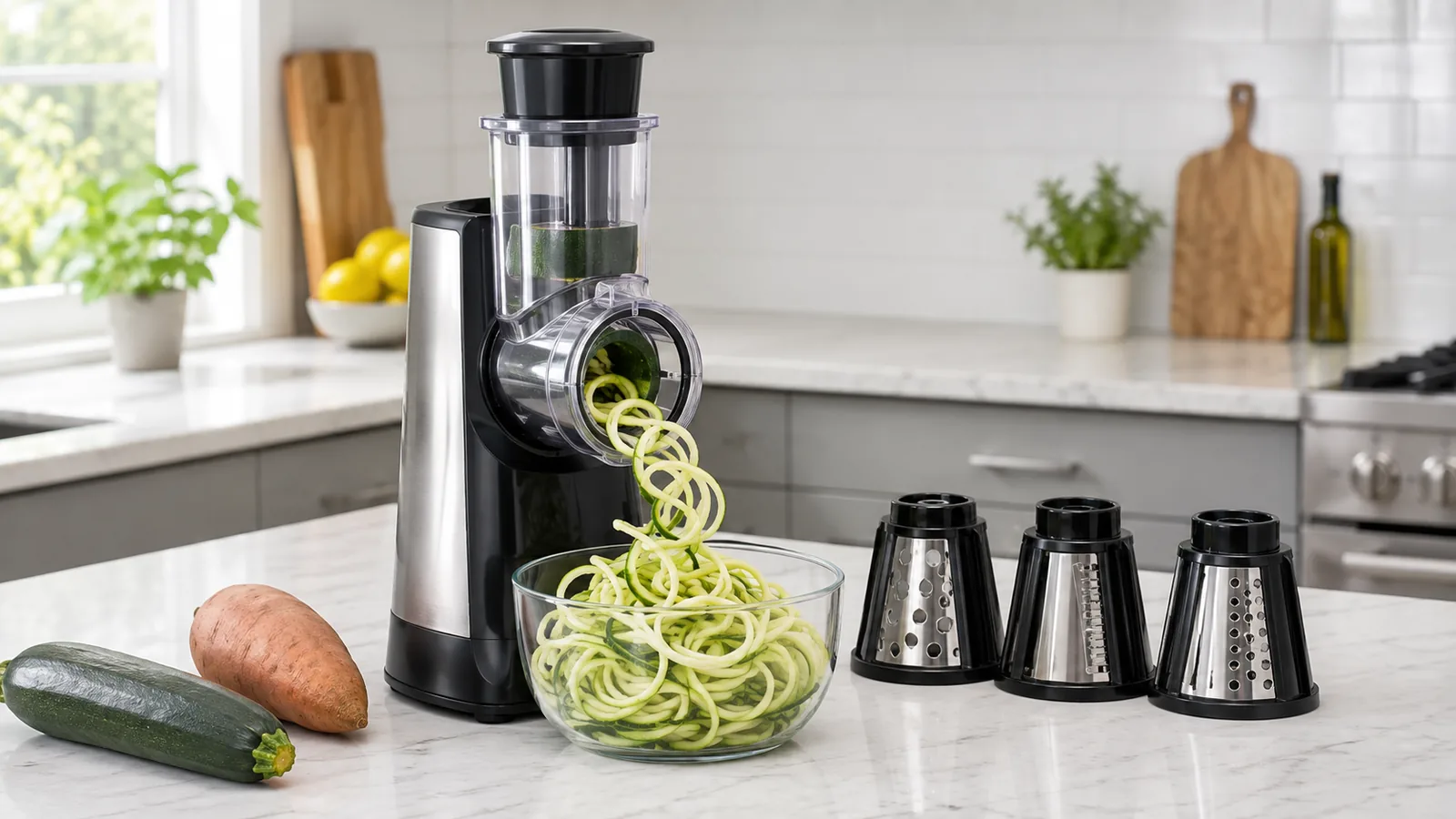
The Hamilton Beach 3-in-1 Electric Spiralizer is a countertop kitchen gadget designed to quickly turn whole fruits and vegetables into spirals and ribbons. It comes with three stainless-steel cutting cones – a blade for thin spaghetti-style noodles, one for wider linguine-style strands, and one for ribbon cuts. This gives you flexibility: for example, you can make zucchini “zoodles,” beet or carrot ribbons, and even curly apple slices for fun snacks or dessertswalmart.com.
Key features include:
- Large 6-cup bowl: A clear plastic bowl attaches beneath the blades to catch the noodles as they’re cut, containing the mess. This bowl holds up to 6 cups of spiralized vegetables – enough for a family meal.
- Food pusher with metal handle: The spiralizer includes a sturdy metal food-holding pusher. You place the vegetable on it, ensuring it stays secure, then push it into the chute. This guard keeps your fingers safe and holds foods firmly in place for “beautiful spirals”. No hand-cranking is required – just push and let the motor do the work.
- Dishwasher-safe parts: All removable components (bowl, blades, chute) are top-rack dishwasher safe. A small cleaning brush is included to scrub out bits of vegetable. This makes cleanup quick and hassle-free – a feature users appreciate.
Why Spiralize? Benefits of Veggie Noodles
Spiralizing vegetables has become popular with home cooks for good reasons. In recent years, “zoodles” (zucchini noodles) and other veggie pastas have gained fame as a low-carb, gluten-free, and nutrient-packed alternative to pasta. For example, a University of Illinois nutrition extension notes that zucchini is “low in fat, sugar, and calories, and high in vitamin C and fiber,” making it a great substitute for traditional pasta noodles. By keeping the dark green skin on, you preserve even more nutrients. In fact, zucchini noodles – often called “zoodles” – can make family meals more creative and healthy without feeling like a choreextension.illinois.edu.
Beyond health, spiralizers make cooking more fun and convenient. As Sur La Table explains, a good spiralizer “opens up a world of creativity and healthy possibilities” in the kitchen. It’s not just about zucchini: you can turn beets, carrots, sweet potatoes and more into elegant spirals or ribbons for salads, stir-fries, and side dishessurlatable.com. For example, spiralized beets and carrots add color and texture to a winter salad, or zucchini noodles tossed with sauce can substitute for spaghetti night. Home cooks find it easy to toss spiralized veggies into soups, casseroles, or onto pizza as a fresh topping.
The convenience is also huge. Vegetable prep takes a lot of time – Freditech notes that “meal prep is often the most time-consuming part of cooking,” and tools like this spiralizer can slice and noodle veggies “in seconds”freditech.com. In fact, one guide found that nearly 60% of kitchen time can be spent chopping and slicing ingredients, so automating that step is a big time-saver. Electric spiralizers like Hamilton Beach’s handle the hard work: “you just flip it on and add your vegetables to churn out piles of veggie noodles in seconds”. This means quick weekday dinners or bulk meal prep, without tears from chopping or spending extra on pre-cut produce.
How to Use the Hamilton Beach Spiralizer (Step-by-Step)
Using the Hamilton Beach 3-in-1 Spiralizer is straightforward. The process follows three main steps: Assemble, Prep, and . Below is a step-by-step guide:
- Assemble the Spiralizer: Begin by placing the spiralizer base on a flat surface. Attach the large bowl, aligning it beneath the motor so it catches the spirals. Next, pick the cutting cone you want (spaghetti, linguine, or ribbon). Align its tabs with the slots in the base and attach it with the sharp side facing up. Finally, align the motor unit with the bowl base and rotate it clockwise until it locks into place. Now the machine is assembled and ready. (Tip: Each time you switch cones, snap off the motor and bowl, insert the new blade, and reattach.)
- Spiralize: Insert the prepared vegetable onto the food pusher (metal spike). The flat end should touch the blade. Turn the spiralizer on at your desired speed. Hold the pusher and gently push the vegetable into the blade. The motor will spin the cone, cutting the veggie into spirals that fall into the bowl. Apply even, gentle pressure—no need to force hard. Because this model is electric, you never need to hand-crank the food. Simply push and let the spiralizer do the work.
- Tip: If the vegetable slips or no spirals emerge (especially with shorter pieces), stop and re-adjust. Rinse the blade and recut a new flat edge on your produce, then try again. This “flat edge” method ensures the veg sits straight and spirals nicely.
- Serve or Store: Once spiralized, the noodles/ribbons are ready to use. You can cook them briefly (zoodles soften in a minute or two) or toss them raw in salads. The clear bowl holds up to 6 cups, so you can spiralize enough for several servings at once.
- Cleanup: Turn off and unplug the spiralizer. Remove the motor top, then the bowl and blade. All removable parts are top-rack dishwasher safe. Use the included brush to clean the cutting cone and remove any stuck bits. Rinse thoroughly and let dry. Reassemble for storage; parts nest compactly so it won’t take up much space.
These steps show how simple spiralizing can be. The official Hamilton Beach guide emphasizes just “assemble, prep and spiralize” as the three easy steps to master the process. With practice, you’ll find it’s fast: for instance, one blogger noted spiralizing zucchini into “zoodles” takes only a minute or two, even for beginners. Always follow the safety and assembly instructions from the manual.
Real-World Examples and Recipe Ideas
The Hamilton Beach Spiralizer shines in everyday cooking. Here are some real-world uses and ideas, backed by expert tips:
- Sweet Potato Noodles: For a heartier dish, spiralize sweet potatoes to make healthy curly fries or noodles. (Note: sweet potato is harder, so you’ll need to use a slower speed and push firmly.) Cook them in the oven or sauté them. This swaps starchy carbs for fibrous veggies in dishes like stir-fry or frittata.
- Fruit Spirals: The ribbon blade can even make fruit garnishes. For example, spiralize apples or pears for a decorative salad topping or dessert. A vintage recipe from the Hamilton Beach e-book uses a spiralizer for “Apple Ambrosia” – spiralized apples mixed with yogurt and nuts.
- Kid-Friendly Meals: Get kids excited about veggies. As noted, children often find spiralized foods fun to eat. Involve them in spiraling (with adult supervision) to make things like “Veggie Nests”: use the spiralizer to make nests of zucchini or sweet potato, bake them, and crack an egg in the center. These crunchy veggie nests are visually fun and nutritious.
Cleaning and Maintenance
For best practice: always unplug before disassembling. Immediately after use, detach the blade and bowl so food doesn’t dry onto the parts. Rinse under water first, then either hand-wash or place in the dishwasher. The metal blade cones are sharp, so handle carefully during cleaning. Once dry, store all pieces nested together.
If you ever run into a jam (e.g., a piece jams or the spirals stop coming out), there’s a helpful hint: stop the machine, rinse the blade, trim a fresh flat end on the vegetable, and try again. This solves most common issues. Also inspect that the motor and bowl are locked tightly each time; loose parts can cause slips.
Fullstar 4-in-1 vs. Hamilton Beach 3-in-1 (For Comparison)
The trade-off is that the Fullstar has more functions (it dices and slices) in one device, while the Hamilton Beach is solely for spiralizing. If you mainly want spirals and don’t mind an appliance on your counter, the electric 3-in-1 may be worth it. It’s quiet and consistent – as Food & Wine points out, you can just press a button and let it run, whereas manual options rely on human pressure.
Where to Buy and Availability
It’s generally well-reviewed for ease of use. For instance, one Walmart buyer wrote: “Great investment, no regrets! Went from a manual crank spiralizer to the Hamilton Beach electric 3-in-1 and it’s a great improvement in my workflow.” (This comment is paraphrased from site reviews.)
FAQs
How to use a 3 in 1 spiralizer?
A 3-in-1 spiralizer typically includes multiple blades (usually spaghetti “noodles,” fettuccine/ribbons, and sometimes a thinner julienne-style cut). To use it safely and get clean spirals:
- Choose the blade: Insert the blade you want (noodle, ribbon, or julienne) and make sure it locks in place.
- Prep the vegetable: Wash and trim the ends. If the veggie is long or thick, cut it into a shorter, straighter piece so it fits the holder/feed area.
- Secure it firmly: Attach the vegetable to the prongs/food holder (or insert into the feed tube on upright models). Keep fingers behind the holder at all times.
- Spiralize steadily: For manual models, turn the crank or twist with consistent pressure. For electric models, switch on and guide gently—don’t force it.
- Stop and clear: If strands bunch up, stop, remove the lid/guard, and clear the blade area carefully.
- Finish and clean: Disassemble and rinse immediately. Use a brush to remove stuck strands around blades.
Tip: Very hard vegetables (like sweet potatoes) spiralize more easily if cut into smaller sections and pushed through slowly.
What is the best electric spiralizer?
The “best” electric spiralizer depends on your kitchen needs, but the top picks usually share these features:
- Strong motor + stable base (so it doesn’t wobble with hard veggies)
- Wide feed tube (less pre-cutting)
- Multiple blades (spaghetti, fettuccine, ribbon, and sometimes spiral slices)
- Easy cleanup (dishwasher-safe parts and a cleaning brush)
If you want an electric unit that does more than spiralizing, a compact food-processor-style spiralizer attachment can also be a smart choice (especially for slicing/shredding too). For pure spiralizing, look for models with consistent output and minimal leftover “core.”
Are spiralizers worth it?
Yes—if you’ll actually use it. Spiralizers are worth it for people who:
- Want to eat more vegetables with fun textures (zoodles, curly fries, salad ribbons)
- Need low-carb or gluten-free alternatives to pasta
- Meal-prep often and want faster, more uniform cuts
They may be less worth it if you rarely cook vegetables or prefer regular chopping. A simple handheld spiralizer is cheap and works for occasional use; an electric spiralizer is better if you spiralize frequently or in large batches.
What vegetables are good to Spiralize?
Most firm, relatively cylindrical vegetables spiralize well. Popular options include:
- Zucchini (classic “zoodles”)
- Yellow squash
- Carrots
- Cucumbers (best with thicker blades; more watery)
- Sweet potatoes (great for curly fries; requires more force)
- Beets (colorful salad spirals)
- Daikon radish and turnips
- Regular potatoes (spiral fries/chips)
Soft or very seeded produce (like tomatoes) doesn’t spiralize well because it collapses or turns mushy.
Is spiralizing healthier than regular pasta?
Spiralized vegetables can be a healthier alternative for some goals because they’re usually lower in calories and carbs and can add fiber, vitamins, and hydration. That said, “healthier” depends on what you need:
- If you’re reducing carbs or boosting veggie intake, veggie noodles can help.
- If you need more energy (athletics, weight gain, very active lifestyle), pasta may fit better.
Many people do a “half-and-half” bowl: mix veggie noodles with some pasta for balance and better texture.
Can you spiralize an onion?
Yes, but results vary. Large, firm onions can be spiralized into curls or ribbons, especially if your spiralizer has a ribbon blade. However, onions are layered and can break apart more easily than zucchini or carrots. For best results, use a large, firm onion, cut it to fit the holder, and spiralize slowly with steady pressure.
Can you julienne with a spiralizer?
Often, yes. Many spiralizers include a thin noodle blade that creates strands similar to julienne. True julienne is more like straight matchsticks, while spiralizers create long curly strands—but for salads, stir-fries, and garnishes, it’s a very similar effect. If you want straight julienne sticks, a mandoline julienne blade is usually better.
Which spiralizer actually works?
Spiralizers that “actually work” usually have a few things in common:
- Strong suction base or sturdy non-slip feet (stability is everything)
- Sharp blades (dull blades cause tearing and mushy strands)
- Solid food holder with spikes (so veggies don’t slip)
- Easy-to-clean design (so you’ll use it more often)
For occasional use, a quality handheld spiralizer works fine for zucchini and cucumbers. For hard vegetables (sweet potatoes, beets), a sturdy countertop model (or electric) tends to work best.
Does spiralizer grate cheese?
Usually, no. A spiralizer is designed to cut long strands or ribbons from firm produce—not grate cheese into fine shreds. Some multi-function kitchen gadgets combine spiralizer + grater attachments, but a standard spiralizer blade won’t grate cheese well (soft cheeses smear; firm cheeses may crumble awkwardly). For cheese, a dedicated box grater, rotary grater, or food processor grating disc works much better.
Conclusion
Author: Wiredu Fred – Kitchen appliance reviewer and home cooking enthusiast.
Bottom Line
The right prep tool is the one you will actually use and clean regularly. Favor stable construction, useful capacity, safe blades and simple cleanup over oversized accessory counts.