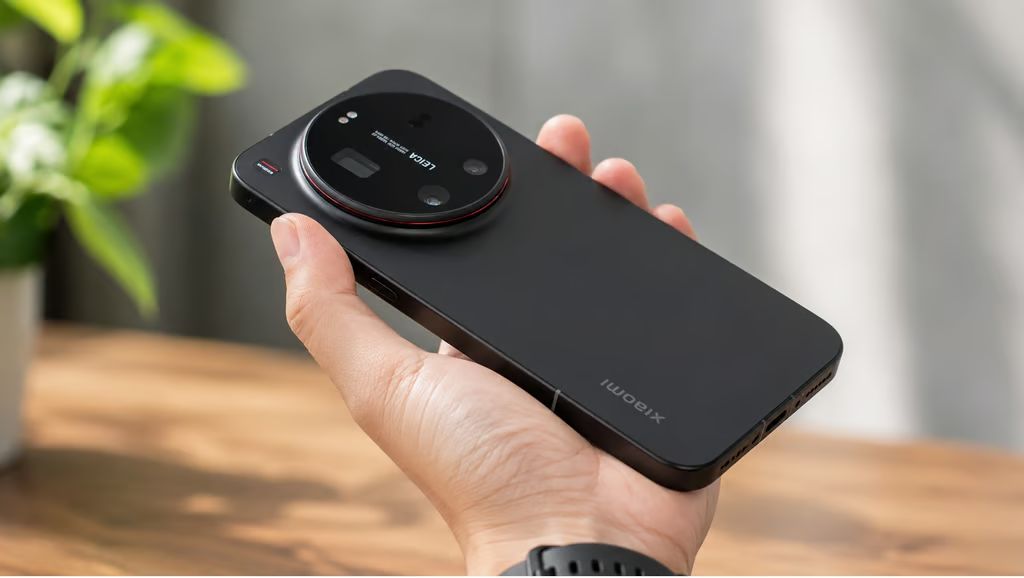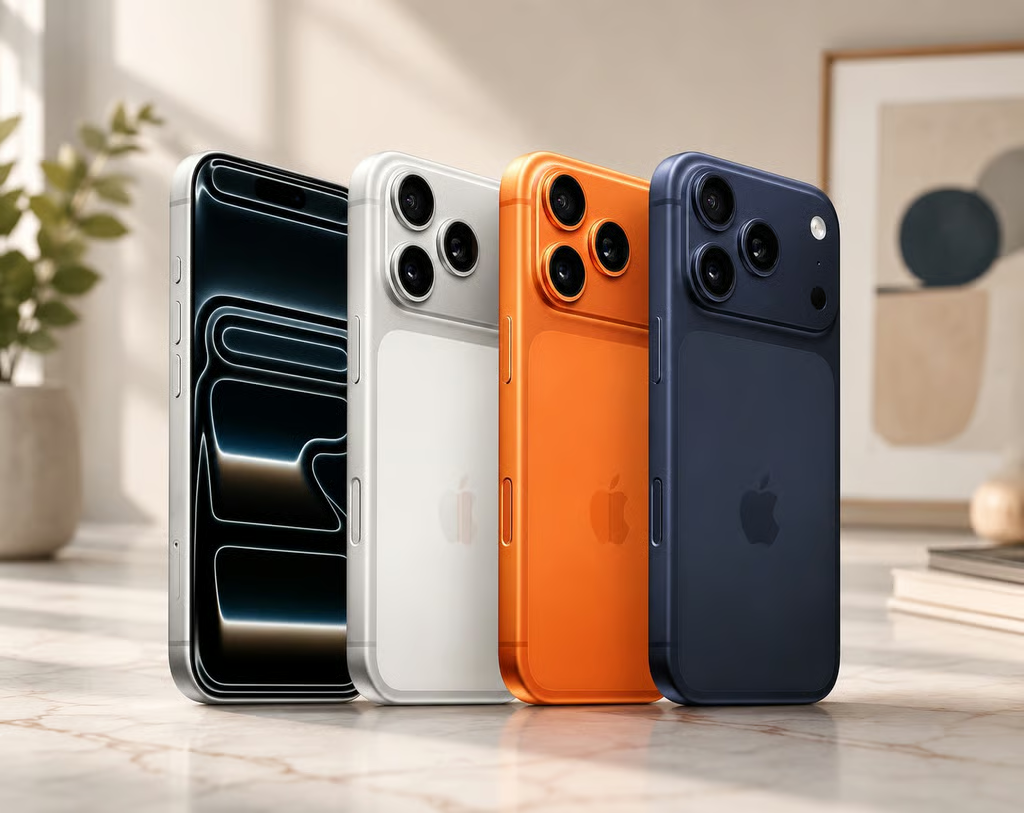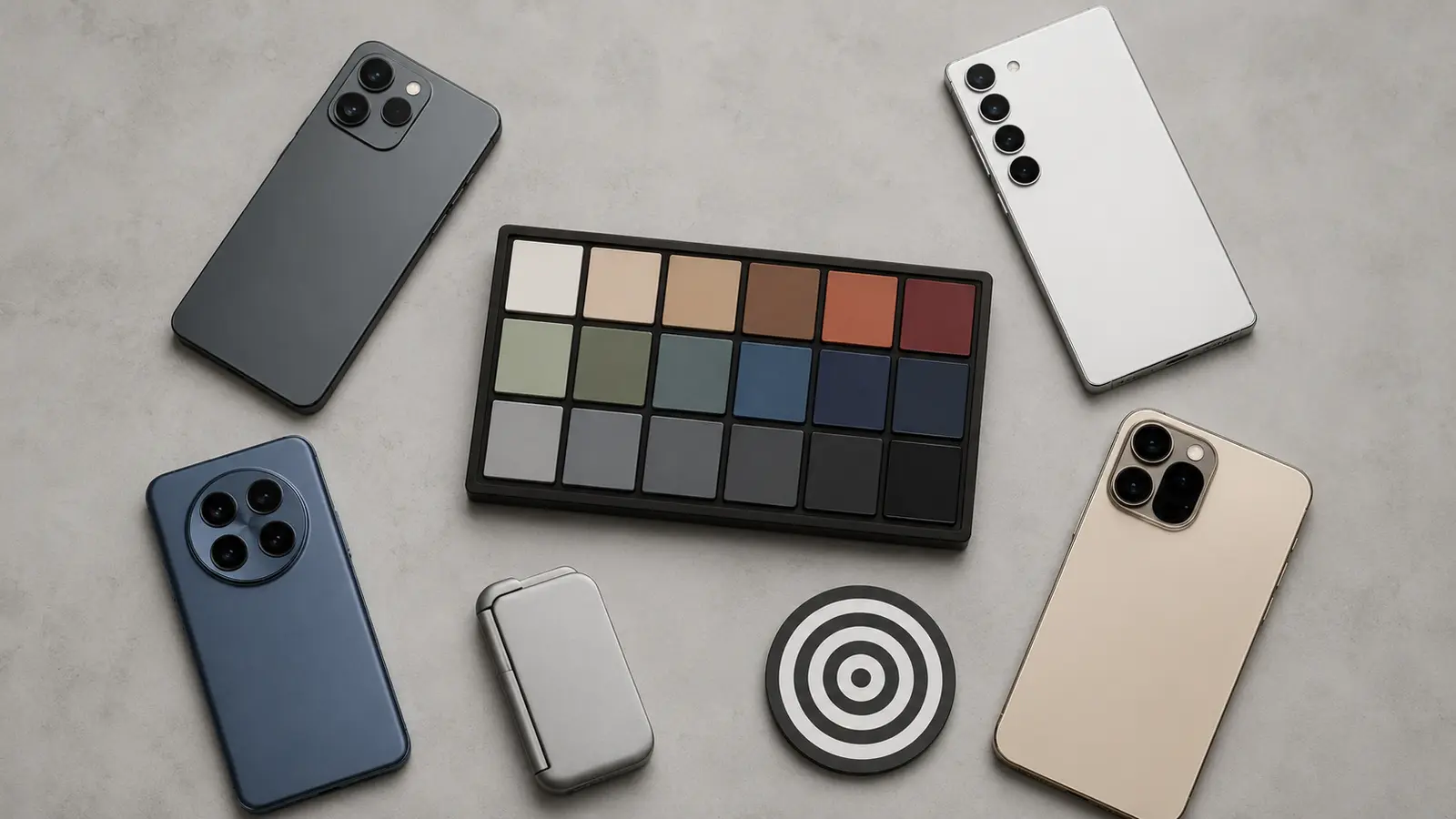

Smartphone Comparison Guide 2026: How to Compare Flagship Phones focuses on give readers a repeatable framework for comparing flagship phones across ecosystems. The aim is to keep the useful depth of the original article while helping readers reach a current, practical decision faster.
Quick Verdict
- Best for: buyers narrowing Apple, Samsung, Google and other premium options.
- Focus on: camera priorities, battery, display, support, ecosystem and total price.
- Watch for: the “best” phone changes with the user’s priorities and region.

Choosing a new smartphone can feel overwhelming with so many flagship options available. Every year brings cutting-edge devices from Apple, Samsung, Google, OnePlus, Xiaomi and more. These top-tier phones typically lead the market – for example, Apple’s iPhones and Samsung’s Galaxy devices each hold roughly 20–26% of global market sharefreditech.comlightreading.com. Indeed, in 2023 global smartphone shipments reached about 1.14 billion units, and analysts predict a sales rebound of 4% in 2024 and 4.4% in 2025 as new AI features drive demandtechcrunch.com. In this guide, we’ll compare the key factors and standout models to help general consumers find the perfect flagship device for their needs. We’ll cover all the must-know features (display, performance, camera, etc.), summarize how today’s top phones stack up, and offer step-by-step advice on making a smart choice.
Table of contents
Key Factors to Compare in Flagship Smartphones
When comparing flagship smartphones, focus on the features that matter most to your use case. Here are the core factors to evaluate:
- Operating System & Ecosystem: Choose between iOS (Apple) and Android. iPhones run iOS, known for its sleek, intuitive design and seamless integration with other Apple devices (iPad, Mac, Watch)freditech.com. If you use Apple products, an iPhone offers continuity features like Handoff, AirDrop, and unified updates. Android phones (from Samsung, Google, Xiaomi, etc.) offer more customization and a wider range of hardware choicesfreditech.comfreditech.com. Consider what ecosystem you’re already in – for example, staying within Apple’s ecosystem can be very convenient.
- Performance (Processor & RAM): Flagship phones use the latest chipsets. Apple’s top iPhones use custom “A-series” chips (e.g. A18 or A19), while Android flagships typically use Qualcomm Snapdragon 8-series or Google’s Tensor chips. In benchmarks, Apple’s silicon often leads in single-core speed, while high-end Snapdragon chips excel in multi-core tasksfreditech.com. For example, Geekbench 6 tests show the iPhone 16 Pro scoring ~3445 (single-core) vs ~8578 (multi-core), while the Snapdragon 8 Elite chipset scores ~3212 (single-core) vs ~10318 (multi-core). In practice, this means iPhones feel very fast at loading apps, and Android flagships are extremely smooth at heavy multitasking. More RAM (6–8 GB and up) helps keep many apps open. Tip: Look for phones with the newest generation chips and at least 6 GB RAM (8–12 GB for power users) to ensure future-proof performance.
A benchmark comparison of recent flagship phones (e.g. Samsung S25 Ultra, OnePlus 13, Apple iPhone 16 Pro) illustrates how different chipsets perform in single-core vs multi-core tests.
- Display & Design: Today’s flagships almost universally use high-quality OLED screens for vivid colors and deep blacks. Screen sizes typically range from about 6.1″ up to 6.8–6.9″ (some Galaxy and Xiaomi models even larger). Key spec to check is refresh rate: most premium phones now support 120 Hz (higher = smoother scrolling and gaming). For example, iPhone 17 Pro models offer ProMotion (up to 120 Hz) and up to 3000 nits peak brightnessfreditech.com. Also note resolution (Full HD+, Quad HD+) and outdoor brightness. Build quality: Flagships use premium materials (glass/metal) and durable protections (e.g. Gorilla Glass or Ceramic Shield). Many have metal frames (some use titanium for strength) and are IP68 water/dust-resistant. For instance, the new iPhone 17 Pro uses a titanium frame with a vapor chamber for cooling and a “Ceramic Shield 2” front that is 3× more scratch-resistantfreditech.com. Ergonomics matter too – a phone should feel comfortable in your hand despite large screens.
- Camera System: Most flagships feature multiple lenses – typically a main (wide) sensor, an ultra-wide, and one or more telephoto/macro cameras. Look at sensor specs: flagship camera systems now often include very high megapixels (Samsung’s Galaxy S25 Ultra uses a 108 MP main sensor plus 10× optical zoom, while Apple’s iPhone 17 Pro has triple 48 MP cameras). Check features like optical image stabilization, low-light modes, and AI enhancements. Videos now often support 4K or even 8K recording. Computational photography (AI-driven processing) is a major differentiator: Google’s Pixel phones, for example, are renowned for their AI camera software. Tip: If photography is a priority, compare sample photos or camera reviews. Leading models excel in night shots, dynamic range, and detail, but their strengths vary (e.g. Samsung for high-res zoom, Google for AI enhancements, Apple for video quality).
- Battery Life & Charging: Flagship phones pack large batteries (often 4500 mAh or more) plus fast charging. Look for how long a phone can last under your usage, and charging speed. Most 2025 flagships support fast charging – many can go from 0% to ~50% battery in about 30 minutesfreditech.com. Some also offer wireless and reverse wireless charging. Software features like adaptive battery management also extend real-world battery life. If you’re often away from outlets, battery endurance becomes critical.
- Connectivity & Extras: Ensure the phone supports modern connectivity – essentially 5G networks are standard on all new flagships. Wi-Fi 6 or 6E is common, as are Bluetooth 5.x and NFC. Some models include special features: e.g. IP68 water resistance, stereo speakers (sometimes Dolby Atmos support), in-display fingerprint/FaceID, and even unique extras like Samsung’s S Pen in the Galaxy S Ultra series. Also consider software support: Apple provides multi-year iOS updates, and Google guarantees several years of Android updates on Pixel phones.
In summary, compare devices head-to-head on these points. For a quick view, here are some of the top features of leading 2025 flagships:
- Apple iPhone 17 Pro Max (2025): 6.7″ OLED, Apple A19 Pro chip, triple 48 MP cameras, iOS 18 ecosystem, up to 120 Hz, IP68. Focus on performance and tight integration.
- Samsung Galaxy S25 Ultra: 6.8″ AMOLED, Exynos 2300/Snapdragon 8 Gen 4, quad-camera (108 MP main + 10× zoom), One UI (Android), 120 Hz, IP68. Known for top-of-line specs and zoom camera performance.
- Google Pixel 10 Pro (2025 expected): ~6.7″ OLED, Google Tensor G4 chip, dual/triple camera (50 MP main), Android with AI features (Night Sight, Gemini AI), 120 Hz. Focus on camera AI and seamless Google services.
- OnePlus 13: ~6.7″ AMOLED, Snapdragon 8 Gen 3, quad cameras (with AI enhancements), Android (OxygenOS), 120 Hz, fast charging (80W+). A “flagship killer” offering near-flagship performance at a lower price pointfreditech.com.
- Xiaomi 14 Pro: 6.8″ AMOLED, Snapdragon top chipset, triple cameras, MIUI (Android), 120 Hz. Delivers premium features for a more affordable premium pricefreditech.com.
(Each of these phones shines in different areas. For example, reviewers note the “refined elegance” and ecosystem integration of the iPhone, the “powerhouse performance and camera innovations” of the Galaxy S Ultra, the “intelligent, AI-driven features” of the Pixel, the “speed and value” of OnePlus, and the “affordable premium” experience of Xiaomi’s flagship.)
How to Choose Your Perfect Smartphone
There’s no one “best” phone for everyone – the ideal device depends on your priorities and budget. Here’s a step-by-step approach to narrow down your choice:
- Identify your needs: Consider what you use your phone for. Is photography your top priority? (Then a phone with an excellent camera system, like a Galaxy S Ultra or Pixel, might be ideal.) Do you play games or use demanding apps? (You’ll want top-tier performance and lots of RAM.) Are you heavily invested in the Apple ecosystem? (An iPhone will integrate smoothly with your other devices.) Think about size and portability too – if you travel light, a 6.1–6.3″ phone might suit you, otherwise a bigger screen enhances movies and gaming. Asking these questions first will clarify your priorities.
- Set your budget: Flagship phones range from mid-to-high-end. If you want the absolute latest tech, expect a premium price. However, there are “flagship killers” like OnePlus and Xiaomi that offer similar specs at lower costfreditech.com. Decide how much you are willing to spend, and look at phones within that range. Premium devices often have better materials and features, but more affordable flagships can still excel in core areas (performance, camera, etc.).
- Choose an operating system: If you already own other Apple products or prefer iOS simplicity, an iPhone is a strong choice. If you value flexibility or want a wider selection (including features like expandable storage or headphone jacks on some models), then Android makes sense. Both ecosystems have excellent apps and support, so this often comes down to personal preference.
- Compare key specs: Now, line up the top contenders and compare their hardware. Look at processor, RAM, camera specs, screen, and battery side-by-side. We recommend checking expert reviews and benchmarks (e.g. Geekbench, camera shootouts) from reputable sources. For example, trusted reviews like CNET or GSMArena provide detailed comparisons. Also consider future software updates – Apple provides many years of iOS support, and Google/Android devices often guarantee at least 3 years of updates.
- Read expert and user reviews: Reviews can highlight strengths and weaknesses that raw specs don’t show. For instance, battery life in real use, camera image samples, or ergonomic comfort. Take note of any issues reported (overheating, bloatware, etc.) from multiple sources. Our Best Smartphones of 2025 guide and performance analysis can help here.
- Make your decision: Often the final decision comes to which feature you value most. It might be worth choosing a slightly less powerful phone if it has a much better camera, or vice versa. Also watch for promotions and trade-in deals which can make higher-end phones more affordable. In the end, choose the device that aligns with your lifestyle and offers the best balance of features for you.
Below is a quick checklist of what we covered (flagship examples are for illustration):
- Display: OLED/AMOLED, at least Full HD+, ideally 90–120 Hz (e.g. iPhone 17 Pro – 6.9″ 120 Hz OLED; Galaxy S25 Ultra – 6.8″ 120 Hz).
- Processor & RAM: Latest chips (Apple A19, Snapdragon 8 Gen 3, etc.) with 6–12 GB RAM (e.g. A19 Pro in iPhone 17 Pro for top speed; Snapdragon 8 Gen 3 in OnePlus 13).
- Cameras: Multiple lenses (wide/ultrawide/tele); high MP (48–108 MP) and optical zoom (e.g. S25 Ultra’s 108 MP main + 10× tele; Pixel’s advanced Night Sight).
- Battery/Charging: Big battery (~4500 mAh+), fast charging (~50% in 30 min), wireless charging.
- OS/Ecosystem: iOS vs Android – pick what you’re comfortable with and that fits your other devices.
- Durability: Premium materials (metal/glass), water resistance (IP68), and shatter-proof glass (e.g. Apple’s Ceramic Shield).
- Connectivity: 5G support (for future-proofing), Wi-Fi 6E, Bluetooth 5+, NFC.
Step-by-Step Summary: To recap, here’s a simple plan:
- List your priorities: (e.g. “top-notch camera” or “long battery”).
- Fix your budget: Identify a price range.
- Pick an OS/ecosystem: iPhone/iOS or Android (based on your other devices and preferences).
- Shortlist models: From our suggested flagships or others (Samsung S-series, iPhone series, Google Pixel, OnePlus, Xiaomi Mi, etc.).
- Compare specs: Check display, CPU/RAM, camera, battery, and special features.
- Read reviews: Consult expert reviews (FrediTech’s [Best Smartphones of 2025 guide], Performance Analysis, and others) and user feedback.
- Buy with confidence: Make sure to buy from reputable retailers, check warranties, and consider deals or trade-ins.
Frequently Asked Questions (FAQ)
Which smartphone brand is currently the most popular?
Global market share shows Apple and Samsung as leaders. In 2025, Apple holds about 25–26% of the market and Samsung about 20–21%. In the U.S., Apple’s iPhone dominates with ~57% sharegs.statcounter.com. Other major players include Xiaomi (≈11–13%) and Oppo/Vivo. Popularity can vary by region, but Apple and Samsung generally top the charts.
How do I know if I should choose iOS or Android?
It depends on your preferences and existing devices. If you already use Apple devices (Mac, iPad, Apple Watch), staying in the iOS ecosystem means features like iMessage, AirDrop, and seamless syncing. If you value customization and a wider hardware selection, Android offers many choices (Samsung, Google, Xiaomi, etc.) and integrates closely with Google services. Both platforms are excellent; choose the one that fits your workflow and other gadgets.
What makes a smartphone a “flagship”?
A flagship is the top model in a lineup: latest processor, best displays (high resolution/refresh), premium materials, and the most advanced cameras. They also tend to get the longest software support. They cost more, but deliver the cutting edge; mid-range models trade some specs to save cost.
Which phone has the best camera in 2025?
“Best camera” depends on what you shoot. Samsung’s Galaxy S Ultra series often has the most versatile hardware (e.g. a 108 MP main sensor and up to 10× optical zoom), while Google’s Pixel line is known for computational photography and low-light performance. Apple’s iPhone cameras excel at video and consistent color. In reviews, all these flagships perform superbly, so consider factors like zoom range, video needs, and personal photo style. Reading camera-specific reviews or looking at sample shots is a good way to decide.
Are flagship phones worth the high price?
Flagships pack cutting-edge tech (processors, screens, cameras) that last longer before becoming obsolete. If you want the best performance, top camera quality, and latest features (like on-device AI, fastest charging, etc.), a flagship can be worth it. However, many mid-range phones now offer excellent value too. If budget is a concern, consider a “flagship killer” from OnePlus or Xiaomi which delivers near-flagship specs at a lower cost.
How important is performance (CPU/RAM) in daily use?
For everyday tasks (calls, social media, video streaming), modern chips and 6–8 GB RAM are already very fast. However, if you game heavily, edit videos, or keep dozens of apps open, then flagship-grade processors (like Apple’s A19 or Snapdragon 8 Gen 3) and 8+ GB RAM make the phone feel snappier for those intensive tasks. Benchmarks show these flagship chips lead in speed, ensuring smooth performance with future software.
What Should I Look for in a Smartphone?
- Performance: fast processor, ample RAM, speedy storage.
- Camera: sensor quality, lens versatility, software features.
- Battery: capacity, charging speed, real-world endurance.
- Display: resolution, brightness, color accuracy, refresh rate.
- Software/Updates: intuitive OS and long update commitment.
- Price vs. Value: match budget to the features you’ll use most.
Which Smartphone Has the Best Camera?
The “best” depends on needs. Pixel excels at computational photography; iPhone is superb for video and consistency; Galaxy S Ultra offers versatile multi-lens hardware and strong zoom. Compare sample images and real-world reviews to match your style.
How Often Should I Upgrade My Smartphone?
Most users keep a phone 2–3 years. Power users or those chasing new features may upgrade every 18–24 months. Update policies help extend life, but batteries age and new apps demand more over time.
Are Budget Smartphones Worth It?
Yes. Many budget/mid-range phones now deliver strong processors, capable cameras, and all-day battery life—ideal if you prioritize essentials over bleeding-edge tech. If you need the very best performance and features, consider a flagship.
How Can I Compare Smartphones Effectively?
- List priorities (must-have features).
- Set budget and shortlist models.
- Compare specs (chip, camera, battery, display).
- Read expert & user reviews (CNET, TechRadar, GSMArena).
- Test in-store if possible for ergonomics and feel.
Author: Wiredu Fred, Senior Tech Editor at FrediTech. Fred has over a decade of experience covering mobile technology and consumer electronics.
Bottom Line
The strongest takeaway is to give readers a repeatable framework for comparing flagship phones across ecosystems. Use the article as a decision framework, verify model- or service-specific details before acting, and give more weight to current support, condition and real-world fit than to old launch-day marketing.