
Confirmed fitments Continental announcement · Checked 27 August 2026
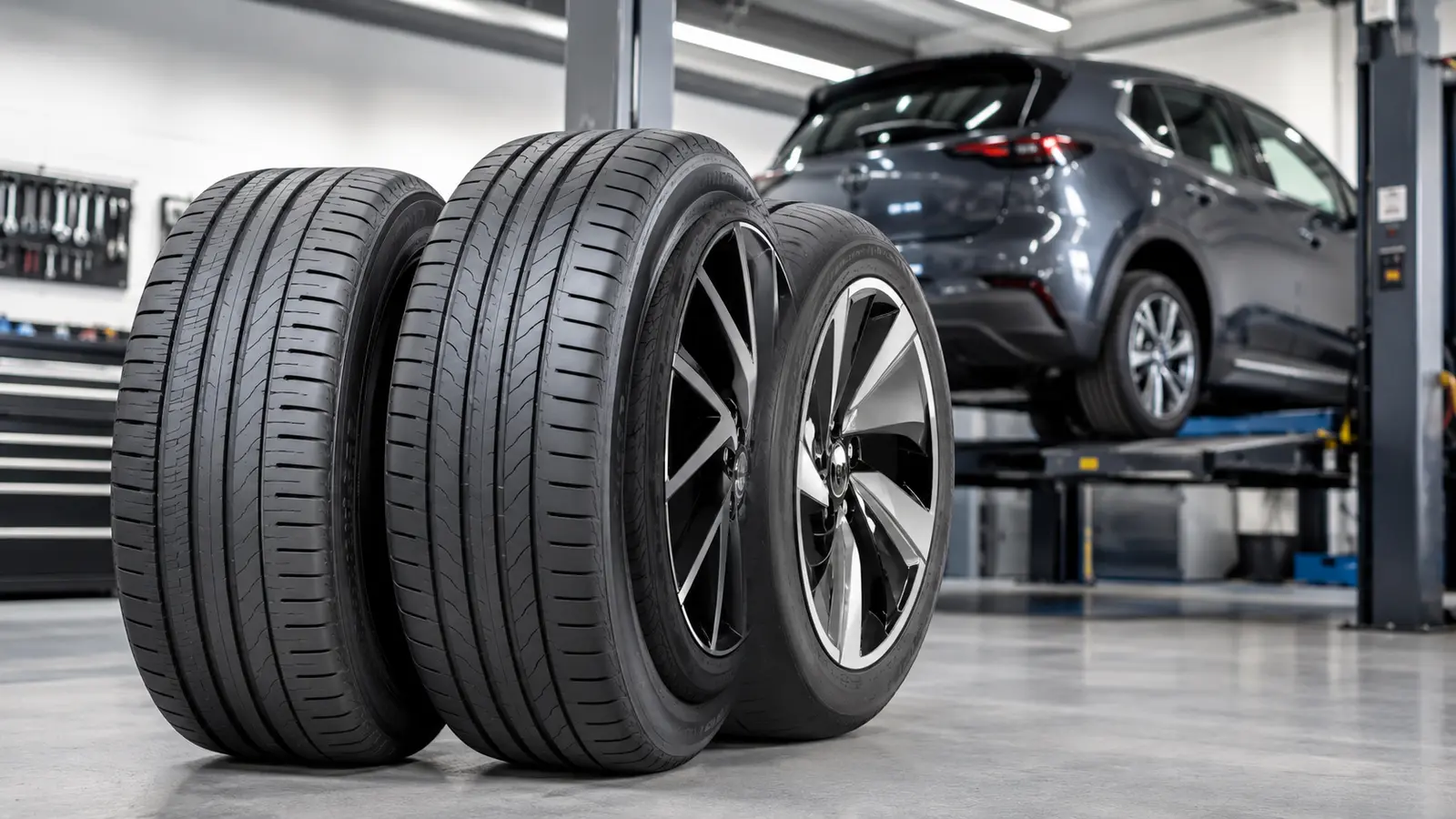
Continental has published approved tire choices for the Volkswagen ID. Polo, including 17- and 18-inch EcoContact 7 summer fitments plus 18-inch AllSeasonContact 2 and WinterContact TS 870 P alternatives. This guide decodes every marking and explains how to replace them without sacrificing load capacity, safety or efficiency.
Use the tire size, load index and speed rating printed on your own vehicle’s placard or conformity documents—not only an online article. The 17-inch EcoContact option may favour comfort and replacement cost, while 18-inch wheels may prioritise appearance and response. Actual range and ride differences require matched testing.
Confirmed Volkswagen ID. Polo tire sizes
Continental says Volkswagen approved the EcoContact 7 as original equipment and recommends seasonal alternatives in numerous countries. Availability, wheel design and homologation can vary by trim and market.
| Tire | Size | Season/use | Construction note |
|---|---|---|---|
| Continental EcoContact 7 | 215/55 R17 94T FR | Summer / original-equipment fitment | 17-inch rim, standard load index 94, rim-protection marking |
| Continental EcoContact 7 | 215/50 R18 92T FR | Summer / original-equipment fitment | 18-inch rim, load index 92, rim-protection marking |
| Continental AllSeasonContact 2 | 215/50 R18 96T XL | All-season | Extra-load construction, load index 96 |
| Continental WinterContact TS 870 P | 215/50 R18 96T XL | Winter | Extra-load construction, load index 96 |
A tire fitting an 18-inch wheel does not automatically make it legal or safe for every ID. Polo. The exact wheel width, offset, trim, axle load and country approval matter. Follow Volkswagen’s placard and documentation.
What 215/55 R17 94T FR means
215
Nominal tire-section width in millimetres.
55
Sidewall height expressed as 55% of the nominal section width.
R17
Radial construction designed for a 17-inch wheel.
94T
Load index 94 and speed symbol T. Both must meet the vehicle’s approval.
Load index 94 corresponds to a maximum of 670kg per correctly inflated tire under the relevant standard conditions. In the listed alternatives, index 92 corresponds to 630kg and 96 to 710kg. These values are per tire, but they do not replace the vehicle’s axle-load limits or recommended pressures.
The T speed symbol corresponds to a maximum rated speed of 190km/h under specified conditions. It is not an invitation to drive at that speed, and local law, vehicle limits, load, pressure and road conditions still govern safe operation.
What do FR and XL mean?
- FR: a Continental fitment marking generally indicating a rim-protection feature. It does not make a wheel immune to kerb damage.
- XL: Extra Load. The tire is designed for a higher load at its specified pressure than an equivalent standard-load construction.
17-inch vs 18-inch: likely trade-offs
The 215/55 R17 has a taller sidewall than the 215/50 R18. A taller sidewall commonly improves impact compliance and wheel protection, while the shorter 18-inch sidewall can feel more direct and fills the wheel arch visually. Wheel mass, tire construction, pressure and compound can outweigh diameter alone, so do not promise a particular range difference without a controlled comparison.
EcoContact 7, AllSeasonContact 2 or WinterContact?
| Type | Best conditions | Strength | Limitation |
|---|---|---|---|
| EcoContact 7 summer | Mild-to-hot weather without winter-road requirements | Designed around efficiency, wet/dry road use and original-equipment tuning | Not a substitute for a winter tire in severe cold, snow or legally regulated winter conditions |
| AllSeasonContact 2 | Moderate climates with mixed rain, cold and occasional winter conditions | One-set convenience and broader seasonal operating window | Cannot maximise both hot-weather and severe-winter performance simultaneously |
| WinterContact TS 870 P | Cold, snow and winter-road use | Purpose-designed winter traction and cold-temperature behaviour | Faster wear and softer response if used through hot weather |
Winter-tire rules differ by country and sometimes by weather rather than calendar date. Check local regulations and required sidewall symbols. An all-season name alone should not be assumed to satisfy every mountain-pass or winter-equipment law.
Why tire choice matters on an electric ID. Polo
Volkswagen offers the ID. Polo with 37kWh and 52kWh net battery options, with published WLTP ranges up to 329km and 454km respectively depending on version. Tire rolling resistance, pressure, temperature and wheel choice can influence how much of that laboratory figure is available in real driving.
Five EV-specific priorities
- Load rating: battery weight makes correct axle capacity especially important.
- Rolling resistance: energy lost through tire deformation affects consumption and range.
- Wet braking: efficiency must never come at the expense of safe stopping.
- Noise: without a combustion engine masking road sound, tread noise can be more noticeable.
- Torque and wear: immediate electric-motor response can accelerate wear if pressure, alignment or driving style is poor.
Continental attributes the EcoContact 7’s efficiency to its Smart Energy Casing and an aerodynamic sidewall-dimple design intended to reduce energy loss and drag. These are manufacturer claims. Continental’s ID. Polo announcement does not publish an independently measured range gain against another tire.
ID. Polo replacement-tire checklist
- Photograph the driver-door placard and current sidewall before shopping.
- Match approved size, load index and speed rating; never reduce a rating without explicit legal and manufacturer approval.
- Check whether the vehicle uses the same size front and rear.
- Confirm production date, warranty, seasonal certification and whether the listed price includes fitting, valves, balancing and disposal.
- Use a workshop familiar with electric vehicles and their approved lifting points.
- Reset or relearn the tire-pressure monitoring system where required.
- Retorque wheels to Volkswagen’s specification after fitting and recheck according to the installer’s guidance.
- Maintain the cold pressures printed for the vehicle’s load—not the maximum pressure moulded on the tire.
Continental recommends using the same brand, size, tread pattern, load index and speed rating at every wheel position where the vehicle specification allows. If only two tires are replaced, follow the tire maker’s and vehicle maker’s placement guidance.
How to compare retail prices correctly
Continental did not announce retail prices with the ID. Polo approval. Compare a complete fitted set, including tax, installation, balancing, valves or TPMS service, alignment and old-tire disposal. The cheapest online tire can become more expensive after separate fitting costs.
Final verdict
The confirmed Continental list gives ID. Polo owners credible summer, all-season and winter paths in 17- and 18-inch sizes. The EcoContact 7 is the logical reference point for original-equipment behaviour, but seasonal safety and local approval matter more than preserving a particular brand name. Never trade away load capacity or certification for a small price saving.
Frequently asked questions
What is the Volkswagen ID. Polo tire size?
Continental lists EcoContact 7 fitments of 215/55 R17 94T FR and 215/50 R18 92T FR. Your own vehicle placard and documents remain the final authority.
Which all-season tire is approved?
Continental lists the AllSeasonContact 2 in 215/50 R18 96T XL for the ID. Polo in numerous markets.
Will 18-inch tires reduce range?
They can change mass, aerodynamics and rolling resistance, but diameter alone does not establish the outcome. No independent matched 17-versus-18-inch ID. Polo range test is cited here.
Can I use a lower load index?
Do not do so without explicit vehicle-manufacturer and legal approval. Match the placard and homologated specification because load capacity is a safety requirement.
Sources and methodology
Fitments come from Continental; ID. Polo battery and WLTP context comes from Volkswagen. Tire-selection advice does not replace the owner’s manual or a qualified installer. Checked 27 August 2026.