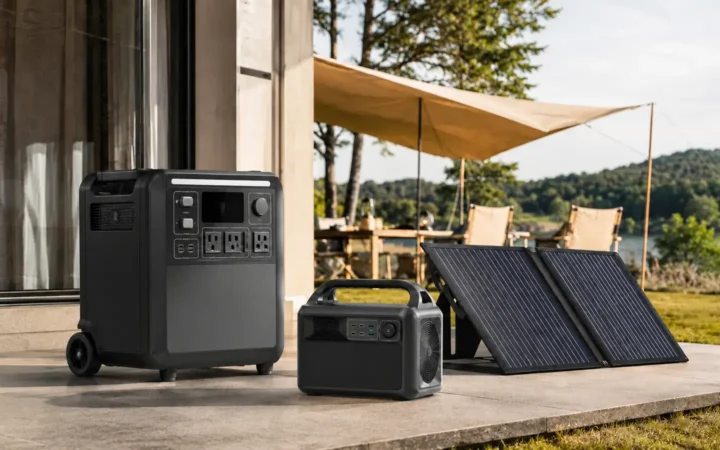
Launch offer ends September 3
The $619 early-bird price is advertised for August 27 through September 3. It reduces the $749 launch reference by $130, or 17.4%. Verify the final seller, coupon and checkout total because retailer prices can change before the promotion closes.
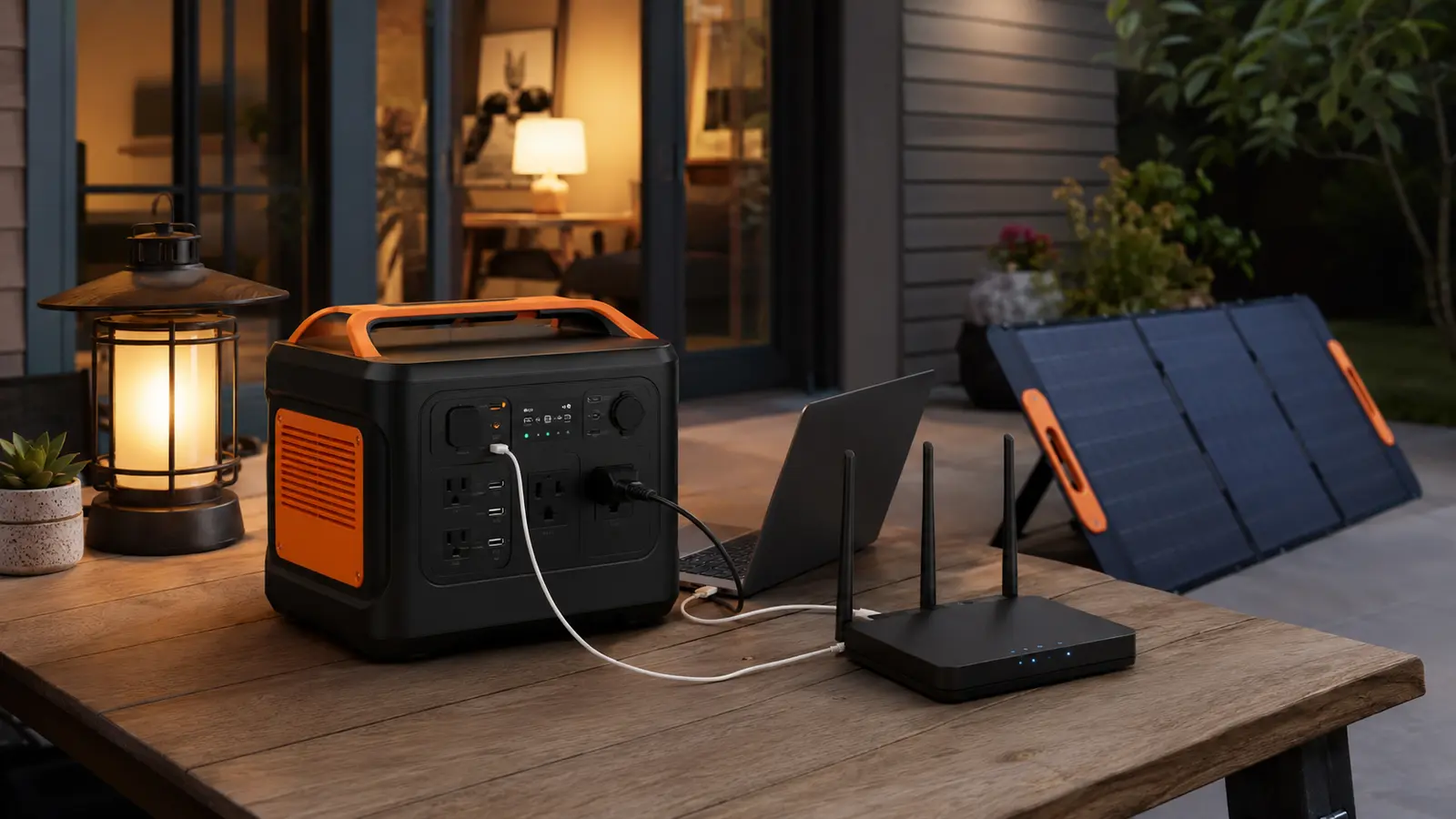
Fact-checked: August 30, 2026
Jackery’s HomePower 1000 Plus V2 is a compact 1,024Wh LiFePO4 portable power station launching at $619, down from $749 during an early-bird offer that runs through September 3. It provides 1,800W continuous AC output, a 3,600W surge rating and less-than-10ms UPS switching for compatible devices.
The unit weighs 23.8 pounds, accepts up to 400W of solar input and can connect to as many as five 2kWh expansion batteries for roughly 11kWh total capacity. Jackery claims a 6,000-cycle battery life; that is a manufacturer durability claim, not an independent long-term test.
This is portable backup for selected devices, travel, work and camping. It is not a permanently wired home battery and not a dedicated EV traction-battery charger. The right buying decision depends on your measured wattage and desired runtime, not only the 1,800W headline.
Affiliate disclosure
FrediTech may earn a commission from qualifying purchases made through links in this article, at no extra cost to you. Prices and availability can change after publication.
Is the HomePower 1000 Plus V2 Worth $619?
At $619, it is attractive for buyers who want a portable 1kWh-class unit with fast AC charging, UPS behavior and future battery expansion. Skip it if you need central air conditioning, a hardwired transfer switch or meaningful EV charging; those jobs require a different power system.
- Capacity: 1,024Wh.
- Output: 1,800W continuous; 3,600W surge.
- UPS transfer: under 10ms for suitable equipment.
- Warranty: three years plus a stated two-year extension on Jackery.com.
Jackery HomePower 1000 Plus V2 Specs
| Feature | Published specification | What it means |
|---|---|---|
| Battery | 1,024Wh LiFePO4 | About 1kWh before conversion losses and reserve |
| AC output | 1,800W continuous / 3,600W surge | Check both running and startup watts |
| UPS | Under 10ms switching | Suitable for many electronics; verify critical device requirements |
| Expansion | Up to five 2kWh add-on batteries | Approximately 11kWh total advertised capacity |
| Solar input | Up to 400W | Manufacturer estimates about 3.3 hours under ideal input |
| AC charging | Full charge advertised in about 50 minutes | Input limits and battery temperature can change timing |
| Weight | 23.8lb | Portable, but not a one-handed device for everyone |
| Cycle life | 6,000 cycles claimed | Manufacturer claim; usage and environment matter |
How Long Will 1,024Wh Actually Last?
A rough first estimate is usable watt-hours divided by average device watts. Do not assume all 1,024Wh reach the outlet: inverter losses, standby consumption, temperature and safety reserve reduce usable energy. A 100W average load may run for several hours, while a 1,500W heater can empty the battery quickly.
| Example load | Illustrative average | Buying implication |
|---|---|---|
| Router + modem + small lamp | About 25–50W | Good fit for extended connectivity and lighting |
| Laptop workstation | About 60–150W | Useful for a workday depending on accessories |
| Refrigerator | Variable with a startup surge | Measure with a watt meter; do not use the label alone |
| Space heater or kettle | Often 1,000–1,800W | Within output only if total stays below limit; runtime will be short |
UPS Mode: Useful, But Test Your Equipment
The advertised sub-10ms transfer makes the unit useful for routers, network storage and many computers during brief interruptions. It is not a certification that every medical, laboratory or server device will tolerate the transition. Check the connected equipment manual and perform a controlled test before relying on it.
Do not improvise a house connection
Never backfeed a wall outlet or connect a portable station to household wiring without an approved transfer setup installed for that purpose. Use the unit’s outlets directly and follow Jackery’s ventilation and grounding instructions.
Expansion to 11kWh: Who Needs It?
Expansion batteries let buyers start small and add runtime later. The advantage is modularity; the downside is total cost, storage space and multiple heavy components. Price the complete configuration before assuming it competes with a permanently installed home battery.
For camping, the base unit is easier to move. For outage planning, list the critical loads, estimate 24-hour energy and then size capacity. The Volkswagen ID. California Cruise offers V2L from the vehicle battery, but portable power can be positioned independently and does not consume driving range.
HomePower 1000 Plus V2 vs Explorer 1000 Plus
Do not buy by the similar names. Compare the exact product-page model numbers, included cables, expansion-battery compatibility, output, solar input, UPS behavior, physical size and warranty. A previous Explorer bundle can be cheaper after clearance, but the new HomePower model’s lower weight and updated feature mix may matter more.
Also compare EcoFlow Delta and Bluetti alternatives on like-for-like usable capacity, tested noise, charge curve, app privacy, battery expansion and final bundle price. One high peak number does not decide reliability or value.
Check the Live Launch Price
Confirm the model name, seller and September 3 promotion at checkout.


FrediTech Verdict
The $619 offer makes the HomePower 1000 Plus V2 a strong compact backup candidate if its 1,800W output and roughly 1kWh capacity match your measured loads. Its expansion path adds flexibility, while the weight and fast charging make the base unit practical. Treat cycle life and runtime as claims to validate, and do not stretch a portable station into whole-home or EV-charging duties.
Frequently Asked Questions
Can the Jackery HomePower 1000 Plus V2 charge an EV?
It is not a dedicated EV traction-battery charger. Even if a specific charging cable can draw power, 1,024Wh would add very little driving energy and compatibility and grounding must be verified.
Can it run a refrigerator?
Many refrigerators fit within 1,800W, but compressor startup surge and daily energy vary. Measure the actual appliance and test it before an outage.
How long does the $619 price last?
Jackery advertised the early-bird offer from August 27 through September 3, subject to stock and checkout terms.
Is the 6,000-cycle figure guaranteed?
It is a manufacturer battery-life claim. Actual results depend on depth of discharge, temperature, storage and use.
Related FrediTech Guides
Sources and Editorial Notes
Specifications, launch pricing and warranty terms were checked against Jackery’s product page and launch coverage. Runtime examples are clearly labeled illustrations, and manufacturer longevity claims are not presented as independent test results.