Confirmed future vehicle First-half 2027 target · Final specifications pending
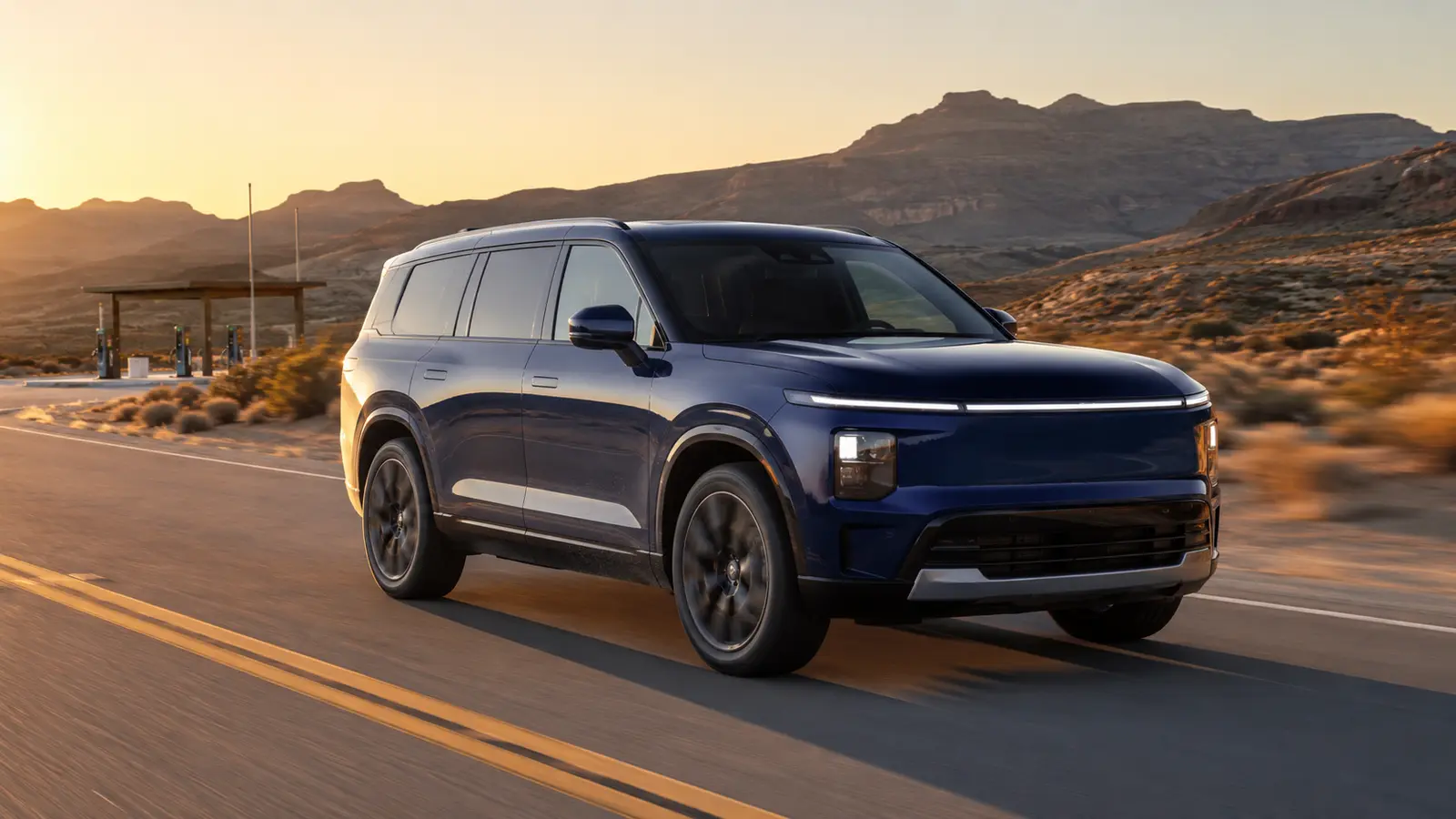
Hyundai has confirmed that a Santa Fe Extended Range Electric Vehicle will arrive in the first half of 2027, be built in Alabama and target more than 600 miles of total range. It could combine electric daily driving with long-distance fuel flexibility, but the headline is far ahead of the full specification sheet.
The Santa Fe EREV is worth watching for families who want EV-like driving but regularly travel beyond dependable fast-charging coverage. Do not compare its 600-mile total-range target directly with a battery EV’s EPA range: Hyundai has not identified the test standard, electric-only range, battery size, fuel capacity, charging speed or price.
Table of contents
What Hyundai has officially confirmed
At its 2026 CEO Investor Day, Hyundai named the Santa Fe as its first EREV and scheduled arrival for the first half of 2027. The company says the vehicle will be manufactured at Hyundai Motor Manufacturing Alabama in the United States and is expected to provide more than 600 miles of total range.
| Detail | Status | Information |
|---|---|---|
| Vehicle | Confirmed | Hyundai Santa Fe EREV |
| Arrival | Confirmed target | First half of 2027 |
| Production | Confirmed | Hyundai Motor Manufacturing Alabama |
| Total range | Manufacturer target | More than 600 miles |
| Range test standard | Not stated | Not yet identified as EPA, WLTP or another cycle |
| Battery capacity | Not announced | Hyundai says the EREV architecture uses less than half a comparable EV’s capacity |
| Price and trims | Not announced | No preorder or dealer pricing yet |
| Charging and warranty | Not announced | Final AC/DC rates and coverage remain unknown |
Hyundai describes the EREV as combining battery-EV power and efficiency with the convenience of an onboard charger. The announcement does not yet give a full mechanical diagram for the Santa Fe, drivetrain output or final market list beyond its US-production plan.
What is an extended-range electric vehicle?
An EREV is driven primarily as an electric vehicle and carries a combustion engine that extends travel by generating electricity when battery energy runs low. In a conventional series arrangement, the wheels are driven by electric motors and the engine’s main job is electrical generation rather than direct mechanical propulsion.
Hyundai has not yet published enough Santa Fe engineering detail to establish whether every operating condition follows a pure series layout. The safe conclusion is that it aims to provide electric driving characteristics with an onboard fuelled source for longer journeys.
Daily use
Charge at home and complete shorter trips primarily with battery energy, reducing routine engine operation when the electric range covers the journey.
Long trips
After battery energy falls, the onboard generator extends travel using fuel, reducing dependence on finding a fast charger at a particular point.
If an owner rarely plugs in, the vehicle carries a battery and charging hardware without obtaining their full efficiency benefit. Fuelled range is a backup and long-distance tool, not a reason to ignore regular charging.
Understanding Hyundai’s 600-mile claim
Hyundai’s figure is “more than 600 miles of total range.” Total means energy from both a charged battery and fuel in the tank. It is not the electric-only distance, and the company has not named an EPA, WLTP or other test procedure.
Until certification, buyers cannot reliably compare the number with an EPA-rated battery EV or even another EREV whose fuel tank has a different size. A large combined figure can result from efficiency, battery capacity, fuel capacity—or a mixture of all three.
Numbers that matter more than the headline
- EPA electric-only range: determines how many daily journeys can avoid engine use.
- Efficiency in EV mode: shows energy consumption after accounting for vehicle size and weight.
- Fuel economy in charge-sustaining mode: reveals long-distance operating cost after the battery’s usable energy is depleted.
- AC charging power: determines whether the battery can refill overnight.
- DC fast-charging curve: matters if owners want to recharge electrically during road trips.
- Tank and battery capacity: explain how the total range is achieved.
FrediTech will not estimate those values from the 600-mile target. They require certified documents and independent testing.
What Hyundai says about the new battery
Hyundai says its newly developed in-house cells produce more than twice the output of the high-nickel cells it previously used and reduce charging time by 40%. It says these high-performance cells will be applied to the EREV arriving in the first half of 2027 and that the architecture uses less than half the battery capacity of a comparable EV while aiming for equivalent battery performance and electric driving dynamics.
These are manufacturer development claims, not final Santa Fe charge times. “40% faster” needs a baseline battery, starting temperature, charger power and state-of-charge window before it can be translated into minutes. More than double output does not automatically mean twice the vehicle acceleration or twice the usable power at all times.
Why a smaller battery can help
- Lower cell cost than a similarly sized full battery EV.
- Potentially lower mass and reduced material demand.
- More frequent use of the available capacity rather than carrying unused long-range reserve.
- Potentially easier packaging in a three-row family SUV.
The trade-off is continued reliance on a combustion system, fuel tank, exhaust and additional maintenance. Real benefit depends on how often the owner completes journeys electrically.
Santa Fe EREV vs hybrid, PHEV and full EV
| Powertrain | Plug in? | Typical wheel-drive concept | Best fit | Main compromise |
|---|---|---|---|---|
| Conventional hybrid | No | Engine and electric system work together | Drivers without regular charging | Limited electric-only driving |
| PHEV | Yes | Engine and motor may both drive the vehicle | Short electric commutes plus long trips | Complexity; efficiency falls when not charged |
| EREV | Yes | Electric drive with onboard fuelled generation as the core concept | EV-like daily use and remote long-distance travel | Still carries and maintains an engine |
| Battery EV | Yes | Electric motors only | Owners with reliable charging | Long trips depend more heavily on chargers |
Who should wait for the Santa Fe EREV?
It is especially relevant to families with predictable home charging who also tow, travel through rural regions or make long winter journeys. Buyers who never plug in may be better served by a conventional hybrid. Buyers with excellent charging access who want zero tailpipe emissions should continue comparing full EVs.
What should be verified before ordering?
- Certified electric-only and total EPA range.
- Vehicle price, tax-credit eligibility and destination charges.
- AC and DC charging speed, port standard and preconditioning.
- Fuel requirement and depleted-battery efficiency.
- Towing rating and range while towing.
- Battery, powertrain and emissions-component warranties.
- Third-row room and cargo volume with all seats occupied.
- Service intervals for the generator engine.
FrediTech buying outlook
Hyundai has confirmed the points that make the Santa Fe EREV editorially important: a first-half 2027 target, US production, next-generation cells and more than 600 miles of total claimed range. Price, electric range, charging and certification will determine whether it becomes a genuine family-EV breakthrough or simply an expensive niche powertrain.
Frequently asked questions
When will the Hyundai Santa Fe EREV launch?
Hyundai targets the first half of 2027. It has not announced a preorder date or detailed dealer rollout.
Is the 600-mile figure electric range?
No. Hyundai calls it total range, combining battery and onboard fuel. Electric-only range remains unannounced.
Is 600 miles EPA-certified?
Hyundai has not stated a test standard in the announcement. Treat it as a manufacturer target until certified figures are published.
Where will it be built?
Hyundai says production will take place at Hyundai Motor Manufacturing Alabama in the United States.
Sources and methodology
Confirmed information comes from Hyundai’s Investor Day release. Explanatory comparisons describe general powertrain principles and do not substitute for the Santa Fe’s pending specification sheet. Checked 27 August 2026.