Confirmed launch India · Checked 27 August 2026
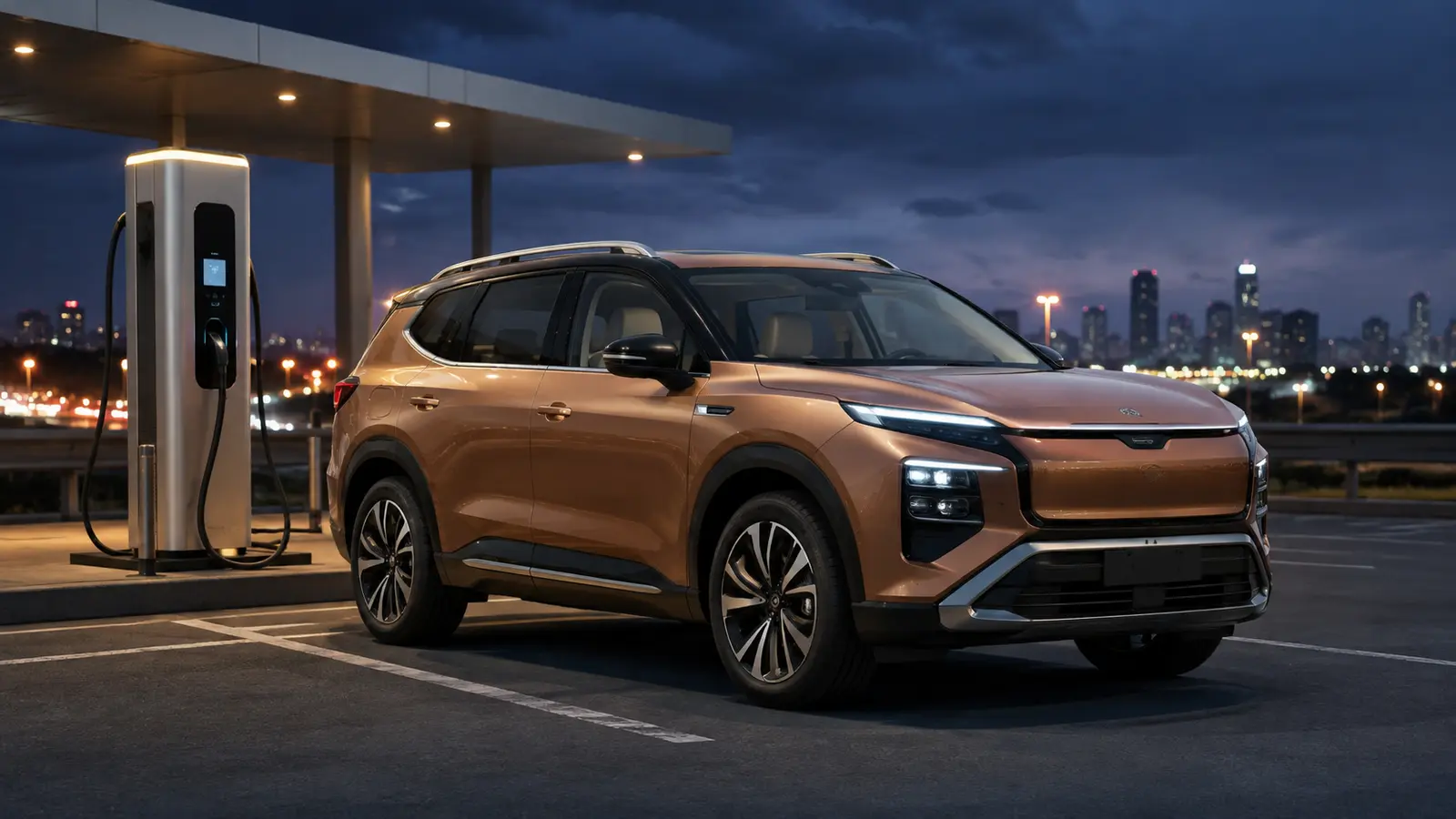
The MG Hector Tomahawk arrives in both battery-electric and plug-in-hybrid forms, with five- or seven-seat practicality, aggressive Battery-as-a-Service prices and unusually ambitious range claims. The important buying decision is not simply EV versus PHEV—it is also whether the lower BaaS entry price makes sense for the distance you drive.
The full-electric Hector Tomahawk is the cleaner choice for buyers with dependable home or workplace charging, while the PHEV is the lower-anxiety option for frequent long-distance travel. Do not choose BaaS from the headline price alone: compare the complete rental contract, minimum-use rules, financing, transfer conditions and the amount you expect to drive.
Table of contents
What MG has officially launched
JSW MG Motor India opened bookings for the Hector Tomahawk on 26 August 2026. The EV is scheduled to reach customers in September, while PHEV test drives and deliveries are expected in November. The EV is offered with five- and seven-seat layouts, a 2,810mm wheelbase and a quoted 23cm of ground clearance intended to give the underfloor battery more protection.
| Specification | Hector Tomahawk EV | Hector Tomahawk PHEV |
|---|---|---|
| Power source | 69.2kWh traction battery and electric motor | 20.5kWh battery plus combustion range extender/powertrain |
| Claimed range | 517km, ARAI/MIDC claim | More than 115km electric; more than 1,100km combined, test standard not stated |
| Motor output | 150kW and 310Nm | Final system-output detail should be confirmed from the variant brochure |
| DC charging | Up to 90kW; 30–80% claimed in 35 minutes | Charging specification not fully detailed in the launch material reviewed |
| First deliveries | September 2026 | November 2026 |
The official product page also advertises a 39.6cm central display with generative-AI and karaoke functions, wireless smartphone connectivity, a panoramic sunroof, ventilated seats, 256-colour ambient lighting and an automatic tailgate. Camp Mode can supply compatible devices through vehicle-to-load, while MG also promotes vehicle-to-home capability. Buyers should ask the dealer which V2L adapter is included, the maximum external output and what additional home equipment V2H needs; a feature name alone does not guarantee plug-and-play backup power.
Hector Tomahawk prices and what BaaS really changes
The EV starts at ₹19.49 lakh when the battery is included in the vehicle purchase. Its advertised BaaS entry price is ₹13.99 lakh plus ₹4.90 per kilometre. The PHEV starts at ₹25.69 lakh outright, or ₹21.79 lakh plus ₹3.20 per kilometre under BaaS. All are launch-era ex-showroom figures; registration, insurance, accessories and local taxes can change the on-road total.
| Plan | Upfront starting price | Battery charge | At 1,000km/month | At 1,500km/month |
|---|---|---|---|---|
| EV with battery | ₹19.49 lakh | Included | No per-km battery rent | No per-km battery rent |
| EV BaaS | ₹13.99 lakh | ₹4.90/km | ₹4,900/month | ₹7,350/month |
| PHEV with battery | ₹25.69 lakh | Included | No per-km battery rent | No per-km battery rent |
| PHEV BaaS | ₹21.79 lakh | ₹3.20/km | ₹3,200/month | ₹4,800/month |
It separates the battery from the vehicle’s headline purchase price and adds an ongoing usage cost. At the advertised rates, 12,000km a year means ₹58,800 in EV battery rent or ₹38,400 for the PHEV before electricity, petrol, finance and taxes. These examples are simple multiplication, not a dealer quotation.
The gap between the outright and BaaS starting prices is approximately ₹5.50 lakh for the EV and ₹3.90 lakh for the PHEV. Dividing those gaps by the advertised rates produces a rough 112,000km and 122,000km respectively. That is not a true break-even calculation: interest, battery-rental escalation, compulsory minimum kilometres, taxes, resale value, contract duration and battery-warranty responsibility can move the result substantially.
Questions to put in writing before choosing BaaS
- Is there a minimum monthly kilometre charge even if the vehicle is parked?
- Can the per-kilometre rate increase, and how often?
- Does PHEV rental apply to every kilometre driven, including petrol-assisted kilometres?
- Can the agreement transfer cleanly to the next owner?
- Who pays after accidental battery or underbody damage?
- What happens if you end the finance or battery contract early?
Range, efficiency and charging
The EV’s 517km figure is a certified ARAI/MIDC claim, not a promise of 517km in every journey. Speed, temperature, air-conditioning, passenger load, tyres, gradients and stop-start traffic all affect actual consumption. At launch there was no broad independent road-test dataset for this new model, so FrediTech is not assigning a real-world range number yet.
MG quotes 90kW peak DC charging and 30–80% in 35 minutes. A charging curve rarely remains at its maximum from start to finish, so peak kilowatts should not be mistaken for average speed. The quoted 7.4kW AC time of about 12.5 hours from 10–100% makes overnight home charging practical if the property can support a dedicated wallbox.
EV charging fit
Best for owners who can routinely plug in at home or work and mainly travel within a predictable daily radius. Public DC charging should be a trip tool, not the only plan.
PHEV charging fit
Best when daily routes can use the battery but long trips regularly extend beyond reliable charging corridors. It still needs frequent charging to deliver its intended efficiency benefit.
The PHEV’s “more than 115km” electric figure and “more than 1,100km” combined figure are manufacturer claims for which the reviewed launch material does not clearly identify a test cycle. Combined range also includes fuel in the tank; it must not be compared directly with a battery-electric range figure.
Which one should you buy?
Choose the EV if…
- You have reliable overnight charging.
- Most daily journeys fit comfortably inside one charge.
- You prefer simpler electric propulsion and no routine petrol use.
- The five- or seven-seat packaging meets your needs.
Choose the PHEV if…
- You frequently drive beyond dependable charging coverage.
- You can still charge often enough to use the electric range.
- You accept the added mechanical complexity and petrol servicing.
- Long-distance flexibility matters more than the lower EV purchase price.
A PHEV used without charging can become an expensive, heavy petrol vehicle carrying an underused battery. Conversely, an EV bought without a workable home, workplace or local public-charging plan can create unnecessary inconvenience. Map your real weekly journeys before selecting the powertrain.
Practicality, warranty and ownership risks
The long wheelbase, flat-floor packaging and seating flexibility make the EV unusually family-focused. However, buyers should test the third row with the passengers who will actually use it and check luggage space with all seven seats raised. A large screen and gesture controls look impressive, but physical usability, software stability and sunlight visibility need real testing.
Launch coverage lists a three-year, unlimited-kilometre vehicle warranty, three years of roadside assistance and two free services for the EV. MG also advertises a lifetime battery warranty for the first owner. “Lifetime” terms can include private-use, ownership and service conditions, so read the written warranty booklet rather than relying on the headline. The battery benefit may not transfer unchanged to a second owner.
What FrediTech would test in a full review
- Independent city and highway range at representative speeds.
- Charging curve from a low state of charge, not only the peak rate.
- Third-row access, adult comfort and luggage space.
- Ride quality with 18-inch wheels and a full passenger load.
- ADAS calibration, touchscreen responsiveness and connected-app reliability.
- Energy use when V2L is powering appliances or camping equipment.
Final buying advice
The Hector Tomahawk EV combines competitive entry pricing, a large certified-range claim and genuine family utility. The PHEV makes sense for drivers who cannot depend on chargers during long journeys, but its higher price and two-energy-source complexity deserve scrutiny. Whichever powertrain you choose, obtain an on-road quote showing every BaaS, finance, insurance and accessory cost before paying a booking amount.
Frequently asked questions
Is the ₹13.99 lakh Hector Tomahawk price the complete EV price?
No. It is the BaaS starting price and carries an advertised ₹4.90-per-kilometre battery charge. The EV starts at ₹19.49 lakh when the battery is included in the purchase price.
Does the Hector Tomahawk EV really travel 517km?
517km is the certified ARAI/MIDC claim. Actual range varies with road, speed, weather, load, climate control and driving style. Independent testing is needed before quoting a dependable real-world figure.
Can the Hector Tomahawk power a home?
MG promotes V2L and V2H functionality. Ask the dealer which variants support it, the output rating, what adapter is supplied and whether certified home hardware and installation are required.
When do deliveries begin?
MG’s launch schedule places EV deliveries in September 2026 and PHEV test drives and deliveries in November 2026, subject to location and dealer allocation.
Sources and methodology
Specifications and feature claims are attributed to MG unless an independent source is stated. Prices were checked on 27 August 2026 and may change.