Confirmed availability change Explorer Edition preorder ended · Research checked 28 August 2026
Plaud One tries to combine premium wireless earbuds, a phone-independent 4G recording case and an AI work assistant. The limited $249.99 Explorer Edition allocation of 2,000 units has ended, so buyers cannot assume they can order now. The immediate decision is whether to join the waitlist—and whether the recording workflow fits local consent laws and future software dependencies.
Join the waitlist if phone-independent conversation capture would genuinely improve your work and you accept early-product uncertainty. Do not buy it merely as music earbuds: much of the value lies in recording, transcription, credits and future agent features. Privacy rules, subscription costs and regional integrations can matter more than the 40dB ANC claim.
Table of contents
Plaud One price, countries and waitlist status
Plaud launched the Explorer Edition at $249.99 on 27 August 2026 and limited the allocation to 2,000 units worldwide. Its official page now states that the current preorder has ended and invites visitors to join a reopening waitlist. A waitlist registration is not an order, reservation or guaranteed delivery allocation.
The limited release covered the United States, Canada, United Kingdom, France, Germany, Italy, Spain and the Netherlands, with local pricing and availability potentially varying. Buyers outside those countries should not assume that importing solves every problem: eSIM support, mobile bands, taxes, return shipping, privacy features and warranty service may be market-specific.
| Item | Confirmed status | What it means |
|---|---|---|
| Explorer Edition price | $249.99 | New product; no previous retail price |
| Allocation | 2,000 units worldwide | Limited release, now ended |
| Ordering | Waitlist only at last check | No guarantee of reopening date or stock |
| Included value | $200 in Plaud credits | Useful only within eligible Plaud services and terms |
| Markets | Eight named countries | Features and integrations may vary |
A sold-out limited allocation can create inflated marketplace listings. Until final hardware, account transfer, warranty and subscription arrangements are clear, paying above the official price introduces unnecessary risk.
What makes Plaud One different from normal earbuds?
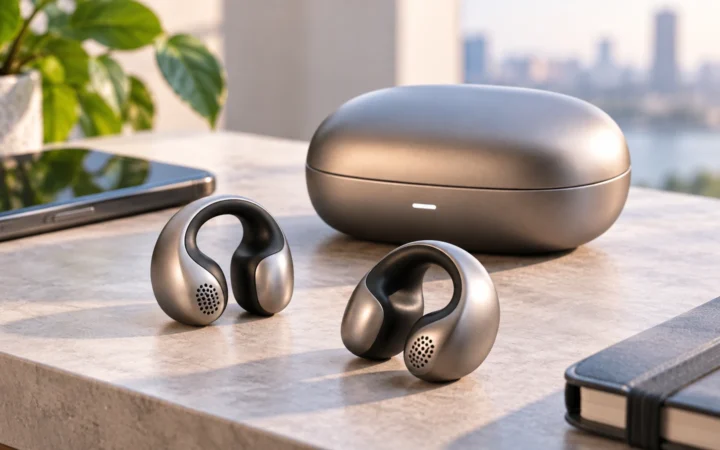
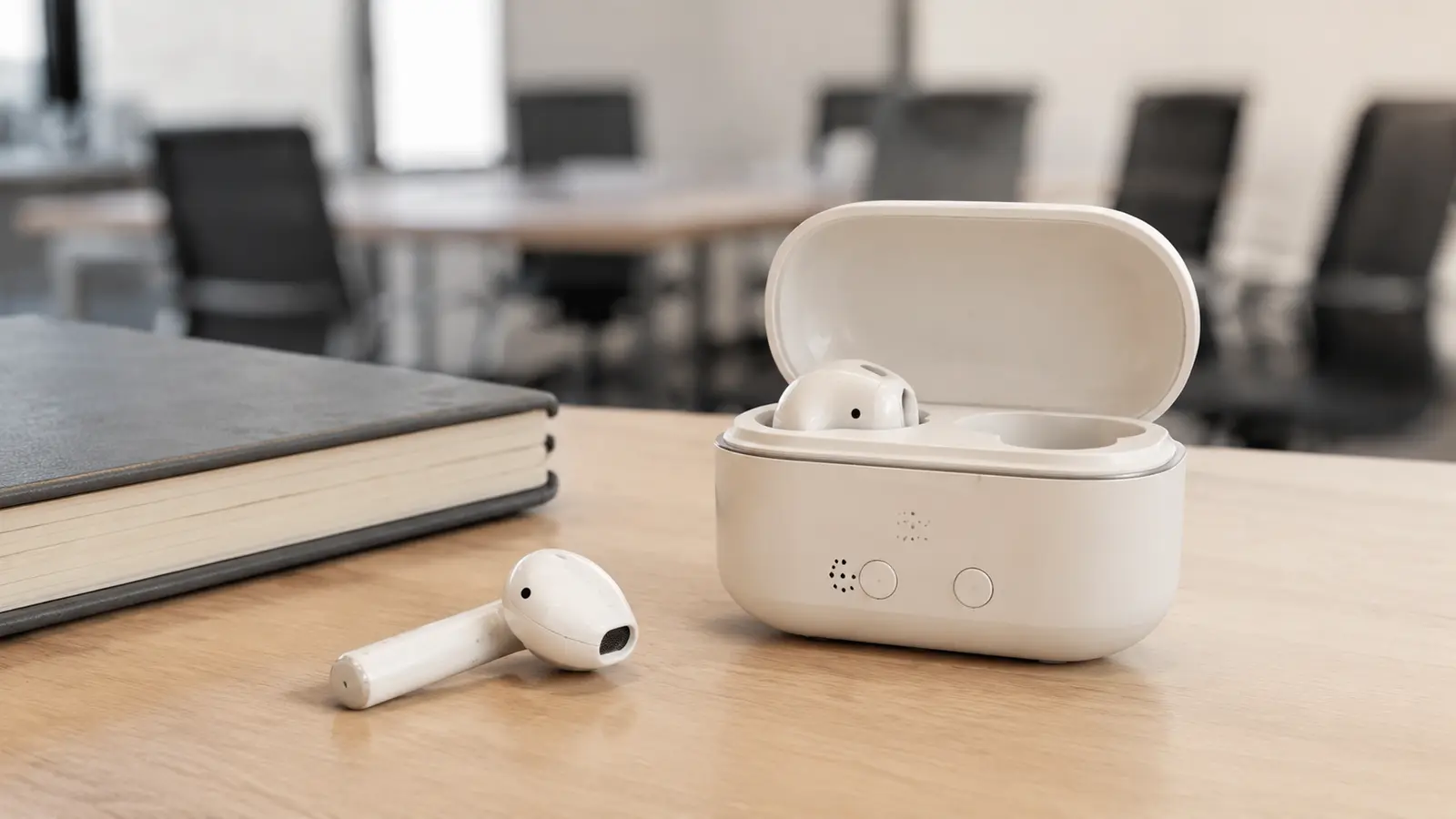
The central idea is a connected charging case with its own microphones and 4G eSIM. The earbuds can capture a wearer’s in-person conversation, phone call or online meeting, while the case can sit on a table as a room recorder. Plaud then processes the audio into transcripts, summaries and action-oriented outputs within its software ecosystem.
This design reduces dependence on a phone during capture. For sales visits, interviews, lectures or field work, a case that can record and transmit independently may be more convenient than opening an app. It also creates more points of failure: eSIM coverage, account status, battery life, cloud availability, permissions and firmware all need to cooperate.
Promised software workflow
- Capture audio through the earbuds, case or supported call/meeting workflow.
- Upload or synchronize the recording through available connectivity.
- Transcribe and organize the conversation in Plaud’s software.
- Generate notes, tasks, reports or other artifacts.
- Connect supported services or agents where available.
Plaud describes future-facing functions such as agents, connectors, routines and generated artifacts. Its own footnotes say some agent capabilities require future software and some integrations may not be available at launch. Buy only for functions documented as available in your market today; treat roadmap items as possible additions, not purchased guarantees.
Recording hardware, ANC and music features
Each earbud is listed with three MEMS microphones plus one voice-pickup unit, while the case uses four MEMS microphones with AI beamforming. Plaud quotes pickup distances of up to 6.6 feet for the earbuds and 16.4 feet for the case. Room acoustics, speaker direction, background noise and overlapping voices can reduce practical accuracy.
For listening, the earbuds use 12mm dynamic drivers, SBC and LDAC codecs, a 20Hz–20kHz stated response, transparency mode and adaptive hybrid ANC rated up to 40dB. Total playback is advertised at up to 36 hours with the case. None of those numbers guarantees sound quality; independent tests should assess tuning, seal consistency, latency, microphone naturalness and noise reduction across low rumbles and speech.
Best professional use
Capturing structured conversations when taking manual notes would break eye contact or slow the meeting—after everybody has agreed to recording.
Weakest purchase case
Buying primarily for music. Established earbuds may offer better measured ANC, repair support and sound at the same price without tying value to AI services.
Recording consent, data security and workplace policy
Recording laws differ by country, state and context. Some places allow one-party consent; others require everyone in a private conversation to agree. Employment contracts, schools, healthcare settings and confidential meetings can impose stricter rules than general law. This guide is not legal advice: obtain clear consent and follow the policy governing the setting.
Plaud says conversation data is encrypted in transit and at rest and is not used to train models unless the user explicitly opts in. Buyers should still review retention controls, deletion behavior, data-region choices, account recovery, export formats and what happens when a subscription ends. Sensitive recordings can include names, health details, trade secrets or client information even when the summary seems harmless.
A responsible recording checklist
- Tell participants what is recording and why before capture begins.
- Obtain the level of consent required by local law and organization policy.
- Pause or delete recordings when confidential topics arise.
- Use strong account security and enable multifactor authentication if offered.
- Set a retention period rather than keeping every raw recording indefinitely.
- Verify transcripts before assigning tasks or publishing quotations.
The $200 credit bundle does not eliminate ongoing cost
The Explorer Edition includes $200 of Plaud credits intended for Plaud Intelligence functions. A credit value is not identical to a cash discount: its usefulness depends on eligible services, expiry, usage rates and whether those services are available in your country. Heavy transcription or agent use could consume credits more quickly than occasional meeting summaries.
Before a future preorder, calculate the first-year total: earbuds, taxes, shipping, mobile or eSIM charges if any, transcription plan, replacement tips and out-of-warranty support. Compare that with using existing earbuds plus a phone recorder or a dedicated Plaud recorder. The integrated workflow must save enough time to justify the premium.
Who benefits most from Plaud One?
Strong fit
- Consultants and sales professionals with frequent consented conversations.
- Researchers or journalists who need both wearable and tabletop capture.
- Users already committed to Plaud’s transcription workflow.
- People who value phone-independent recording enough to accept early-adopter risk.
Poor fit
- Anyone prohibited from recording at work or school.
- Buyers wanting only the best music or ANC performance.
- Users unwilling to store conversations in a cloud service.
- People who need every advertised agent or integration on day one.
Alternatives to consider
A conventional premium earbud plus a phone transcription app is more flexible and easier to replace, though it lacks the case-based room recorder. A dedicated voice recorder can offer clearer controls and visible recording status. Plaud’s own Note or NotePin products may suit people who need capture but do not want their everyday listening device tied to the same workflow.
For meetings on Zoom, Teams or Meet, built-in transcription may be cheaper and clearer about participant notification. The Plaud One advantage grows when conversations happen away from laptops and when switching between wearable, call and tabletop capture is genuinely useful.
How to test transcription and microphone quality
A polished summary can hide errors in the raw transcript. In a return-window review, record the same consented five-minute conversation with Plaud One, a phone and an established meeting tool. Include two speakers, product names, numbers and a short interruption. Compare word accuracy, speaker separation, punctuation and whether action items preserve who agreed to do what.
Repeat the test in a quiet office, café-like background noise and a larger room. Move speakers to the edge of the advertised pickup range. Case beamforming may reject noise well when everybody sits in front of it, yet perform differently when voices surround the table. For calls, ask the remote participant whether your voice sounds processed or unstable.
Accuracy failures that matter most
- Wrong names, dates, prices or measurements.
- Combining two speakers into one statement.
- Turning uncertainty into a firm commitment.
- Losing negation—for example, changing “do not ship” into “ship.”
- Omitting confidential context from a summary while retaining it in cloud audio.
- Generating tasks that were discussed but never approved.
Human review is essential before sending minutes, updating a customer record or assigning work. The more consequential the conversation, the less appropriate fully automatic action becomes.
Comfort, repair and product-life questions
Recording functions will not matter if the earbuds are uncomfortable. Test all supplied tip sizes for seal, pressure and stability during speech and walking. A loose seal reduces bass and ANC; an overly tight tip can cause fatigue. Check sidetone or transparency when speaking so your own voice does not feel blocked.
Battery wear is a long-term concern for every true-wireless product. Ask whether individual earbuds, the case or batteries can be replaced, how warranty handles uneven drain, and whether the eSIM case continues to function if one earbud is lost. Cloud-service longevity is equally important: export options determine whether recordings remain useful if a plan or product changes.
A one-month workflow experiment
Before committing to an annual service, identify three recurring tasks—perhaps client-call summaries, lecture notes and follow-up lists. Measure time spent recording, reviewing corrections and moving output into the real system of record. If the device creates more cleanup than it saves, impressive AI output is not practical productivity.
Keep a manual fallback for critical sessions and never make the earbuds the only copy of an interview or decision. A professional recording workflow needs battery, storage and permission redundancy.
Should you join the Plaud One waitlist?
The waitlist costs less commitment than an aftermarket purchase and may provide updated pricing, firmware and availability. Plaud One is an ambitious professional tool, but the limited allocation, future-feature caveats and legal responsibilities make it unsuitable for impulse buying. Wait for independent microphone, battery and transcription tests before treating it as a finished replacement for premium earbuds and a recorder.
Questions buyers are asking
Can I buy Plaud One now?
The official page said the current 2,000-unit preorder had ended when checked on 28 August 2026. Visitors can join a waitlist for notice if preorders reopen.
Does the case work without a phone?
Plaud promotes a 4G eSIM-equipped case for phone-independent connectivity and room recording. Coverage, plan requirements and regional support should be confirmed before purchase.
Are Plaud One recordings legal?
Legality depends on location and context. Obtain required consent and follow workplace, school, medical or client policies. Hardware capability does not grant permission to record.
Are all AI agent features available at launch?
No. Plaud’s footnotes say some capabilities require future software and some integrations can vary or arrive later. Base a purchase on confirmed current functions.
Sources and research method
FrediTech checked Plaud’s official product page, specifications and footnotes on 28 August 2026. Recording distances, ANC, battery life and workflow capabilities are manufacturer claims pending independent review.