
Vivo Buds Clip launched in China on September 21, 2026 as Vivo’s first clip-style open-ear earbuds. The standard USB-C charging version has a regular China price of CNY 699, while the wireless-charging version is CNY 799. During the current launch promotion, which runs through October 31, the two versions are discounted by CNY 100 to CNY 599 and CNY 699 respectively. Eligible Vivo and iQOO device owners can receive an additional CNY 50 discount during the launch period.
The Buds Clip use 12mm dual-magnetic dynamic drivers, support LDAC, AAC, SBC and LC3, carry Hi-Res Audio Wireless certification and connect to as many as three devices over Bluetooth 5.4. Vivo rates them for up to 10 hours from the earbuds and 42 hours with the case. The higher-priced version adds Qi wireless charging. What has not changed since launch is the global situation: Vivo has not announced an official international release date for India, the UK, Europe, the US or other major markets as of September 28, 2026.
Table of contents
Vivo Buds Clip: Quick Facts
- China launch: September 21, 2026
- Standard regular price: CNY 699
- Standard launch price: CNY 599 through October 31
- Wireless-charging regular price: CNY 799
- Wireless-charging launch price: CNY 699 through October 31
- Design: clip-style open ear
- Weight: 5.2g per earbud
- Driver: 12mm dual-magnetic dynamic driver
- Codecs: LDAC, AAC, SBC and LC3
- Bluetooth: 5.4 with three-device connectivity
- Battery: up to 10 hours earbuds / 42 hours with case
- Protection: IP55 earbuds; case rating not listed
- Wireless charging: Qi on the wireless-charging version
- Global availability: not officially announced outside China
Vivo Buds Clip Price in China
Vivo sells two Buds Clip versions in China. The regular/list price is CNY 699 for the standard version and CNY 799 for the wireless-charging version. Vivo’s own specifications page confirms those list prices.
The September launch promotion reduces each version by CNY 100. From September 21 through October 31, the standard model is promoted at CNY 599, while the wireless-charging version is promoted at CNY 699. Existing Vivo/iQOO device owners can receive another CNY 50 reduction where the launch offer applies, potentially bringing the prices to CNY 549 and CNY 649.
| Version | Regular/list price | Launch price | Wireless charging |
|---|---|---|---|
| Vivo Buds Clip Standard | CNY 699 | CNY 599 | No |
| Vivo Buds Clip Wireless Charging | CNY 799 | CNY 699 | Yes, Qi |
The promotional prices are temporary rather than new permanent MSRPs. China retailer pages can also show seller-specific coupons or account benefits, so buyers should check the final checkout total rather than assume every listing reflects Vivo’s standard list price.
Standard vs Wireless-Charging Version
Vivo publishes one shared earbud specification set for Buds Clip. The documented difference between the two versions is the charging case: the higher-priced case supports Qi wireless charging and compatible phone reverse wireless charging, while the standard case charges by USB-C only. Vivo does not list different drivers, Bluetooth hardware, battery claims or audio features for the earbuds themselves.
The wireless charger is not included. If you already use a Qi pad or a phone that supports reverse wireless charging, the CNY 100 price premium may be useful. Otherwise, the standard model delivers the same core listening feature set for less.
Vivo Buds Clip Global Availability
Last checked: September 28, 2026. Vivo Buds Clip are officially launched and on sale in China. Vivo has not announced an official retail release in India, the United Kingdom, Europe, the United States, Canada, Australia, Southeast Asia, the Middle East or Africa.
| Region | Availability status |
|---|---|
| China | Launched September 21, 2026; officially on sale |
| India | Not officially announced |
| United Kingdom | Not officially announced |
| Europe | Not officially announced |
| United States | Not officially announced |
| Canada | Not officially announced |
| Australia | Not officially announced |
| Southeast Asia | No official regional retail launch announced |
| Middle East | Not officially announced |
| Africa | Not officially announced |
A marketplace import listing is not the same as an official Vivo launch. Until Vivo publishes local product pages, warranty terms or official retailer availability, FrediTech will treat China as the only confirmed market.
Will Vivo Buds Clip Launch in India?
Vivo has not announced an India release date or Indian price. The earbuds may eventually reach more markets because Vivo sells accessories internationally, but there is no evidence-based date to publish yet. Any India price converted from CNY would be speculative and should not be presented as official.
Should You Import Vivo Buds Clip From China?
Importing can give early access, but buyers should consider warranty, return shipping, import taxes, regional Vivo-account features and firmware support. Basic Bluetooth music and calls are widely compatible, yet several advanced features are documented specifically for supported Vivo/iQOO phones running particular OriginOS and Android versions.
Translation, AI smart broadcasts, offline earbud finding and some customization features should therefore not be assumed to work identically on an imported pair connected to a non-Vivo phone. The China warranty may also be harder to use from another country.
How the Vivo Buds Clip Design Works
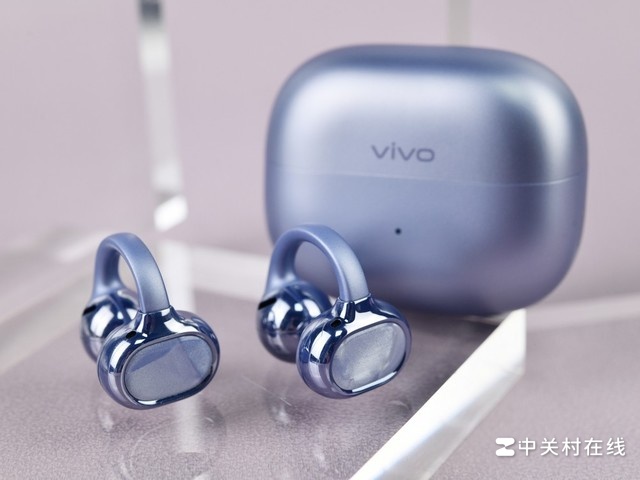
Each earbud uses a C-shaped open-ear design made from a listening section, a rear balance section and a flexible titanium-alloy bridge. The earbuds weigh about 5.2g each. Vivo says the shape was refined using more than 2,000 ear models, and the symmetrical design means the buds do not need to be sorted into fixed left and right pieces before wearing.
Because the ear canal remains open, users can hear more of their surroundings than with sealed in-ear earbuds. That can be useful for walking, office work and exercise. The trade-off is weaker physical isolation from traffic, aircraft or loud public transport, plus more potential sound leakage and less bass reinforcement than a well-sealed in-ear design.
Comfort cannot be guaranteed from weight alone. Ear shape, bridge pressure and speaker placement vary by person. Buyers who have never used clip-on earbuds should try the form factor if possible before assuming it will be comfortable for all-day wear.
Colors and Finish
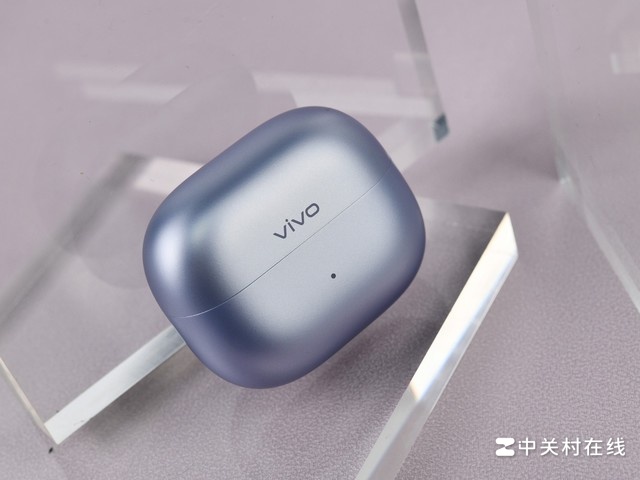
The China lineup comes in Floating Purple, Moonlight White and Starry Night Black. Vivo uses a mother-of-pearl-inspired decorative finish on the purple and white versions, while the black version has a darker textured appearance.
12mm Dual-Magnetic Driver and Audio Hardware
Vivo Buds Clip use a 12mm dual-magnetic dynamic driver with Vivo’s dual-parallel voice-coil design. Vivo lists a 20Hz–40kHz frequency range and a BES2710IHC audio platform. The product has Hi-Res Audio Wireless certification.
A larger driver can move more air, but driver diameter alone does not prove better sound. Open-ear placement, DSP tuning, leakage control and individual fit strongly affect bass, vocals and treble. Hi-Res certification describes technical capability; it does not guarantee that every listener will prefer the tuning.
LDAC, LC3, AAC and SBC Support
The official codec list is LDAC, LC3, AAC and SBC. LDAC can carry higher-bitrate Bluetooth audio on compatible devices, while AAC and SBC provide broad compatibility. LC3 is associated with newer Bluetooth LE Audio workflows.
Codec use depends on the source device, operating system, Bluetooth settings, firmware and audio source. iPhones do not use LDAC, so iPhone users should expect AAC/SBC rather than Vivo’s highest-bitrate LDAC path. Android compatibility varies by manufacturer.
DeepX 5.0, Listening Modes and Spatial Audio
Vivo’s specification page lists DeepX sound presets for clear vocals, stronger bass, brighter treble and audiobook/voice listening. Vivo also provides custom EQ options. Separate listening modes include Balanced, Voice Enhancement and an anti-leakage mode intended to reduce sound spreading outward in quiet spaces.
Spatial audio is supported, but the most advanced implementation requires compatible Vivo/iQOO phones running Android 15 with OriginOS 5.0 or newer, supported MediaTek/Qualcomm hardware and more than 6GB RAM. Vivo says non-Vivo/iQOO phones can use a standard spatial-audio mode through the Vivo Earbuds app where supported. This should not be confused with Apple Spatial Audio or Dolby Atmos branding.
AI Call Noise Reduction
For calls, Buds Clip combine a dual-microphone array with a VPU bone-conduction microphone and AI call-noise-reduction algorithms. The system is designed to improve voice pickup in wind and noisy environments by combining airborne microphone information with vibration-based voice detection.
Do Vivo Buds Clip Have ANC?
Vivo does not list traditional playback Active Noise Cancellation for music. AI call-noise reduction applies to microphone/call quality; it is not the same as ANC that suppresses outside noise for the listener. That distinction is particularly important with an open-ear design, which intentionally leaves the ear canal unsealed.
If strong isolation is a priority for flights or loud commuting, sealed ANC earbuds are a better category to compare. FrediTech’s noise-cancelling headphones guide explains how ANC differs from call-noise processing.
Vivo Buds Clip Battery Life
Vivo rates Buds Clip for up to 10 hours of music from the earbuds and up to 42 hours combined with the charging case. The official test uses AAC, 50% volume, MP3 playback and sound effects disabled in a normal-temperature lab environment.
Battery life will change with volume, LDAC use, spatial effects, calls, connection behavior and temperature. Vivo also claims that 10 minutes of charging can provide up to three hours of music under its test conditions.
Each earbud has a typical 60mAh battery, while the case is rated at 570mAh typical. Vivo lists approximately 60 minutes to charge the earbuds and about 2.5 hours to charge the case and earbuds together by the documented wired method.
Charging and the Wireless-Charging Version
Both versions support USB Type-C charging. The wireless-charging version additionally supports mainstream Qi wireless chargers and compatible reverse wireless charging from a phone. Vivo does not include a wireless charging pad.
The charging distinction is therefore simple: choose the CNY 799 list-price version if Qi convenience matters; otherwise the CNY 699 standard model keeps the same documented earbud features and uses USB-C charging.
Bluetooth 5.4 and Three-Device Connectivity
Bluetooth 5.4 is paired with one of the Buds Clip’s most unusual features: simultaneous connection to three devices. Vivo describes support across phones, tablets and computers, with audio able to move between connected devices when media or calls become active.
Most multipoint earbuds focus on two devices, so a three-device connection can be genuinely useful for someone who moves between a phone, tablet and laptop during the day. FrediTech’s Soundcore AeroClip 2 coverage provides another current open-ear reference.
70ms Latency
Vivo lists a latency figure of 70ms. That is a manufacturer figure, not a guarantee across every phone, codec and game. Bluetooth latency can change with the connected device, software path and audio mode, so competitive gaming performance should be tested with the exact phone being used.
Real-Time Translation and AI Features
Real-time translation integrates with Vivo’s translation system for text, spoken prompts and conversation translation. Vivo’s own requirements are important: the feature needs a supported Vivo/iQOO phone running Android 14 or newer with a compatible OriginOS release and the required Vivo translation software version. Vivo does not publish a complete Buds Clip language list on the product page.
AI smart broadcasts can read parcel-delivery, flight and train-status information, but Vivo documents this feature for supported Vivo/iQOO phones running OriginOS 6 with Android 14 or newer. Other ecosystem functions include Find My Earbuds, drop alerts, remote camera control, incoming-call announcements and BlueOS watch integration, with requirements varying by feature.
These features should not be advertised as universally available on every Android or iPhone. FrediTech’s OriginOS 7 coverage provides additional ecosystem context.
IP55 Dust and Water Resistance
The earbuds themselves are rated IP55. Vivo explains that this provides limited protection from dust ingress and water jets/splashes under controlled testing. The product is not designed for submersion, swimming or professional waterproof use.
The IP55 rating applies to the earbuds, not the charging case. Water resistance can also decline over time with wear.
Do Vivo Buds Clip Work With iPhone and Other Android Phones?
Basic Bluetooth audio and calls are not limited to Vivo phones, and Vivo explicitly markets the three-device connection as cross-ecosystem. PCs and tablets can also be part of the three-device setup.
The advanced feature picture is different. Translation, AI broadcasts, offline finding, certain gestures, popup customization and the deepest spatial-audio implementation have Vivo/iQOO device and OriginOS requirements. Non-Vivo Android phones may use the Vivo Earbuds app for some settings. iPhone users can use Bluetooth audio/calls, but they should not expect LDAC or every Vivo ecosystem feature to be available.
Vivo Buds Clip vs Huawei FreeClip 2
| Feature | Vivo Buds Clip | Huawei FreeClip 2 |
|---|---|---|
| China price | CNY 699 standard / CNY 799 wireless; launch promos CNY 599/699 | From CNY 1,299 |
| Weight per earbud | 5.2g | 5.1g |
| Driver | 12mm dual-magnetic dynamic | 10.8mm dual-diaphragm |
| Battery claim | 10h / 42h | 9h / 38h in stability-priority mode |
| Bluetooth | 5.4 | 6.0 |
| Codec highlight | LDAC | L2HC on compatible Huawei devices |
| Multipoint | Three simultaneous devices | Dual-device; broader multi-device support in Huawei ecosystem |
| Earbud protection | IP55 | IP57 |
| Case protection | No rating listed | IP54 |
| Wireless charging | Optional version | Supported |
The comparison shows different priorities rather than a universal winner. Vivo is substantially cheaper in China and emphasizes LDAC plus three-device connectivity. Huawei offers a higher protection rating, Bluetooth 6.0 and stronger Huawei-ecosystem integration at a much higher price.
Vivo Buds Clip Pros and Cons
Pros
- Light 5.2g clip-on design
- 12mm driver and LDAC
- Hi-Res Audio Wireless certification
- 10h / 42h official battery claims
- Three-device connectivity
- IP55 earbuds
- AI call-noise reduction
- Qi option available
Cons
- No official global launch yet
- Advanced AI features require compatible Vivo/iQOO devices
- No traditional playback ANC listed
- Open fit provides little passive isolation
- Sound leakage is harder to control than sealed in-ear buds
- Launch prices are temporary and can confuse buyers
Who Should Consider Vivo Buds Clip?
Buds Clip make the most sense for people who dislike silicone tips, want to remain aware of traffic or coworkers, use several devices, or already own compatible Vivo/iQOO products. The 10-hour earbud claim also suits long office or travel days where frequent case charging is inconvenient.
Traditional sealed earbuds remain more suitable for frequent flyers, buyers who need strong ANC, listeners who want maximum passive isolation, or people who need greater privacy in quiet spaces. Buyers outside China may also prefer to wait for official local availability rather than accept import warranty and feature-compatibility uncertainty.
For a broader view of sealed alternatives, see FrediTech’s Moto Buds 2 Fusion comparison and headphones and earbuds buying guide.
Final Buying Perspective
The Vivo Buds Clip are now much easier to evaluate than they were in the preview stage. The standard CNY 699 price, temporary CNY 599 launch offer, 12mm driver, LDAC, 42-hour combined battery, IP55 rating and three-device connection give the product a clear position in China’s growing clip-on earbud market.
The CNY 799 wireless-charging version is mainly about case convenience, not a higher-performance earbud. Buyers should therefore pay the extra CNY 100 only if Qi charging is useful to them.
The biggest limitation for international buyers is not hardware but availability. Vivo has not announced a global release, and several translation/AI features depend on supported Vivo/iQOO phones. Until local launches appear, importing should be treated as an enthusiast option rather than the default recommendation.

Frequently Asked Questions
How much do Vivo Buds Clip cost in China?
The standard model has a regular price of CNY 699, while the wireless-charging version costs CNY 799.
What is the Vivo Buds Clip promotional price?
Through October 31, the standard version is promoted at CNY 599 and the wireless-charging version at CNY 699. Eligible Vivo/iQOO device owners can receive another CNY 50 reduction where the offer applies.
What is the difference between the two versions?
The higher-priced version adds Qi wireless charging to the case. Vivo lists the same core earbud specifications for both versions.
How long do Vivo Buds Clip last?
Vivo claims up to 10 hours from the earbuds and 42 hours total with the case under AAC, 50% volume and sound-effects-off lab conditions.
Do Vivo Buds Clip support LDAC?
Yes. The official codec list includes LDAC, LC3, AAC and SBC.
Do Vivo Buds Clip have active noise cancellation?
Vivo lists AI call-noise reduction, but not traditional playback ANC for music.
Can Vivo Buds Clip connect to three devices?
Yes. Vivo supports simultaneous connection to three devices such as phones, tablets and computers.
Are Vivo Buds Clip waterproof?
No. The earbuds are IP55-rated for limited dust and water resistance under test conditions; the charging case does not inherit that rating.
Do Vivo Buds Clip work with iPhone?
They support basic Bluetooth audio and calls across ecosystems. iPhones do not support LDAC, and Vivo-specific AI/translation features should not be assumed to work.
Are Vivo Buds Clip available in India?
No official India launch has been announced as of September 28, 2026.
Are Vivo Buds Clip available in the US or Europe?
Vivo has not announced official US, UK or European retail availability.