
Confirmed L-mount availability Orders opened 27 August 2026 · Research checked 28 August 2026
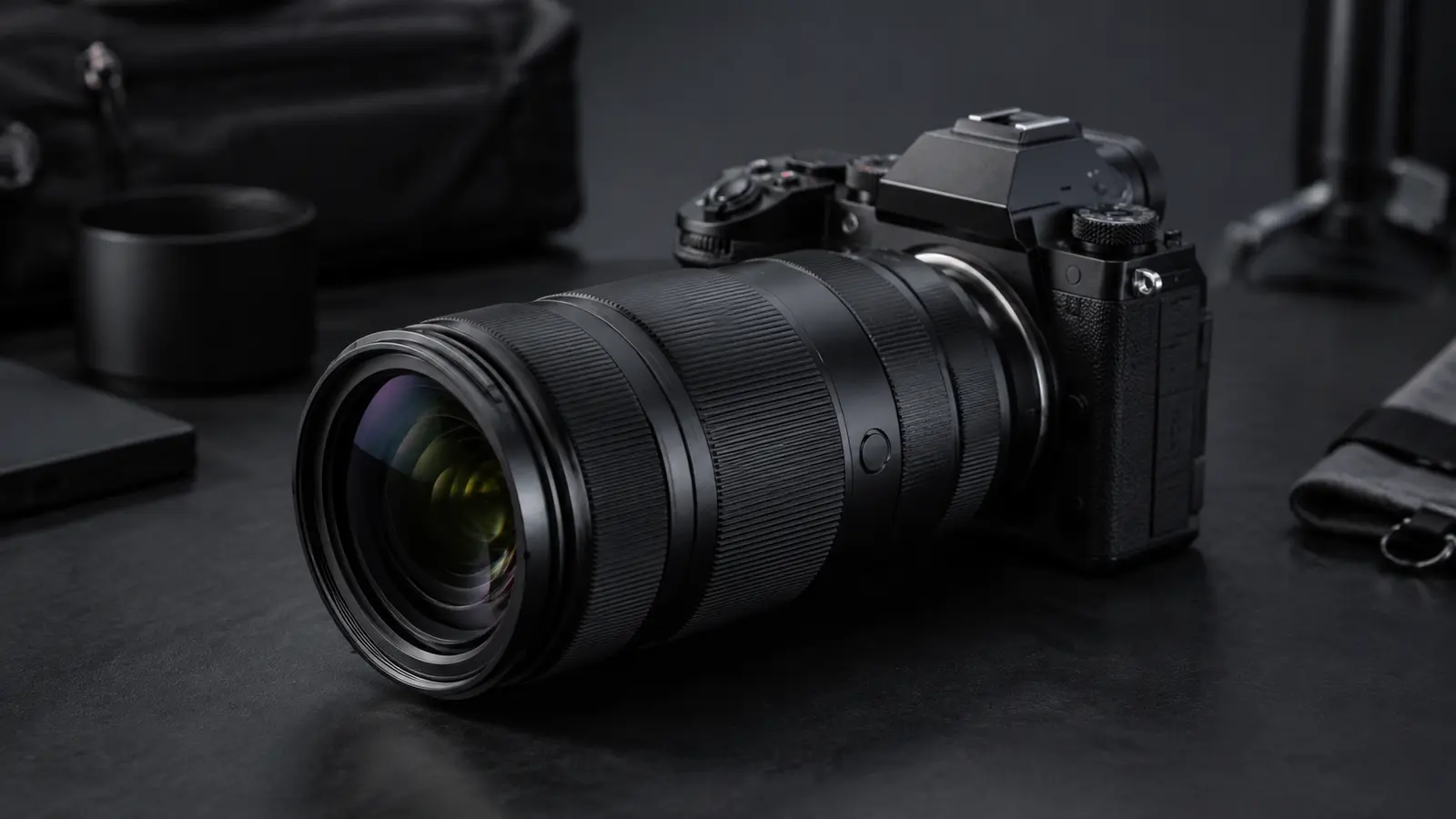
The Samyang 60–180mm F2.8 brings a compact constant-aperture telephoto zoom to L-mount for $1,199/£949. Its 728g weight, 0.35m minimum focus and 77mm filter thread are unusually travel-friendly for an F2.8 zoom. The missing 180–200mm reach and still-untested autofocus are the trade-offs to examine.
This lens is compelling for L-mount portrait, event and travel photographers who value lower weight and a wider 60mm start more than reaching 200mm. Sports and low-light professionals should wait for autofocus, stabilization interaction, sharpness and weather-sealing tests. Price it against Sigma and Panasonic alternatives after current promotions.
Samyang 60–180mm F2.8 L-mount price
Orders for the L-mount version opened on 27 August 2026 at $1,199 in the United States and £949 in the United Kingdom. Delivery timing varies by retailer. This is a new mount version rather than a discounted product, so no previous L-mount selling price exists.
The optical design was developed with Schneider-Kreuznach and had already appeared for Sony E-mount. L-mount availability expands the choice for Panasonic Lumix, Leica and Sigma full-frame users, subject to body and firmware compatibility.
| Specification | Confirmed detail | Why it matters |
|---|---|---|
| Focal range | 60–180mm | Wider start, shorter long end than 70–200mm |
| Maximum aperture | Constant F2.8 | Consistent exposure and subject isolation |
| Weight | 728g | Light for a full-frame F2.8 telephoto zoom |
| Minimum focus | As close as 0.35m | Useful for details and tight portraits |
| Filter thread | 77mm | Common size for pro zoom filters |
| Maintenance | USB-C firmware updates | No separate dock required for updates |
What the compact F2.8 design offers
A constant F2.8 aperture maintains the same maximum opening throughout the zoom range. That helps event shooters keep shutter speed and ISO consistent, and it provides shallower depth of field than many variable-aperture travel zooms.
At 728g, the lens is substantially easier to carry than many traditional 70–200mm F2.8 lenses. Weight influences more than comfort: a lighter front end balances better on compact Lumix or Sigma bodies, puts less strain on a gimbal and can reduce fatigue during weddings or travel days.
Weather sealing is included, but sealing is not waterproofing. The camera body and lens mount must also be protected, and heavy rain, salt spray or dust can exceed normal resistance. Retail warranty terms should be checked for professional use.
60–180mm versus 70–200mm
The 60mm wide end captures a noticeably broader scene than 70mm. It can help in small rooms, full-length portraits, stage work and travel situations where stepping back is impossible. At the long end, 180mm provides 10% less focal length than 200mm, so distant subjects appear slightly smaller.
For portrait and event work, the difference may be beneficial: 60mm bridges the gap to a standard zoom, and 180mm still offers strong compression. For field sports, wildlife or stage photographers working from fixed positions, every millimeter at the long end can matter.
Why choose 60–180mm
More flexible indoors, lighter bag and fewer lens changes around the short-telephoto range.
Why choose 70–200mm
Extra reach, mature professional accessories and often proven autofocus or stabilization.
Cropping a 180mm image to match a 200mm field of view discards some pixels. High-resolution bodies can absorb that loss for moderate use, but it does not replace optical reach when the subject already occupies few pixels.
Close focus, controls and autofocus questions
A 0.35m minimum focusing distance is unusually close for this class and expands the lens beyond distant portraits. It can capture food, flowers, products and wedding details without immediately switching to a macro lens. Maximum magnification and edge sharpness at close focus still need testing.
The lens includes tactile zoom and focus rings, weather-resistant construction, a 77mm filter thread and USB-C for firmware updates. Photographers should test zoom torque, focus-ring response, button customization, tripod-collar options and whether the barrel changes length during zooming.
Autofocus is the largest unknown for demanding use. Eye detection, subject tracking, focus breathing, video transitions and burst consistency can vary by camera body and firmware. A lens that is sharp on a static chart can still miss a moving athlete or walking bride.
What a full review should test
- Center and corner sharpness at 60mm, midrange and 180mm.
- Performance at F2.8, F4 and smaller apertures.
- Longitudinal chromatic aberration and flare in backlight.
- Autofocus acquisition and tracking on several L-mount bodies.
- Focus breathing and parfocal behavior in video.
- Close-focus sharpness and effective focal length.
- Interaction with in-body stabilization.
Alternatives for L-mount buyers
Panasonic’s 70–200mm options may offer native-system ergonomics, established stabilization behavior and professional support, usually with more weight or cost depending on version. Sigma telephoto zooms can be strong value and may offer traditional focal ranges. Exact live pricing matters more than launch MSRP.
A 70–180mm F2.8-class lens from another system is not an alternative unless it is available in native L-mount with dependable autofocus. Adapters can add limitations and are rarely ideal for action. Slower F4 zooms are lighter and cheaper for daylight travel, while primes offer greater subject isolation at the cost of flexibility.
| Need | Best lens type | Trade-off |
|---|---|---|
| Events and portraits | 60–180mm F2.8 | Less reach than 200mm |
| Field sports | Proven 70–200mm F2.8 | Often heavier and more expensive |
| Travel daylight | F4 telephoto zoom | One stop less light |
| Maximum background blur | Fast 85mm/135mm prime | No zoom flexibility |
Who benefits most from the weight saving?
Wedding photographers carrying two bodies, travel creators walking all day and videographers balancing a gimbal will feel the difference. A lighter lens can stay in the bag more often and reduce the temptation to leave an F2.8 zoom at home.
Large camera bodies, battery grips and heavy cages reduce the relative benefit. Balance matters more than the isolated lens number, so handle the lens on your own camera if possible.
Use-case guide: portraits, events, sports and video
Portraits
From 60mm for environmental portraits to 135–180mm for tighter framing, the range covers most people work. F2.8 separates subjects while preserving enough depth for couples. Review bokeh transitions, eye sharpness and longitudinal color around hair and jewelry.
Weddings and events
The wider 60mm end can capture a speaker and surroundings in a tight venue, while 180mm reaches a stage from the aisle. Low weight helps during long coverage. Dual-camera photographers may pair it with a 24–60mm or fast prime to minimize overlap.
Sports and wildlife
The aperture supports faster shutter speeds, but 180mm is short for many field sports and wildlife subjects. Autofocus consistency and keeper rate matter more than static sharpness. A crop-sensor L-mount body, where available, changes field of view but not actual light gathering.
Video
Videographers should test focus breathing, motor noise, manual-focus linearity and center-of-gravity change during zooming. A lighter lens is easier on gimbals, but extending barrels or stiff rings can disturb balance. USB-C firmware is useful if Samyang refines behavior.
Filter, hood and support costs
A 77mm thread is common, allowing shared polarizers and neutral-density filters. High-quality filters preserve autofocus and flare performance; cheap protection glass can add reflections. Check whether a hood, caps and case are included and whether a tripod collar is available or necessary.
Professional buyers should investigate local repair turnaround, spare parts and loan equipment. Saving on purchase price can be offset by downtime. Register the lens and keep firmware, receipt and serial information.
Buying used or importing
Because the E-mount version existed first, verify that a used listing is truly L-mount. Mount photos, model code and box label should agree. An adapter does not turn the E-mount version into a native L-mount lens.
Imported lenses may have different warranty service and tax. Firmware is usually global, but retailer support is not. Test decentering, autofocus and zoom action immediately within the return window.
Sample-variation and optical checks
- Photograph a detailed flat subject with the camera square to it.
- Compare all four corners at 60mm, midrange and 180mm.
- Repeat focus several times rather than judging one frame.
- Test a backlit subject for flare and contrast.
- Photograph specular highlights for bokeh and color fringing.
- Run a walking-subject burst with eye autofocus.
Minor corner variation is normal, but a consistently soft side can indicate decentering. Real subjects at realistic distances matter more than brick-wall perfection.
Value over a three-lens kit
The 60–180mm can replace several portrait primes for event flexibility, but primes remain smaller and faster. Compare the combined weight and price of the kit you would actually carry. A single F2.8 zoom can reduce sensor exposure and missed moments from lens changes.
If most images are made at 85mm and 135mm, two primes may deliver better low-light performance. If focal length changes constantly, the zoom earns its cost through efficiency.
Should you buy the Samyang 60–180mm?
Buy if…
- You want a lighter constant-F2.8 L-mount zoom.
- 60mm is more useful to you than reaching 200mm.
- Close-focus versatility matters.
- $1,199/£949 undercuts the alternatives you are considering.
Wait or choose another lens if…
- You shoot fast action professionally.
- You need proven stabilization and autofocus behavior.
- 200mm reach is already barely enough.
- You want long-term review data before relying on it for paid work.
The focal range is a thoughtful compromise rather than a deficiency: wider at one end, shorter at the other, and much easier to carry. Its value will be decided by optical consistency and body compatibility. Rent or buy with a strong return policy before using it on an unrepeatable assignment.
Questions photographers are asking
How much does the L-mount lens cost?
The announced prices are $1,199 in the US and £949 in the UK. Retail timing, tax and bundles vary.
Is 180mm much shorter than 200mm?
It provides 10% less focal length. The difference is modest for portraits but can matter for distant sports, wildlife and stage subjects.
Does it work on Leica, Panasonic and Sigma cameras?
It is a native L-mount lens, but exact autofocus features, firmware and body compatibility should be checked for the chosen camera.
Is it a macro lens?
It focuses as close as 0.35m, which is useful for details, but it should not be called a true macro lens without the required reproduction ratio.
Sources and research method
FrediTech used Samyang’s product information and independent launch-price reporting. Autofocus, stabilization, durability and optical quality await hands-on testing.