Confirmed on-sale product Available from 27 August 2026 · Research checked 28 August 2026
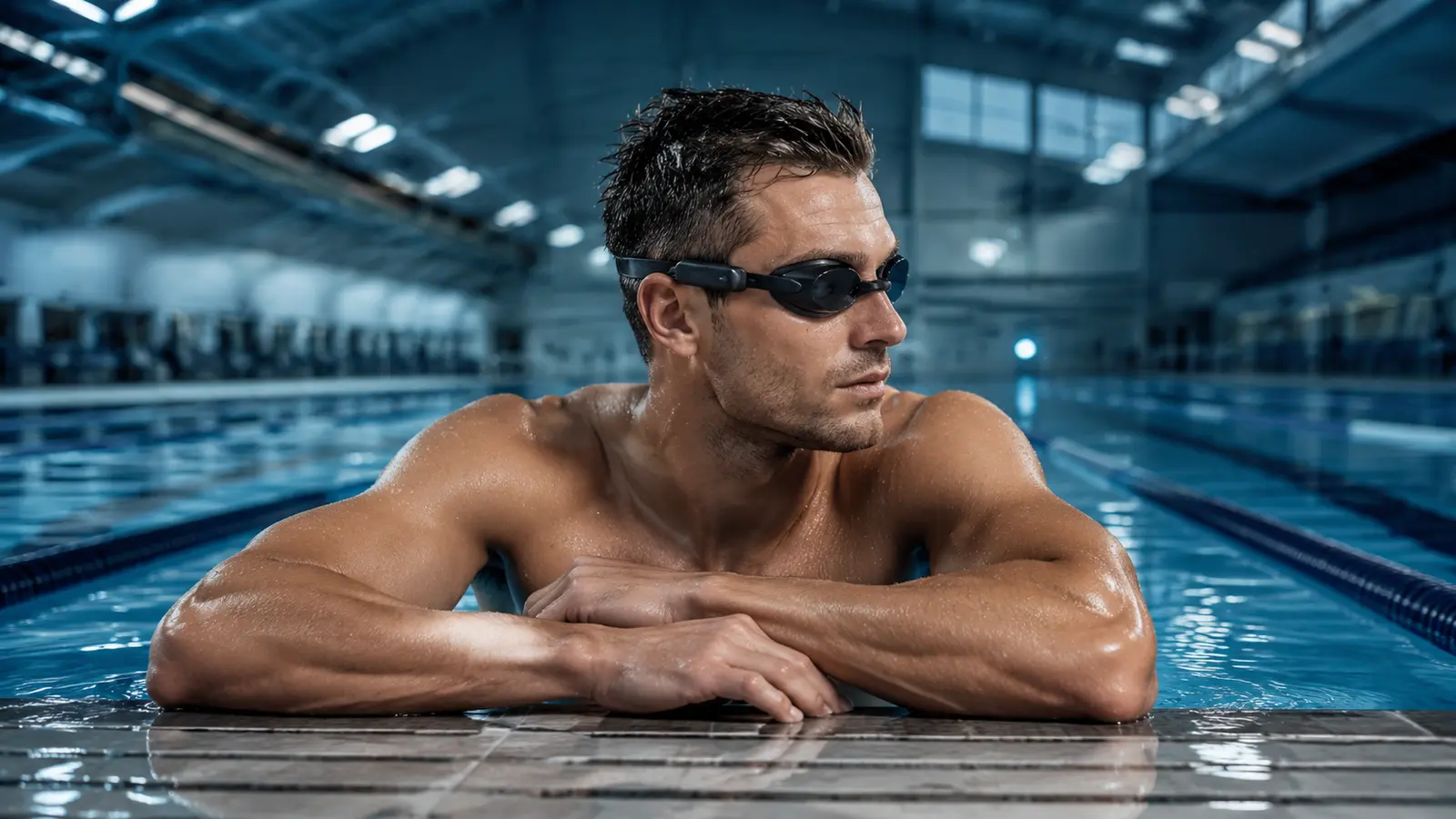
Speedo iQ is a $189/£149 smart-goggle system that records pace, strokes, breathing, turns and head movement through a removable module, then shows insights in the companion app after swimming. It deliberately has no in-goggle display. That makes it race-ready and distraction-free, but less useful than FORM for swimmers who want live pacing.
Speedo iQ is best for competitive swimmers who want approved familiar goggles and detailed post-session technique data without a heads-up display. FORM remains the stronger concept for live interval guidance. Choose based on when you need feedback—during the length or after leaving the pool—not the length of the metric list.
Speedo iQ price and availability
Speedo iQ went on sale on 27 August 2026 at $189 in the United States and £149 in the United Kingdom. It is offered in six color combinations based on Speedo’s Vanquisher 3.0 Track or Mirror Track goggles. Regional tax, color and retailer stock can vary.
The system combines the goggles with a removable tracking module and the Speedo iQ app. Because this is a new product, there is no previous iQ retail price and no valid discount percentage. Compare the complete system with a normal pair of race goggles plus a watch or pool tracker.
| Item | Confirmed detail | Buyer implication |
|---|---|---|
| US price | $189 | Premium over conventional goggles |
| UK price | £149 | Local warranty and retailer terms apply |
| Display | No in-goggle HUD | Insights are mainly reviewed after swimming |
| Goggle platform | Vanquisher 3.0 Track | Familiar low-profile racing design |
| Approval | World Aquatics approved | Suitable for eligible competition use under current rules |
What Speedo iQ tracks
The module is designed to measure pace, stroke count, breaths, turns, head movement, distance per stroke and related session data across freestyle, backstroke, breaststroke and butterfly. Data synchronizes to the Speedo iQ app after the swim, where the raw measurements become technique and performance insights.
A module attached close to the head can observe motion that a wrist watch may interpret differently. That may improve analysis of breathing and head position, although independent validation is needed. Stroke recognition can be challenged by drills, mixed lengths, kick sets, crowded lanes or non-standard turns.
How to use the data well
- Establish several normal sessions before changing technique.
- Compare the same set, stroke and pool length rather than unrelated workouts.
- Use pace together with stroke count and distance per stroke.
- Ask a coach to connect trends with observed technique.
- Verify unusual readings before changing a training plan.
A swimmer who tries to improve pace, breathing, stroke length and head movement at once can lose focus. Choose one or two actionable measures for each block.
The biggest difference: no in-goggle display
Speedo iQ does not project pace or instructions into the swimmer’s view. Results are primarily reviewed in the app after the session. That keeps the optical path clear, reduces distraction during starts and turns, and supports its race-ready positioning.
The trade-off is delayed feedback. A swimmer cannot glance at live pace mid-length, follow a visual interval timer or correct a slow split immediately through the goggles. Coaches can still structure sets around pool clocks or verbal guidance, then use iQ data for review.
Post-swim feedback advantage
Cleaner vision, familiar race behavior and deeper reflection after the set.
Live feedback advantage
Immediate pacing and interval cues without waiting for app sync—the reason some swimmers prefer a HUD product.
Speedo iQ versus FORM Smart Swim 2
The core difference is philosophy. Speedo emphasizes a removable sensor on competition-approved goggles with analysis after swimming. FORM builds around an in-lens display that can show metrics and workouts in real time. Neither approach is universally better.
| Buying factor | Speedo iQ | FORM-style HUD goggles |
|---|---|---|
| Feedback timing | Post-session app review | Live in-goggle information |
| Visual distraction | No display in view | Display can help or distract |
| Race use | World Aquatics-approved system | Check current event rules and model approval |
| Best use | Technique analysis and competition continuity | Pacing, guided sets and immediate feedback |
| Main question | Is app analysis actionable? | Is the HUD comfortable and worth the cost? |
Compare total price, subscription requirements, battery, field of view, prescription options, spare seals and app export. Coaches may prefer a system that integrates with their existing training platform. Recreational swimmers may get enough data from a watch and normal goggles.
Fit, anti-fog, racing and long-term ownership
Goggle fit is more important than sensor sophistication. The seal should be secure without excessive strap tension, the nose bridge should match the face and the module must not create imbalance. Try the underlying Vanquisher shape if possible before committing.
Anti-fog coatings wear with rubbing and harsh cleaning. Rinse in clean water, avoid touching the inside lens and let the goggles dry as instructed. Check the module’s charging contacts and attachment point for chlorine residue. Replacement straps, nose pieces and compatible goggles affect long-term value.
Competition checklist
- Confirm the exact model remains approved for the event and governing body.
- Charge and sync before arriving at the pool.
- Practice starts and turns with the module attached.
- Keep a conventional backup pair ready.
- Do not change fit or nose bridge immediately before a race.
Who gets value from smart-goggle data?
Competitive club swimmers can use recurring technique measurements to supplement coaching. Masters swimmers may appreciate pacing trends and breath symmetry. Triathletes should check whether the system supports the open-water context they need; pool performance does not automatically translate to navigation or outdoor GPS.
Beginners may gain more from lessons and comfortable goggles than a dense dashboard. If the data will not change a set or technique cue, a $189 tracker becomes an expensive logbook.
Understanding the core swim metrics
Pace shows how quickly a distance is completed, but faster is not always better during technique work. Stroke count indicates how many cycles or strokes are used per length; reducing it can improve efficiency until over-gliding slows the swimmer. Use both together.
Distance per stroke helps show how effectively each movement propels the body. A higher number can result from better streamlining, but also from a slower cadence. Breath count and head movement can reveal asymmetry or disruption, yet video and coaching are needed to identify the cause.
Turn data matters because starts, walls and underwater phases can decide races even when free-swimming pace is equal. Compare turns within the same pool and stroke. Different wall timing, lane traffic and push-off depth can change results.
Coach-and-athlete workflow
- The coach selects one technical objective and a repeatable set.
- The swimmer completes the set without looking for live numbers.
- iQ synchronizes after the session.
- Coach and swimmer compare metrics with observed video or notes.
- They choose one cue for the next session and repeat the set.
This prevents data from becoming a report nobody uses. Trends across several sessions are more valuable than the best single length. The app should allow annotation for drills, fatigue, injury or equipment so outliers have context.
Pool-length, drill and mixed-set accuracy
Automatic trackers can misread kick-only sets, sculling, one-arm drills, mid-length stops and open turns. Set the correct pool length and split unusual work into separate sessions if the app recommends it. Compare total distance with the coach’s written set.
If data is wrong, correct it where possible rather than forcing technique changes. Firmware and algorithm updates may improve recognition, but they can also alter trends; note update dates when comparing a long season.
Battery and race-day reliability
Charge well before competition rather than at the last minute, confirm synchronization and disable unnecessary phone distractions. The module should never be the only record of a required training set. Keep a manual clock and backup goggles.
Cold open-water conditions, long storage and repeated chlorine exposure can affect batteries and seals. Speedo’s published care and operating limits should guide use. Do not open or charge a wet module.
Accessibility, vision and comfort
The absence of a display benefits swimmers who find overlays distracting or visually inaccessible. Others may need prescription lenses or a different nose bridge. Verify compatible optical options; a sensor cannot compensate for poor vision or leakage.
Pressure around the eye socket should be even. Marks alone are not proof of bad fit, but pain, headaches or persistent leakage are. Return or exchange within the retailer’s hygiene policy if the frame shape is wrong.
Total cost and useful life
Include replacement goggles, straps, nose bridges and eventual module battery service. A removable module can improve longevity if the wear item—the goggle—is replaceable without buying the electronics again. Confirm cross-color and future-goggle compatibility.
App export matters for long-term value. Swimmers should be able to retain core session data if they change phones or coaching platforms. Account dependence and subscription terms, if any, should be checked before purchase.
Should you buy Speedo iQ?
Buy if…
- You already like Vanquisher 3.0 fit.
- You want detailed post-swim technique analysis.
- Competition approval matters.
- You prefer an unobstructed view to a live HUD.
Choose another approach if…
- You need live pacing or guided workouts in the lens.
- You are satisfied with watch-based lap data.
- The Vanquisher seal does not fit your face.
- You will not review or act on the app’s metrics.
Speedo iQ’s clear identity is its strength: familiar competition goggles, a removable sensor and post-session insights. The lack of a HUD is a benefit for some swimmers and a deal-breaker for others. Decide when feedback is useful to you, then compare fit and total cost.
Questions swimmers are asking
Does Speedo iQ show pace inside the goggles?
No. It does not have an in-goggle display. The module records data and the app presents insights after the session.
Can Speedo iQ be used in competition?
Speedo says the system is World Aquatics approved. Always confirm the exact event’s current equipment rules.
Which strokes does it track?
Speedo says it works across freestyle, backstroke, breaststroke and butterfly, with metrics including pace, strokes, breaths and turns.
Is it better than FORM?
It is better for swimmers who want no display and post-swim analysis. FORM’s HUD concept is better for live pacing and guided feedback.
Sources and research method
FrediTech checked Speedo’s official product information and independent launch context on 28 August 2026. Sensor accuracy, app quality and durability need long-term testing.