
Fact-checked: September 2, 2026. Prices, availability and announced features can change by market.
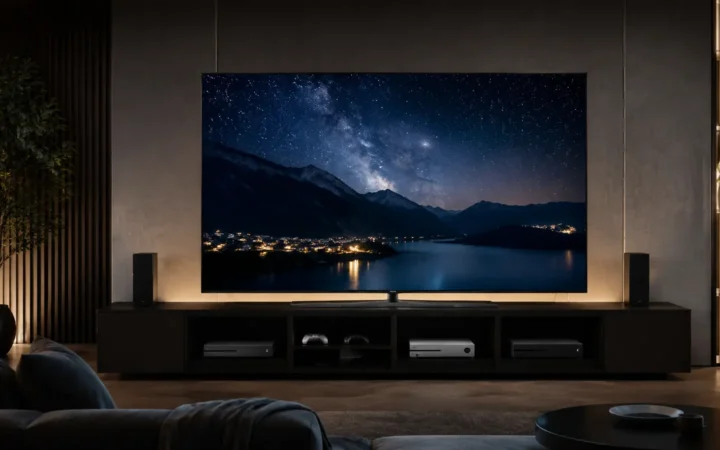
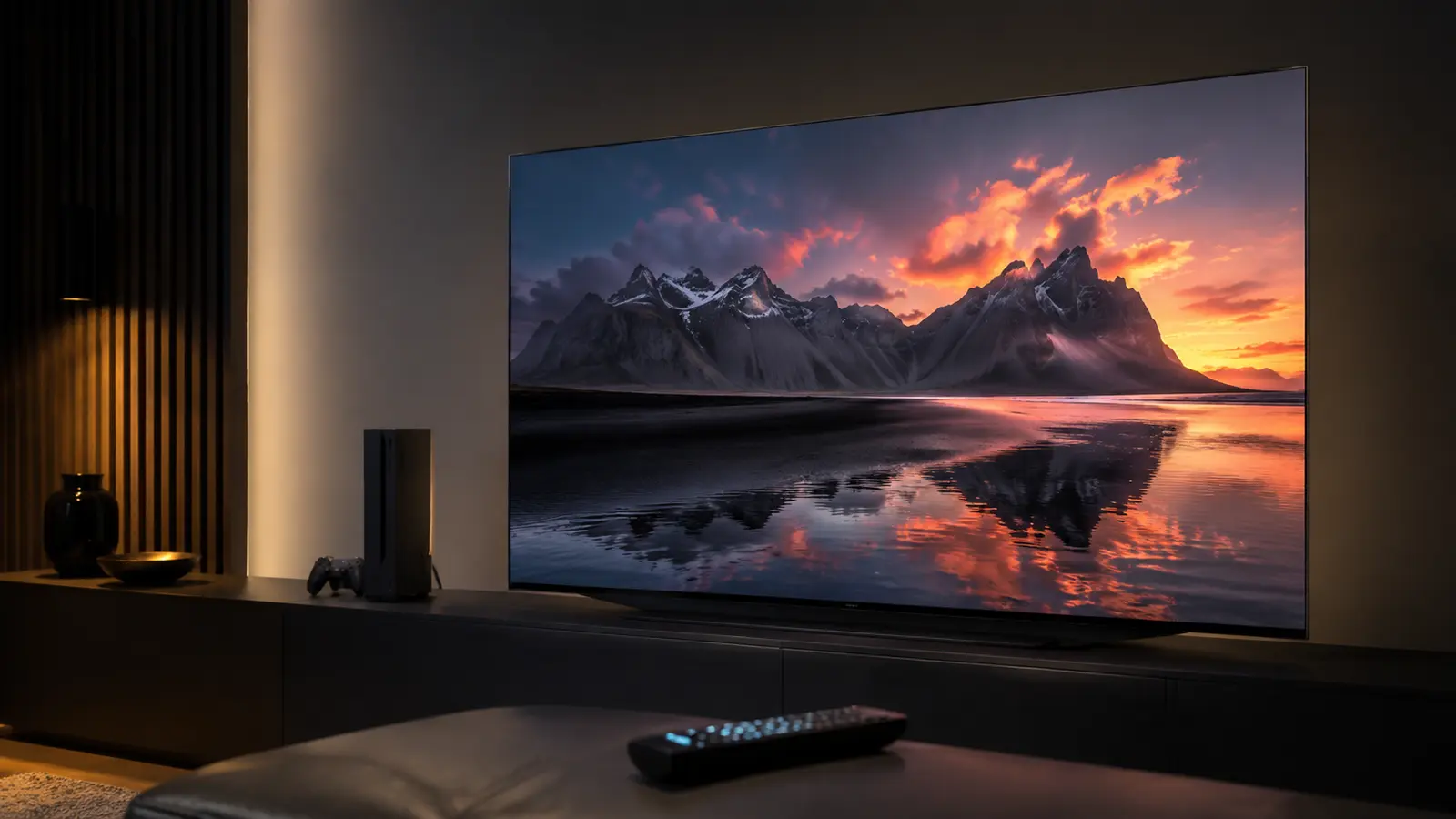
Roku has entered the OLED market under its own TV brand with two tiers. The Amazon-exclusive Pro Series OLED is available at $999.99 for 55 inches and $1,199.99 for 65 inches. The higher-end Pro Series LX OLED arrives in October at $1,299.99 and $1,599.99 in the same sizes.
Both lines combine 4K OLED panels with Roku OS, Dolby Vision, Dolby Atmos and HDMI 2.1-era gaming features. The standard Pro supports 120Hz, variable refresh rate and FreeSync Premium. LX increases the advertised maximum to 144Hz and adds a reflection-reducing layer plus a manufacturer claim of substantially higher brightness.
The attractive price does not make these reviewed products. Roku had not published independent peak brightness, color accuracy, input lag or sustained HDR measurements at launch. Buyers should weigh platform simplicity and price against panel performance, processing and warranty data from LG, Samsung and Sony alternatives.
At a Glance
| Key fact | Verified position |
|---|---|
| Pro Series OLED 55 | $999.99, Amazon exclusive at launch |
| Pro Series OLED 65 | $1,199.99 |
| LX OLED 55 | $1,299.99, scheduled for October |
| LX OLED 65 | $1,599.99, scheduled for October |
| Pro refresh | Up to 120Hz with VRR and FreeSync Premium |
| LX refresh | Up to 144Hz VRR; source and input requirements apply |
| HDR/audio | Dolby Vision and Dolby Atmos support |
| Unknown at launch | Independent brightness, input lag, uniformity and processing results |
Price and Size Strategy
The 65-inch Pro costs only $200 more than the 55, making it attractive when viewing distance and furniture allow. The LX premium is $300 at 55 inches and $400 at 65 inches. That surcharge must be justified by reflection handling, 144Hz PC gaming and any measurable brightness/processing advantage—not the OLED label alone.
Amazon exclusivity simplifies where to buy but reduces immediate retailer competition and in-person comparison. Verify delivery method, damaged-panel return procedure and installation. Large OLED panels are fragile; a low price can be erased by difficult freight returns or inadequate mounting.
OLED Strengths and Unanswered Picture Questions
OLED controls light at the pixel level, producing true blacks, excellent shadow separation potential and wide viewing angles. It is well suited to dark-room film viewing and games with high-contrast scenes. Panel quality alone does not determine the final image: tone mapping, near-black handling, upscaling and motion processing come from Roku’s electronics and software.
Roku’s LX brightness language is relative to its own Pro tier. Without a measurement method and nits data, it should not be translated into a universal ranking. Full-screen brightness, small HDR highlights and sustained output are different tests. Reflection reduction can also trade a little perceived black depth in bright rooms.
Gaming: 120Hz vs 144Hz
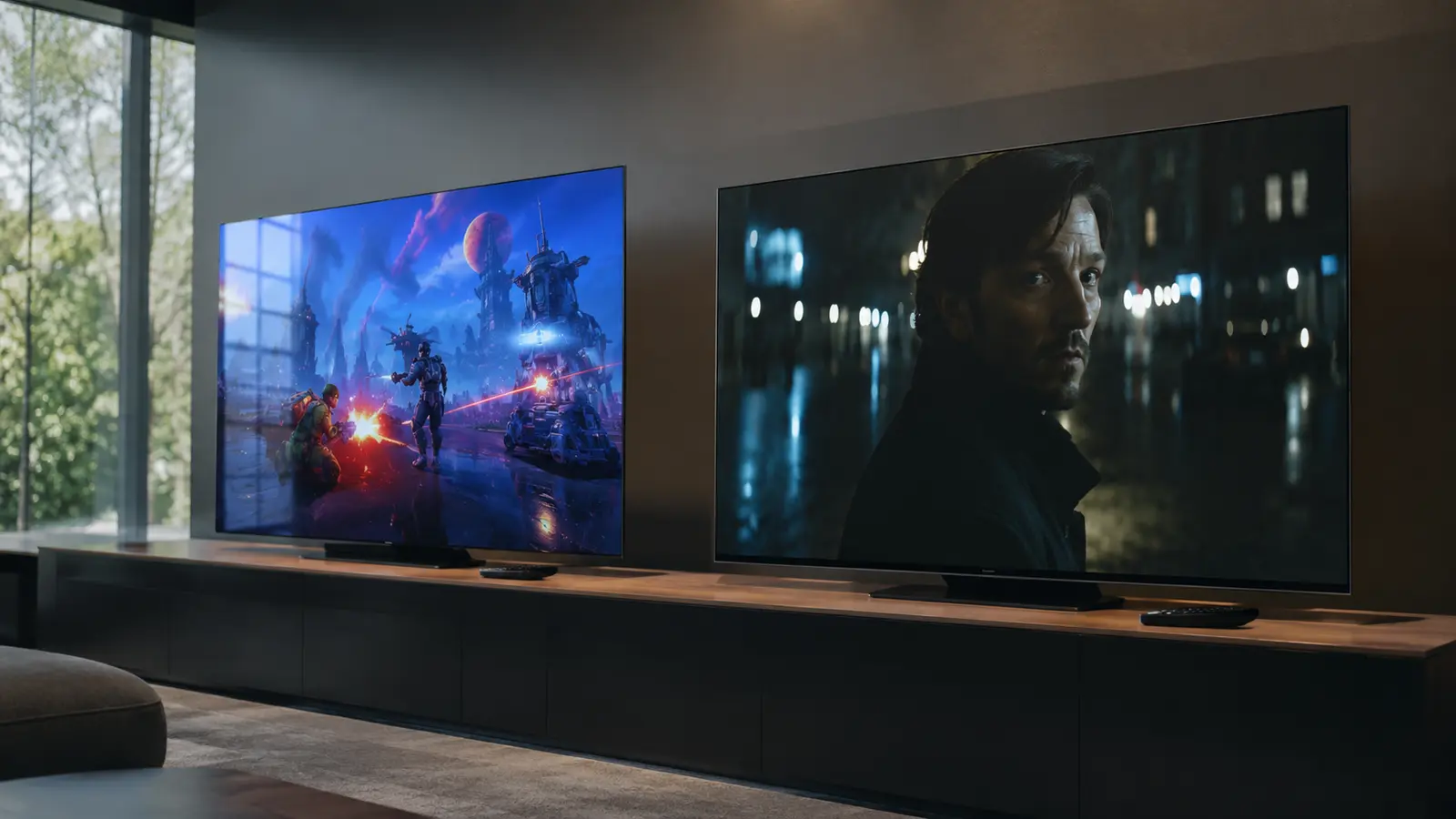
Console owners generally top out at 4K/120Hz, so the standard Pro’s 120Hz, VRR, ALLM and FreeSync Premium specification covers the important use cases. The LX’s 144Hz ceiling targets gaming PCs. Reaching it requires the correct HDMI input, cable, graphics card and TV mode; a 144Hz panel does not make a game run at 144fps.
Input lag and VRR behavior were not independently measured at launch. Look for tests at 60Hz, 120Hz and VRR, because performance can differ. Also confirm whether Dolby Vision gaming retains the maximum refresh rate and low-latency mode.
Roku OS, Remote and Connectivity
Roku OS remains the reason many households will choose these TVs: a straightforward home screen, broad app coverage and familiar voice remote. The backlit remote is useful in a dark room. Platform simplicity should be balanced against advertising controls, data-sharing settings, update policy and whether required local streaming apps exist in your region.
Four HDMI 2.1-class inputs are advertised on the Pro tier, but port bandwidth and eARC allocation must be checked. If one port is used by a soundbar, make sure enough high-bandwidth inputs remain for consoles and PC. Wi-Fi performance, tuner support and antenna standards are market-specific.
Pro OLED vs LX OLED
| Feature | Pro OLED | LX OLED |
|---|---|---|
| 55/65 price | $999.99 / $1,199.99 | $1,299.99 / $1,599.99 |
| Availability | Now; Amazon exclusive at launch | October |
| Maximum refresh | 120Hz | 144Hz |
| Reflection treatment | Standard finish | Reflection-reducing polarizer |
| Best fit | Value, console gaming, dark-room film | Bright-room use and 144Hz PC gaming |
Most console and streaming households should begin with the Pro. The LX is defensible in a bright room where reflections are a known problem or for a PC gamer who can deliver 4K above 120fps. Waiting until October also provides time for Pro reviews that indicate Roku’s baseline processing quality.
Roku vs LG, Samsung and Sony OLED TVs
LG’s current OLED range offers a mature gaming interface and broad independent test history. Samsung’s QD-OLED models often emphasize color volume and gaming but do not universally support Dolby Vision. Sony commonly charges more for processing and film-oriented tuning. Exact value changes weekly with promotions.
Roku’s differentiator is price plus Roku OS, not proven category-leading picture quality. Compare the delivered price, panel warranty, burn-in language, number of full-bandwidth HDMI inputs and local service network. An older discounted premium OLED can be a better buy than a new budget model.
Who Should Buy or Wait?
The Pro makes sense for a Roku household moving from LCD to OLED and wanting a straightforward 120Hz console TV. The 65-inch model has the strongest size-to-price proposition. Choose LX only when reflection reduction or 144Hz PC input has clear value.
FrediTech verdict
Roku’s $999.99 entry is compelling, but an OLED purchase should survive more than a spec-sheet comparison. Wait for measurements of HDR brightness, input lag, uniformity and processing unless the retailer’s return policy lets you evaluate the set safely at home.
Delivery-Day Inspection
Inspect the carton before signing, photograph obvious damage and keep the panel upright. With two people, mount the stand without pressing the screen. During the return window, check uniform gray scenes, subtitles, HDMI inputs, Wi-Fi, remote pairing and sustained HDR playback. A few temporary retention traces are different from permanent burn-in; run normal mixed content before making conclusions.
Register the exact model and save the serial number, invoice and retailer return terms. Confirm whether the warranty includes in-home service and whether panel replacement is handled by Roku, Amazon or another party. Do not run aggressive compensation cycles repeatedly unless support recommends them. Early OLED buyers should prioritize a retailer with straightforward exchanges because independent reliability data is not yet mature.
Frequently Asked Questions
How much is the 55-inch Roku OLED TV?
The Pro Series OLED launched at $999.99 for 55 inches. The 55-inch LX is $1,299.99.
How much is the 65-inch model?
The Pro is $1,199.99 and the LX is $1,599.99 at launch.
Where can I buy the Roku Pro OLED?
The Pro Series is an Amazon exclusive at launch in the United States.
Is the Roku OLED good for PS5 or Xbox?
Its 4K/120Hz, VRR and ALLM features are appropriate on paper, but input-lag and VRR testing should be checked.
Do I need LX for 144Hz?
Yes, the LX is the tier advertised up to 144Hz. Consoles generally target 120Hz, so the gain mainly matters for PC gaming.
How bright is it?
Roku had not supplied independently comparable brightness measurements at launch. Do not infer nits from relative marketing language.
Related FrediTech Guides
- Internal-link opportunity: FrediTech OLED TV buying guide (URL to be assigned)
- Internal-link opportunity: FrediTech HDMI 2.1 gaming guide (URL to be assigned)
Sources and Verification
Prices, sizes, refresh features and availability are launch facts. Brightness, input lag and picture-quality rankings are intentionally not claimed without testing.