
Mercedes EQS SUV Review 2026: Range, Comfort & Value is built around the ownership questions that matter most: usable range, charging access, performance, cabin practicality, software, warranty coverage and total value—not just headline acceleration or estimated range.
Quick Verdict
- Best for: EV shoppers comparing real ownership trade-offs rather than spec-sheet bragging rights.
- Focus on: usable range, charging speed and access, comfort, software, warranty, service and total price.
- Watch for: trims, battery packs and regional specifications can materially change range, performance and value.

Table of contents
Introduction
The 2026 Mercedes-Benz EQS SUV represents the pinnacle of Mercedes’ electric vehicle lineup – a full-size luxury SUV that blends S-Class level opulence with cutting-edge EV technology. As the SUV counterpart to the EQS sedan, the EQS SUV offers seating for up to seven and a spacious, ultra-quiet cabin laden with high-end materials and futuristic tech. With its all-electric powertrain and dual-motor all-wheel drive, this flagship EV delivers whisper-quiet acceleration and a generous driving range, all while cocooning occupants in first-class comfortcaranddriver.com. In this comprehensive review, we’ll dive into the 2026 EQS SUV’s design, performance, range, features, pricing, and how it stacks up against competitors. By the end, you’ll see why Mercedes’ top-of-the-line electric SUV is making waves in the luxury EV market – and whether it lives up to its lofty expectations under real-world conditions.
In a world rapidly embracing electrification – from mainstream crossovers like the 2026 Chevrolet Blazer EVfreditech.com to innovative hybrid SUVs from China such as BYD’s Song L DM-i freditech.com– the Mercedes EQS SUV aims to stand out by delivering unmatched luxury and technology in the electric SUV space.
Overview of the 2026 Mercedes EQS SUV
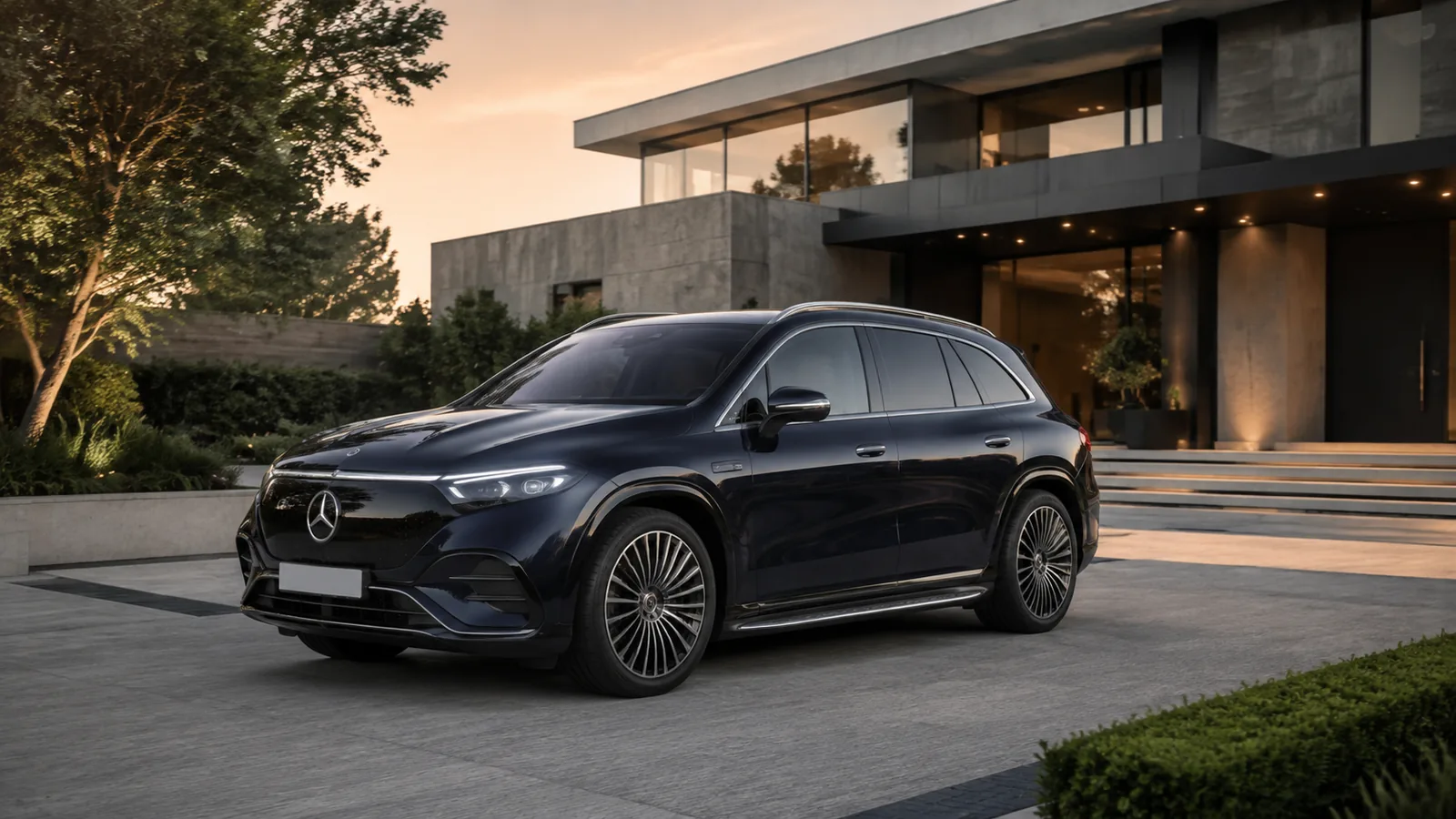
The EQS SUV is essentially an electric alternative to Mercedes’ GLS-Class SUVtopgear.com, built on the company’s dedicated EV platform (EVA2) shared with the EQS sedan. It measures about 201.8 inches in length with a long 126.4-inch wheelbase, giving it a commanding presence on the road. Despite weighing in at over 6,300 pounds (around 2.8 tons), the EQS SUV manages a sleek aerodynamic profile with a drag coefficient of just ~0.26 – impressively low for a large SUV. The design is smooth and rounded, with minimal panel gaps and flush door handles to optimize airflow. A black-panel front grille (embellished with tiny three-pointed stars) houses LED lighting elements, creating a distinctive front light signature. The roof is often painted black to visually lower the silhouette, and an optional hood-mounted standing Mercedes star emblem is available for a classic touchraycatenaedison.com.
Under the skin, every EQS SUV features dual electric motors (one on each axle) for fully variable 4MATIC all-wheel drive. For 2026, Mercedes simplified the lineup to two main variants: the EQS 400 4MATIC and the EQS 550 4MATIC (replacing last year’s EQS 450 and 580, respectively). Both use the same 108 kWh (usable ~118 kWh) battery pack and share many features, but differ in power output:
- EQS 400 4MATIC: Dual-motor AWD, 355 hp and 590 lb-ft of torque. 0–60 mph in ~5.2 seconds (Mercedes claims 5.9s), with an EPA range of ~312 miles on a full charge.
- EQS 550 4MATIC: Dual-motor AWD, 536 hp and 633 lb-ft (est.) of torque. 0–60 mph in ~4.0 seconds, noticeably quicker off the line. Despite the power boost, it can achieve up to 317 miles of range in ideal conditions (likely due to efficient tuning and possibly smaller wheels).
Both models are electronically limited to about 130 mph top speed, which is plenty for an SUVkbb.com. All-wheel drive is standard, and thanks to the instant torque of its electric motors, even the “slower” EQS 400 feels lively – 5.2 seconds 0–60 mph is fairly quick for a 3-ton vehicle. That said, the EQS SUV is not trying to be a sporty Tesla Model X or a track monster; its focus is on smooth, effortless acceleration and supreme comfort rather than neck-snapping performance.
Design and Exterior Features

One unique exterior option for 2026 is the return of the hood-mounted Mercedes star ornament – buyers can opt to have the classic three-pointed star standing on the hood, a nod to traditional luxury (it was uncommon on prior EQ models). There’s also an AMG Line Exterior package available, which adds sportier AMG-style bumpers, gloss black trim, and special wheels for a more aggressive look. Additionally, illuminated running boards and even an illuminated front Star emblem are offered, catering to those who love a little extra flair at night/en.
Interior Luxury and Comfort
Performance and Driving Experience
Despite its hefty weight and comfort-oriented mission, the EQS SUV delivers solid performance thanks to its dual electric motors and advanced chassis systems. Here’s how it behaves on the road:
Acceleration and Power
Ride and Handling
On curvy roads, the EQS SUV’s mass is evident. It’s not a vehicle you toss into tight corners eagerly – it prefers gentler, sweeping bends taken at a smooth pace. The steering is light but accurate, and crucially, the EQS SUV comes with standard rear-axle steering to aid maneuverability. In 2026, the rear steering is default limited to 4.5° of angle (which gives about a 39-foot turning radius) but you can option the 10° rear-steer upgrade for tighter ~36-foot turns. With even the 4.5° system, this large SUV feels surprisingly nimble in parking lots, making U-turns or navigating city streets easier. At speed, the rear-steer also adds stability in lane changes. Don’t expect sports-car feedback though – as MotorTrend noted, “you never feel like you’re wafting or loosely driving” (thanks to the tech keeping it stable), but nor does Sport mode “amp things up all that much” dynamically. The EQS SUV remains a comfort-biased cruiser; enthusiasts seeking more agile handling might actually prefer rivals like the BMW iX or Rivian R1S which have a bit more driver engagement. Mercedes even acknowledges this in their own review: “enthusiasts will likely be happier in the BMW iX or Rivian R1S” for driving fun.
Braking and One-Pedal Driving
Off-Road Capability
Battery Range and Charging
One of the strongest aspects of the 2026 EQS SUV is its excellent range and charging capability for a vehicle of its size. Mercedes equipped all versions with a big lithium-ion battery ~118 kWh in usable capacity. This battery, coupled with Mercedes’ efficient motors and aerodynamic design, yields competitive range numbers:
- EPA-Estimated Range: ~312 miles for the EQS 400 4MATIC, and up to 317 miles for the EQS 550 4MATIC. These figures assume the standard 21-inch wheels; choosing larger 22-inch wheels or the optional 7-seat configuration may lower range slightly. Notably, the dual-motor EQS SUVs nearly match the range of the single-motor sedan variants from a couple years prior, thanks to steady efficiency improvements.
For home or Level 2 charging, the EQS SUV has a 9.6 kW onboard AC charger, which can fully recharge the battery from 0% in about . Given the large battery, overnight charging is expected – you’ll want a Level 2 charger at home to top it off each night if you’ve driven a lot during the day. Mercedes also provides intelligent charging modes to preserve battery health (like charging to a certain limit or scheduling when to charge to take advantage of off-peak rates).
Importantly, Mercedes has adopted the NACS (North American Charging Standard) for 2026 models, which means the EQS SUV can directly use Tesla Supercharger stations with an included adapter. This is a big deal for charging convenience, as it opens up Tesla’s extensive Supercharger network to EQS owners in the U.S. and Canada. Car and Driver tested the EQS’s new NACS adapter on Tesla Superchargers and found “it works a treat”, easily hitting the 200 kW charging rate without issues. The EQS still has its standard CCS port as well, so it’s compatible with both CCS fast chargers and Tesla stations. Essentially, you’ll have no shortage of charging options on road trips – a major improvement in the EV landscape by 2026. Mercedes also offers the MB.Charge integration with apps and a year of free fast charging on certain networks (this can vary by region/promotion).
Overall, the range and charging capabilities of the EQS SUV are excellent for its class. You get genuinely usable 300+ mile range and the ability to reclaim a lot of that range in a short charging stop. This long-legged ability complements the SUV’s road-trip friendly comfort. Compared to key competitors: Tesla’s Model X offers slightly less range (~348 miles for Long Range) but a more expansive charging network (though Mercedes now can use it too); BMW’s iX maxes around 300 miles EPA; Rivian’s R1S is ~321 miles in Max pack form but slower to charge; Lucid’s upcoming Gravity could exceed 350 miles but that remains to be seen. The EQS SUV holds its own, if not leading, in this department –
Advanced Technology and Safety Features
As expected from Mercedes, the EQS SUV is loaded with the latest driver-assistance and safety tech. Many of these features come standard, befitting its flagship status, with some optional upgrades available:
- ADAS (Advanced Driver Assistance Systems): The EQS SUV includes Adaptive Cruise Control with Stop&Go, Lane Keeping Assist, and Active Steering Assist, which together enable a semi-autonomous driving experience on highways (Level 2). It can automatically keep itself centered in the lane and maintain distance from the car ahead, even in stop-and-go traffic. There’s also Active Lane Change Assist (signal and the car will change lanes if safe) and Traffic Sign Recognition to adjust speed accordingly. Some markets may offer Drive Pilot Level 3 automation (where the car can fully drive itself under certain conditions up to ~40 mph), but as of 2026 in the U.S., that’s not widely available yet – mainly it’s Level 2.
- Active Brake Assist with Cross-Traffic: Mercedes’ collision mitigation system. It can automatically emergency brake if it detects an imminent collision with a vehicle, pedestrian, or cyclistraycatenaedison.com. For 2026, Mercedes says they’ve improved pedestrian and cyclist detection in this system, meaning it’s smarter and more effective at recognizing people in the EQS SUV’s path.
- Blind Spot and Parking Safety: Active Blind Spot Assist will alert you to vehicles in your blind spot and can intervene to prevent a lane-change if it senses a potential crash. Parking is aided by Surround View 360° cameras and Parking Assist, which can automatically steer into parking spots. The EQS SUV also has rear cross-traffic alerts to warn of cars or people when backing out of a space. Given its large size, these aids are very valuable.
- Attention Assist: This system monitors driver fatigue and attention, and for 2026 it now gives more personalized alerts when it detects drowsiness or inattention (for example, suggesting a rest stop).
Overall, the EQS SUV’s technology profile is comprehensive and state-of-the-art. It delivers an executive class experience where the vehicle assists and pampers you at every turn. While a few tech quirks remain (e.g., getting used to the all-digital controls or occasional overly sensitive sensors), Mercedes has crafted a true smart vehicle that feels a generation ahead of many competitors in luxury and safety integration.
Pricing and Value Proposition
The 2026 Mercedes EQS SUV comes with a strong value story compared to previous years. The pricing is still firmly in luxury territory, but Mercedes has made it more attainable and better equipped:
- EQS 550 4MATIC SUV – . This gives you the higher-output powertrain (536 hp) and typically includes some extra features standard. The EQS 550 also comes in an even more exclusive Mercedes-Maybach EQS SUV variant (often referred to as the EQS 680 in some markets) which is ultra-luxurious and priced much higher – beyond the scope of this review, but know that if you want a chauffeur-grade electric SUV with reclining rear seats, a Maybach version exists above the EQS 550.
Competitors and Comparisons
The luxury electric SUV segment is heating up, and the 2026 EQS SUV faces competition from both traditional rivals and new upstarts. Here’s how it compares with a few key competitors:
- Tesla Model X: Often the default choice for a luxury EV SUV, the Model X offers similar range (up to ~348 miles) and a quicker 0–60 (as low as 2.5s in Plaid trim). Tesla’s Supercharger network is a huge advantage, though now the EQS can use it too via adapter. The Model X’s strengths are its extreme performance and tech (Autopilot/FSD, over-the-air updates), but it lags the EQS in interior finish and ride comfort. The Mercedes feels far more opulent and solidly built, whereas the Model X has a minimalist interior and sometimes build quality quirks. The EQS also has a usable third row; the Model X’s third row is tight. If you want outright speed and a proven EV ecosystem, Tesla is strong, but for a traditional luxury experience with EV power, the EQS leads.
- Audi Q8 e-tron: Audi’s electric SUV (rebranded e-tron) is smaller and older tech – ~285 miles range, slower charging ~150 kW, but it’s also cheaper ($75k-$95k). The Audi has excellent ride comfort and a nice interior, but the EQS surpasses it in tech and range. They’re not directly segment peers since the EQS is bigger and pricier, but worth noting as an alternative if you want a more classic SUV shape and don’t need maximum range.
- Rivian R1S: The R1S from EV startup Rivian is a compelling 3-row electric SUV starting around $78k (for Explore trim). It’s more off-road oriented than the EQS – think of it as an electric Land Rover, with standard air suspension, great ground clearance, and even optional quad-motor AWD for tank turns. It seats 7, and interior quality is good, though not at Mercedes levels of luxury. Range ~ 321 miles (with Max pack up to 400 miles promised) and 0–60 ~3 seconds in quad-motor form, so performance and capability are stellar. Rivian’s weakness is it’s a newer company (service network not as wide as Mercedes) and its tech interface is less mature (no CarPlay, etc.). The EQS is the better choice for on-road comfort and luxury, while the R1S is better for outdoor adventure types.
- Lucid Gravity (Upcoming): Lucid’s SUV is expected to launch in 2025/2026. Early figures suggest it will be very fast (Lucid is known for performance), with possibly 7 seats and range possibly 350+ miles. The interior likely will be techy and minimalist. It could be a strong competitor if you prioritize range and performance, but as a new model it won’t have Mercedes’ proven track record and dealer support.
Conclusion
Mercedes-Benz set out to create the electric equivalent of its renowned S-Class and GLS, and with the 2026 EQS SUV they’ve largely succeeded. This SUV delivers a true luxury experience with all the benefits of electric drive. From its silent operation and cutting-edge cockpit, to the indulgent comfort of its seats and suspension, the EQS SUV makes every journey feel special. It’s not a sports SUV and doesn’t try to be – instead, it focuses on wafting its occupants along with minimal fuss and maximum comfort. Real-world use has only improved with the 2026 model: range is more than sufficient, charging is faster and now more convenient with Tesla network access, and even previous niggles like brake feel have been corrected.
Of course, no car is perfect. Some drivers will wish for more engaging handling or simpler controls, and the styling may be too avant-garde for those who prefer a classic SUV look. The price, while improved, is still high – and adding options can push it well into the six-figure realm. But if you consider what you’re getting – one of the most advanced electric vehicles money can buy, backed by Mercedes’ heritage of engineering – many would argue it’s worth it. Early adopters of the EQS SUV are reporting high satisfaction, especially with the quiet ride and interior ambiance.
In an era where luxury automakers are all racing to define the future of the SUV, Mercedes has planted a flag with the EQS SUV that says: the future is here, and it’s electric, sumptuous, and thoroughly Mercedes. This 2026 update only reinforces that with better value and incremental refinements. For families or individuals who want a spacious, high-tech EV that doesn’t compromise on luxury, the EQS SUV deserves a top spot on the shortlist. It truly “earns its spot at the top of Mercedes-Benz’s electric lineup,” delivering on the promise of a zero-emission SUV with first-class comfort and cutting-edge innovation.
Author: Wiredu Fred – Tech and automotive writer with years of experience reviewing electric vehicles and luxury cars. Wiredu Fred leverages deep industry insight and hands-on testing to provide thorough, unbiased analyses of the latest automotive trends. This review adheres to the highest editorial standards, emphasizing factual accuracy (with sources cited) and practical insights for readers.
FAQ: Frequently Asked Questions
What is the driving range of the 2026 Mercedes EQS SUV on a full charge?
How fast is the Mercedes EQS SUV from 0 to 60 mph?
Is the Mercedes EQS SUV a 7-seater?
How does the EQS SUV compare to the Tesla Model X and BMW iX?
What is the price of the 2026 Mercedes EQS SUV?
Can the EQS SUV use Tesla Superchargers?
Does the EQS SUV come with an “Autopilot” or self-driving feature?
Where is the Mercedes EQS SUV built?
Is the Mercedes EQS SUV worth buying?
Bottom Line
Choose an EV by the routes, charging access, passenger needs and ownership costs you actually have. The best specification on paper matters less than the configuration that fits daily use and remains well supported.