
Rivian R1S vs R1T in 2026: 5 Key Differences focuses on the everyday trade-offs that matter most: passenger and cargo needs, range, charging, towing, software, warranty coverage and current pricing.
Quick Verdict
- Best for: buyers comparing Rivian body styles for real passenger, cargo and adventure needs.
- Focus on: range, charging, seating, cargo, towing, software, service access and total price.
- Watch for: configuration changes can materially affect range, performance and value.
Table of contents
Introduction
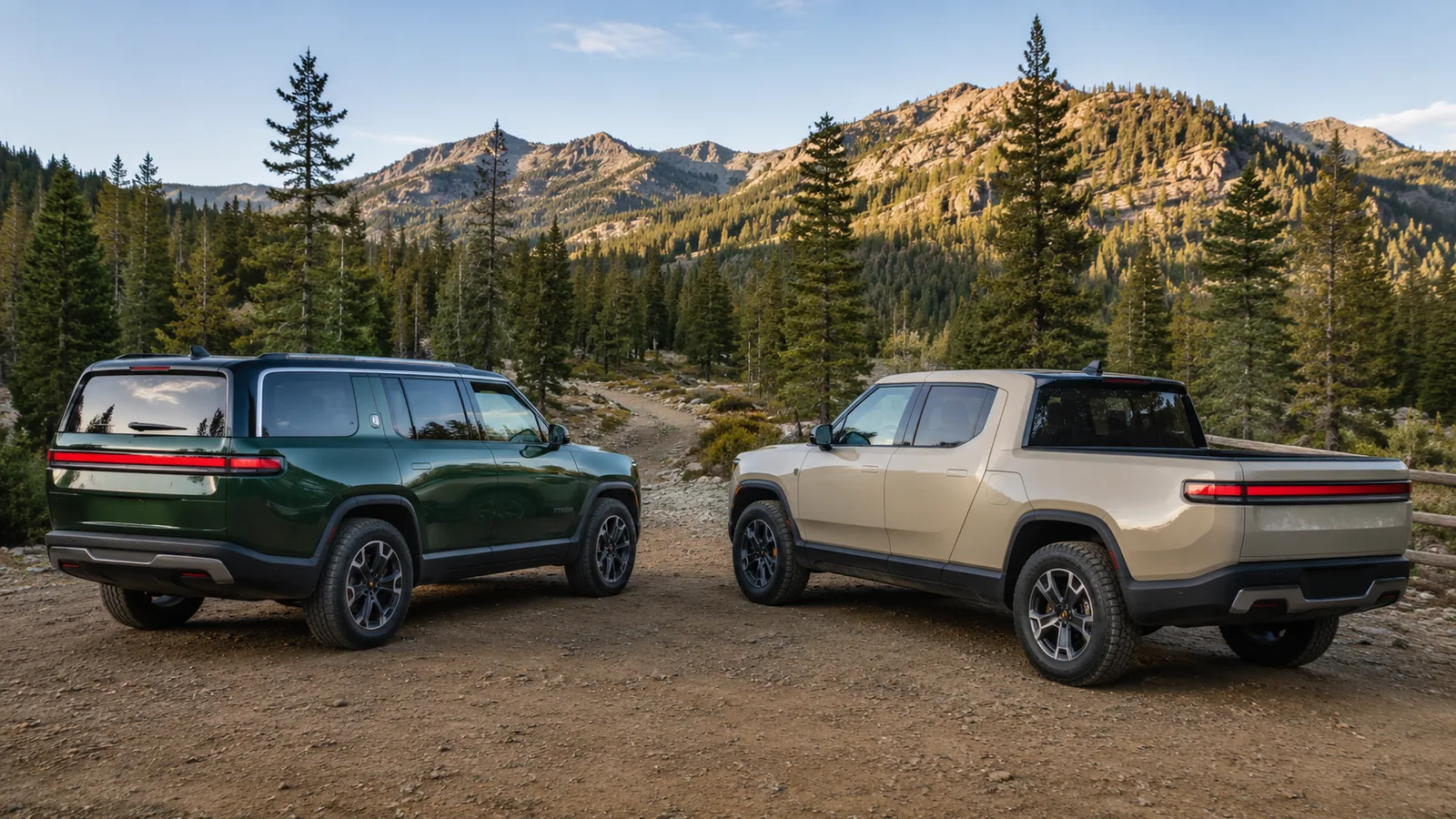
The electric-vehicle (EV) revolution has reached a point where adventure‑ready EVs are no longer a novelty; they are everyday options for people who want to haul gear to a trailhead, shuttle kids to school and still have fun on road‑trip weekends. Rivian, a U.S. startup launched in 2009, tapped into that desire with the R1S three‑row SUV and R1T pickup. Both vehicles sit on the same skateboard platform and share much of their technology, yet the R1S and R1T serve very different needs. Understanding those differences is essential for buyers who want an EV that fits their lifestyle.
This in‑depth comparison examines the vehicles’ shared architecture, size and off‑road geometry, cargo solutions, performance and range options, technology and comfort, pricing and incentives and ultimately helps you decide which model aligns with your needs. Links to FrediTech articles provide additional context on car‑related gadgets like premium audio systems and phone holders that can complement your Rivian experience. The article concludes with frequently asked questions addressing common search queries.

Shared DNA: Platform, Motors and Suspension
The shared air‑suspension system adjusts ride height for comfort, efficiency or off‑road clearance. Green Car Reports’ first‑drive of the 2023 R1S explains that the suspension can be raised to 15 inches of ground clearance or lowered to 9.5 inches to improve range, with intermediate settings selected through a 15.6‑inch central touchscreengreencarreports.com. Drivers can also adjust ride stiffness (soft or firm), regenerative‑braking strength (high or standard) and stability‑control aggressiveness. These settings are identical on both models because the vehicles use the same suspension hardware.
Motors and Battery Configurations
Suspension and Tech Features
Size and Dimensions: Wheelbase, Length and Turning Radius
Seating Capacity and Cabin Layout
Off‑Road Geometry and Water Fording
Cargo and Utility: Gear Tunnel vs Cabin
Cargo space and utility are decisive factors when choosing between the R1S and the R1T. This section breaks down the cargo solutions, towing capacity and payload capabilities of both models.
R1T: Versatile Bed, Gear Tunnel and Accessories
Towing and payload capacity are another area where the R1T stands out. CarsDirect states that the 2026 R1T can tow up to 11,000 pounds and carry a . Those figures match or exceed many full‑size gas trucks. However, towing heavy loads significantly reduces driving range, especially with the Standard battery pack, so long trips may require careful planning.
R1S: Enclosed Cargo and Flexible Seating
The R1S SUV trades the open bed and gear tunnel for an enclosed cabin with flexible seating. When the third row is upright, cargo space behind it measures 17.6 cu ft—enough for groceries or weekend bags. Folding the third row yields 48.6 cu ft, while folding both the second and third rows expands cargo volume to 90.7 cu ft. That’s more cargo capacity than many mid‑size SUVs. The R1S’s total interior storage is 105.8 cu ft, thanks partly to a larger rear under‑floor compartment. However, the SUV lacks a gear tunnel; long items must be stowed inside or on the roof.
Performance and Range: Speed, Driving Modes and Battery Options
Performance comparisons help illustrate how each vehicle handles daily driving, road trips and off‑road adventures.
Acceleration and Horsepower
Although they share hardware, the R1T and R1S differ slightly in available motor configurations and tuning. CarsDirect lists four power levels for the R1T:
- Dual Standard – dual motors producing 533 hp with a 0–60 mph time around 4.5 sec.
- Dual – dual motors tuned for 655 hp and slightly quicker acceleration.
- Tri‑Motor – three motors delivering 850 hp.
- Quad‑Motor – four motors producing 1,205 hp and a 0–60 mph time of about 2.5 sec.
The R1S follows the same formula: dual‑motor trims rated at 533 hp and 665 hp, a tri‑motor rated at 850 hp, and a quad‑motor flagship rated at 1,205 hp. Because the two vehicles weigh roughly the same and share powertrains, acceleration differences are negligible. MotorTrend remarks that both vehicles “are equally quick to accelerate and stop”.
Battery Packs and Range
Range is affected by wheel size, payload, weather and driving mode. Both vehicles offer drive modes such as Conserve, Snow, All‑Purpose, Sport and Off‑Road, each adjusting suspension height and power distribution. Drivers can also select Rally and Rock Crawl settings within Off‑Road mode. Green Car Reports notes that the driver can manually fine‑tune ride quality (Firm or Soft), regenerative braking (High or Standard) and stability control (On, Reduced or Off) through the infotainment system. The ability to customize these settings helps optimize range or performance depending on conditions.
Real‑World Example
Interior and Technology: Comfort, Infotainment and Safety
Cabin Quality and Seating
Infotainment and Connectivity
Comfort and Convenience Features
Both vehicles come with heated and ventilated front seats, dual‑zone climate control, a hands‑free Bluetooth interface and multiple 120‑V outlets in the cabin. The R1T offers four 120‑V outlets, while some R1S trims include two. An available camp mode uses the air suspension to level the vehicle and maintain cabin climate during overnight stays; a camp courtesy feature dims exterior lights and reduces fan noise so occupants can sleep in the vehicle comfortably. These features make both the R1S and R1T appealing to adventurers who prefer camping over hotels.
For audio enthusiasts, consider complementing your Rivian with a premium sound system or phone‑mount accessory. FrediTech’s guides on the best car audio systems of 2025 and the ultimate phone holder for your car offer detailed reviews and buying tips. These links provide trustworthy product recommendations that align with Rivian’s technology‑forward ethos.
Pricing, Value and Incentives
MSRP and Trim Pricing
Leasing and Tax Incentives
Cost of Ownership
Electric vehicles generally offer lower running costs than comparable combustion trucks and SUVs because electricity is cheaper per mile and there is no need for oil changes. Rivian includes an 8‑year/175,000‑mile battery warranty and a 5‑year/60,000‑mile basic warranty. Insurance costs may be higher due to the vehicles’ premium status and advanced technology, and replacement parts such as sensors and cameras could increase repair bills after a collision. Prospective buyers should consult insurance carriers for quotes based on their driving history.
Which Should You Choose? Practical Scenarios
Selecting between the R1S and R1T depends on how you plan to use your electric adventure vehicle. The following scenarios illustrate which model may suit particular lifestyles:
- Family hauling and enclosed cargo: If you regularly transport more than five people or require secure, weather‑proof cargo space, the R1S is the better choice. Its three‑row cabin can seat seven, and with the second and third rows folded it offers 90.7 cu ft of flat cargo space. This makes it ideal for family road trips, ski weekends or moving furniture without renting a trailer.
- Urban maneuverability and tight spaces: For city dwellers or off‑roaders who value agility, the R1S offers a smaller turning circle because of its shorter wheelbase. Navigating parking garages or tight switchbacks is easier in the SUV. However, the R1T’s longer wheelbase yields a smoother ride at highway speeds.
- Off‑road enthusiasts: Both vehicles share the same motors, suspension and drive modes, but the R1S’s better departure and breakover angles provide an edge on steep trails. The R1T’s longer wheelbase and lower departure angle require caution on sharp inclines, though its open bed can accommodate bulky off‑road gear.
Top 5 Differences Summary
Difference | Rivian R1T (Truck) | Rivian R1S (SUV) |
Length & Wheelbase | Longer overall length and wheelbase; smoother ride; larger turning circle | Shorter by 16.3 inches with a 14.6‑inch shorter wheelbase; more agile with tighter turning radius |
Seating & Cargo | Seats five; 4.5‑ft bed (54.2 × 51.1 × 18.3 in) with 29.2 cu ft of volume; 11.7 cu ft gear tunnel; total interior storage 59.9 cu ft | Seats seven; cargo volumes: 17.6 cu ft (third row up), 48.6 cu ft (third row folded), 90.7 cu ft (second row folded); total interior storage 105.8 cu ft |
Towing & Payload | Tow rating up to 11,000 lb and 1,764 lb payload | Tow rating up to 7,700 lb with the same 1,764 lb payload capacity |
Off‑road Geometry | Lower departure (30.0°) and breakover (26.4°) angles; longer wheelbase offers stability | Better departure (34.3°) and breakover (29.6°) angles due to shorter overhangs |
Price | 2026 model starts at $72,885; top trim $102,885 | 2026 model starts at $78,885; top trim $107,795 |
Conclusion
Rivian’s R1S and R1T are two sides of the same electric‑adventure coin. Both deliver astonishing power (up to 1,205 hp) and torque with four‑motor all‑wheel drive, adjustable air suspension and sophisticated software. They share the same skateboard platform, battery options and front‑cabin design. The key differences lie behind the B‑pillar: the R1T provides an open bed, gear tunnel and higher towing capacity, while the R1S offers more enclosed cargo space, seating for seven and a shorter wheelbase that improves maneuverability.
Choosing between them depends on whether your lifestyle leans toward hauling gear and towing heavy loads (R1T) or transporting people and valuing enclosed cargo (R1S). The R1S costs about $6,000 more per trim but rewards buyers with greater interior volume and slightly better off‑road geometry. Both vehicles make everyday driving fun, safe and eco‑friendly. With Rivian’s planned expansion of its Adventure charging network and future software updates, either model will deliver years of zero‑tailpipe‑emission adventure. For more car‑gadget insights, explore FrediTech’s guides on premium car audio systems and smartphone holders to enhance your Rivian experience.
Frequently Asked Questions
What’s the main difference between the R1S and R1T?
Does the R1S have a gear tunnel like the R1T?
Which model has better off-road capability?
What are the range options for each model?
How much do the R1S and R1T cost?
Is Rivian eligible for federal tax credits?
Do Rivian vehicles support Apple CarPlay or Android Auto?
How long does charging take?
Bottom Line
Choose between Rivian configurations by the space, towing, range and charging pattern you actually need. Current pricing, service access and software support should be part of the value calculation alongside headline performance.