
Fact-checked: September 2, 2026. Prices, availability and announced features can change by market.
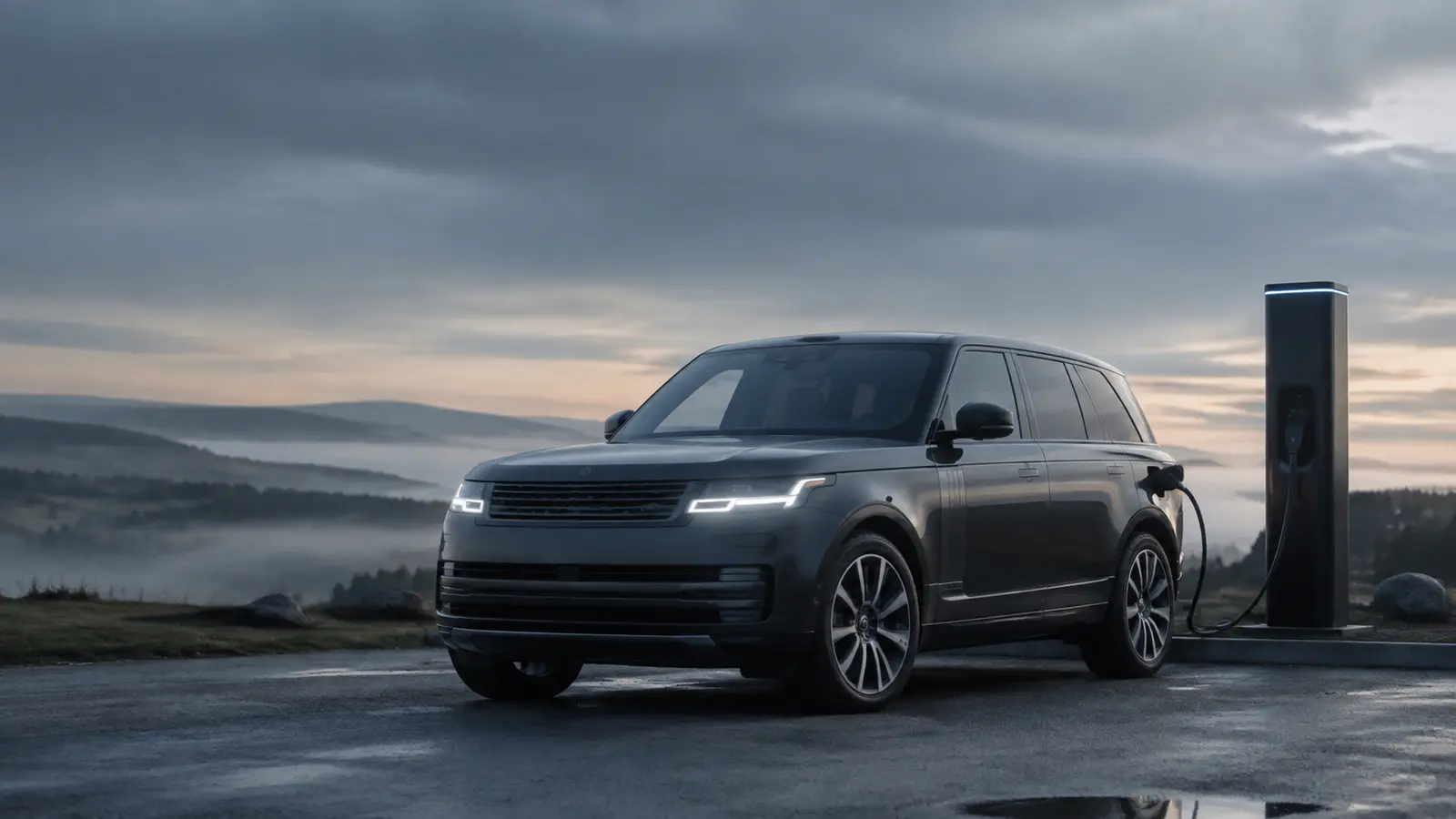
Range Rover has finally put a price and verified launch specification around its battery-electric flagship. Announced on September 2, 2026, the Range Rover Electric starts at £154,070 on the road in the UK, uses a 118.5kWh usable battery and carries a maximum WLTP range claim of 372 miles. It is available to order in the UK now, with market timing and configurations varying internationally.
The headline charging figure is equally ambitious: up to 350kW DC and a quoted 10–80% session of about 22 minutes under ideal conditions. Range Rover says a maximum-rate ten-minute charge can add around 137 WLTP miles. Those are laboratory- and charger-dependent claims, not promises that every public charger or winter journey will reproduce them.
This is therefore not simply a silent petrol Range Rover. The buying decision turns on whether its rapid-charging potential, off-road hardware and familiar luxury justify a price well above many accomplished electric SUVs—and whether a buyer has the home and road charging access needed to exploit a battery this large.
Table of contents
At a Glance
| Key fact | Verified position |
|---|---|
| UK price | From £154,070 on the road; options can increase it substantially |
| Battery | 118.5kWh usable, 800-volt architecture, 344 prismatic cells |
| Range | Up to 372 miles WLTP; manufacturer real-world estimate about 333 miles |
| DC charging | Up to 350kW; claimed 10–80% in about 22 minutes |
| Performance | Dual 260kW permanent-magnet motors, up to 550PS and 850Nm |
| Capability | Up to 2,500kg towing and 900mm wading, according to Range Rover |
| Warranty | Eight years or 100,000 miles for the propulsion battery/system terms identified at launch; confirm local wording |
| Availability | UK ordering open September 2; specifications, price and timing differ by market |
Price and Availability: What £154,070 Buys
The UK on-the-road starting price places the Electric in the same rarefied territory as high-output, heavily optioned luxury SUVs. It is not appropriate to convert £154,070 into dollars or euros and call the result an official local price: taxes, homologation, standard equipment and market positioning differ. Buyers outside Britain should use the local configurator or dealer order sheet.
At launch, Range Rover said ordering was opening in the UK and outlined charging-network arrangements for Europe and North America. European customers are promised access to a large roaming network; North American cars are designed around NACS and Tesla Supercharger access. A network-access statement does not guarantee every charger will deliver 350kW, nor that every market receives identical trims.
Budget beyond the list price
Large wheels, paint, interior specifications, insurance, home electrical work and public rapid-charging tariffs can materially change ownership cost. Ask for a configured on-the-road quotation and insurance quote before paying a deposit.
Battery, Motors and Performance Explained
The 118.5kWh figure is usable capacity—the portion made available to the driver—rather than a vague gross pack number. The double-stacked 800-volt battery contains 344 prismatic cells. High voltage helps the vehicle accept high charging power without requiring proportionally extreme current, although thermal management and the charging curve still determine how long peak power lasts.
A permanent-magnet motor at each axle is rated at 260kW, with system output quoted at up to 550PS and 850Nm. Range Rover claims 0–60mph in 4.3 seconds. The useful point is not drag-strip theatre: immediate torque should help controlled off-road progress and confident overtaking, while two motors enable precise axle control. The cost is mass—the vehicle weighs roughly 2.9 tonnes depending on specification.
How Far Will the Range Rover Electric Really Go?
The 372-mile number is the maximum WLTP rating, not a forecast for every driver. Range Rover separately gives an approximate 333-mile manufacturer real-world estimate. Neither replaces an independent road test. Speed, temperature, precipitation, elevation, traffic and cabin heating can move consumption substantially, and a driver normally preserves a charging reserve rather than arriving at zero.
- Cold weather: battery chemistry is less efficient and cabin heating consumes energy.
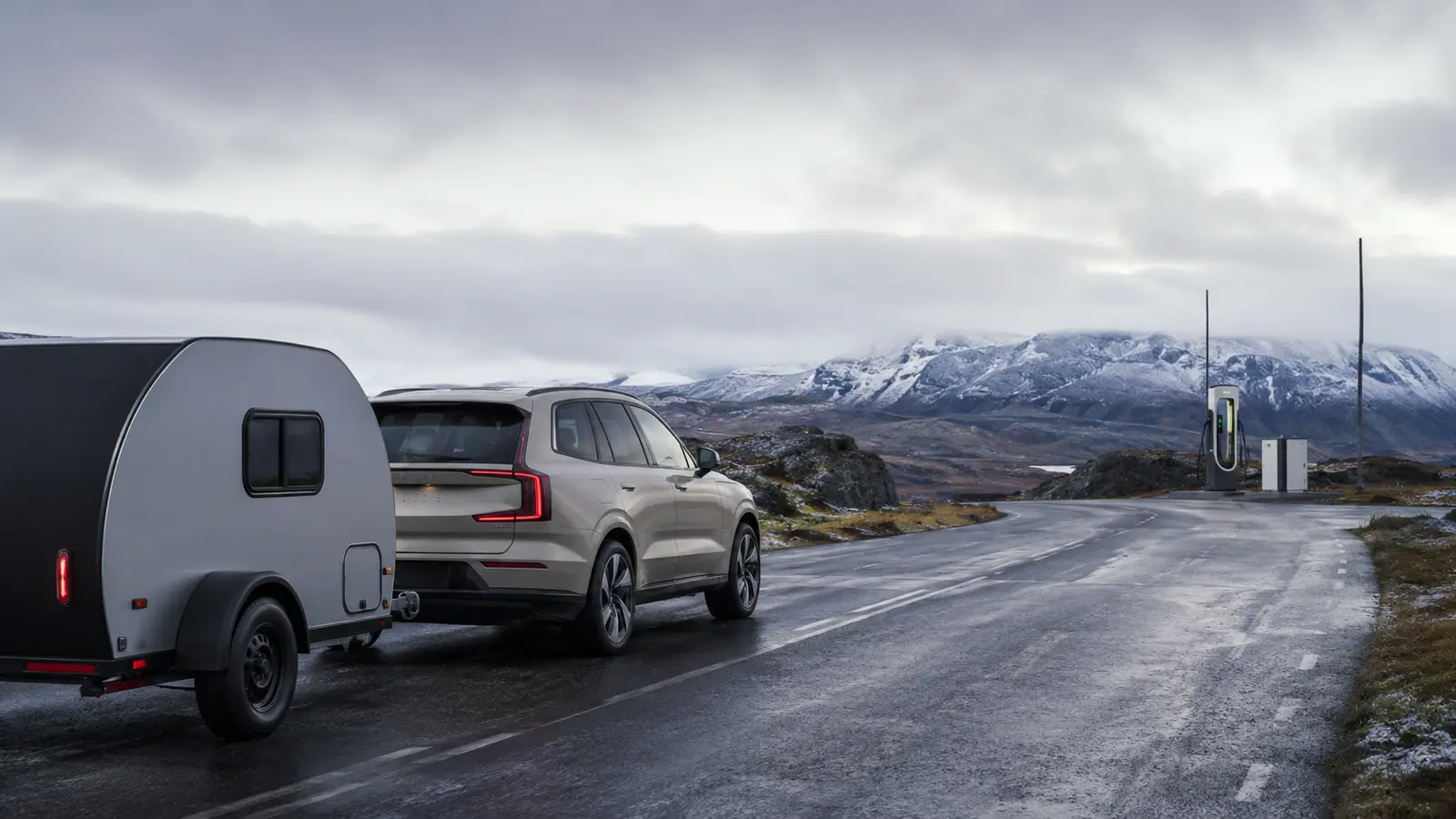
- Towing: the trailer adds mass and, more importantly at speed, aerodynamic drag.
- Off-road driving: soft surfaces, gradients and low speeds can raise energy use per mile.
- Wheels and tyres: larger wheels, winter tyres and off-road rubber can reduce efficiency.
- Roof accessories: boxes, racks and tents disturb airflow even when lightly loaded.
For route planning, start with the vehicle’s own prediction and apply a conservative margin until you know your configuration. A winter towing trip may require charging much earlier than a mild-weather solo motorway run. Range Rover’s ThermAssist heat-management claim—up to 40% less heating energy and as much as 25 miles preserved—remains a manufacturer claim pending independent testing.
Charging: 350kW Is a Peak, Not an Average
The quoted 22-minute 10–80% session requires a capable charger, a battery at a suitable temperature and a favorable starting state. Seventy percent of 118.5kWh is about 83kWh, so sustaining a 22-minute session would require a very high average—not merely touching 350kW briefly. Battery preconditioning and selecting the rapid charger in navigation will matter.
Range Rover’s 137-mile ten-minute figure is stated in WLTP-equivalent miles added at maximum rate. It is best read as a comparison metric. The miles actually obtained after charging depend on subsequent consumption. On a towing or winter journey, the same energy will deliver fewer road miles.
AC charging needs a market-specific check
The launch release did not provide a universal 7kW or 22kW zero-to-full time. Simple division gives an ideal minimum of about 17 hours at 7kW and 5.4 hours at 22kW for 118.5kWh, before losses and power tapering. These are calculations, not official promises; verify the car’s onboard AC limit and local supply.
Range Rover Electric vs BMW iX, EQS SUV and G 580
| Model | Why consider it | Important trade-off |
|---|---|---|
| Range Rover Electric | Traditional Range Rover cabin, off-road depth, 350kW peak claim | Very high price, weight and no independent efficiency data yet |
| BMW iX | Established road-test record, efficient packaging and broad charging data | Styling and brand character differ; less traditional off-road positioning |
| Mercedes-Benz EQS SUV | Three-row availability in some versions and comfort-led cabin | Pricing and options vary; less iconic off-road identity |
| Mercedes-Benz G 580 with EQ Technology | Extreme off-road engineering and distinctive form | Shorter-range, less efficient shape and different luxury experience |
The closest rival depends on use. The iX is the rational road-oriented alternative; the EQS SUV is a comfort and seating-space comparison; the electric G-Class is the capability-and-image foil. None is a direct substitute for a buyer specifically attached to the full-size Range Rover’s seating position, design and terrain systems.
Warranty, Towing and Long-Term Ownership
Range Rover lists an eight-year/100,000-mile protection period around the electric propulsion battery/system at launch. Read the country-specific warranty booklet for capacity-retention thresholds, exclusions, transferability and roadside assistance. A time-and-mileage headline alone does not tell you what gradual degradation is covered.
The 2,500kg towing figure is substantial for an EV, while 900mm wading preserves a recognizable Range Rover capability claim. Owners should still check nose weight, trailer licensing, payload, wheel-and-tyre suitability and the reduced range of a specific route. Wading depth assumes the vehicle is configured and operated within the manual, not that high-voltage components make every water crossing safe.
Who Should Buy—and Who Should Wait?
Buy or place a refundable order if you already intended to purchase a flagship Range Rover, can charge reliably at home, regularly use its towing or terrain capability and accept first-model-year uncertainty. Its strongest case is replacing a high-consumption luxury SUV without abandoning the brand’s core format.
Wait if maximum value, proven reliability, independent winter range or easy apartment charging matters more than novelty. A BMW iX or established Mercedes electric SUV has more owner data. Waiting also allows charging-curve tests, insurance quotes and early software behavior to become visible.
FrediTech verdict
The specification is credible enough to make the Range Rover Electric a serious luxury-EV contender, but £154,070 demands evidence beyond launch claims. Order only after confirming your exact configuration, home-charging plan and warranty; otherwise wait for independent range and charging tests.
Home-Charging Survey: Questions to Settle Before Ordering
A 118.5kWh battery changes the home-charging conversation. A normal overnight top-up may replace only the energy used that day, which is perfectly adequate for many owners; the car does not need to return from 0% to 100% every night. The problem appears after a long journey if another early departure follows. A 7kW wallbox replenishes roughly 7kWh per hour before losses, while three-phase 22kW capability can recover much faster when the car, property and tariff all support it.
Ask a qualified installer to inspect incoming supply, earthing, cable route, load balancing and parking position. Confirm whether the delivered vehicle accepts 11kW or 22kW AC in your market rather than assuming the publicized wallbox figure. Solar integration, off-peak scheduling and a house battery can improve cost, but software compatibility and export limits need checking. Renters and apartment residents should obtain written permission and a clear billing arrangement before placing a non-refundable vehicle order.
A Realistic Long-Journey Planning Example
Suppose a mild-weather trip begins at 90% and the car predicts 300 usable miles to a prudent reserve. A driver might stop after 220–250 miles, precondition the pack through navigation and charge only until the next stop plus reserve is secure. That can be faster than waiting for 80% every time because charging power normally tapers as state of charge rises. The optimum stop depends on charger spacing, amenities, queue risk and weather—not the brochure’s single 10–80% number.
Now add a trailer, strong headwind and freezing temperature. Consumption could rise enough that the same stop must happen substantially earlier. Navigation may learn current efficiency, but a driver should identify backup sites that accept the vehicle and trailer without uncoupling. Charging-bay length is an overlooked practical issue for towing EVs. An eight-minute detour or occupied stall can matter more than a small difference in theoretical maximum charging power.
Order and Delivery Checklist
- Obtain the final configured price, deposit terms and estimated delivery window in writing.
- Confirm wheel size, tyre type and how they change the certified range shown for your configuration.
- Verify AC onboard-charger specification, DC connector and charging-network access in the delivery country.
- Read battery-capacity warranty language and roadside-assistance exclusions.
- Get insurance quotes using the exact trim and options.
- Test child-seat, luggage, trailer and garage-clearance needs.
- Plan the home charger before the vehicle arrives and keep a reliable public-charging fallback.
A first-year luxury EV can receive software improvements, but it can also reveal service bottlenecks and parts delays. Ask which local retailer is authorized for high-voltage diagnosis and whether a courtesy vehicle is guaranteed. Buyers keeping the car beyond the warranty should also ask what battery-health report can be produced at resale. The best order decision is not “can I afford £154,070?” but “does the complete ownership system work where and how I drive?”
Frequently Asked Questions
What is the Range Rover Electric price?
It starts at £154,070 on the road in the UK. That is a base-market figure; options and international taxes can change the delivered price.
Is 372 miles a real-world range?
No. It is the maximum WLTP rating. Range Rover separately estimates about 333 miles in real use, but weather, speed, wheels, towing and terrain can reduce it.
Can it really charge from 10 to 80% in 22 minutes?
Range Rover claims about 22 minutes on a suitable high-power DC charger with the battery prepared correctly. Independent charging-curve testing was not available at publication.
How long will a 7kW home charge take?
A mathematical minimum for 118.5kWh is about 17 hours before losses. Real time will be longer and depends on usable window, onboard charger, temperature and supply.
Does it use Tesla Superchargers?
Range Rover says North American models use NACS and will have Tesla Supercharger access. Confirm the supported network, adapter and billing details for the delivered model and country.
How much can it tow?
The manufacturer quotes up to 2,500kg. Check the exact vehicle plate, trailer limits, payload and local licensing rules.
Related FrediTech Guides
- Smart Lighting Guide 2026
- Internal-link opportunity: FrediTech EV home-charging guide (URL to be assigned)
- Internal-link opportunity: FrediTech luxury electric SUV comparison (URL to be assigned)
Sources and Verification
Range, charging, performance and capability numbers are manufacturer claims unless explicitly identified as calculations. No independent production-vehicle range or charging test was available on announcement day.