
Backup power fails long before the battery reaches zero when the plan begins with a product instead of a load. A refrigerator compressor starts, the inverter overloads, the router resets during the transfer, or a family discovers that the “2,000-watt” label says nothing about how many hours the system can run.
This home backup power guide for 2026 starts with the services a household must preserve, then compares UPS systems, portable power stations, solar batteries, generators and vehicle-to-home power. It uses power and energy calculations that travel across markets while directing electrical installation, fuel safety and certification back to local rules.
Research checked: August 28, 2026. This is general consumer guidance, not an electrical design, emergency-services plan or medical-device power prescription. Product certification, battery placement, transfer equipment, generator clearances and permits vary by jurisdiction and building.
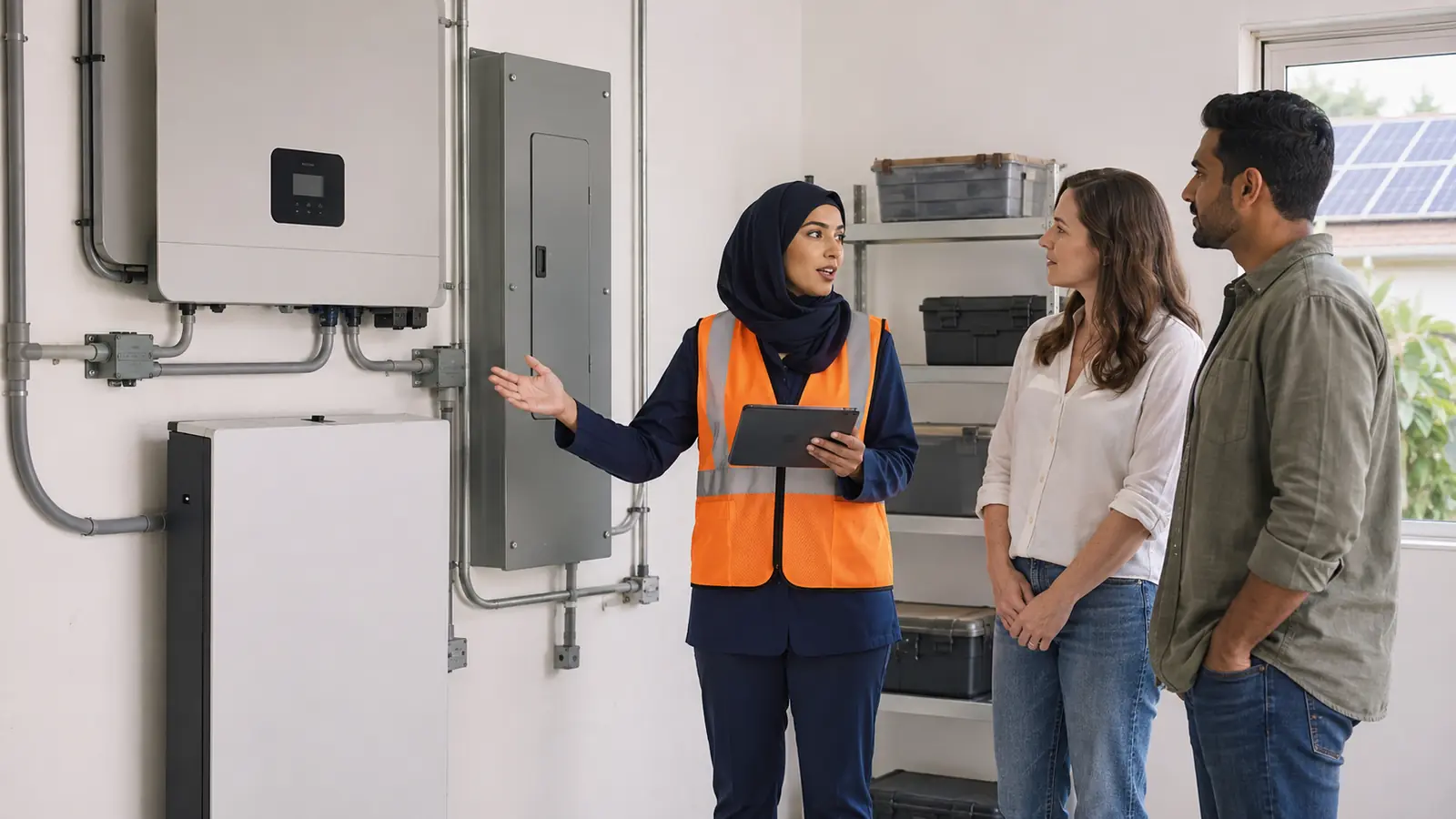
Table of contents
The best backup-power strategy
Use layers. Put the modem/router, computer and other interruption-sensitive electronics on a correctly sized UPS. Use a certified portable power station for phones, lights and selected plug-in essentials during shorter outages. Consider a professionally installed home battery with a critical-loads panel for automatic, quiet backup and solar integration. Use a combustion generator only where it can operate legally and safely outdoors with approved transfer equipment. Size every layer from measured watts, starting surge and required hours.
In this guide
Define what must keep working during an outage
Create three columns: essential immediately, useful after several hours, and safe to leave off. Internet equipment, one communication device, safe lighting and a way to receive alerts often belong in the first. Refrigeration may become important as the outage lengthens. Electric cooking, resistance heating, large air conditioners, water heaters and clothes dryers create much larger demands and may require a whole-home design or an alternative emergency plan.
Record why each load matters and how long it must run. A router may need continuous power, while a refrigerator cycles. A laptop can charge for two hours and then operate from its internal battery. One bright room light can be replaced with several efficient task lights. Reducing the load usually buys more resilience per dollar than buying a larger battery.
Plan for people, not only appliances. Keep battery lighting on stairs and exit routes, accessible charging for mobility and communication devices, printed contacts, safe food and water, and a non-electric method for necessary information where feasible. Anyone relying on powered medical or assistive equipment should make a personalized plan with the equipment supplier, clinician and local emergency resources; a general consumer battery recommendation is not enough.
UPS vs portable power station vs home battery vs generator
| Option | Best job | Strength | Main limitation |
|---|---|---|---|
| Small UPS | Router, desktop computer, network storage, security hub | Fast transfer and power conditioning for selected electronics | Short runtime; batteries age and high-draw appliances are unsuitable |
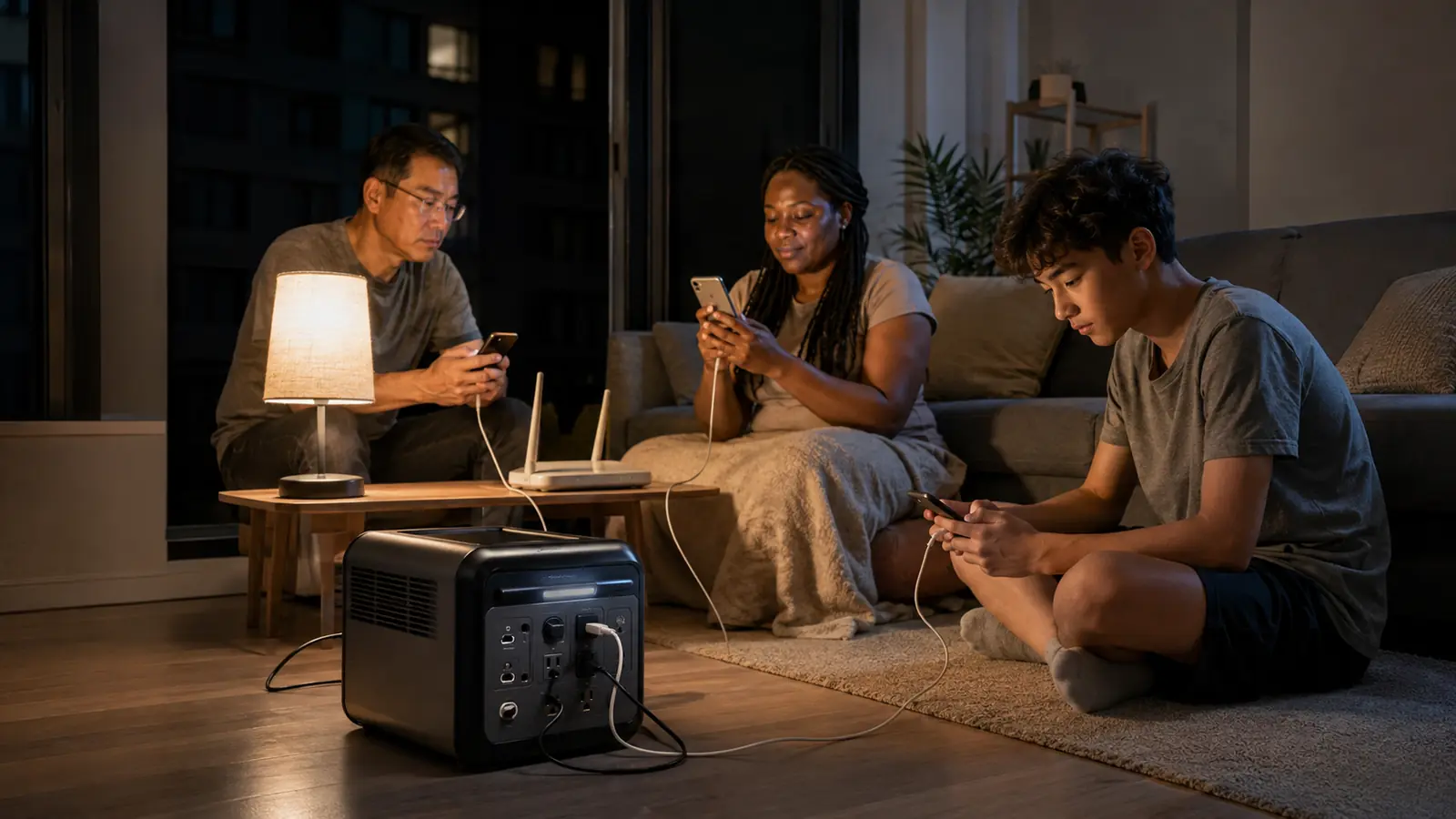
| Portable power station | Phones, lights, laptops, TV, selected small appliances | Quiet, movable stored energy with multiple outputs | Manual connection, finite energy, charging time and load limits |
| Professionally installed home battery | Critical circuits or whole-home automatic backup | Integrated transfer, solar compatibility and larger capacity | High capital cost, fixed installation and code/utility requirements |
| Portable fuel generator | Long outages where fuel and safe outdoor operation are practical | Can run as long as fuel, maintenance and safe conditions permit | Carbon monoxide, fire, noise, weather, fuel storage and transfer hazards |
| Standby generator | Automatic backup for larger fixed loads | High output and automatic transfer when properly designed | Fuel supply, emissions, maintenance, noise and substantial installation |
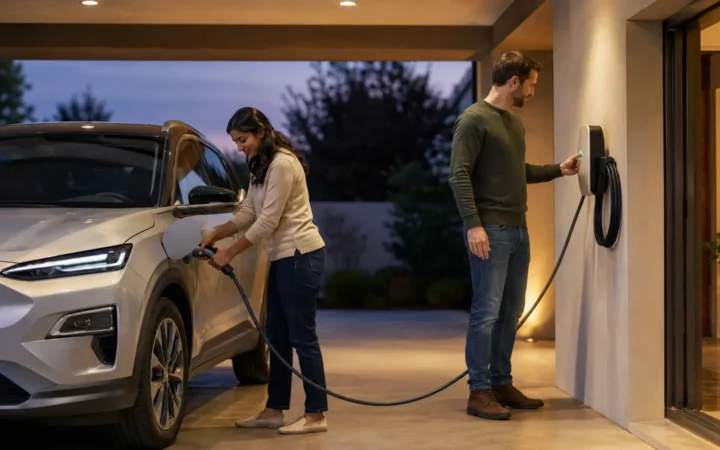
| Compatible EV with V2H/V2B | Large mobile battery supporting approved home loads | Uses an asset already purchased for transport | Vehicle, bidirectional charger, transfer equipment and utility must align |
These options complement one another. A home battery may take a moment to transfer or may be reserved for selected circuits; a small UPS can bridge sensitive network equipment. A portable power station can cover a separate room while the fixed system protects refrigeration. A generator can recharge some approved battery systems, but connection, waveform, earthing and manufacturer rules must be verified—never improvise a backfeed.
How to calculate power, energy and realistic runtime
Watts determine whether the system can start and run the load
Add the running watts of devices that may operate together. Then identify motors, compressors and pumps with a starting surge. The inverter must support both continuous power and the specified surge duration. Apparent power in volt-amperes, power factor and waveform matter for some equipment, so use nameplates and manufacturer guidance rather than assuming watts tell the full story.
Watt-hours determine approximately how long it can run
Required delivered energy (Wh) = average load (W) × required hours
A 70-watt combined communication and lighting load for eight hours requires 560 Wh delivered. The battery must store more because the inverter, electronics, temperature and aging create losses, and products may reserve capacity to protect cells. Use the manufacturer’s tested output data at a similar load where available, then include margin. Do not multiply the front label by an optimistic efficiency and present the result as guaranteed runtime.
Cycling loads need observation. A refrigerator may draw a modest average over a day but a high starting surge and a duty cycle that changes with room temperature, door opening and food load. A plug-in energy meter can measure normal consumption when used within its rating. For fixed circuits or unfamiliar equipment, use a qualified professional.
Choosing a UPS for routers, computers and sensitive electronics
ENERGY STAR distinguishes standby/offline (VFD), line-interactive (VI) and online/double-conversion (VFI) UPS types. A standby unit can provide basic outage backup for a home computer. A line-interactive design also corrects some voltage variation without using the battery continuously and is common for network and small-server loads. Online designs continuously condition power for more demanding applications but cost more and consume more energy.
Check output watts as well as VA, transfer time, waveform on battery, socket type, replaceable-battery availability, software shutdown, audible alarm control and runtime at the intended load. A 1,500 VA label does not mean every model supplies the same watts or minutes. Laser printers, heaters and appliances with large motors are generally poor loads for a small computer UPS; follow the maker’s exclusions.
Test the UPS quarterly by safely removing mains input according to its instructions while observing the connected devices. Replace a swollen, leaking, overheated or faulting battery through the approved service route. Record the installation and battery date because an old UPS that passes power normally may provide almost no outage runtime.
Choosing a portable power station
- Usable energy: compare tested AC and DC runtime at loads similar to yours.
- Continuous and surge output: match the simultaneous loads and motor-start requirement.
- Battery chemistry and cycle terms: read the capacity-retention condition, not only the cycle number.
- Safety certification: look for credible certification appropriate to the product and market; UL 2743 covers portable power packs in North America, while other regions use applicable standards.
- Charging options: mains, approved solar input and vehicle charging should match the household plan.
- Transfer or EPS behavior: verify switching time and whether the manufacturer approves continuous pass-through for the intended device.
- Output quality: check voltage, frequency, pure-sine claim, grounding arrangement and appliance compatibility.
- Repair and battery service: long warranty and local support matter more than an oversized app.
- Physical handling: weight, handles, ventilation, water exposure and storage temperature affect real usefulness.
Use DC or USB outputs for compatible electronics when that avoids inverter losses, but never force a connector or voltage. Keep the unit dry, ventilated and away from escape routes, heat, direct sun and combustible clutter. Do not cover it to silence a fan. Charge it on a stable surface using approved equipment and follow storage-state recommendations rather than leaving it forgotten at empty or full for years.
Whole-home batteries, critical-load panels and solar
A grid-tied solar array normally shuts down during an outage unless the inverter, storage and isolation system are designed to operate safely as a backup microgrid. The U.S. Department of Energy explains that solar plus storage can provide power during disruptions; solar alone is not a guarantee. Ask the installer to demonstrate which circuits remain energized, what happens at night, how black-start works and whether solar can recharge the battery while islanded.
A critical-loads panel restricts backup to selected circuits, reducing battery and inverter requirements. Prioritize refrigeration, communications, lighting, selected outlets, security and carefully assessed pumps or heating controls. Whole-home backup is convenient but may need automatic load shedding so a cooker, vehicle charger or air conditioner does not overload the system. Label backed-up and non-backed-up circuits clearly.
Compare usable kWh, continuous and surge kW, round-trip efficiency, backup reserve, operating temperature, enclosure rating, warranty throughput, capacity retention, monitoring ownership, installer network, fire-service access and end-of-life plan. Ask whether the warranty covers labor and whether the system remains functional if the vendor’s cloud changes. Battery location must follow product certification, building/fire rules and manufacturer clearances.
Generator safety is not optional
Carbon monoxide warning: never operate a fuel generator inside a home, garage, basement, crawlspace, shed, porch or carport—even with openings. The U.S. Consumer Product Safety Commission says portable generators should operate outdoors at least 20 feet from homes, with exhaust directed away from doors, windows and vents. Other jurisdictions may require different or greater separation; follow the strict applicable rule and install working CO alarms.
Use manufacturer-approved weather protection that does not enclose the generator or trap exhaust. Let it cool before refueling, store fuel legally in approved containers, keep it away from ignition, and follow maintenance intervals. Never connect a portable generator to home wiring through a homemade cord or ordinary outlet. Backfeeding can energize utility lines and endanger workers and neighbors. A qualified electrician must install approved transfer equipment and an inlet where applicable.
Noise and fumes affect nearby homes, especially dense urban areas. Check local operating hours, fuel storage, apartment rules and fire restrictions. A generator that cannot be placed safely is not a backup option for that property; use stored-energy and community-resilience alternatives instead.
Three practical backup-power tiers
Tier 1: connected essentials
UPS for modem/router and computer, battery lights, power banks, charging cables and an outage checklist. Best for brief interruptions and a small apartment. It preserves communications without pretending to power large appliances.
Tier 2: portable resilience
Add a certified portable power station sized for selected lights, communications, laptops and a tested refrigeration strategy. Add approved portable solar only when placement, weather, theft and charging time are realistic.
Tier 3: installed critical loads
Professionally designed battery/inverter and critical-load panel, optionally integrated with solar, a generator or compatible V2H. Best for frequent or longer outages when automatic transfer and larger loads justify the investment.
Any tier: reduce demand
Efficient lights, a maintained refrigerator, charged device batteries, insulated rooms and an agreed switch-off list extend runtime. The home energy-saving guide helps identify the loads worth improving first.
Buying, installing and maintaining the system
- Measure loads. Record running watts, surge, hours, duty cycle and which items must operate simultaneously.
- Choose the smallest safe architecture. Separate interruption-sensitive electronics, portable loads and fixed circuits.
- Verify certification and regional fit. Check voltage, frequency, sockets, battery/UPS standards, installer approval and warranty service.
- Plan the location. Protect ventilation, access, weather, escape routes, children, pets and fire-service clearance.
- Use approved transfer equipment. Fixed home circuits, generators, batteries and V2H require professional design and local compliance.
- Document operation. Label circuits and cables; record serials, passwords, battery dates, service contacts and shutdown steps.
- Run an outage drill. Test transfer, runtime, alarms, communications, lighting and the household switch-off sequence at least twice a year.
Compare total ownership cost: equipment, installation, permits, fuel, consumables, battery replacement, maintenance, monitoring subscriptions and warranty labor. Stored energy can also support tariff shifting where rules permit, but do not count speculative savings twice. Backup value is mainly avoided disruption and improved safety; it does not always produce a simple financial payback.
Inspect cables, vents and enclosures; install firmware updates; confirm CO and smoke alarms; rotate stored fuel where lawful; and keep battery systems within specified temperature and state-of-charge ranges. After any flood, impact, overheating, unusual odor, swelling or electrical fault, isolate only if safe and contact qualified service. Do not open lithium battery enclosures.
Keep a one-page operating sheet beside the system and another copy offline. It should show the backed-up circuits, maximum simultaneous load, safe shutdown order, transfer procedure, emergency contacts and equipment that must never be connected. Teach at least two household members how to read the display and silence only non-critical alarms. A short, calm drill exposes missing cables, expired batteries and unrealistic runtime assumptions before a real outage does.
FrediTech recommendation: protect internet and computers with a UPS, add portable stored energy only for measured essentials, and move to a professionally installed critical-load battery when outage frequency and household needs justify it. Never solve an energy problem by introducing generator carbon monoxide or unsafe backfeed risk.
Frequently asked questions
How big a battery do I need for home backup?
Multiply the measured average watts of essential loads by the required hours, then account for inverter losses, surge, temperature, aging and reserve. Size output watts separately from energy watt-hours. A site survey is needed for fixed circuits and large appliances.
Can a portable power station run a refrigerator?
Some can, if continuous output, starting surge, waveform, energy capacity and appliance requirements all match. Measure the refrigerator’s real cycling consumption and follow both manufacturers’ guidance. Do not assume the average wattage captures compressor start.
What is the difference between a UPS and a portable power station?
A UPS prioritizes rapid transfer and power protection for selected electronics, often for minutes rather than many hours. A portable power station prioritizes movable energy and multiple outputs. Some offer EPS/UPS-like modes, but switching time and approved continuous use vary.
Will rooftop solar work during a blackout?
Only when the inverter, storage and isolation system are designed for safe islanded operation. Many ordinary grid-tied solar systems shut down during an outage to protect workers and equipment.
Where can I safely run a portable generator?
Outside only, following the strict local and manufacturer clearance. U.S. CPSC guidance says at least 20 feet from homes with exhaust facing away from openings, never in garages, porches or carports. Use working CO alarms and approved transfer equipment.
Research method and primary sources
Recommendations were screened by load criticality, power, energy, transfer behavior, certification, placement, ventilation, local service and failure safety. Consumer products are categories rather than hands-on rankings. Exact runtime and installation must be verified for the selected equipment and property.
- U.S. Department of Energy — Solar and storage basics
- U.S. Department of Energy — Solar and resilience
- ENERGY STAR — UPS types and key criteria
- UL Solutions — UL 2743 portable power packs
- U.S. CPSC — 2026 generator carbon-monoxide and fire guidance
- Ready.gov — Power-outage preparation
- U.S. Department of Energy — Bidirectional EV charging