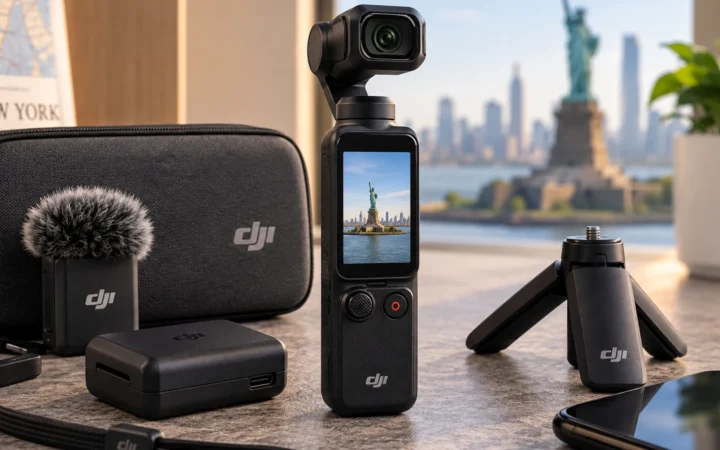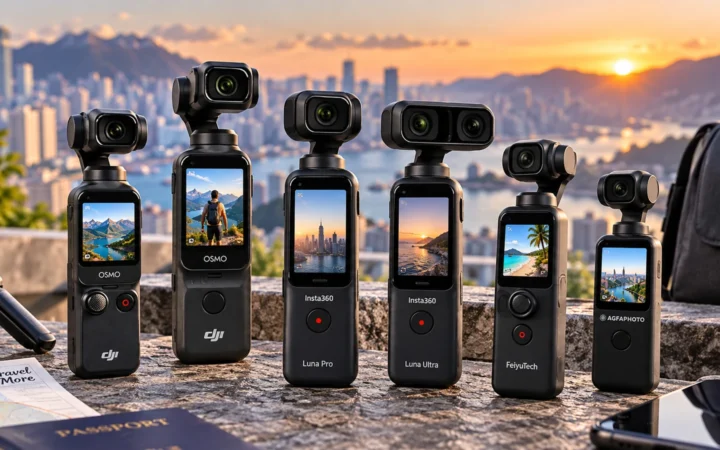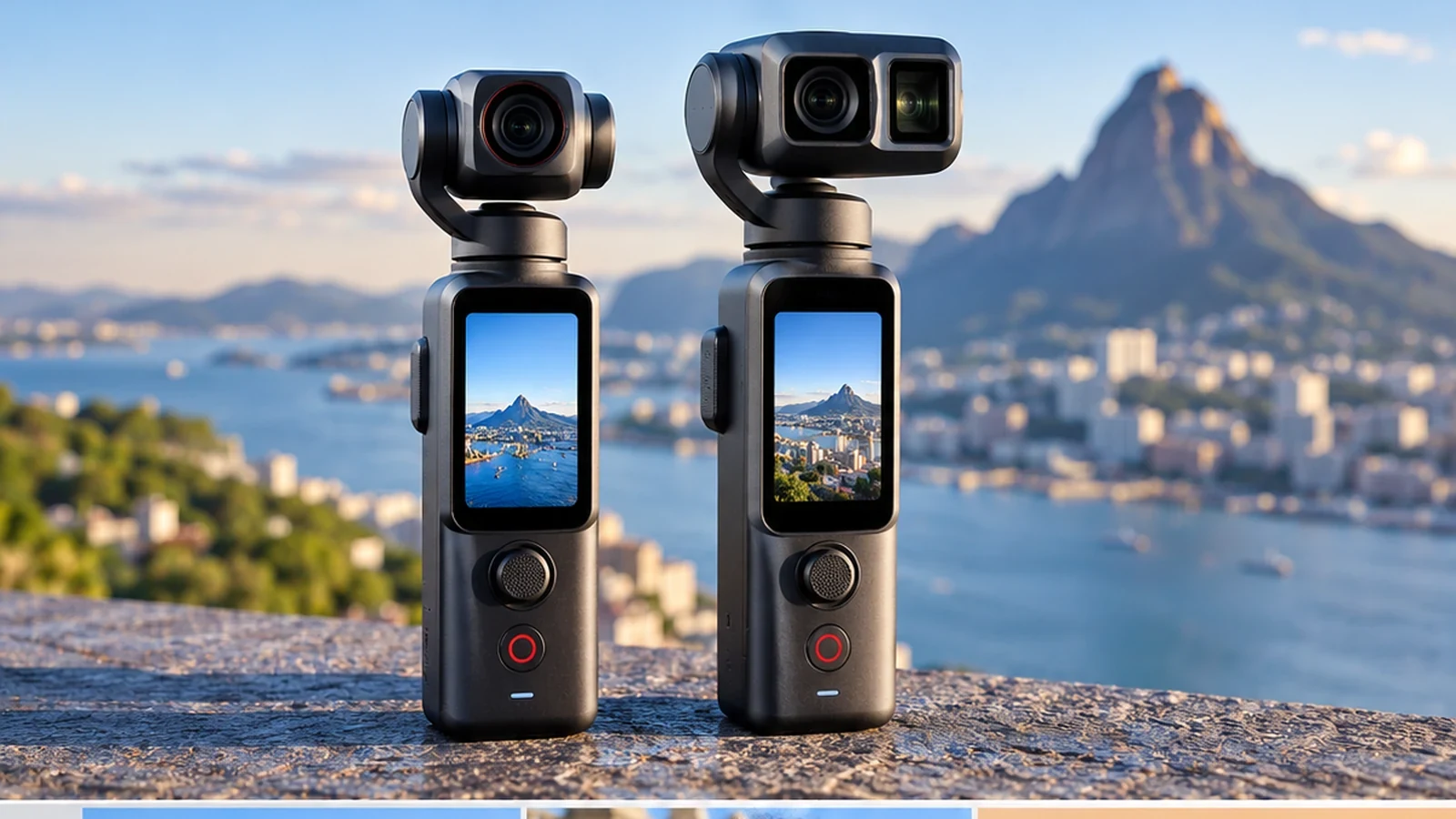

Price checked September 14, 2026: the Insta360 Luna Pro starts at $599.99, while the Luna Ultra starts at $769.99 in current official-store listings. That makes the Ultra exactly $170 more, or about 28.3% more expensive than the Pro. The important point is that you are not paying for a dramatically different main camera: both models publish the same core 1-inch, approximately 50MP, 20mm-equivalent F1.8 main-camera specification. The Ultra’s defining hardware advantage is its second camera—a 1/1.3-inch, 60mm-equivalent F2.0 telephoto.
If most of your videos live at 1×–2×, Luna Pro keeps most of the experience for less. If you regularly shoot portraits, travel details, performances or distant subjects, Ultra’s native 3× telephoto and 6× lossless crop create framing the Pro cannot fully reproduce.
Luna Pro vs Luna Ultra: Quick Verdict
Buy the Luna Pro if you primarily vlog, shoot social video, use 1×–2× framing and would rather keep $170 for audio, filters or storage. Buy the Luna Ultra if 3×–6× framing is part of your normal workflow. Its 60mm-equivalent telephoto is a real second optical perspective, not merely a digital zoom trick. At current pricing, the Ultra premium is justified for creators who will use that lens frequently; it is unnecessary for buyers who mostly stay wide.
Insta360 Luna Pro vs Luna Ultra: price and key differences
The current official-store baseline is $599.99 for Luna Pro and $769.99 for Luna Ultra. Pro is about 22.1% cheaper; Ultra is about 28.3% more expensive. This is a sibling-model price gap, not a temporary $170 promotion.
Insta360 lists Pro with a September 10, 2026 release date and Ultra with a June 10 release. Pro removes the second camera but retains 8K30, 4K120, I-Log, Dolby Vision, PureVideo, the detachable OLED remote, 47GB internal storage, microSD expansion and a 1,550mAh battery.
| Feature | Luna Pro | Luna Ultra |
|---|---|---|
| U.S. price baseline | $599.99 | $769.99 |
| Price difference | $170 less | $170 more |
| Release date | September 10, 2026 | June 10, 2026 |
| Main sensor | 1-inch, approx. 50MP | 1-inch, approx. 50MP |
| Main lens | 20mm equivalent, F1.8 | 20mm equivalent, F1.8 |
| Telephoto | No | Yes |
| Telephoto sensor | — | 1/1.3-inch |
| Telephoto lens | — | 60mm equivalent, F2.0 |
| Native optical positions | 1× | 1× and 3× |
| Maximum Clarity/lossless zoom | 2× | 6× |
| Maximum zoom | 4× | 12× |
| 8K video | Up to 30fps | Up to 30fps |
| 4K high frame rate | Up to 120fps | Up to 120fps |
| 1080p slow motion | Up to 240fps | Up to 240fps |
| 4K 9:16 vertical | Yes, up to 30fps | Not listed yet; future OTA announced |
| Photo format | JPG / JPG + RAW | JPG / JPG + RAW |
| 10-bit I-Log | Yes | Yes |
| Dolby Vision | Yes | Yes |
| Screen | 2.0-inch detachable OLED, 318×564, 1000 nits, 60Hz | Same |
| Internal storage | 47GB | 47GB |
| microSD | Supported, specified cards up to 2TB | Supported, specified cards up to 2TB |
| Main battery | 1,550mAh | 1,550mAh |
| Official battery claim | Up to 240 min under 1080p24 lab conditions | Same |
| Weight, black | Approx. 215g | Approx. 233g |
| Dimensions | 52.78 × 155.7 × 38.47mm | 52.4 × 169.9 × 38.5mm |
| Microphones | 4 | 4 |
| Waterproof / splashproof | No | No |
| Dustproof | No | No |
| Best for | Vlogging, social video, value, portability | Portraits, travel, events, telephoto B-roll |
| Biggest compromise | No true telephoto; quality falls beyond 2× crop | Higher price, larger body; telephoto is weaker than main camera in low light |
The short answer: who should buy each camera?
| Buyer priority | Better choice | Why |
|---|---|---|
| Best value | Luna Pro | Keeps the same published 1-inch main-camera setup for $170 less. |
| Best for vlogging | Luna Pro | Most selfie and walk-and-talk footage lives on the 20mm main camera. |
| Best for portraits | Luna Ultra | The native 60mm-equivalent camera offers more natural tight framing from farther away. |
| Best for travel | Luna Ultra | 3× and 6× views help capture buildings, signs, stage details and distant subjects. |
| Best for distant subjects | Luna Ultra | Native 3× plus 6× lossless crop is far stronger than Pro’s digital range beyond 2×. |
| Best for vertical video today | Luna Pro | Official specs currently list 4K 9:16 up to 30fps on Pro; Ultra’s OTA is still pending. |
| Best for portability | Luna Pro | It is roughly 18g lighter in black and about 14mm shorter. |
| Best zoom | Luna Ultra | Native 1×/3× and lossless 2×/6× positions. |
| Best professional versatility | Luna Ultra | Two native perspectives produce more visual variety without changing cameras. |
The main cameras are much closer than the prices suggest
On paper, both models use the same published core main-camera specification: a 1-inch sensor with about 50MP effective pixels, a 20mm-equivalent lens, F1.8 aperture and 9cm minimum focusing distance. Unless Insta360 publishes the exact sensor part number for both, it is safer to describe this as the same published main-camera specification rather than claiming the underlying sensor component is definitely identical.
That means the Ultra should not be assumed to produce dramatically better 1× footage. TechRadar praised Luna Pro’s video quality, tracking and stabilization, while PetaPixel found Luna Ultra’s main camera strong overall and in low light; these were separate reviews, not a laboratory side-by-side test. Both also offer Leica Natural, Vivid and Chrome profiles for creators who want an in-camera look without heavy grading.
What the Luna Ultra’s $170 telephoto actually gives you
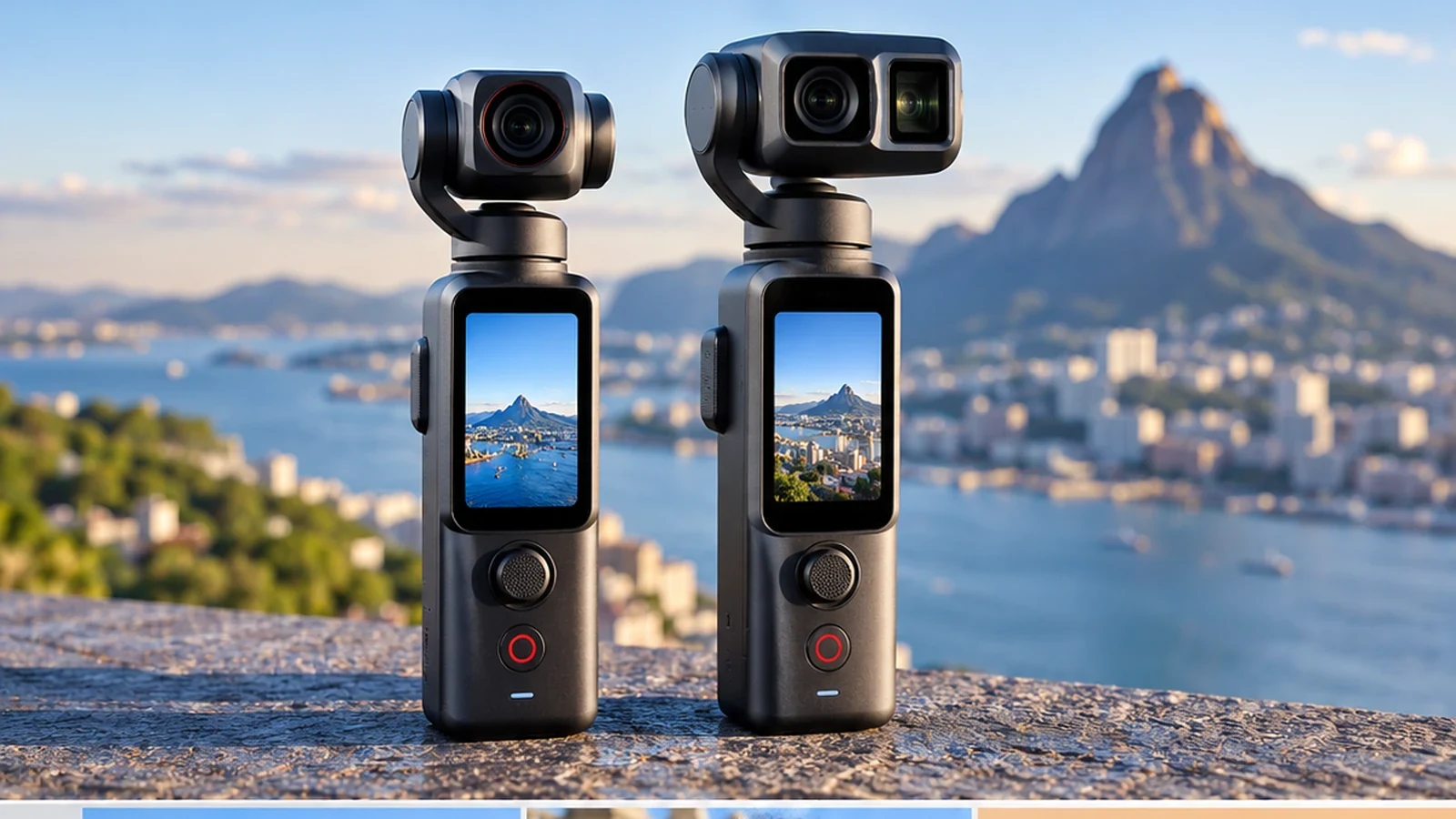
The Luna Ultra adds a 1/1.3-inch telephoto sensor behind a 60mm-equivalent F2.0 lens with a 15cm minimum focus distance. Relative to the 20mm main camera, that is a true 3× native optical perspective. This is the single most important reason to spend the additional $170.
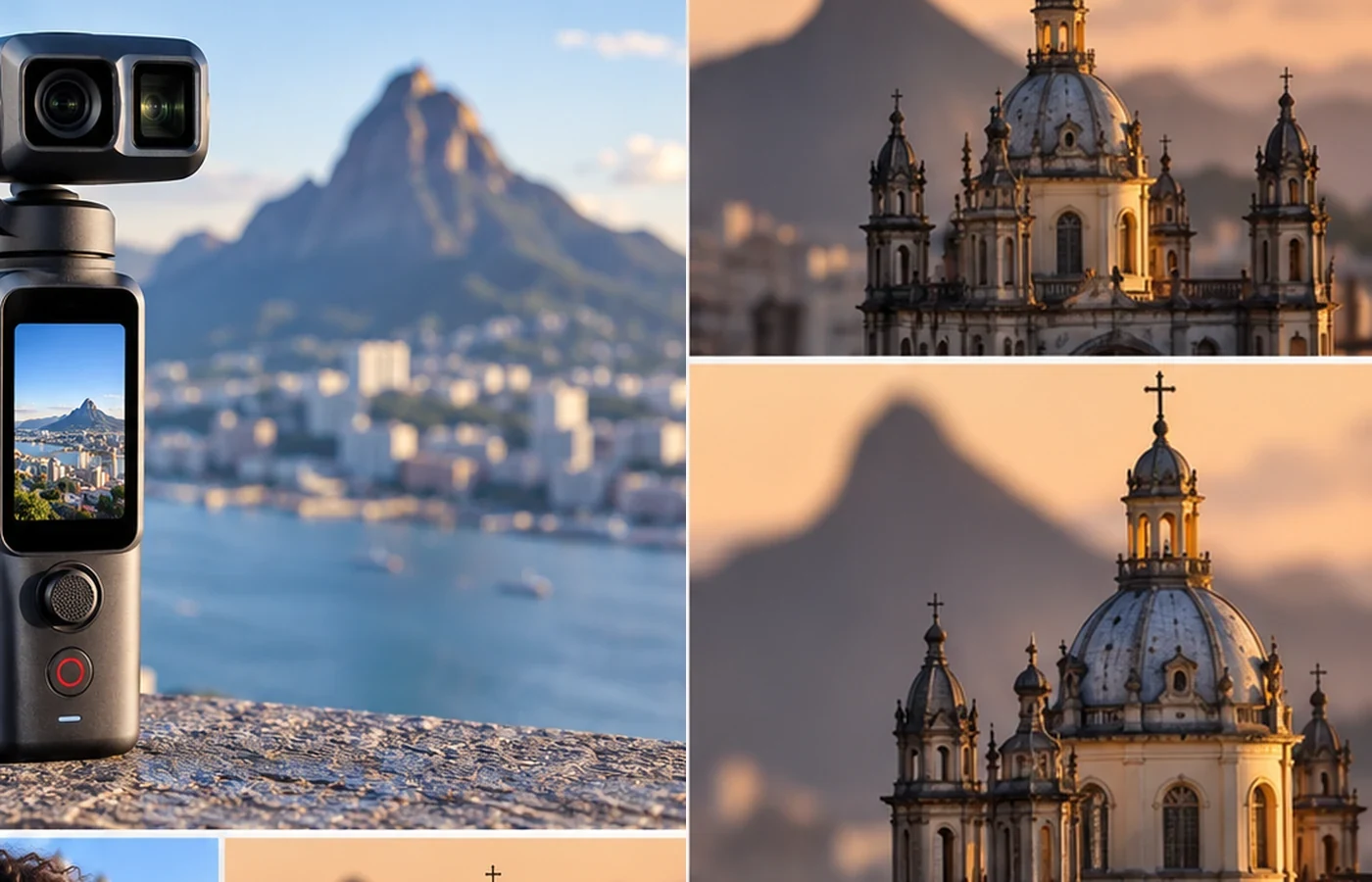
The 60mm view is valuable for portraits, interviews, product details, street scenes, architecture, performances and B-roll because it lets you frame tightly from farther away. Perspective is determined by camera-to-subject distance; the telephoto simply makes that greater working distance practical, producing the compressed-looking relationships often associated with longer lenses.
Its 1/1.3-inch F2.0 system gathers less light than the 1-inch F1.8 main camera, so the main lens retains an advantage in dim conditions. PetaPixel still found the native 3× view useful, while warning that the longest digital positions lose quality.
Luna Pro 2× and 4× vs Luna Ultra 3× and 6× zoom
“Zoom” means several different things on these cameras, and treating every number as optical is misleading.
- Luna Pro 1×: native optical view from the 20mm main camera.
- Luna Pro 2×: Insta360 describes this as an interpolation-free, lossless crop using the central 4K-resolution area of the main sensor.
- Luna Pro 2.1×–4×: digital cropping based on the 2× image. The maximum is 4×, but only 2× is the maximum Clarity Zoom position.
- Luna Ultra 1×: native optical 20mm main camera.
- Luna Ultra 2×: lossless central crop from the main sensor.
- Luna Ultra 3×: native optical 60mm telephoto camera.
- Luna Ultra 6×: lossless/interpolation-free central 4K crop from the telephoto sensor.
- Luna Ultra 6.1×–12×: digital crop based on the 6× image.
Framing is roughly 20mm at 1×, 40mm at 2×, 60mm at the Ultra’s native 3× and about 120mm-equivalent framing at 6×. Only 1× and Ultra’s 3× are native optical positions; 2× and 6× are sensor crops.
TechRadar found Pro zoom less convincing beyond 2×, while PetaPixel warned that Ultra quality falls toward 12×. Treat 6× as a useful good-light option and 12× as emergency framing rather than a substitute for a long optical lens.
Portraits: this is where Luna Ultra earns its premium
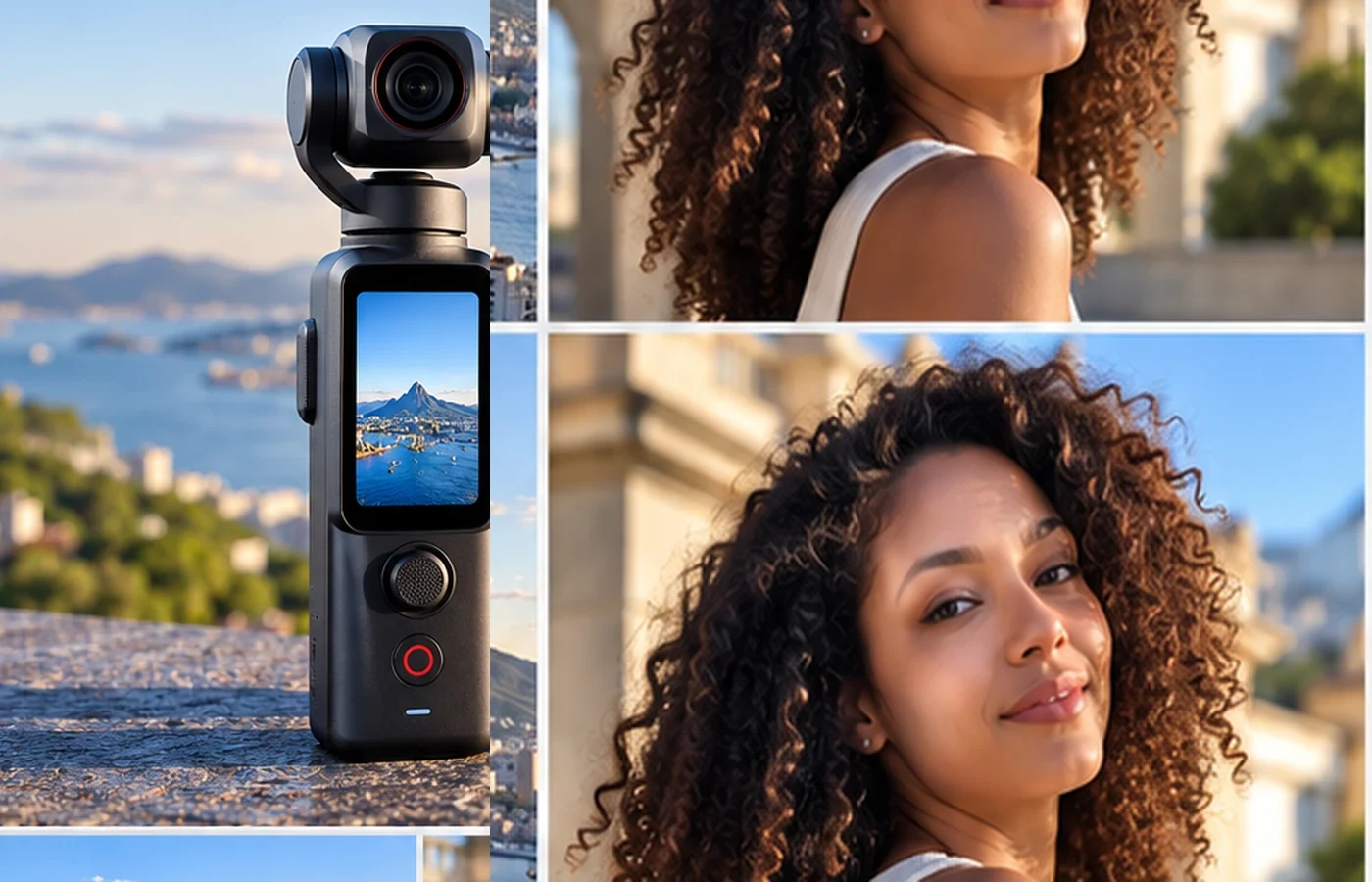
Portrait shooters benefit most clearly from the Ultra. A 20mm-equivalent lens is excellent for environmental context and arm’s-length vlogging, but tight facial framing from very close range can exaggerate perspective. The Ultra’s 60mm lens lets the camera move farther from the subject while maintaining a tighter composition, producing a more natural face-to-background relationship for many head-and-shoulder shots.
PetaPixel highlighted the longer focal length’s value for tighter framing. The benefit is not simply “more blur”; it is the combination of working distance, composition and a genuinely different native perspective.
Travel: telephoto changes the kind of shots you can capture
Travel is another workflow where the Ultra can justify its premium quickly. You cannot always walk closer to a building detail, animal, stage, sign, mountain feature or subject across a street. The 3× camera gives a native optical view for those situations, while 6× extends useful reach through a central sensor crop.
It also adds visual variety: cutting between 20mm establishing shots and 60mm details creates more rhythm than relying on one wide perspective throughout a trip.
Vlogging: Luna Pro may be all you need
For selfie vlogging, walk-and-talk video, TikTok, Reels, Shorts and desk content, the Pro’s 20mm main camera is often the focal length you would choose anyway. Both models share the detachable 2-inch, 318×564 OLED remote rated at 1,000 nits; it is excellent for solo framing and unusual angles, although PetaPixel noted that its small size makes critical focus confirmation difficult.
4K vertical video: check the latest firmware before choosing
As of September 14, 2026, Insta360’s current photo/video specification page lists 4K 9:16 recording at up to 30fps for Luna Pro but does not list the same 4K vertical mode for Luna Ultra. Insta360 has publicly said the Ultra will receive related 4K vertical capability through a later OTA update.
That makes 4K vertical a temporary Pro advantage. The Verge reports an Ultra firmware update is expected on September 20, 2026, while Insta360’s own support documentation still describes the feature only as a future update. Treat September 20 as an expected date rather than a guaranteed rollout, and check the Ultra firmware notes before buying specifically for 4K 9:16.
8K, 4K120 and professional video tools are largely shared
Both support 8K30, 4K120 and 1080p240. 8K adds crop and reframing latitude but increases storage, editing load, heat and battery use; 4K remains the practical default for most creators.
Both also support 10-bit I-Log, Dolby Vision and PureVideo. Insta360 claims up to 14 stops for I-Log; treat that as a manufacturer figure. Each camera has four microphones and supports Bluetooth connection to Insta360 Mic Air and Mic Pro.
Size and weight: Luna Pro is genuinely more compact
The black Pro is about 215g versus 233g for Ultra; the white versions are roughly 218g and 235g. Pro is also shorter at 155.7mm versus 169.9mm. The difference is modest, but Pro is easier to fit into a compact creator kit.
Battery life: do not take the four-hour number at face value
Both use a 1,550mAh main battery and 210mAh remote battery. Insta360’s 240-minute claim comes from 1080p24 at about 25°C with screen and Wi-Fi off. TechRadar saw roughly 90 minutes during demanding 8K use on Luna Pro, so do not read the four-hour figure as normal creator endurance. Charging is effectively tied at about 23 minutes to 80% and 38 minutes to full under Insta360’s stated lab conditions.
Storage, screen and audio: little reason to choose based on these
Both cameras include 47GB of internal storage and support compatible Lexar and SanDisk microSD cards up to 2TB according to current Insta360 documentation. Both use the same detachable 2-inch OLED screen specification and the same four-microphone count. Both also support wireless Insta360 microphone options.
These shared features simplify the decision: spend extra for Ultra because you need the telephoto, not for storage, screen or basic audio. Also note that neither model is officially waterproof, splashproof or dustproof, so rain, beaches and sand require care.
Accessories could change the real $170 calculation
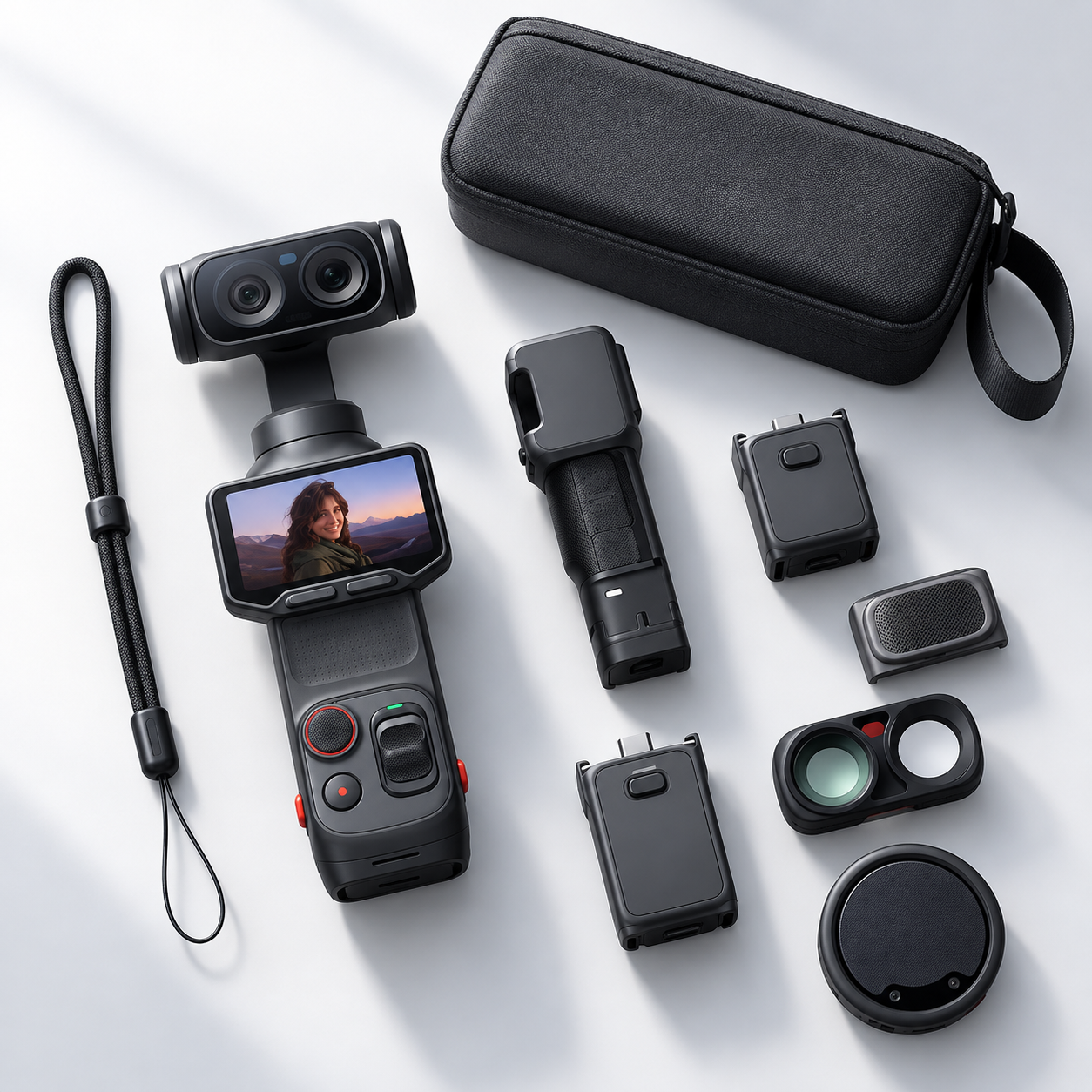
The two cameras share several accessories, including the Luna Series battery handle, 1/4-inch thread handle, neck mount, wind guard, magnetic mount, carry options and straps. Insta360 also lists several Pro-specific accessories such as the Wide-Angle Lens, Black Mist Filter, Sliding Protective Case, ND Filter Set and Mini Fill Light. Ultra has its own model-specific options as well.
Compare complete kits, not only body prices. A Pro buyer who adds filters, power and audio can spend much of the $170 saving, while an Ultra buyer may still need those same accessory categories.
What can you buy with the $170 you save?
Accessory prices vary by region and promotion. Best Buy currently lists the Insta360 Mic Air transmitter at $49.99 in the U.S., while some official Insta360 USD storefronts list the Luna Series Battery Handle at $79.99. Together, that is about $129.98 before tax, leaving roughly $40 of the $170 gap for storage or protection. Recheck U.S. pricing before purchase because Insta360 storefront pricing can vary by market.
The opportunity cost is real: a vlogger may gain more from better audio or power than from a seldom-used telephoto, while a travel or event shooter may value the 60mm view more because no accessory can recreate that native perspective.
Ask yourself these five questions before paying $170 more
- Do I regularly shoot subjects I cannot physically approach?
- Do I prefer tighter portraits to wide-angle facial framing?
- Do I film concerts, events, buildings, wildlife or travel details?
- Would I genuinely use 3× or 6× framing every week?
- Would $170 improve my work more if spent on audio, filters, storage or power?
Mostly yes to questions 1–4: the Luna Ultra is likely worth the premium. Mostly no: the Luna Pro is probably the better-value purchase.
Luna Pro vs Luna Ultra for different creators
Vlogger
Pick: Luna Pro. Its 20mm main camera suits arm’s-length and walk-and-talk video; choose Ultra only if telephoto B-roll is routine.
Travel creator
Pick: Luna Ultra. Travel gives 3× and 6× more chances to earn their keep on architecture, performers and distant details.
TikTok, Reels and Shorts creator
Pick: Luna Pro. It currently has the documented 4K 9:16 advantage and most short-form selfie workflows stay wide.
YouTube creator
Pick: depends on shot variety. Talking-head channels favor Pro; travel, event and cinematic channels gain more from Ultra.
Event creator
Pick: Luna Ultra. Telephoto framing is valuable when crowds or barriers limit movement.
Family or casual user
Pick: Luna Pro. Its main camera, tracking, stabilization and detachable screen cover common family use.
Portrait or lifestyle creator
Pick: Luna Ultra. The 60mm-equivalent view is the decisive advantage.
Professional B-roll shooter
Pick: Luna Ultra. Two native perspectives add more B-roll variety.
Budget-conscious buyer
Pick: Luna Pro. Keep the savings or redirect them to accessories.
Is the Luna Ultra telephoto worth $170?
Yes—if you use 3×–6× framing regularly. Ultra’s 60mm-equivalent telephoto changes working distance, composition and shot variety in ways Pro cannot fully reproduce by cropping.
No—if you spend almost all your time at 1×–2×. Pro keeps the same published 1-inch 20mm F1.8 main-camera setup and much of the same video platform while saving $170.
The simplest buying rule is this: do not pay $170 because “more cameras must be better.” Pay it if the second focal length will appear in your actual weekly work.
FrediTech verdict
Best overall value: Insta360 Luna Pro. It preserves the core 1-inch main-camera experience, advanced recording modes, detachable OLED remote and storage architecture for $170 less.
Best for serious creators: Insta360 Luna Ultra. Its native 3× telephoto and 6× lossless crop give it substantially more compositional range.
Best for vloggers: Insta360 Luna Pro. The wide main lens is what most vloggers need, and 4K vertical is currently documented on Pro.
Best for travel: Insta360 Luna Ultra. The second native perspective is genuinely useful when moving closer is impossible or when wide-only footage would become repetitive.
The best choice depends on focal-length use, budget and whether compactness or shot variety matters more.
Frequently asked questions
What is the difference between Insta360 Luna Pro and Luna Ultra?
Both publish a 1-inch, approximately 50MP, 20mm-equivalent F1.8 main-camera specification. Luna Ultra adds a 1/1.3-inch, 60mm-equivalent F2.0 telephoto camera and extends useful zoom options to native 3× and lossless 6×.
Is Luna Ultra worth $170 more?
It is worth the premium for creators who regularly use portraits, travel details, events or other 3×–6× framing. Buyers who mostly shoot at 1×–2× will usually get better value from Luna Pro.
Does Luna Pro have a telephoto lens?
No. Luna Pro has one native 20mm-equivalent main camera. Its tighter views are produced by sensor cropping and digital processing.
What focal length is the Luna Ultra telephoto?
It is 60mm equivalent with an F2.0 aperture, giving a native 3× perspective relative to the 20mm main camera.
Does Luna Pro have optical zoom?
Not as a continuously moving optical zoom lens. Insta360 describes 1× as the native optical focal length and 2× as a lossless central sensor crop.
Is Luna Pro 4× zoom lossless?
No. Insta360 lists 2× as Luna Pro’s maximum Clarity Zoom position. The range beyond 2× to 4× uses digital cropping from the 2× image.
Which is better for portraits?
Luna Ultra. Its native 60mm-equivalent camera lets you shoot tighter portraits from farther away and offers a more portrait-friendly working distance than the 20mm main camera.
Which is better for vlogging?
Luna Pro is the stronger value for most vloggers because the 20mm main camera is the natural selfie perspective and the telephoto often goes unused in walk-and-talk shooting.
Which is better for travel?
Luna Ultra is more versatile for travel because its 3× telephoto helps with architecture, performances, signs, distant details and cinematic B-roll.
Does Luna Ultra support 4K vertical video?
As of September 14, 2026, Insta360’s current specification page does not list the same 4K 9:16 mode shown for Luna Pro. Insta360 has announced that Luna Ultra will receive related 4K vertical capability through a later OTA update, so check current firmware before buying.
Research methodology and sources
This is specification-led editorial analysis, not a FrediTech hands-on test. Manufacturer claims were checked against current Insta360 documentation and independent observations are attributed to their reviewers.
- Insta360 Luna Series hardware specifications
- Insta360 Luna Series photo and video specifications
- Insta360 Luna Series zoom documentation
- Insta360 Luna Series accessory compatibility
- Insta360 I-Log documentation
- TechRadar Luna Pro review
- PetaPixel Luna Ultra review
Related FrediTech context: iPhone 17 Pro review and Xiaomi 17 Ultra review.