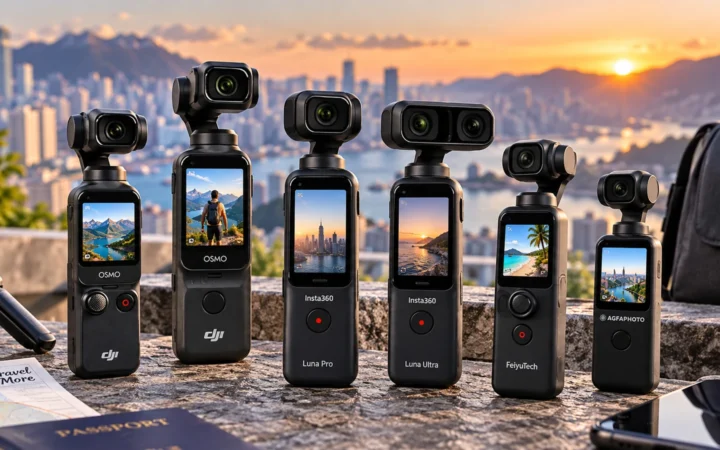
The Insta360 Luna Pro and Luna Ultra share the same published core main-camera specification: a 1-inch sensor, approximately 50MP effective resolution, a 20mm-equivalent f/1.8 lens and 9cm minimum focusing distance. The Ultra costs more because it adds a second camera—a 1/1.3-inch sensor behind a 60mm-equivalent f/2.0 telephoto lens. At current U.S. pricing, that means $599.99 for Luna Pro versus $769.99 for Luna Ultra, a $170 gap.
The real question is not whether two cameras are “better” than one. It is whether the Ultra’s dedicated 60mm perspective produces useful images that the Pro’s 20mm main camera and 2× crop cannot reasonably recreate. This analysis uses current Insta360 specifications, published hands-on testing from TechRadar and PetaPixel, sample-image evidence where available, and FrediTech editorial analysis. FrediTech did not physically shoot a controlled side-by-side test with both cameras, so no independent reviewer’s result is presented as our own measurement.
Luna Pro vs Luna Ultra camera test: Quick verdict
At 1×, there is no compelling evidence that Luna Ultra buys you a fundamentally better wide camera. Both models publish the same 1-inch 20mm f/1.8 main-camera specification, and Luna Pro testing shows similarly strong video, tracking and stabilization. Ultra’s real advantage starts at 3×, where its dedicated 60mm camera changes working distance, portrait perspective and B-roll composition. Its 6× clarity crop can remain useful, although independent reviewers disagree on how “lossless” it looks in 4K. The 12× endpoint is digital and visibly softer. In difficult light, the 1-inch f/1.8 main camera remains the safer default. Buy Ultra for the second perspective, not for a dramatically better 1× camera.
Camera hardware: what is actually different?
| Feature | Luna Pro | Luna Ultra | Why it matters |
|---|---|---|---|
| Main sensor | 1-inch, approx. 50MP | 1-inch, approx. 50MP | Same published core main-camera spec |
| Main lens | 20mm equivalent, f/1.8 | 20mm equivalent, f/1.8 | Same published wide perspective and aperture |
| Main minimum focus | 9cm | 9cm | Useful for close products and food |
| Telephoto sensor | — | 1/1.3-inch | True second camera |
| Telephoto lens | — | 60mm equivalent, f/2.0 | Native 3× viewpoint |
| Telephoto minimum focus | — | 15cm | Longer working distance than main lens |
| Native optical positions | 1× | 1× and 3× | Ultra adds a genuinely different focal length |
| Clarity / interpolation-free positions | 2× | 2× and 6× | Sensor crops, not extra optical lenses |
| Maximum zoom | 4× digital endpoint | 12× digital endpoint | Reach differs sharply after 2× |
| 8K | Up to 30fps | Up to 30fps on both native cameras | Ultra keeps high resolution on telephoto |
| 4K high frame rate | Up to 120fps; zoom disabled at 120/100fps | Up to 120fps at native 1× or 3×; no continuous zoom at 120/100fps | Ultra can retain native telephoto in 4K120 |
| U.S. price baseline | $599.99 | $769.99 | $170 premium for Ultra |
At 1×, Luna Pro and Luna Ultra are much closer than you might expect
Insta360 does not publish an exact sensor part number proving the two main cameras are literally identical, so the safe description is the same published 1-inch 20mm f/1.8 main-camera setup. TechRadar found strong video, tracking and stabilization on both models, with no evidence that Ultra’s price premium buys a fundamentally better 1× camera. For selfie vlogging, interiors and environmental travel shots, Pro therefore starts from essentially the same published wide-camera foundation.
20mm vs 60mm: why focal length changes more than magnification
The main camera’s 20mm-equivalent view is wide and immersive. It suits walk-and-talk vlogging, groups, landscapes and interiors because it captures more environment around the subject. Ultra’s 60mm-equivalent camera is a moderate telephoto. It is better suited to portraits, architecture details, stage subjects, event B-roll and scenes where moving physically closer is difficult.
Telephoto “compression” is really a distance effect: 60mm lets you stand farther back for the same subject size, making the background appear larger relative to the subject. That is the compressed look associated with telephoto portraits.
Portrait test: Luna Pro 1× vs Luna Ultra 3×
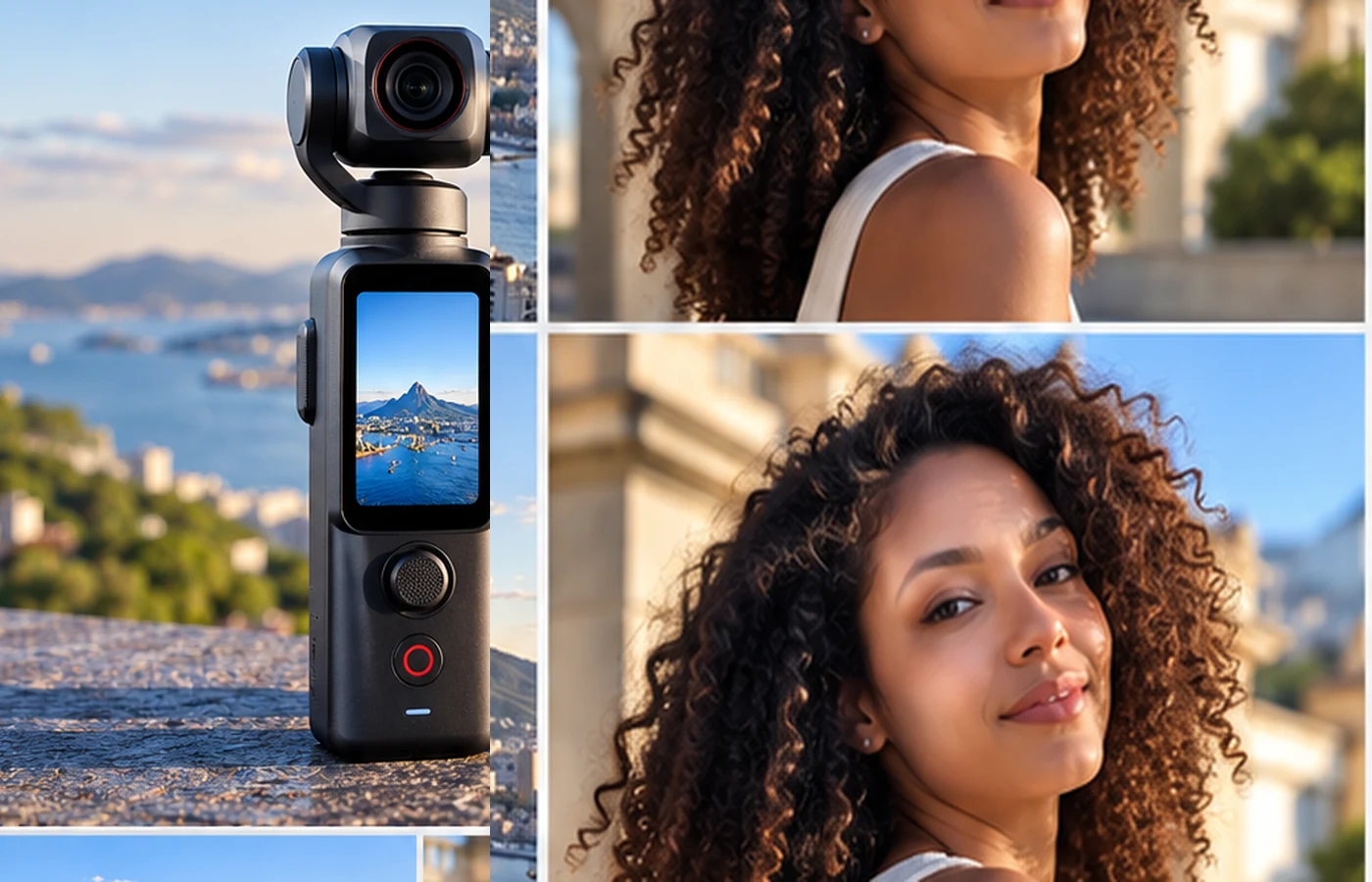
For a tight portrait, Luna Pro’s 20mm view requires the camera to move close to the face. That can exaggerate facial perspective—especially nose-to-ear distance—because the camera is physically near the subject. Ultra’s 60mm camera allows the photographer to move farther back for similar framing, generally creating a more natural head-and-shoulders perspective.
TechRadar praised Ultra’s 3× camera for upper-body portraits with noticeable separation, while PetaPixel highlighted its tight field of view and pleasing depth. The smaller sensor does not automatically mean shallower depth of field, but the 60mm perspective gives a stronger portrait working distance and composition.
Luna Pro 2× vs Luna Ultra 3×: crop or real telephoto?
Luna Pro’s 2× position is not ordinary digital zoom. Insta360 says it uses the central 4K-resolution area of the 1-inch sensor without interpolation. That makes it a genuinely useful mode and explains why TechRadar found quality convincing up to 2×. The Ultra’s 3× position is different: it switches to the dedicated 60mm telephoto and uses nearly the full area of that camera’s sensor.
A 2× versus 3× screenshot is not matched framing. A fair comparison either judges each native/lossless position as-is or moves the cameras to match subject size. Pro’s 2× remains strong; Ultra’s 3× adds a perspective and working distance that magnifying the same 20mm viewpoint cannot reproduce.
Luna Ultra 6×: how good is the lossless crop?
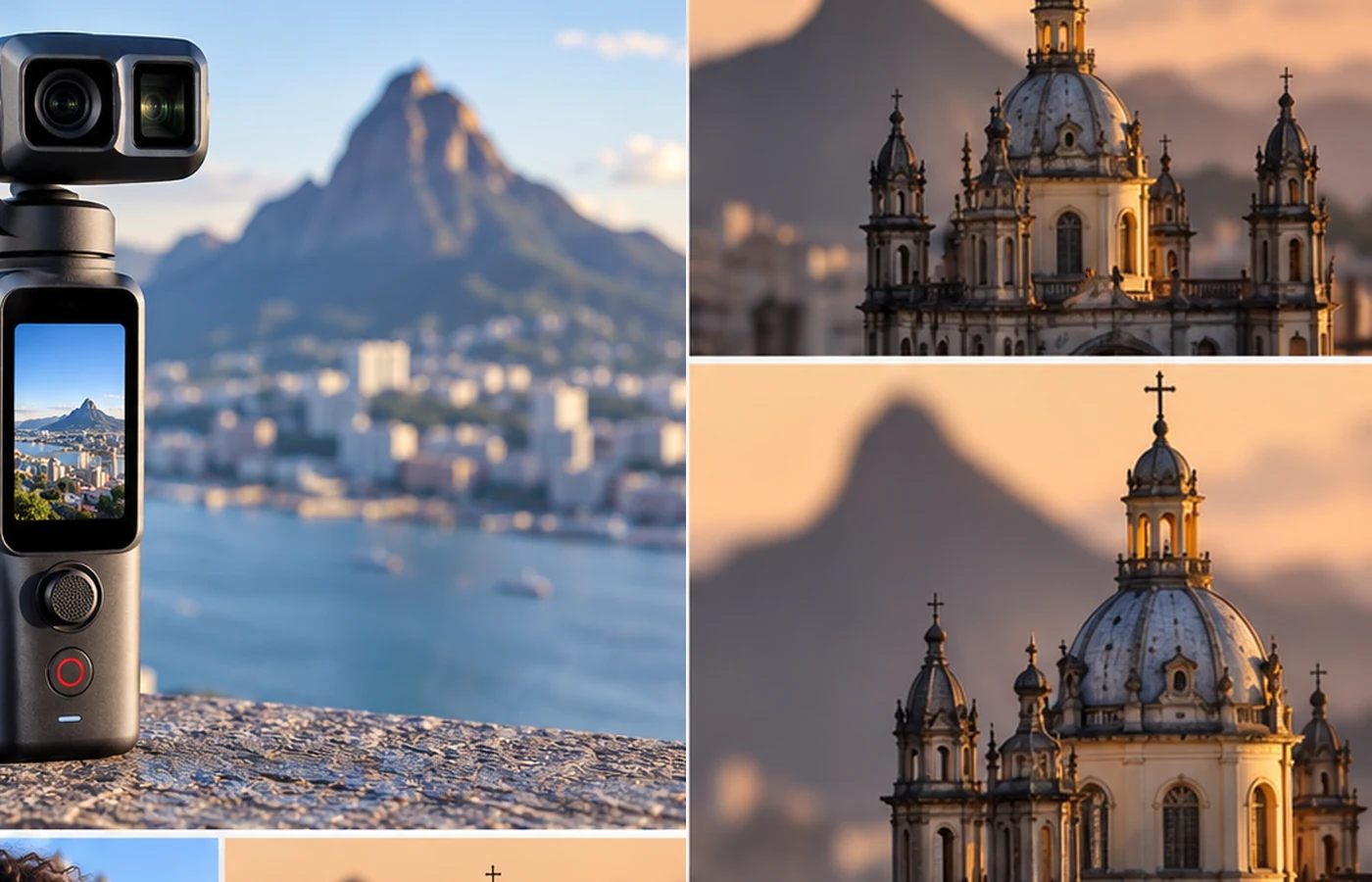
Insta360 calls 6× an interpolation-free clarity position created from the central 4K region of the telephoto sensor. It is therefore not a third optical lens. Independent reviews disagree slightly on how well the claim holds up in practice, which is useful context.
TechRadar saw no obvious 6× drop in normal viewing; PetaPixel thought 6× already looked somewhat questionable in 4K. An interpolation-free crop can preserve output resolution while still exposing sensor, lens and processing limits under close inspection. Treat 6× as a useful good-light reach mode, not as equal to native 3×.
12× digital zoom: useful or too soft?
12× is digital. Both Insta360 documentation and independent tests make that distinction clear. TechRadar found it more pixelated on close inspection, and PetaPixel was even less enthusiastic. It can still help when getting physically closer is impossible, but it is an emergency framing option rather than a quality-first focal length.
By comparison, Luna Pro’s maximum 4× is also digital and TechRadar found obvious softness and muddier edges once the Pro was pushed beyond 2×. That is where Ultra’s telephoto produces the clearest advantage: Pro can imitate tighter framing, but it cannot keep the same image-quality starting point.
Daylight image quality
In bright light, both cameras’ 1× modes should be treated as broadly comparable because the published hardware is so closely aligned and no controlled evidence shows a meaningful main-camera winner. For daylight comparison, useful test subjects include brick, foliage, signs, clothing texture, skin, bright sky and deep shadows.
At 2×, Pro still benefits from the large main sensor’s central crop. At 3×, Ultra changes cameras and gains true telephoto composition. At 6×, the Ultra retains a technically interpolation-free crop but becomes more dependent on scene detail and viewing size. 12× should be expected to show the largest processing and edge penalties.
Low-light test: the 1-inch main sensor fights back
Low light favors the larger 1-inch f/1.8 main system on hardware alone; the telephoto uses a smaller 1/1.3-inch sensor and f/2.0 aperture. PetaPixel and TechRadar both found Ultra capable at night overall, but neither provides a rigorously matched main-versus-telephoto benchmark. Favor the main camera in difficult light, and use 3× when its framing is essential and the scene is sufficiently illuminated.
Color and exposure matching between 1× and 3×
Dual-camera systems can show jumps in white balance, saturation, contrast or skin tone. Current reviews praise Ultra’s overall usability but do not publish a controlled 1×/3× color-difference measurement. This remains an open test item: lock white balance/exposure, record the same scene at both lenses, then compare skin, neutral surfaces and highlight roll-off.
Autofocus and tracking
Insta360 says telephoto tracking is enabled by default, and Video, PureVideo and Slow Motion support tracking. TechRadar and PetaPixel found the system generally effective, though busy scenes can still challenge it. No precise main-versus-tele autofocus-speed benchmark was found, so the evidence supports functionality rather than a numerical AF winner.
Stabilization: does telephoto magnify gimbal movement?
Both cameras share the same published gimbal range and ±0.005° jitter-suppression specification. That does not mean footage looks equally stable at every focal length. A 60mm field of view magnifies small framing changes more than a 20mm view, so tiny movements become more visible.
PetaPixel liked the different creative look of longer focal lengths on a gimbal. In practice, slower pans, gentler walking and more deliberate tracking help at 3× and 6×.
8K vs 4K quality
Both models support 8K30 and 4K120. PetaPixel found 8K only slightly sharper, while 4K I-Log was substantially cleaner in demanding high-contrast scenes. Ultra’s telephoto also records 8K, but for everyday creator work 4K is usually the better balance of dynamic range, editing load, battery and heat.
High-frame-rate behavior also favors Ultra’s flexibility. Official documentation says Ultra can use native 1× or 3× at 4K120 and 1080p240, although continuous zoom is disabled in those high-frame-rate modes. On Pro, zoom is disabled at 4K120/100 and 1080p240/200/120/100. At 60fps and below, continuous zoom is available in supported Video and PureVideo modes.
Product shots and close focus
The main camera focuses to 9cm, making it the better choice for very close food, watches, phones and small objects. Ultra’s telephoto minimum focus is 15cm, which still allows relatively close work for a 60mm-equivalent lens but requires more room.
For B-roll, telephoto working distance can make products easier to isolate, while Pro’s 2× crop remains useful when space is tight.
Travel and event shooting
Travel and events are where Ultra earns its premium most easily. The native 60mm view isolates buildings, signs, performers and distant details without aggressive digital zoom. It is a moderate telephoto rather than a wildlife lens, and dim venues still expose the smaller sensor’s trade-off.
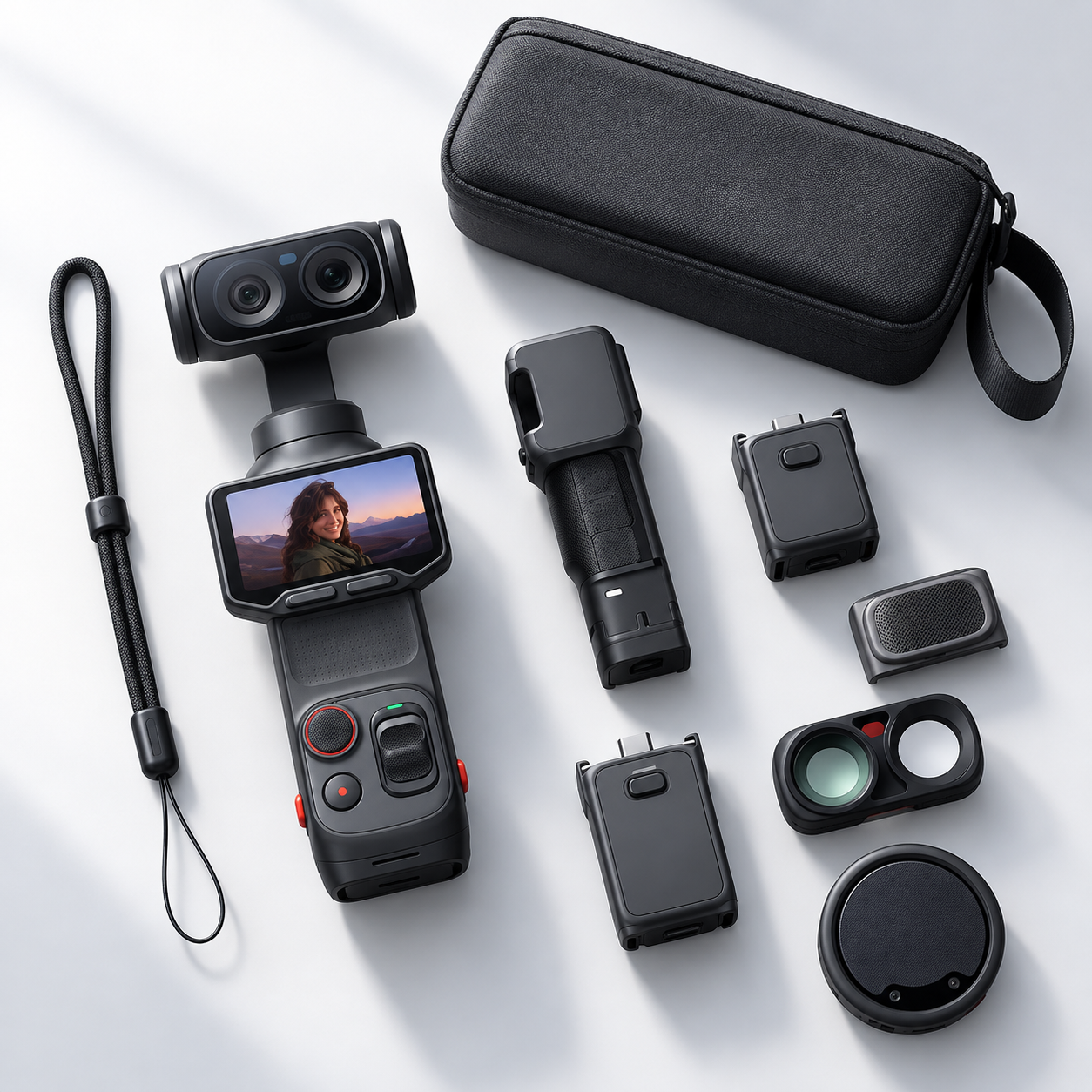
Luna Pro vs Luna Ultra camera test plan
| Test | Luna Pro setup | Luna Ultra setup | What to evaluate |
|---|---|---|---|
| Daylight wide | 1×, same resolution/profile | 1×, same resolution/profile | Detail, color, highlights, noise, edge rendering |
| Portrait | 1×; move closer for matched subject size | 3×; move farther back | Face perspective, background size, separation, skin detail |
| 2× vs 3× | 2× Clarity Zoom | 3× native telephoto | Fine detail, working distance, texture, compression |
| 3× vs 4× | 4× digital | 3× native telephoto | How much Pro loses beyond 2× |
| 6× | Not available | 6× clarity crop | Text, foliage, architecture, skin detail |
| 12× | Not available | 12× digital | Pixelation, edge artifacts, emergency usefulness |
| Low light | 1× main | 1× main and 3× tele | Noise, shadows, highlights, color, focus |
| Product close-up | 1×/2× at 9cm+ | 3× at 15cm+ | Working distance, distortion, separation |
| Walking stabilization | 1×/2× | 1×/3× | Perceived jitter and framing stability |
| Autofocus / tracking | Person/object movement | Same scene at 1× and 3× | Acquisition, retention, hunting, reacquisition |
| Lens switching | Not applicable | 1× → 3× | Color, exposure and white-balance continuity |
| 8K | 1× 8K30 | 1× and 3× 8K30 | Fine detail, noise, processing, thermal cost |
| 4K120 | 1× only | 1× and 3× native positions | Slow-motion detail and telephoto flexibility |
Main sensor vs telephoto: results at a glance
| Test | Winner | Why | Evidence level |
|---|---|---|---|
| 1× main-camera quality | Tie | Same published main-camera specification; no evidence of meaningful hardware advantage | Official specs + separate reviews |
| Portrait framing | Luna Ultra | Native 60mm viewpoint gives more natural working distance and stronger separation | Independent hands-on evidence |
| 2× vs 3× | Depends | Pro 2× remains strong; Ultra 3× adds a different native perspective | Official zoom rules + independent reviews |
| Beyond 2× reach | Luna Ultra | Pro becomes digital; Ultra switches to native 3× then 6× clarity crop | Official specs + reviews |
| 6× | Luna Ultra | Useful interpolation-free crop, though reviewers differ on critical sharpness | Official claim + mixed independent evidence |
| 12× | Luna Ultra, conditional | More reach but visibly digital/pixelated | Independent hands-on evidence |
| Low light | Main camera | Larger 1-inch sensor and faster f/1.8 lens; no matched lens-by-lens benchmark found | Hardware evidence + indirect review evidence |
| Travel details | Luna Ultra | 60mm and 6× reduce need to approach distant subjects | Independent + editorial |
| 4K120 telephoto | Luna Ultra | Officially supports native 3× at 4K120; Pro disables zoom in that mode | Official specs |
| Value for 1×–2× shooters | Luna Pro | Much of the same main-camera experience for $170 less | Official pricing + specs |
Who actually needs Luna Ultra’s telephoto?
Choose Ultra if portraits, travel details, event shooting, cinematic B-roll or distant subjects are recurring parts of your work. The 3× camera changes composition in a way Pro cannot imitate simply by cropping the same 20mm perspective, and 6× extends that reach when light is good.
Who should save money with Luna Pro?
Choose Pro if most of your footage is 1×–2×, especially vlogging, environmental shots and wide travel scenes. You still get the same published main-camera foundation, 8K30, 4K120, strong tracking, stabilization and the detachable remote while keeping $170.
FrediTech verdict
Does Luna Ultra’s telephoto produce images Luna Pro cannot reasonably recreate? Yes—when the value comes from perspective, working distance and native 60mm framing rather than simply magnifying pixels. That is why portraits, event details, architecture and cinematic B-roll are the strongest reasons to buy Ultra.
But Ultra should not be treated as having a better camera at every focal length. At 1×, the two models are close relatives. Pro’s 2× crop is genuinely useful. Ultra’s 6× is useful but not universally indistinguishable from native capture, and 12× is clearly digital. In poor light, the 1-inch main camera remains the safer choice.
Buy Ultra for a genuinely different second perspective. Buy Pro if the 20mm main camera is the perspective you actually use.
For related FrediTech camera context, see the Xiaomi 17 Ultra telephoto review, smartphone photography guide, iPhone 17 Pro camera review, Pixel 8 Pro camera review, emerging mobile-photography guide and mobile photo-editing techniques.
Frequently Asked Questions
Do Luna Pro and Luna Ultra use the same main camera?
They share the same published 1-inch, approximately 50MP, 20mm-equivalent f/1.8 main-camera specification. Insta360 does not publicly identify an exact sensor part number proving the components are literally identical.
What sensor does Luna Ultra telephoto use?
A 1/1.3-inch sensor behind a 60mm-equivalent f/2.0 lens.
Is Luna Ultra 3× optical?
Yes. 3× is the native optical position of the dedicated telephoto camera.
Is Luna Ultra 6× optical?
No. It is an interpolation-free clarity crop from the telephoto sensor’s central 4K area.
Is Luna Ultra 6× lossless?
Insta360 describes it as lossless/interpolation-free. Independent reviews differ on how close it looks to native capture under close inspection.
Is Luna Ultra 12× optical?
No. 12× is digital zoom and independent reviewers report visible pixelation/softness.
Is Luna Pro 2× lossless?
Insta360 describes 2× as an interpolation-free crop using the central 4K area of the main sensor.
Is Luna Pro 4× optical?
No. Pro’s range beyond 2× is digital crop zoom.
Which Luna camera is better for portraits?
Luna Ultra because its 60mm-equivalent camera allows tighter framing from a greater distance and produces a more portrait-friendly perspective.
Which is better in low light?
The 1-inch f/1.8 main camera is the safer choice. Ultra’s telephoto is useful in brighter night scenes, but its sensor is smaller and its aperture slightly slower.
Is Luna Ultra telephoto worth the extra money?
Yes if you regularly use portraits, travel details, events or 3×–6× framing. No if almost all your work stays at 1×–2×.
Should vloggers buy Luna Pro or Ultra?
Most wide-angle walk-and-talk vloggers can save money with Pro. Vloggers who mix portraits, details and cinematic telephoto B-roll gain more from Ultra.
Sources and Further Reading
- Insta360 Luna Series hardware specifications
- Insta360 Luna Series zoom documentation
- Insta360 Luna Series photo and video specifications
- Insta360 tracking documentation
- Insta360 Luna Ultra official store pricing
- Insta360 Luna Pro official store pricing
- TechRadar Luna Ultra review
- TechRadar Luna Pro review
- PetaPixel Luna Ultra review
Fact-check date: September 14, 2026. Firmware, zoom behavior and prices can change after publication.