
Sustainable living can sound like a shopping list: new bottles, new appliances, new storage jars and a new product to replace every object already in the house. That approach is expensive—and replacing useful things early can create the very waste you hoped to avoid.
This guide to sustainable living at home in 2026 starts with a more practical idea: use what you own well, prevent waste before it enters the bin, repair what still has value and upgrade only when the numbers and daily routine make sense. The result should save resources without making family life harder.
Research checked: August 27, 2026. Waste, recycling, water and electricity systems differ by country and municipality. Confirm local collection rules, product labels, utility programs and public-health guidance before acting.
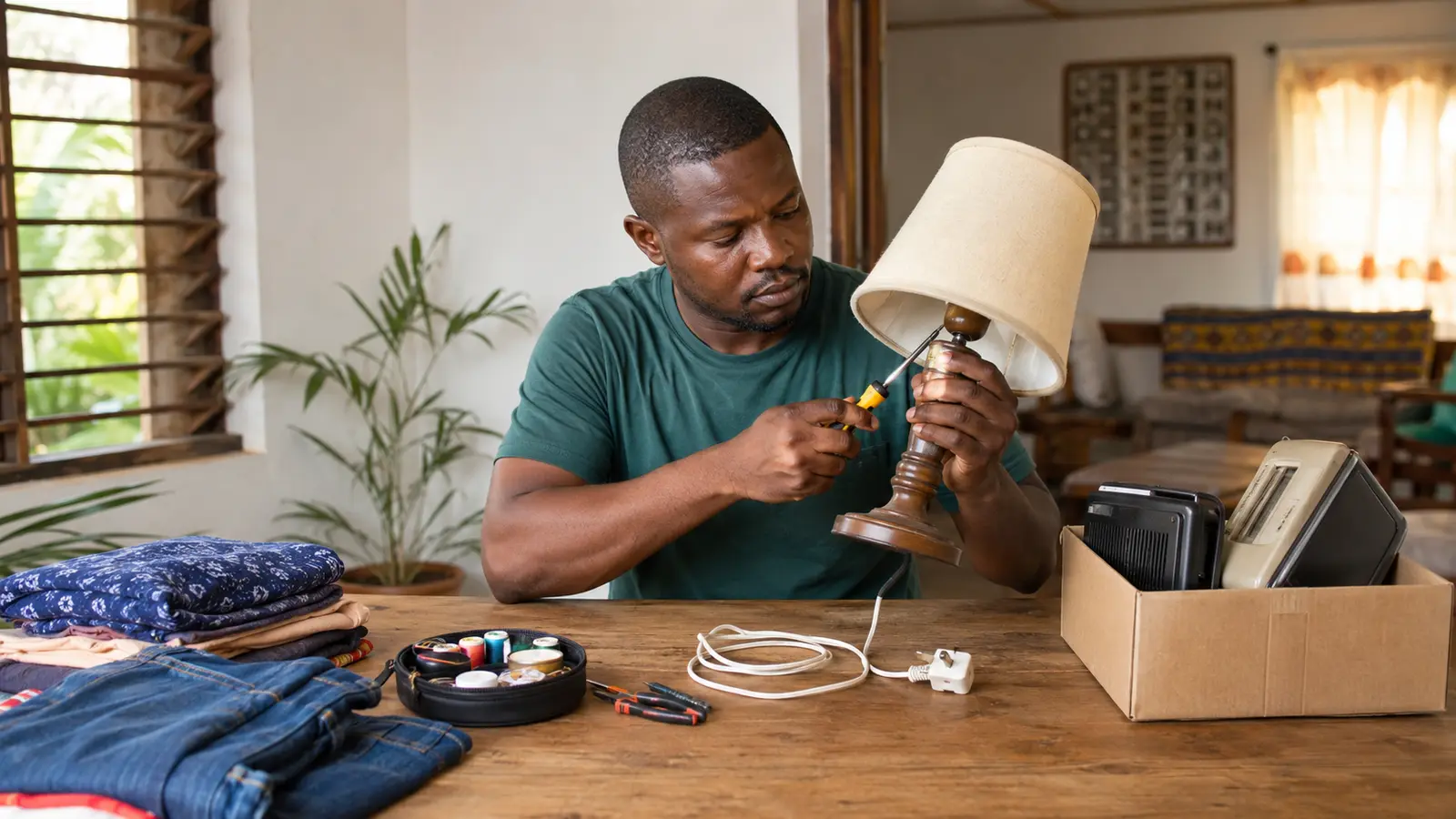
Table of contents
What are the most affordable sustainable changes?
Begin with buying less, preventing food waste, repairing leaks, switching off genuine energy waste, maintaining products, reusing safe containers and keeping electronics in service longer. The EPA waste hierarchy places source reduction and reuse ahead of recycling. Measure one month of bills and rubbish first, then target the largest repeated cost rather than copying a generic “eco” checklist.
Measure the household before setting goals
For four normal weeks, record electricity and water meter readings or bills, the number of general-waste bags, food discarded, transport spending and the household items purchased. Do not turn the exercise into perfect carbon accounting. You are looking for visible patterns: a refrigerator full of duplicate food, cooling an empty room, bottled drinks bought daily, a dripping tap or cheap chargers replaced repeatedly.
Choose one cost, one waste stream and one routine to improve. For example: reduce spoiled vegetables, cut one hour of unnecessary air-conditioning and carry a refillable water bottle. Give each goal a simple measure and review it after a month. A change that saves little but creates conflict or excessive work is unlikely to last. The most sustainable habit is often the one that quietly becomes normal.
| Track | Simple measure | Question to answer |
|---|---|---|
| Food | One note of what and why it was discarded | Was it overbought, forgotten, spoiled or disliked? |
| Energy and water | Weekly meter reading or bill comparison | Which high-use routine changed? |
| Household purchases | Item, price and expected lifespan | Did it replace, repair or duplicate something? |
| General waste | Bags or bin volume per week | Which repeated package dominates? |
Five affordable ways to buy less and buy better
1Use the best thing you already own
Before replacing a container, chair or appliance with an “eco” version, inspect the current item. Clean it, locate the manual, adjust it and repair a simple fault safely. A working durable product has already consumed materials and transport. Replace it when it is unsafe, unrepairable, unsuitable or when verified lifetime savings justify the change—not because the color no longer matches an online trend.
2Buy for total life, not the lowest checkout price
Compare warranty, spare parts, battery replacement, energy or water use, repair access and local service. Read the return conditions and check whether proprietary filters or subscriptions are required. A modest product with replaceable parts may cost less over several years than a cheap sealed one bought repeatedly. Do not finance a premium “sustainable” label without evidence that it fits the household’s actual use.
3Pause non-essential purchases for 48 hours
Save the link and write the problem the item will solve, where it will live and what it replaces. Check local secondhand, rental, borrowing or repair options during the pause. This prevents impulse organizers, kitchen gadgets and décor becoming the next donation pile. For a genuine urgent replacement, use a written shortlist of safety and performance requirements rather than browsing endless features.
4Choose reusable items for high-frequency routines
A washable bottle, food container, shopping bag or cleaning cloth makes sense when it is used repeatedly, cleaned safely and not constantly replaced. Start with items already at home. Match the material to hot food, freezer, microwave or cleaning requirements, and retire cracked or unsafe containers. Reuse is not an excuse to accumulate dozens of promotional bottles; assign each household member a practical set.
5Borrow, rent or share rare-use equipment
A drill, carpet cleaner, ladder, party table or specialist pan may be used once a year. Borrowing or hiring can reduce cost and storage when safe, insured and locally available. Inspect the item, learn correct operation and return it clean and complete. Do not share damaged electrical equipment or safety-critical gear, and respect each owner’s maintenance and liability rules.
Five changes that prevent food waste
6Plan meals from the refrigerator first
Before shopping, photograph or list food that needs using. Choose two or three flexible meals around those ingredients, then add only what is missing. Keep one “eat next” area visible in the refrigerator. The EPA recommends preventing wasted food before disposal; planning from existing food is cheaper than trying to compost repeated overbuying.
7Store food where it remains visible and safe
Use clear or consistently labelled containers, include the storage date and keep older safe food toward the front. Follow food-safety guidance for cooling, refrigeration and reheating; a sealed box does not make food safe indefinitely. Learn which produce prefers a cool dry place, refrigeration or separation. Clean spills promptly so hidden food and odors do not make the whole refrigerator harder to use.
8Serve smaller first portions
Put extra food in a serving dish or safe storage rather than overfilling plates. People can take more, while untouched food remains easier to save. Learn the household’s realistic quantities and scale recipes. For children, appetite changes; offer appropriate portions without turning waste tracking into pressure around eating. Freeze suitable excess in useful portions and label it before it becomes an unidentified block.
9Create a weekly leftovers meal
Schedule one lunch or dinner that safely combines remaining ingredients: cooked vegetables in a soup, rice in a new dish or fruit in breakfast. Use judgment about compatibility and storage time, and discard food when safety is uncertain. A visible leftovers plan prevents buying another meal while prepared food is forgotten. Keep a few flexible staples that turn small quantities into something complete.
10Compost only after prevention and donation
EPA’s Wasted Food Scale places preventing waste and feeding people above composting. If local conditions allow, compost unavoidable plant scraps using a suitable home or community system. Learn the correct balance, permitted materials and pest controls; do not add meat, dairy, pet waste or other excluded material to a basic home pile. Apartment households may use a recognized collection service rather than keeping an unsuitable indoor bin.
Five practical water and energy changes
11Repair drips, running toilets and hidden leaks
Watch the meter when all known water use is off, listen for a toilet that continues filling and inspect below basins and appliances. Replace simple washers only when you understand the fitting; use a plumber for concealed, pressurized or persistent leaks. A low-cost leak alarm can provide early warning, but it cannot replace maintenance. Record the bill before and after repair to see the real effect.
12Choose verified efficient fixtures when replacement is due
Look for the relevant local label and flow rate on showerheads, basin faucets and toilets. In the United States, WaterSense-labelled products are independently certified for efficiency and performance. Check household pressure, heater compatibility and user needs; a handheld shower may improve access. Do not discard a sound fitting for a tiny theoretical gain, but avoid replacing a failed one with another inefficient model.
13Run full, appropriate appliance loads
Use washing machines and dishwashers at practical full loads without overloading, select efficient cycles suited to the soil and maintain filters. Pre-rinse only when the product instructions require it. Air-dry dishes or clothes when conditions, fabric and space allow. Keep wet laundry ventilated and do not dry items where they create indoor damp, block exits or contact heaters.
14Reduce cooling demand before lowering the thermostat
Shade sun-facing windows, close gaps in cooled spaces, clean filters, use fans safely and cool occupied zones. Set schedules around real occupancy and avoid running cooling against open doors. Compare weekly consumption because weather changes can hide or exaggerate savings. The detailed FrediTech home energy-saving guide explains how to audit cooling, hot water, lighting and standby loads.
15Use efficient lighting where hours are highest
Turn off unneeded lights and use daylight and task lighting before illuminating the whole room. Replace failed or heavily used inefficient lamps with compatible LEDs. The U.S. Department of Energy says LEDs use much less energy and last longer than traditional incandescent bulbs. Match brightness, fitting, voltage, enclosure and dimmer requirements, and recycle old lamps through the appropriate local route.
Five low-waste changes for cleaning and clothing
16Simplify the cleaning shelf
Use products suited to the surface and task, follow label dilution and ventilation instructions, and finish safe existing stock before buying alternatives. Never mix cleaning chemicals or decant them into drink containers. Concentrated products can reduce packaging and transport when measured correctly, but more concentrate is not better cleaning. A small kit of frequently used products is easier to store safely than many duplicates.
17Replace repeated disposables one routine at a time
Washable cloths can replace some paper use; durable food containers can replace some wraps; rechargeable batteries can serve compatible high-use devices. Start where washing or charging already fits the household. Keep separate cloths for toilets, food areas and general dusting, wash them appropriately and dry completely. Do not reuse a material where hygiene or safety requires a disposable product.
18Wash clothing for the fabric and soil
Follow care labels, treat stains promptly and use an appropriate dose of detergent. Cooler cycles can reduce energy for many everyday loads when the machine, detergent, textile and hygiene need allow. Avoid unnecessary washing of clean outer layers, but never compromise infection-control or occupational requirements. Close zips, use garment bags where suitable and air-dry within the fabric instructions to extend useful life.
19Repair simple clothing damage early
Keep a small kit with thread, needles, spare buttons and fabric patches, stored safely. A loose hem or missing button is faster to fix before the garment disappears into a repair pile. For shoes, zips and complex alterations, compare local professional repair with replacement. Repair should restore safe function; do not keep using damaged protective clothing or footwear beyond its intended service life.
20Use secondhand markets selectively
Secondhand furniture, clothing, books and tools can provide excellent value when inspected for condition, pests, recalls, missing parts and safety. Avoid used products whose history is critical, such as certain protective equipment, and follow current guidance for children’s products. Clean items appropriately before use. Sell or donate only goods that are safe, complete and useful rather than transferring disposal costs to someone else.
Five responsible habits for electronics and batteries
21Keep devices useful for longer
Install security updates, protect equipment from heat and moisture, clean ventilation openings and use a suitable case where damage is likely. Replace a battery, storage drive or cable when the repair is supported, safe and economical. Remove unused apps and review settings before deciding hardware is too slow. Unsupported connected devices may create security risk, so longevity includes a planned retirement point.
22Choose rechargeable batteries for repeat use
Rechargeables can reduce repeated purchases in compatible toys, sensors and accessories, but use the correct chemistry and charger. Keep matched sets together, inspect for swelling, leakage or damage and store away from heat and metal objects. Low-drain emergency devices may have manufacturer-specific battery requirements; follow them rather than making a blanket substitution.
23Handle lithium-ion batteries separately at end of life
The EPA says lithium-ion batteries and devices containing them should go to appropriate battery or electronics collection, not household rubbish or mixed recycling. Follow local instructions for taping terminals or bagging batteries. Do not puncture, crush or mail a damaged battery casually; contact the manufacturer or local hazardous-waste authority for the correct route.
24Erase data before electronics leave the home
Back up what matters, sign out of accounts, remove payment methods and household access, disable tracking locks as required, and perform the manufacturer’s reset. Remove memory and SIM cards. A factory reset process varies, so verify it for the exact product. Then donate a working supported device or use a recognized electronics recycler; do not leave personal data on a “broken” device.
25Share one measurable household challenge
Choose a goal everyone can influence, such as one fewer bag of avoidable waste, using all planned produce or reducing an identified electricity load. Display progress without shaming individuals and celebrate the money or time recovered. After 30 days, keep the routine that worked and replace the one that did not. Household cooperation produces more lasting change than one person policing every light switch.
A 30-day sustainable-living plan
| Week | Focus | One measurable outcome |
|---|---|---|
| 1: Observe | Record bills, waste, spoiled food and household purchases | Name the three largest repeated opportunities |
| 2: Prevent | Plan food, pause purchases and repair active leaks | Reduce one avoidable waste stream |
| 3: Maintain | Clean filters, repair clothing and organize batteries/electronics | Extend the life of three useful items |
| 4: Improve | Add one efficient fixture or routine backed by the baseline | Compare the same measure and keep what worked |
- Pick one household goal. Make it small enough to measure in a month.
- Use current supplies first. Avoid a “green” shopping trip that duplicates useful products.
- Prevent at the source. Change shopping quantity, storage or routine before improving disposal.
- Repair and maintain. Address leaks, filters, clothing and supported electronics.
- Separate end-of-life materials. Confirm local routes for food scraps, batteries and electronics.
- Review cost and effort. Keep the habit that produces value and redesign the one that creates friction.
Frequently asked questions
How can I start sustainable living with no extra money?
Plan meals from food already at home, pause non-essential purchases, turn off genuine energy waste, repair drips, maintain appliances and carry a safe reusable bottle or bag you already own. Track the money saved before buying an upgrade.
Is recycling the most important sustainable habit?
No. Recycling is useful for accepted materials, but official waste hierarchies place source reduction and reuse above it. Buying less, preventing food waste and extending product life usually avoid more material before it needs an end-of-life route.
Should I replace working appliances with efficient models?
Usually compare the current product’s measured use, repair condition and expected remaining life with the purchase price and verified efficiency of a replacement. Replace unsafe or failed equipment promptly, but do not assume discarding every working appliance creates an immediate benefit.
What sustainable change saves the most money?
It depends on the household baseline. In one home it may be reducing cooling demand; in another, preventing food waste, repairing a leak or avoiding impulse purchases. Measure bills and waste for a month so the largest repeated cost becomes visible.
Can I compost in an apartment?
Possibly, through a carefully managed small system or local collection service, but building rules, pests, odor, climate and accepted materials matter. Prevent food waste first and choose a method you can maintain hygienically. Do not improvise an indoor pile without a suitable process.
Research sources and methodology
This guide was checked against current official waste, food, water, energy and electronics guidance. Actions were prioritized by source prevention, affordability, safety, repeatability and regional adaptability. Examples are household practices, not a product endorsement or complete environmental life-cycle assessment.